
You type a sentence, and half a second later, the words finally catch up on screen. It throws off your whole rhythm, and it’s more common than you’d think.
Most people assume their keyboard is dying. Usually, it isn’t; the real cause is often hiding in a setting or connection you’ve never touched.
Learning how to fix keyboard delay means understanding it’s rarely just one problem. It could be a setting filtering your keystrokes, a driver that needs refreshing, or a wireless connection acting up.
Here’s how to spot the real symptom, narrow down the cause with a quick test, and apply the fix that actually matches what’s happening.
What Does Keyboard Delay Actually Look Like?
Keyboard delay happens when there is a noticeable pause between pressing a key and seeing the character appear.
You may also notice missed keystrokes, repeated letters, or characters appearing later than expected. The problem can affect every app or happen only in one program, which may point to an app-specific issue.
Wireless keyboards can also experience delayed or missed input when their connection is unstable or affected by interference.
Accessibility settings can also change how quickly keystrokes are accepted.
Pay attention to when the delay happens, which keys are affected, and if another keyboard behaves normally. These details can help narrow down the cause.
What’s Actually Causing the Delay?
Keyboard delay isn’t random. It comes from a handful of causes, and most of them are easy to spot once you know what to look for. Here’s what’s actually behind it:
1. OS and Accessibility Settings
Windows has Filter Keys, while macOS has Slow Keys. These are accessibility features that can change how keystrokes are accepted.
Windows Filter Keys can ignore brief or repeated keystrokes, while Slow Keys on Mac can add a delay before a key is accepted. If typing feels delayed across different apps, checking these settings is a useful first step.
2. Driver and Connection Issues
Keyboard drivers help the operating system communicate with the keyboard, so driver problems can affect input.
Connection problems can also cause delayed or missed keystrokes on wired, Bluetooth, or wireless keyboards. A loose cable, mismatched USB connector type, or unstable wireless connection can interfere with input.
Checking the connection and trying another port can help identify the problem.
3. Wireless and Hardware Problems
Wireless keyboards have extra factors that can affect responsiveness, including low batteries, receiver placement, and radio interference.
For some 2.4 GHz wireless keyboards, USB 3.0 ports can create radio interference that affects the receiver. Moving the receiver away from USB 3.0 ports or using a USB extension cable can reduce this interference.
4. App and System Performance Issues
Keyboard delay can sometimes be limited to a particular app rather than the keyboard itself. If typing works normally in other programs, the affected app may be contributing to the problem.
Broader system issues can also affect input responsiveness. Testing the keyboard in another app can help determine if the delay is specific to one program or affects the computer more widely.
How to Fix Keyboard Delay?
The right fix depends on what’s causing the delay. Start with accessibility and connection settings, then move on to keyboard drivers or other troubleshooting steps if the problem continues.
1. Fixing Wired or OS-Level Delay
Start with the settings and driver checks that can affect how your computer receives keyboard input. These are simple checks and can often be done in just a few minutes.
- Turn off Filter Keys on Windows: Go to Settings > Accessibility > Keyboard and turn off Filter Keys.
- Check Slow Keys on Mac: Go to Apple menu > System Settings > Accessibility > Keyboard and make sure Slow Keys is turned off.
- Adjust Repeat Settings if Held Keys Repeat Slowly: On Windows, press Win + R, type
control keyboard, and adjust Repeat Delay and Repeat Rate. These settings affect how quickly a held key starts and continues repeating. - Reinstall the keyboard driver: Open Device Manager, expand Keyboards, right-click your keyboard, and select Uninstall device. Restart the computer. Windows will normally detect the keyboard again, but you can also use Action > Scan for hardware changes if needed.
If the delay is still there after these checks, move on to the wireless or connection fixes below.
2. Fixing Wireless Delay
Wireless keyboards have a few extra things to check because the connection depends on batteries, a receiver, or Bluetooth. Small connection problems can sometimes cause missed or delayed keystrokes.
- Replace or Recharge the Batteries: A low battery can cause unstable wireless performance, including missed or delayed keystrokes.
- Move the Wireless Receiver: Position the receiver closer to the keyboard and away from potential sources of interference.
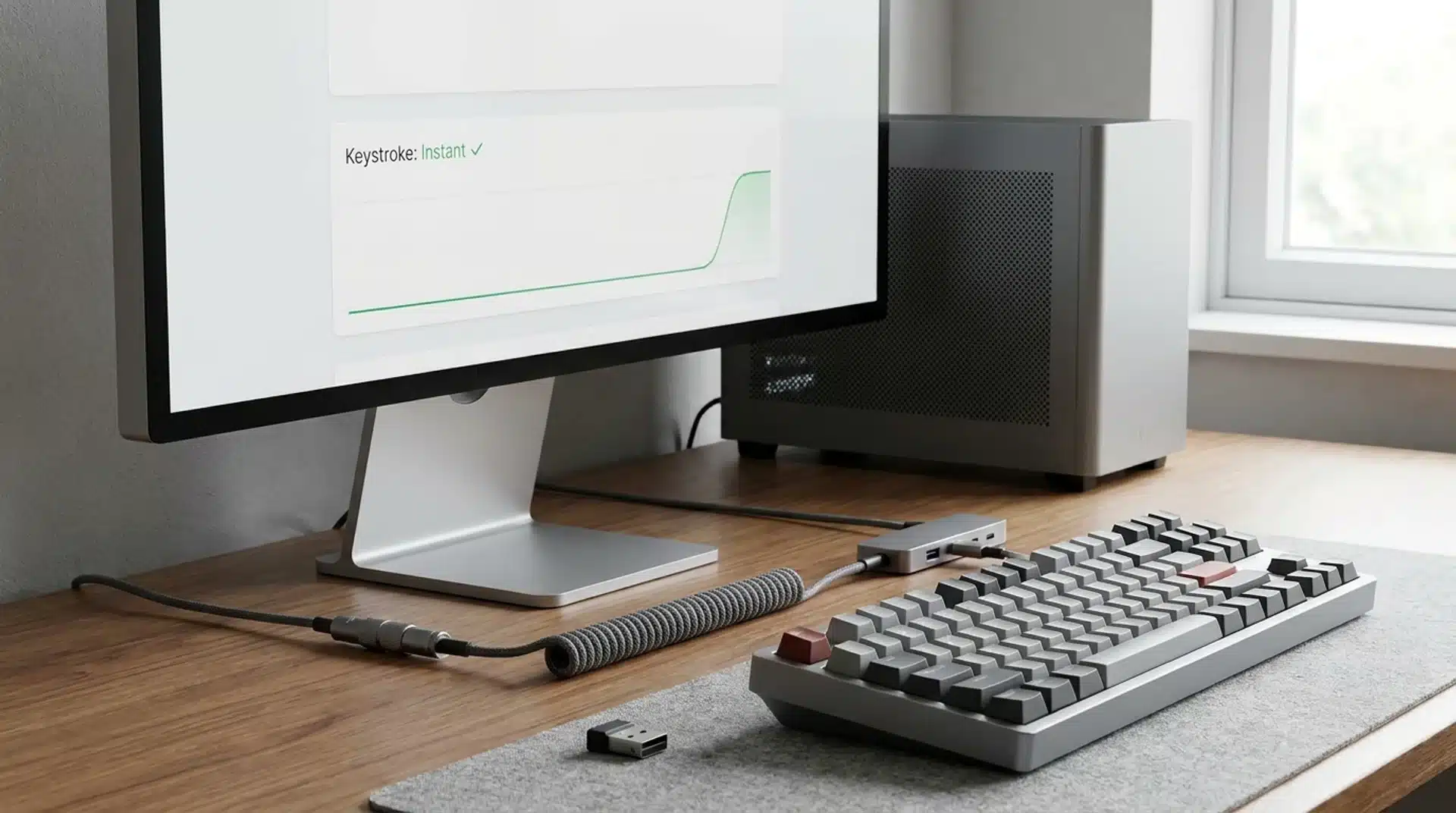
- Avoid USB 3.x Interference: With some 2.4 GHz wireless keyboards, USB 3.x ports can interfere with the wireless signal. Try moving the receiver away from the USB 3.x port.
- Use a USB Extension Cable: If the receiver is behind the computer, an extension cable can help position it farther from potential interference.
- Reconnect the Keyboard: For Bluetooth keyboards, remove and reconnect the keyboard through your computer’s Bluetooth settings.
- Test Another Computer: If the keyboard still lags on another computer, the keyboard or its connection becomes more likely to be the source of the problem.
If these steps don’t solve the problem, test the keyboard on another computer to see if the delay follows it. If it works normally there, the issue may be related to your computer’s settings, drivers, or connection.
How Do You Confirm Which Cause Applies to You?
A few quick tests can narrow down the cause before you change any settings. Here’s how to run them:
- Check Filter Keys: Open Settings > Accessibility > Keyboard and check whether Filter Keys is turned on.
- Try Another USB Port: For a wired keyboard, connect it to a different USB port. For a 2.4 GHz wireless keyboard, move the receiver away from USB 3.x ports or use a short USB extension cable.
- Test Another Computer: Connect the keyboard to a different computer, if you have access to one.
- Watch What Happens: If the delay follows the keyboard to another computer, the keyboard, its firmware, or its connection becomes more likely to be the source.
- Compare the Results: If the delay disappears on the other computer, your original computer’s settings, drivers, software, or connection become more likely causes.
These tests can help you avoid changing drivers or replacing the keyboard before you know where the problem is coming from, saving you time, effort, and unnecessary troubleshooting steps.
When Should You Replace Your Keyboard?
A keyboard does not need replacing just because it starts lagging. First, check the settings, connection, batteries, and drivers, since these can cause delayed or missed input.
If the same keyboard continues to lag on another computer, the keyboard itself becomes more likely to be the problem. Physical damage, keys that repeatedly fail, or persistent missed keystrokes are stronger signs of hardware trouble.
Microsoft recommends testing the keyboard on another PC and replacing it if it fails there too. Apple similarly recommends testing another keyboard or another Mac when troubleshooting persistent keyboard problems.
Closing Thoughts
Most typing lag isn’t a hardware problem. It’s usually a setting your system applies on purpose, without telling you.
That’s why testing before fixing saves so much time. You avoid chasing drivers or replacing gear that was never broken.
Now you know how to fix keyboard delay without guessing. The two-minute test does the real work here. Keep this in mind next time typing feels off, on any device you own. The same logic applies almost everywhere.
Try the test today, and see how fast your keyboard feels again.
Frequently Asked Questions
Why Is There a Delay When I’m Typing?
Possible causes include accessibility settings, driver or connection problems, wireless interference, or an app-specific issue. Test the keyboard in another app and on another computer to narrow down the cause.
Why Did My Keyboard Suddenly Start Lagging?
A software or driver change, wireless connection problem, low battery, or background process may cause new input delays. Restart the computer and keyboard, then test another connection or device.
Why Is My Keyboard Lagging When I Type?
Check accessibility settings, connections, batteries, and drivers first. If the keyboard works normally in another app or computer, the original program or system settings may be causing the delay.