


I’ve seen companies lose strong candidates simply because the hiring process took too long or became too complicated.
Open roles stayed vacant, good applicants accepted other offers, and hiring teams struggled to keep up. That is one reasonrecruitment process outsourcing has become a practical option for many businesses. It is more than hiring an outside recruiter to fill vacancies.
The right provider can support your hiring strategy, improve efficiency, and help your team find qualified people faster.
Before deciding if it makes sense for your company, it helps to understand how recruitment process outsourcing works, what it includes, and where it delivers the most value.
What is Recruitment Process Outsourcing?
Recruitment process outsourcing, or RPO, transfers part or all of your recruitment process to an outside provider who manages hiring as an extension of your internal team.
They take on all or part of your permanent recruitment. And they work as if they’re part of your own team.
A regular agency fills a role and moves on. An RPO provider owns the whole process. They are responsible for agreed hiring outcomes, such as hiring speed, candidate quality, and overall recruitment performance. That shift matters more than it sounds.
When someone owns your hiring, they’re accountable for how it performs, not just for handing you names.
Think of RPO as one branch of a bigger idea called business process outsourcing, or BPO, a concept that sits close to software-driven process management in finance and operations. BPO means letting an outside expert run a whole business function for you.
RPO is that same setup, pointed straight at recruitment. For companies evaluating an RPO business partner, the key difference is not just the service offered.
It is the level of ownership, integration, and responsibility the provider takes over within your hiring process. So it’s not a headhunter you call for one job.
It’s a partner who takes the process off your plate and answers for the results.
What Does Recruitment Process Outsourcing Include?
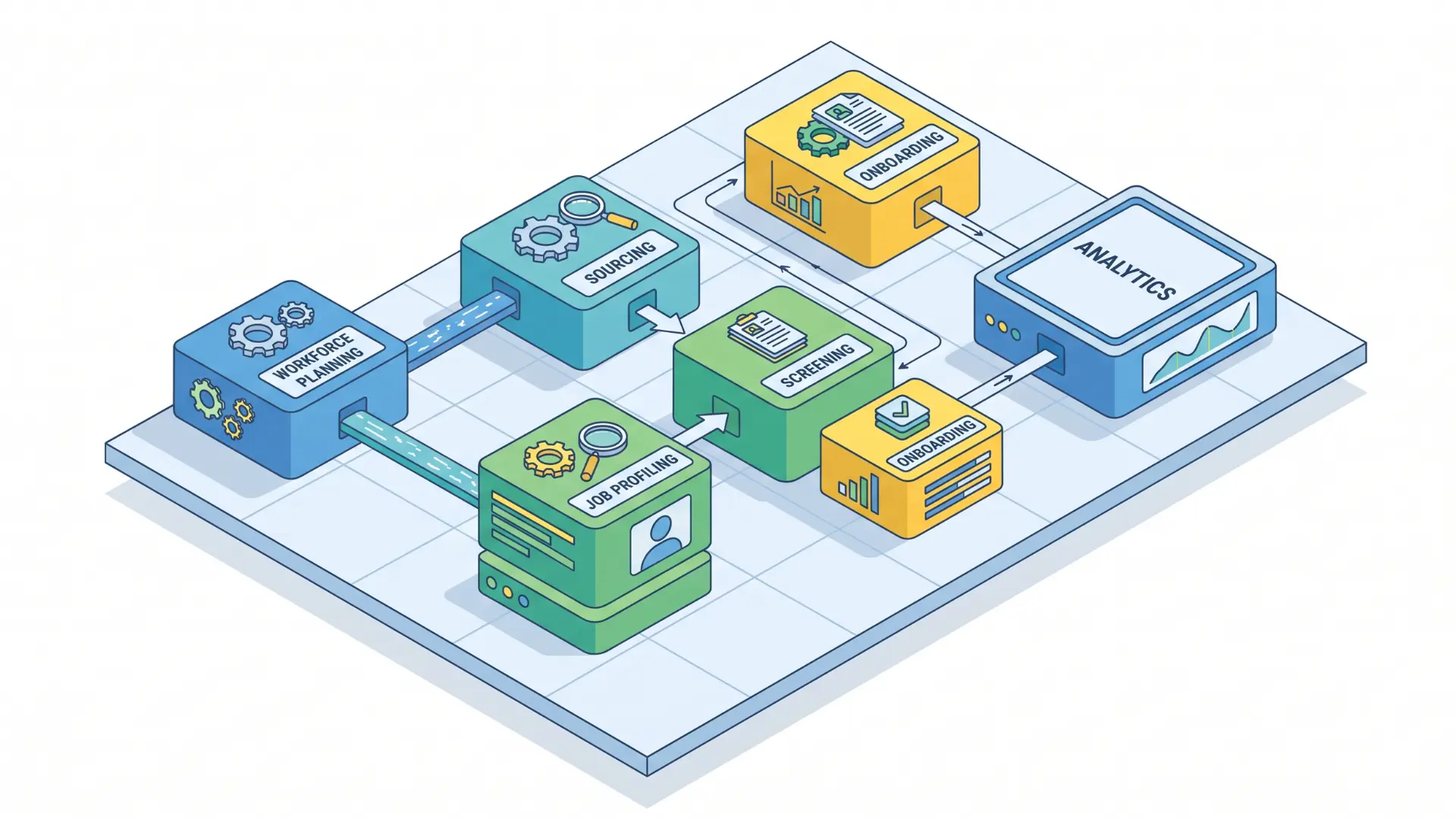
An RPO can run your entire hiring process or just one piece of it. What they take on depends on the model you agree to. Below is what that scope actually covers.
What an RPO Provider Manages
In a full-service engagement, an RPO can manage the recruitment process from workforce planning through onboarding, depending on the scope of the partnership. That’s a longer list than most people expect.
| Area | What the RPO Provider Owns |
|---|---|
| Workforce Planning | Identifies upcoming hiring needs and plans when specific roles should be filled. |
| Job Profiling | Defines the skills, experience, and requirements needed for each position. |
| Sourcing | Finds qualified candidates through active and passive talent channels. |
| Screening | Reviews applicants, evaluates fit, and shortlists the strongest candidates. |
| Onboarding | Helps new hires transition smoothly and become productive faster. |
| Analytics | Tracks hiring data, performance, and areas where the process can improve. |
A full-service RPO provider manages these areas together, often tracking candidates through customer relationship platforms the same way sales teams track leads, creating a more consistent hiring process from planning to onboarding.
RPO Delivery Models
How much you hand over isn’t fixed. It’s set by the model you pick. There are four common ones.
- End-to-End RPO: Manages the entire recruitment process, from workforce planning and sourcing to onboarding. This model is best for organizations that want a long-term partner to oversee most or all of their hiring.
- Project-Based RPO: Supports hiring for a specific project or time-limited need, such as opening a new office, launching a new product, or scaling a team quickly.
- Selective (Modular) RPO: Takes responsibility for selected parts of the recruitment process, such as candidate sourcing, screening, interview coordination, or hiring for a specific department, while your internal team manages the remaining tasks.
- On-Demand RPO: Places experienced recruiters within your team temporarily to handle short-term increases in hiring demand or provide additional recruitment support during busy periods.
The right model depends on your situation. A steady, high-volume employer leans toward end-to-end. A company with one big need leans toward project-based or on-demand.
Recruitment Process Outsourcing vs Staffing Agencies and BPO
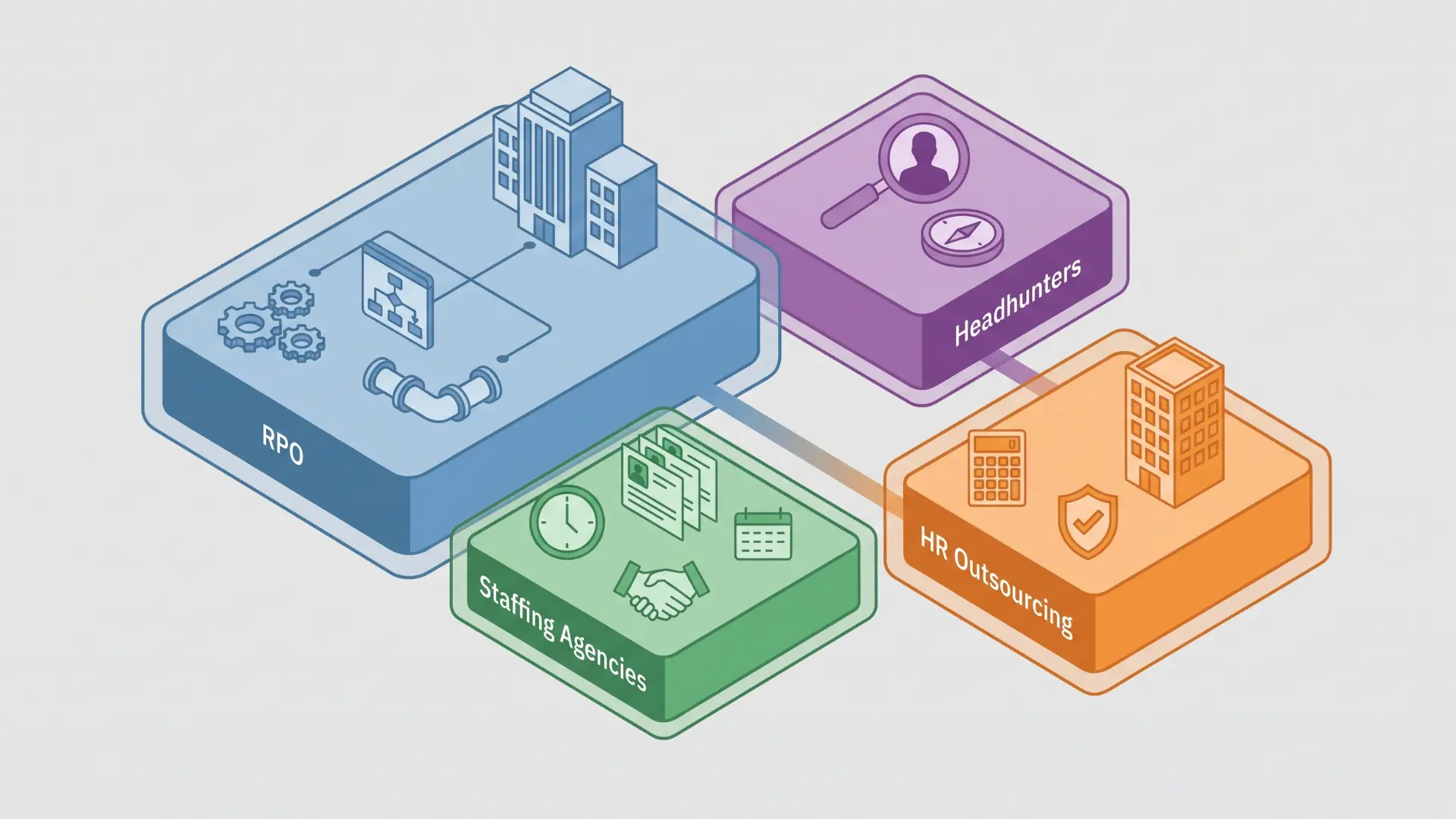
RPO is often confused with staffing agencies, headhunters, and full HR outsourcing. The difference comes down to ownership, branding, and accountability for hiring results.
A staffing agency focuses on filling specific roles and collecting placement fees. RPO builds ongoing talent pipelines, works under your brand, and manages recruitment outcomes.
Unlike headhunters who target individual executives, RPO handles broader hiring needs. It covers recruitment processes without taking over your entire HR function.
RPO falls under business process outsourcing but has a narrower focus. It manages sourcing, screening, and hiring while leaving other HR areas to your team. Outsourcing recruitment does not mean losing control.
A strong RPO partner works alongside your HR team, shares insights, and follows your hiring strategy.
Why an RPO Business Improves Hiring Results
RPO creates value because one partner takes ownership of the hiring process from start to finish. That responsibility improves speed, quality, cost control, and scalability in ways that are difficult to achieve with a scattered approach.
A reliableRPO business model gives companies access to recruitment expertise, technology, and flexible hiring support without building every capability internally.
- Faster Hiring: An RPO provider does not wait until a role opens to start searching. They build talent pipelines in advance, giving you access to qualified candidates faster when hiring needs appear.
- Better Candidate Quality: Since they are responsible for hiring outcomes, they focus beyond filling open positions. Strong screening, better matching, and ongoing performance tracking help bring in candidates who are more likely to succeed.
- Lower Hiring Costs: Fewer bad hires, shorter vacancy periods, and less dependence on multiple recruitment agencies can reduce the overall cost of hiring.
- Flexible Hiring Capacity: RPO providers can adjust their support based on your hiring needs. They can add recruiting resources during growth periods and scale back when demand slows.
- Clear Accountability: Instead of different teams handling separate parts of hiring, one partner owns the process and has responsibility for improving results.
RPO works best when hiring demand is consistent and ongoing. If you only hire a few people each year, the cost of a dedicated provider may outweigh the benefits.
When Recruitment Process Outsourcing Is the Right Choice
Recruitment process outsourcing works best when your company hires regularly or expects steady growth.
It can be a practical choice if your internal team struggles to fill roles quickly, manage high hiring volumes, or find candidates with specialized skills.
Many businesses also use RPO during expansion, mergers, or seasonal hiring when recruitment demand increases. On the other hand, if you only hire a few employees each year, a full RPO partnership may not provide enough value for the cost.
Looking at your hiring patterns, recruitment goals, and available resources can help you decide if recruitment process outsourcing is the right fit for your business.
Final Thoughts
I believe recruitment process outsourcing works best when it solves a real hiring challenge instead of simply shifting work to another company.
The right RPO partner can improve hiring speed, support better candidate experiences, and give your team the flexibility to manage changing recruitment needs.
At the same time, it is not the best choice for every business, especially if hiring happens only occasionally.
Looking at your hiring goals and long-term workforce plans can help you decide if it is the right fit. Have you worked with an RPO provider or considered one for your business?
Share your thoughts or experience in the comments below.
Frequently asked questions
What is the difference between BPO and RPO?
RPO is one specific type of business process outsourcing. BPO means handing any business function to an outside provider. That could be payroll, IT, or customer service. RPO takes that same idea and applies it at recruitment alone. It transfers ownership of sourcing, screening, and hiring rather than a wider back-office task.
What are the 7 stages of the recruitment process?
A common recruitment process includes workforce planning, sourcing, screening and shortlisting, interviewing, selection and assessment, offer management, and onboarding. The exact stages may vary between organizations. An RPO provider can own all seven. Or it can take just a few, depending on the model you agree to.
Is RPO the same as a staffing agency?
No. A staffing agency fills one role for a one-time fee and works under its own name. An RPO recruits under your brand instead. It builds talent pipelines over time and answers for long-term hiring metrics as part of your team.
Does RPO replace my in-house recruitment team?
Not always. RPO can run hiring fully or work beside your existing team. It might take over certain stages or high-volume roles while your staff keeps oversight. The provider plugs into your HR function rather than removing it. You set how much stays in-house.