


That word “bug” gets used a hundred times a day without anyone stopping to question where it actually came from. Most people haven’t, and the answer isn’t what they’d expect.
It didn’t start with computers. The word was already doing real work in engineering circles long before anyone wrote a line of code or built a circuit board.
What made it travel so far and last so long comes down to something simple: it described a feeling, not just a fact. That’s harder to replace than any technical term.
Stick with this, and you’ll understand exactly why software flaws are called bugs even when far more precise words have existed all along and never stood a chance.
Why is a Software Problem Called a Bug?
A software bug is a hidden flaw that makes a program fail in ways nobody planned for or expected.
The word didn’t start with computers. Engineers were already using “bug” to describe stubborn, invisible faults in machines long before coding existed.
It wasn’t a casual nickname either. A bug meant something specific, a failure hiding inside the system that you couldn’t immediately see or trace.
That’s what makes it different from a plain mistake. A mistake is obvious. A bug makes you hunt for it before you can even name it.
The famous moth story didn’t create this word. It just gave the term a face and made sure nobody forgot it.
The Word “Bug” Was Already an Engineering Term Before Computers Existed

Thomas Edison used the word “bug” in 1878 to describe hidden faults in his telegraph work, decades before any computer existed.
He wasn’t being casual about it. Edison wrote about finding and fixing these “bugs” as a standard part of building and refining new technology.
That one detail matters more than most people realize. It means the word had real, established meaning in engineering long before the moth story ever happened.
Part of why “bug” fits so well comes down to what the word actually implies:
- Hidden by nature: A bug isn’t visible on the surface; it lives inside the system, out of reach.
- Small but damaging: It causes failures far larger than its size would suggest.
- Requires active hunting: You can’t fix a bug until you find it first, and finding it takes work.
These qualities made it a natural fit for engineering problems across multiple fields, not just one.
Telegraph operators used it. Electrical engineers used it. Mechanical engineers reached for the same word. It crossed disciplines because the problem it described kept appearing everywhere.
By the time computers arrived, “bug” wasn’t waiting to be invented. It was already the word engineers defaulted to when something invisible broke something that should have worked.
Computing inherited the term. It didn’t create it.
The 1947 Moth: Why This Story is Famous but Misunderstood?
In September 1947, Grace Hopper’s team was working on the Harvard Mark II when they found a moth trapped inside a relay.
The moth was causing the machine to malfunction. They removed it, taped it into their logbook, and wrote beside it: “first actual case of bug being found.”
That logbook still exists. The moth itself is preserved at the Smithsonian Institution, a record of one of the most literally documented moments in computing history.
But read that annotation carefully. “First actual case of bug being found” doesn’t say they invented the word. It says they found a real one.
They were using a term that already existed. The note was a joke, a nod to engineering language they already knew well.
So why does everyone treat this as the origin story? Three reasons made it unforgettable:
- It was visual: An actual insect causing an actual failure is hard to forget.
- It was documented: The taped moth gave the story physical proof that most moments in history don’t have.
- It had a famous name attached: Grace Hopper was already a significant figure, which made the story travel further and faster.
The moth didn’t create the word “bug.” It just gave the word an image, and that image stuck harder than any definition ever could.
Why “Bug” Stuck when More Precise Words Didn’t?
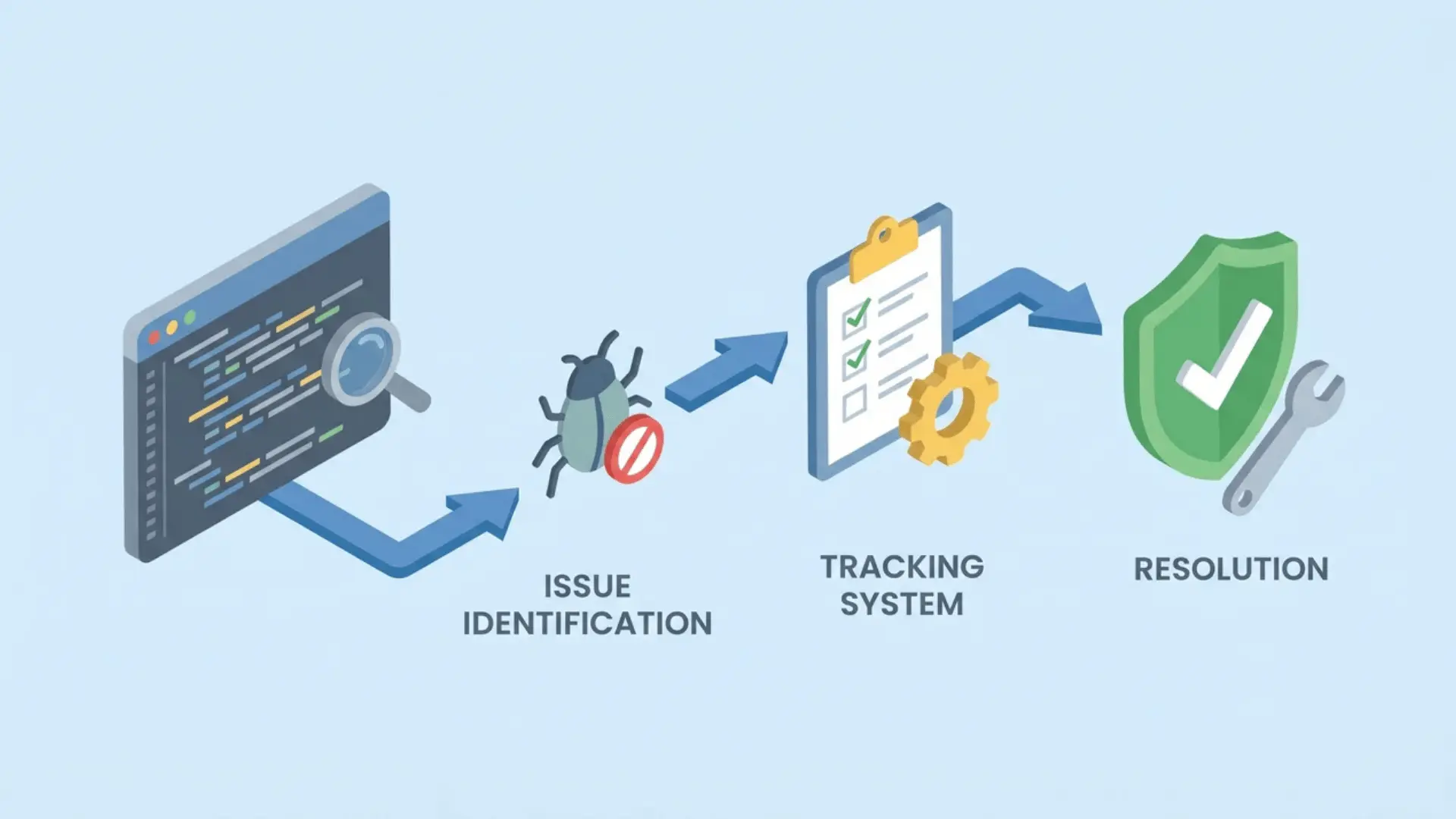
“Bug” survived because it captures what finding a hidden failure actually feels like, not just what it technically is.
Words such as defect, fault, and failure appear in formal software engineering standards. IEEE documentation uses them precisely, with clear definitions separating one from another.
But nobody says, “I’m going to defect-correct this afternoon.” They say they’re debugging, and that difference isn’t accidental.
“Bug” implies something specific that clinical terms don’t:
- It’s hidden: You don’t know where it is until you look.
- It requires hunting: You’re not correcting a known error; you’re tracking something down.
- It feels alive: It behaves unpredictably, shows up inconsistently, and resists easy fixes.
That last quality is what formal terms miss entirely. They describe the category. “Bug” describes the experience.
Tools like Endbugflow are built around exactly this metaphor: hunt, capture, resolve. The entire workflow reflects how developers actually think about the process, not how documentation defines it.
When a word shapes not just language but the way entire tools get designed, it’s done something no technical term ever managed. It became the way people think about the problem itself.
Conclusion
The word “bug” didn’t originate in software. It came from engineers who needed a name for something invisible quietly breaking everything around it.
Edison documented it. Telegraph operators passed it on. Computing simply inherited a word that already had decades of meaning behind it.
That one word eventually shaped tools, workflows, and the default way developers describe their work, without most of them ever questioning why.
The reason software flaws are called bugs has nothing to do with computers, and everything to do with a century of engineers reaching for the only word that truly fits. If you’re ready to start hunting yours down, give Endbugflow a try.
Frequently Asked Questions
Did Grace Hopper invent the term “software bug”?
No. Grace Hopper’s team documented the term in 1947 when they taped a moth into their logbook as the “first actual case of bug being found”, but that phrasing shows they were using an existing word, not coining one. Thomas Edison used “bug” to describe technical faults in his electrical work as early as 1878.
What was the first computer bug?
The most famous early instance was a moth found trapped in a relay of the Harvard Mark II computer in September 1947. The moth caused the machine to malfunction, and the incident was documented in the team’s logbook. The physical moth is now preserved at the Smithsonian Institution.
Why do programmers say “debugging” instead of “fixing”?
“Debugging” reflects how finding and resolving software faults actually works; it is an active search for something hidden, not a simple correction of a known error. The word inherited that sense of hunting from the broader engineering tradition that used “bug” to refer to unseen faults long before software existed.
Is there a more precise technical term for a software bug?
Yes. Software engineering standards use terms like defect, fault, and failure with distinct technical meanings. In regulated industries such as aviation and medical devices, these formal terms are required in documentation. In everyday development, tools like Endbugflow deliberately use “bug” rather than “defect” because the term conveys urgency and a sense of action in a way clinical alternatives do not.