

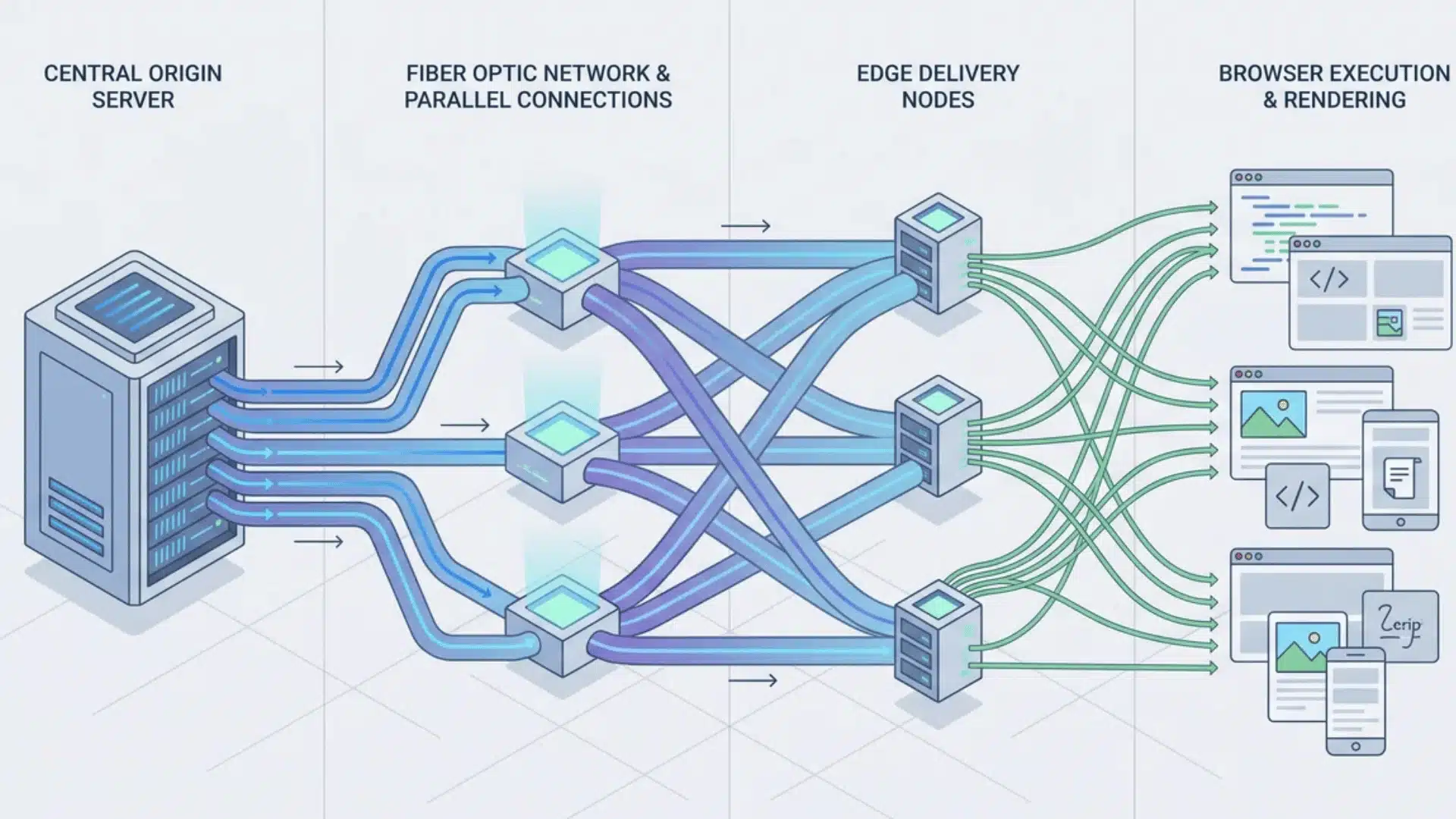
Every fast website is built on decades of engineering. Web speed improved in layers, including faster connections, better protocols, delivery networks, and execution engines, with each one fixing a new bottleneck.
Most explanations stop at “faster internet” and leave the real mechanics unexplained, which is exactly where the useful details start.
Understanding how these pieces actually work reveals why some sites still feel sluggish despite strong connections, and what genuinely fixed that.
What Are the Tech Ideas That Made the Web Move Quicker?
If you’ve ever wondered why websites feel so much faster today, it wasn’t because of one big invention. I’ve watched the web improve step by step, with each new technology fixing a different problem that slowed everything down.
Faster internet connections were the first piece of the puzzle. Broadband and fiber gave us more bandwidth, but I quickly realized that faster internet alone didn’t make slow websites load instantly. A lot of time was still being wasted behind the scenes.
That’s where smarter technology came in. Better web protocols and content delivery networks (CDNs) reduced the amount of waiting and brought website data closer to you. In many cases, those changes made a bigger difference than simply having a faster connection.
None of this happened overnight. These improvements rolled out over decades, with each one solving the biggest bottleneck at the time. Put together, they’re the reason today’s web feels much quicker than it did years ago.
Which Technologies Actually Made the Web Faster, and How Do They Work?
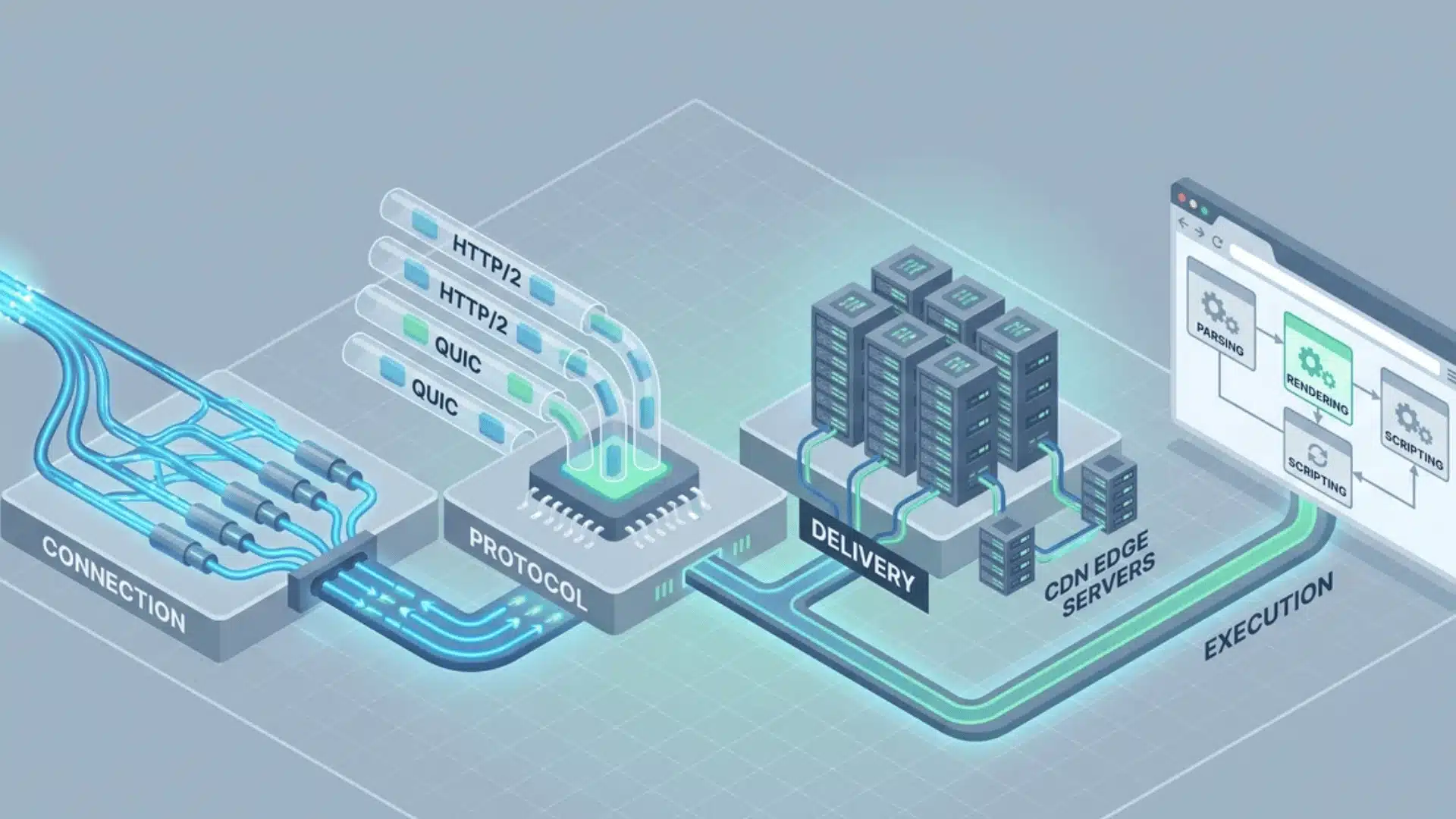
These speed gains fall into four functional layers. Each one solves a distinct part of the problem, and together they explain why the modern web feels instant instead of sluggish.
Faster Connections: Broadband, Fiber, and Bandwidth
Bandwidth was the first bottleneck anyone tackled. Without enough raw capacity, nothing else in this list would have mattered, since data simply couldn’t move fast enough to begin with.
- Dial-up limited users to tiny amounts of data per second, making even basic pages slow to load.
- Broadband and fiber optic cables massively increased how much data could travel at once.
- More bandwidth meant richer content, like images and video, became practical to load quickly.
Bandwidth solved the “how much data can move” problem. But it couldn’t fix how inefficiently that data was being requested in the first place.
Smarter Protocols: HTTP/2 and HTTP/3
This is where the real mechanical improvement happened. Bigger pipes helped, but the rules governing how browsers and servers talk to each other needed fixing too.
- HTTP/1.1 could only handle one request at a time per connection, forcing browsers to wait in line.
- HTTP/2 introduced multiplexing, letting multiple requests and responses travel over a single connection simultaneously.
- HTTP/3 switched the underlying transport to QUIC, cutting the number of round trips needed to establish a connection.
- Fewer round trips means less waiting, especially on networks with higher latency, like mobile connections.
Protocol upgrades removed the traffic jam at the connection level. The next layer tackles distance, not just efficiency.
Closer Delivery: CDNs and Edge Computing
Even a perfectly efficient connection is slow if data has to travel halfway around the world. This layer shrinks that physical distance.
- CDNs store copies of website content on servers spread across many locations worldwide.
- Nearest-server delivery means a request is served from the closest location instead of one central origin.
- Reduced round-trip latency happens simply because data has less distance to travel.
- Edge computing pushes this further by running actual computation near the user, not just cached files.
Delivery proximity fixed the distance problem. The final layer speeds up what happens once data actually reaches the browser.
Faster Execution: V8, WebAssembly, Caching, and SPAs
Getting data to the browser quickly is only half the job. The browser still has to process and render it, and that used to be slow too.
- The V8 engine dramatically improved how fast browsers compile and execute JavaScript.
- WebAssembly lets precompiled code run at near-native speed, ideal for heavy tasks like video editing or games.
- Single Page Applications (SPAs) update content dynamically instead of reloading the entire page for every action.
- Browser caching, compression, and Progressive Web Apps further reduce repeated load times.
Execution speed closed the loop, turning fast delivery into a fast experience.
Together, these four layers didn’t compete with each other. Bandwidth, protocols, delivery, and execution each removed a different bottleneck, and stacking them is what actually made the web feel quick.
What Doesn’t Actually Speed Up the Web?
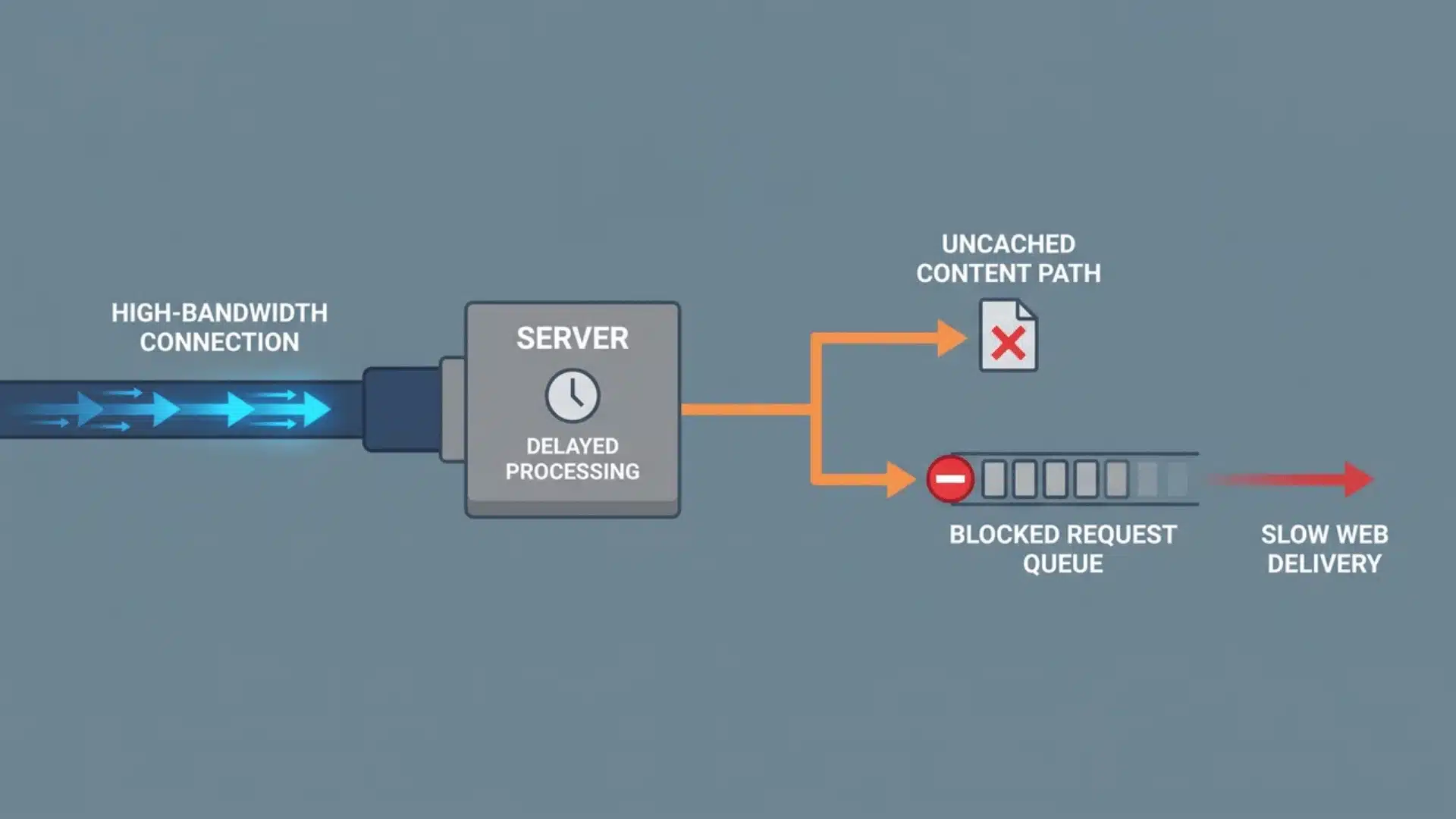
Faster internet speed alone does not guarantee a faster web experience. A great connection can still deliver a slow, frustrating website if other layers aren’t working properly.
Bandwidth increases don’t fix protocol-level inefficiencies like head-of-line blocking, where one delayed request holds up everything behind it. More speed can’t solve a queuing problem.
A single fast component can’t make up for the rest. A slow server, uncached content, or inefficient rendering will bottleneck the experience no matter how strong the connection is.
| What People Assume Helps | Why It Falls Short |
|---|---|
| Faster internet connection | Doesn’t fix inefficient request handling or server-side delays |
| Higher bandwidth alone | Can’t resolve queuing issues like head-of-line blocking |
| One strong component | Gets bottlenecked by whichever layer is still slow |
Speed isn’t about having one fast piece. It’s about making sure no single layer, connection, server, or rendering, becomes the weak link that slows everything else down.
Why Do These Speed Innovations Still Matter Today?
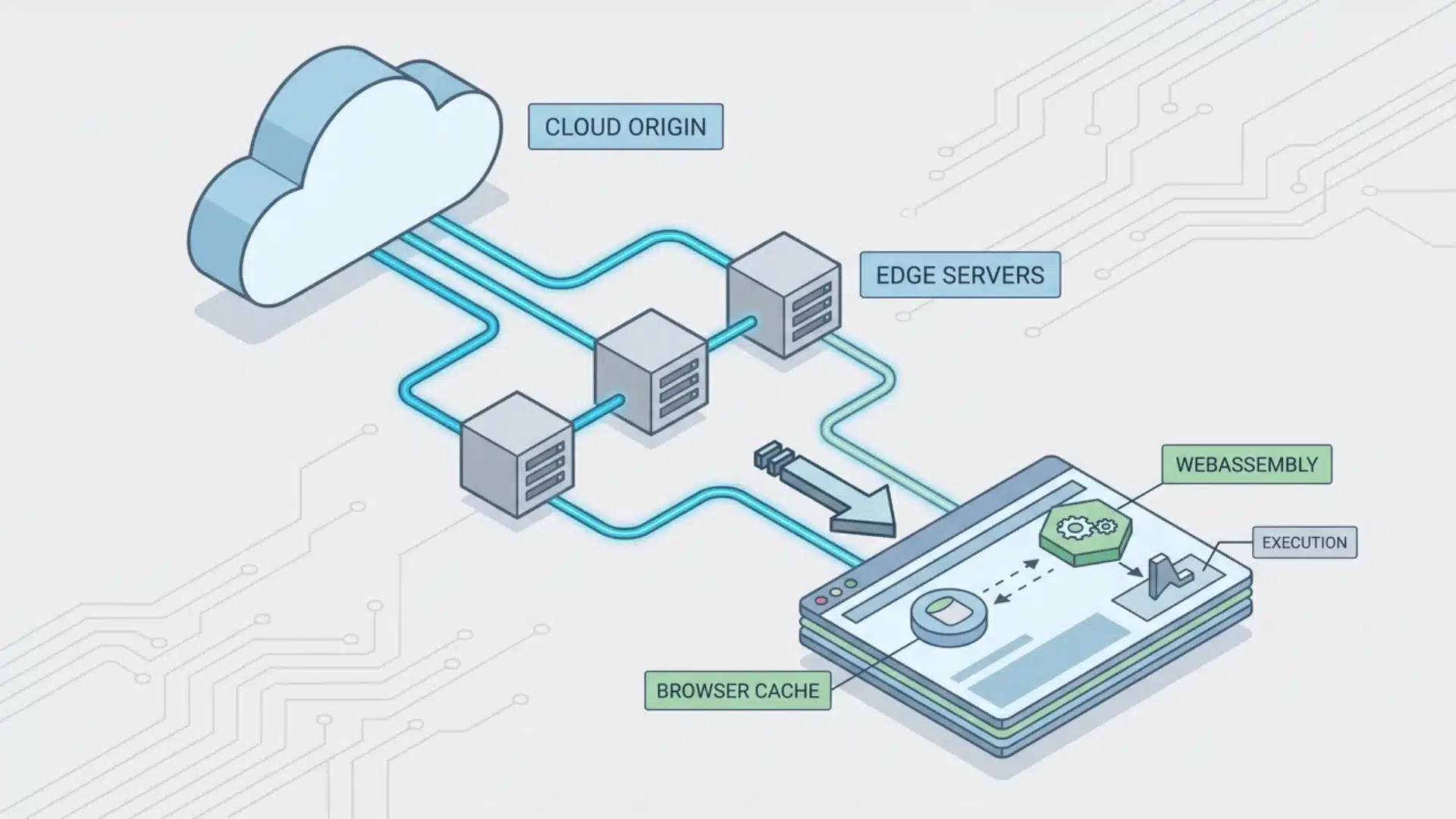
These technologies still shape everyday web use because modern expectations were built on top of them. Users notice instantly when any layer, connection, protocol, delivery, or execution, falls short.
Search rankings and user experience scores now factor in speed directly. A slow site doesn’t just frustrate visitors, it can quietly lose visibility, since these speed layers are baked into how performance gets measured.
None of these ideas got replaced either. Progressive Web Apps and expanded WebAssembly use build directly on protocols and execution engines that came before them, not around them.
Speed stopped being a nice-to-have thing a long time ago. It became the baseline users expect before they even judge your content or design.
Understanding this foundation matters because newer tools inherit its strengths and its limits. If the underlying layers slow down, everything built on top of them slows down too.
Conclusion
The tech ideas that made the web move quicker weren’t random upgrades. They were layered solutions, each one removing a specific bottleneck along the way.
From broadband expanding raw capacity to HTTP/3 cutting round trips, and CDNs shrinking distance, every layer earned its place in the stack.
Looking back, it’s clear speed was never about one component working alone, but about every layer supporting the next.
Take a closer look at your own site’s connection, delivery, and execution layers, since one weak link is often all it takes to slow everything down.
Frequently Asked Questions
What are the main tech ideas that made the web move quicker?
The main ideas include broadband and fiber for raw connection speed, HTTP/2 and HTTP/3 for efficient data transfer, CDNs and edge computing for closer content delivery, and engines like V8 and WebAssembly for faster browser execution. Together, these layers removed different bottlenecks slowing down the web.
Why doesn’t a faster internet connection always mean a faster website?
A fast connection only fixes bandwidth limitations. It can’t resolve protocol level inefficiencies like head-of-line blocking, slow servers, uncached content, or inefficient rendering. Website speed depends on multiple layers working together, not just connection strength alone.
How did HTTP/2 and HTTP/3 improve web speed?
HTTP/2 introduced multiplexing, allowing multiple requests to travel over a single connection instead of waiting in line. HTTP/3 further reduced the number of round trips needed to establish a connection, cutting delays especially on higher latency networks like mobile data.
What is the difference between a CDN and edge computing?
A CDN stores and serves cached website content from servers near the user, reducing travel distance for data. Edge computing goes further by running actual computation closer to the user, not just delivering files, which reduces latency for dynamic tasks.