

Supply chain management isn’t just about moving products from A to B. It’s about building a network that holds up when things go wrong.
The right digital tools do more than automate. They bring together data, systems, and decisions to improve every step, from supplier coordination to final delivery. In practice, that means better visibility and faster responses to disruptions, but no tool solves everything on its own.
Issues like poor data quality and integration gaps still persist. However, when set up well, supply chain technology can transform operations, delivering real efficiencies and smarter decisions at every level.
Let’s go through how it works and what it actually delivers.
What is Supply Chain Technology?
Supply chain technology refers to digital tools and systems used to plan, execute, track, and optimize the flow of goods, data, and decisions across a supply network.
Supply chains are complex, multi-party systems involving suppliers, warehouses, transport providers, and customers operating simultaneously.
Digital technologies collect, process, and share data across these participants to coordinate activities more effectively.
This results in better visibility, fewer delays, improved accuracy, and faster operational decisions.
Traditional supply chains relied heavily on manual processes, spreadsheets, and disconnected systems.
Digital supply chains integrate platforms and data streams into a connected ecosystem that communicates in real time.
It is not just software or automation working in isolation. It is a synchronized network of data, intelligence, and execution tools working together end to end.
How Supply Chain Technology Actually Works: End-to-End Flow
Supply chain technology operates as a connected digital loop that links physical operations with intelligent systems.
It ensures that information flows continuously through the supply chain rather than being trapped in silos.
Step 1. Data is Captured: Sensors, barcode scans, ERP entries, shipment updates, and transaction records generate real-time operational data.
Step 2. Data is Transmitted: Networks, APIs, and cloud platforms move this data across departments, facilities, and external partners.
Step 3. Data is Processed: Analytics engines and AI models analyze patterns, compare historical trends, and detect risks or inefficiencies.
Step 4. Decisions are Generated: Systems create alerts, forecasts, replenishment signals, or automated workflow instructions.
Step 5. Actions are Executed: Machines, employees, or enterprise systems adjust production, inventory, routing, or procurement activities.
The entire structure operates in a continuous feedback loop, where each action generates new data that strengthens future predictions.
Over time, this improves accuracy and operational stability. This model works because real-time visibility reduces uncertainty and shortens response time across the network.
Faster information flow leads to faster, more coordinated decisions.
However, the system weakens when data quality is poor or incomplete. Inaccurate inputs produce unreliable forecasts and misaligned actions. Breakdowns also occur when systems are disconnected and unable to share information efficiently.
Delayed data transmission creates blind spots that reduce agility and increase risk.
Core Components that Power Supply Chain Technology
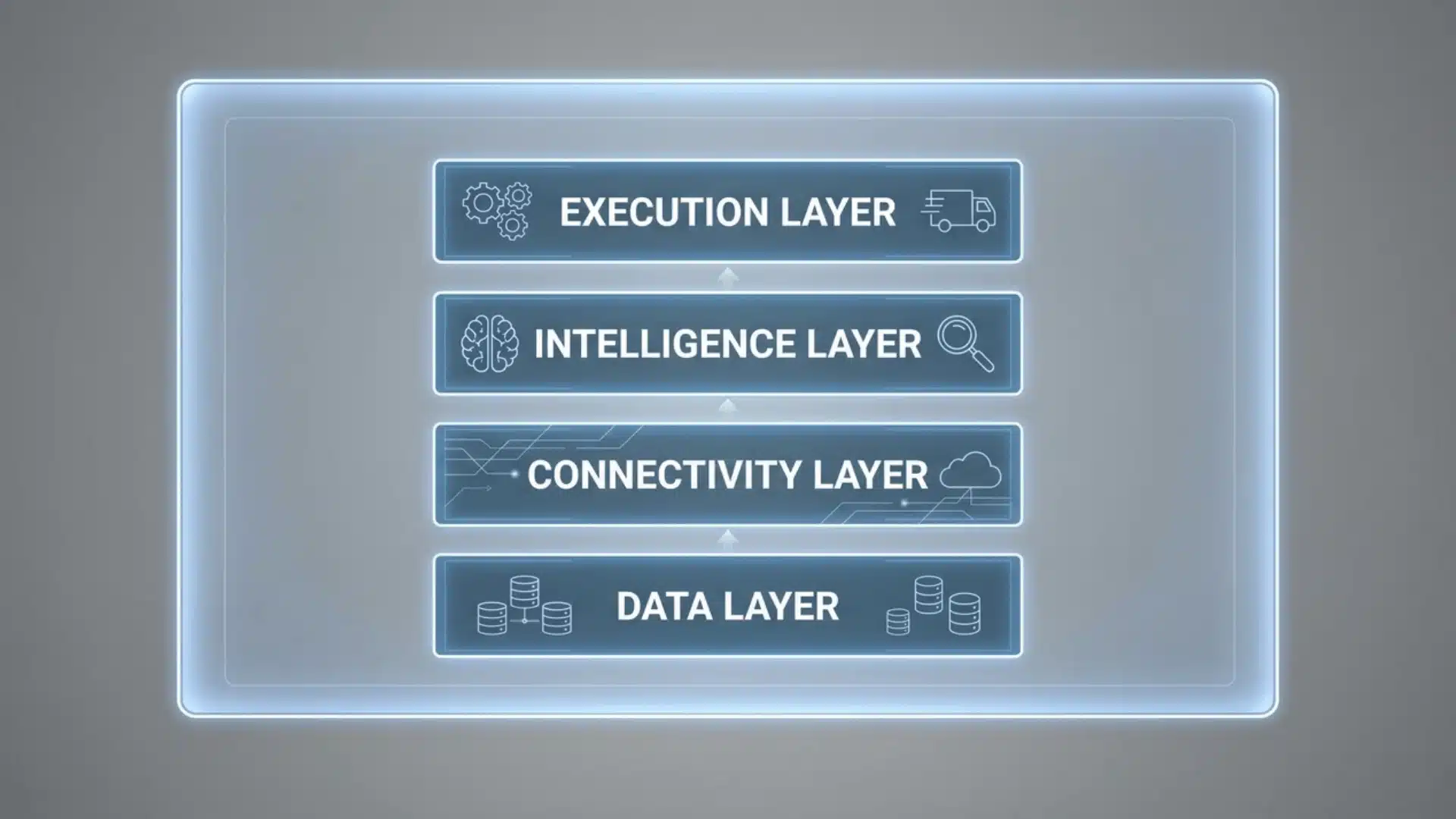
The end-to-end flow only works when the right layers are in place. Here’s what each one does, and where things break down if any of them are missing:
Data Layer (The Foundation)
The data layer gathers structured and unstructured data from suppliers, warehouses, transport systems, and customers.
Since every forecast and decision depends on this input, incomplete or delayed data directly leads to inaccurate planning and poor outcomes.
Connectivity Layer (How Systems Communicate)
The connectivity layer links systems through APIs, cloud platforms, and digital networks to enable real-time data exchange.
When systems are not properly integrated, siloed information creates blind spots and weakens coordination across partners.
Intelligence Layer (Decision-Making Engine)
The intelligence layer uses AI, analytics, and algorithms to convert raw data into predictions, alerts, and optimization decisions.
Over-reliance on models without context or human oversight can result in misleading outputs and flawed actions.
Execution Layer (Where Action Happens)
The execution layer includes automation, robotics, and ERP systems that translate digital decisions into operational changes.
If automation lacks flexibility, it can struggle in unpredictable environments and limit adaptability.
Key Supply Chain Technologies Explained
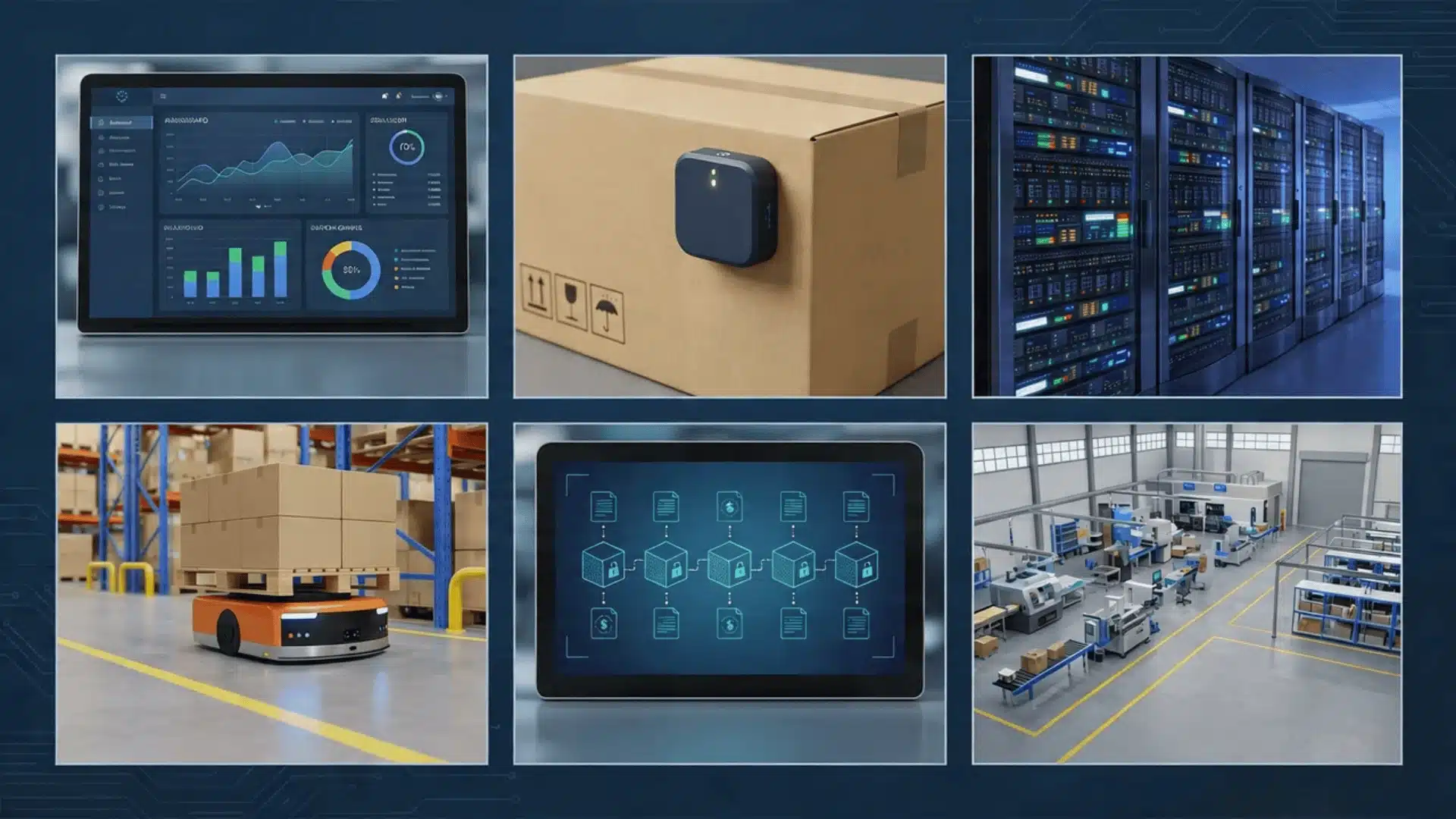
These technologies form the functional backbone of modern digital supply chains. Each one plays a specific role in sensing, analyzing, securing, or executing supply chain activities.
1. Artificial Intelligence and Machine Learning
AI and ML analyze historical and real-time data to spot patterns humans would miss. They power demand forecasting, route optimization, inventory planning, and disruption prediction — and get more accurate the longer they run.
The catch: feed them bad data, and they’ll confidently produce the wrong answer.
2. Internet of Things (IoT)
IoT connects physical assets, shipments, equipment, and warehouse stations to live data streams through sensors and devices. This gives you location tracking, temperature monitoring, and equipment condition visibility without waiting for manual updates.
It works until connectivity drops or the data volume becomes too large to process cleanly.
3. Cloud Computing
Cloud platforms give every team, regardless of location, access to the same systems, dashboards, and planning tools. That shared visibility is what makes global coordination possible without building separate infrastructure for each site.
The trade-off is a hard dependency on stable internet access and tight cybersecurity controls.
4. Robotics and Automation
Robots handle the high-volume, repetitive work: picking, sorting, packaging, and moving materials. They’re faster and more consistent than manual labor, and they don’t fatigue.
Where they struggle is adaptability. Unscripted environments and unexpected variables still require human judgment.
5. Blockchain
Blockchain records every transaction in a distributed ledger that no single party controls and no one can quietly edit. That makes it useful for traceability, fraud prevention, and verifying supplier claims across complex networks.
The limitation is practical: it only works well when all your partners are on board, and adoption is still uneven.
6. Digital Twins
A digital twin is a live virtual replica of your supply chain. You can run disruption scenarios, test capacity changes, or simulate a new supplier lane before committing any real resources.
Accuracy depends entirely on data quality. An outdated input produces a simulation that looks right but isn’t.
Together, these technologies form a connected system where visibility, intelligence, and execution reinforce each other; no single tool delivers the full picture on its own.
What Problems Supply Chain Technology Solves?
Supply chain technology addresses operational pain points by linking specific tools to measurable business problems. Its value becomes clear when viewed through a problem-to-solution lens.
- Lack of Visibility: IoT sensors, combined with cloud tracking, enable real-time monitoring of goods, inventory, and asset conditions across the network.
- Demand Uncertainty: AI-driven forecasting analyzes historical and live data to improve inventory planning and reduce stockouts or overstocking.
- Operational Inefficiency: Automation supported by analytics streamlines repetitive tasks and process optimization to lower costs and minimize errors.
- Disruptions and Delays: Predictive analytics and digital twins simulate risks in advance, enabling faster, more informed responses.
Note: Technology does not eliminate supply chain risk but strengthens the ability to detect, assess, and respond to disruptions quickly.
Where Supply Chain Technology Breaks Down?
Supply chain technology fails when the foundation supporting it is weak. Most breakdowns stem from structural gaps rather than tool limitations.
- Poor data quality leads to inaccurate forecasts and flawed automated decisions. Since systems rely on data inputs, errors quickly multiply across operations.
- Integration complexity across legacy and modern systems creates silos. When platforms cannot communicate properly, end-to-end visibility disappears.
- High implementation costs with unclear ROI create hesitation and stalled projects. Without measurable outcomes, digital initiatives lose executive support.
- Human resistance to change limits adoption and weakens results. If teams do not trust or understand the system, performance suffers.
- Cybersecurity risks increase as systems become more connected. A breach can disrupt operations and damage data integrity.
Failures occur when processes, people, and data are misaligned. Technology reinforces what exists but cannot fix a structurally broken supply chain on its own.
How Modern Supply Chains are Evolving with Technology?
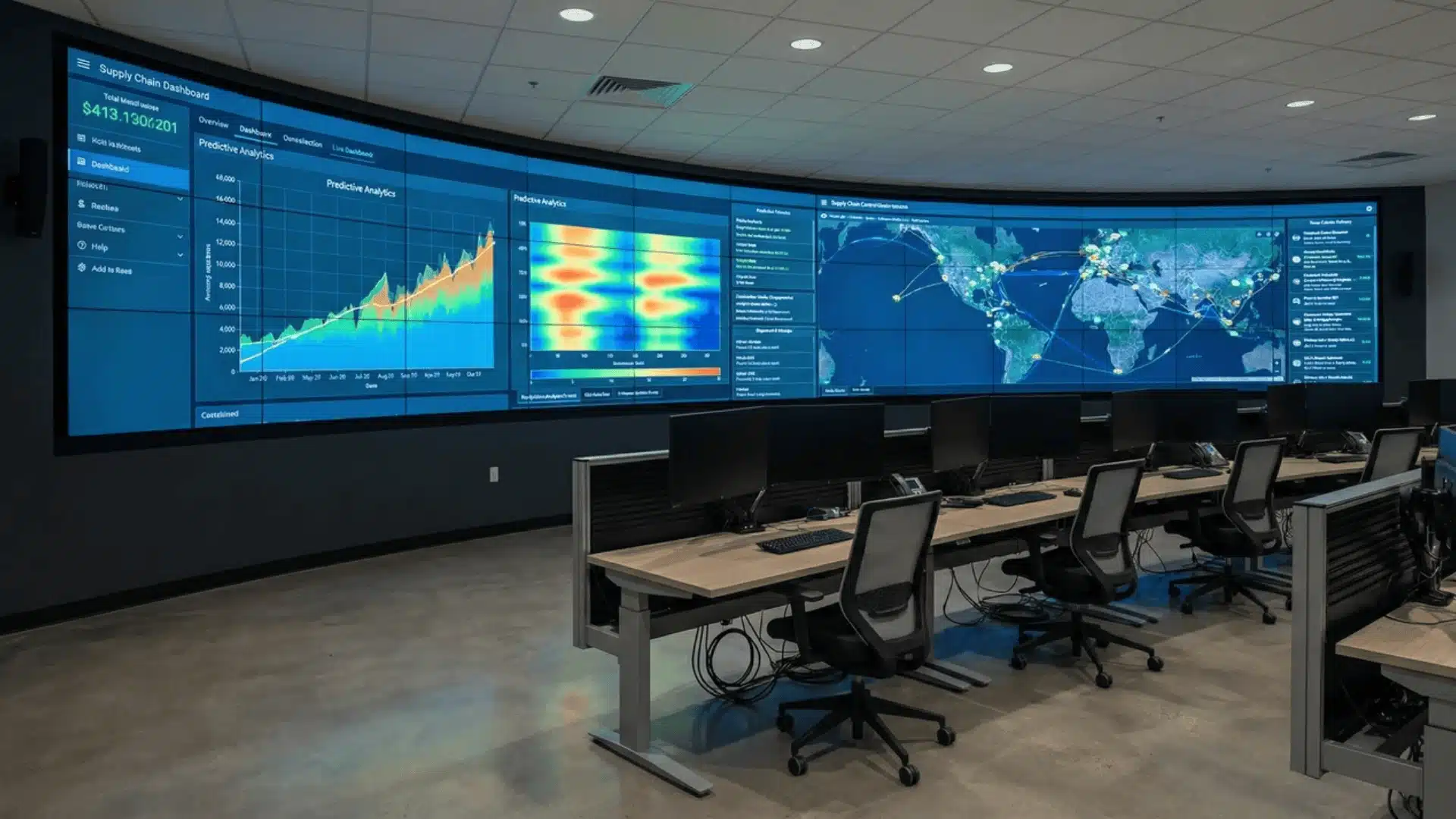
Modern supply chains are moving from reactive models to predictive and semi-autonomous systems. Companies now aim to anticipate disruptions rather than simply respond to them.
Agentic AI is one of the most significant shifts underway right now. These systems can trigger purchase orders, flag supplier risks, and adjust inventory plans without waiting for human approval. Companies are also using generative AI to help procurement teams query supply chain data conversationally and draft supplier communications faster.
Real-time visibility platforms are replacing delayed reporting structures. Live tracking improves coordination across inventory, transport, and supplier networks.
End-to-end integration connects internal systems with external partners. This reduces silos and creates a unified operational view.
Sustainability requirements are reshaping traceability expectations too. Regulatory pressure around ESG and Scope 3 emissions is pushing organizations to track carbon, sourcing origins, and supplier compliance across the entire chain, not just internally.
Continuous data flows combined with automation reduce the need for manual intervention. As intelligence improves, systems handle more routine decisions automatically.
Overall, the evolution of modern supply chains reflects a steady shift toward smarter, faster, and more integrated systems that prioritize anticipation over reaction.
Conclusion
Supply chain technology has reshaped how businesses plan, move, and respond at every step of their operation.
When the data is clean, the systems are connected, and people stay in the loop, the results are real: fewer delays, better decisions, and stronger performance overall. But the challenges don’t disappear on their own. Integration gaps, data quality issues, and adoption friction all require ongoing attention.
Understanding how these tools work together is the clearest starting point. If you’re ready to go further, explore how AI, IoT, or automation could fit your specific operation.
Frequently Asked Questions
Is supply chain technology only for large enterprises?
No. Small and mid-sized businesses also use supply chain technology through scalable cloud platforms that reduce upfront costs and support gradual digital adoption.
Does supply chain technology replace human jobs?
It typically automates repetitive tasks while shifting human roles toward analysis, oversight, and strategic decision-making rather than eliminating the workforce entirely.
Can supply chain technology work without cloud infrastructure?
Yes, but cloud platforms improve scalability, remote access, and collaboration, making them more practical for modern, globally connected supply chains.