

Most software projects don’t fail because of bad code. They fail because nobody agreed on what they were building before the building started.
That disconnect has a cost. Budgets stretch. Deadlines slip. Features ship that don’t match what users actually need. And the team that built it often can’t pinpoint where it went wrong, because the problem started long before the first line of code.
The software development process exists to close that gap. Not as a formality. Not as corporate overhead. As a practical structure that catches errors early, keeps phases connected, and makes sure the final product matches the original intent.
What is the Software bixiros.5a8 Development Process and Why Does It Exist?
The software development process is a structured sequence of phases that takes a product from idea to working software. It exists because software built without that structure fails: not occasionally, but in well-documented, entirely predictable ways. That’s the part most explanations skip.
The process isn’t there because organizations love procedure. It’s there because every phase produces something the next one depends on for the feed design.
Design feeds development. Development feeds testing. When you skip a phase, you don’t skip the work; you push it into a later stage, where fixing it costs far more.
Think about what “structured roadmap” actually means in practice. It means making hidden dependencies visible before they become problems. Before the first line of code is written, a design gets locked, or a budget gets committed.
Without that visibility, teams discover those dependencies at the worst possible moment: in production, under pressure, when the cost of getting it wrong is at its highest. That’s what the process is protecting against.
What Are the Core Phases of The Software Development Life Cycle?
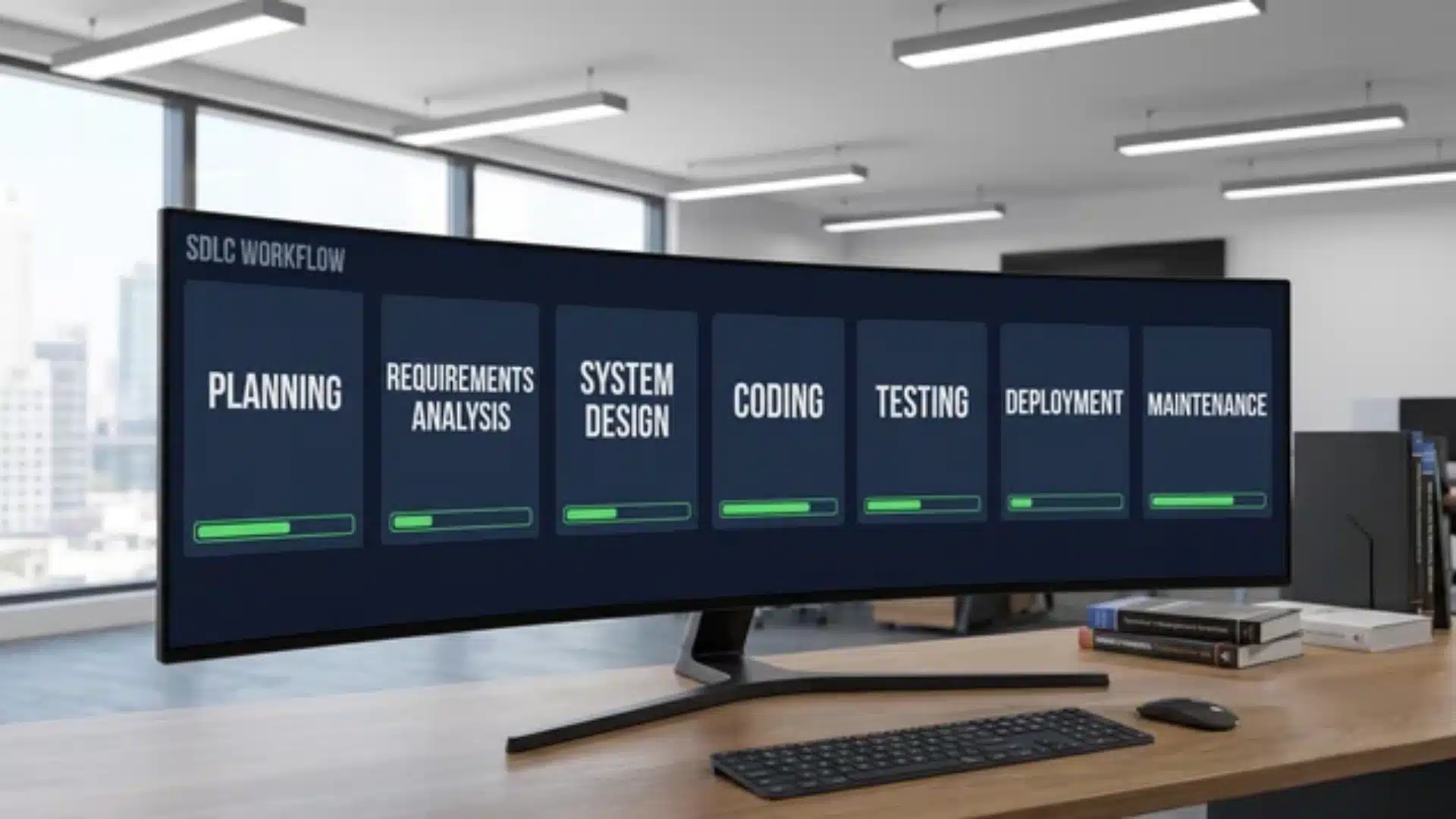
The SDLC breaks software development into five phases. Each one produces a specific output, and that output is what the next phase builds on.
1. Planning and Requirements Analysis
This is where scope gets defined. The team establishes what the software needs to do, who it’s for, and what success looks like.
The output is a requirements document that everything downstream depends on. Get this wrong, and every phase that follows inherits the error.
2. System Design
Requirements get translated into architecture. Database structures, system components, and UX wireframes are decided here.
This phase turns “what the software must do” into “how it will be built.” Design decisions are expensive to reverse once development starts.
3. Coding and Development
Developers translate the design into working source code. This phase moves fastest when the two before it were done well. When they weren’t at that speed, it disappeared because the team was resolving upstream ambiguity in real time.
4. Testing and Quality Assurance
Features are tested iteratively, not once at the end. Bugs, security vulnerabilities, and performance issues get caught here. The iterative part matters. A single test pass before launch is not QA. It’s a formality.
5. Deployment and Maintenance
The software goes live. But this phase doesn’t end at launch. Monitoring, updates, and patches continue indefinitely. Maintenance isn’t a post-project task: it’s an ongoing phase that runs in parallel with everything else once the product is in users’ hands.
Why Does the Sequence of Phases Matter?
The phases aren’t in order because someone preferred it that way. Each phase produces something the next one literally needs to function.
When requirements are wrong, design inherits the error. Development codes it in. Testing finds it late, which means reopening everything built on top of it.
That’s not a code problem. It’s a planning problem discovered at the worst possible moment, at the highest possible cost.
Agile compresses the phases into shorter cycles. The dependencies don’t disappear; they operate at the print scale. Skip planning, compress testing, and the cost still arrives.
What Happens When the Development Process is Skipped or Compressed?
The consequences are predictable. They trace back to specific phases: not to the project as a whole.
Skip testing, and untested assumptions ship with the code. Security vulnerabilities don’t appear from nowhere. They come from logic that was never checked under real conditions.
Budget overruns almost always start in planning. Scope that isn’t defined before design begins gets defined during development: at a much higher cost per change.
Poor user experience comes from skipping design, specifically, the wireframing step. The software solves the technical problem. It just doesn’t fit how users actually work.
The pattern is consistent. Skipping a phase doesn’t remove its work. It moves that work to a later stage where the team is under more pressure, the product is more built out, and every fix pulls more threads.
How Do Different Development Frameworks Use This Process?
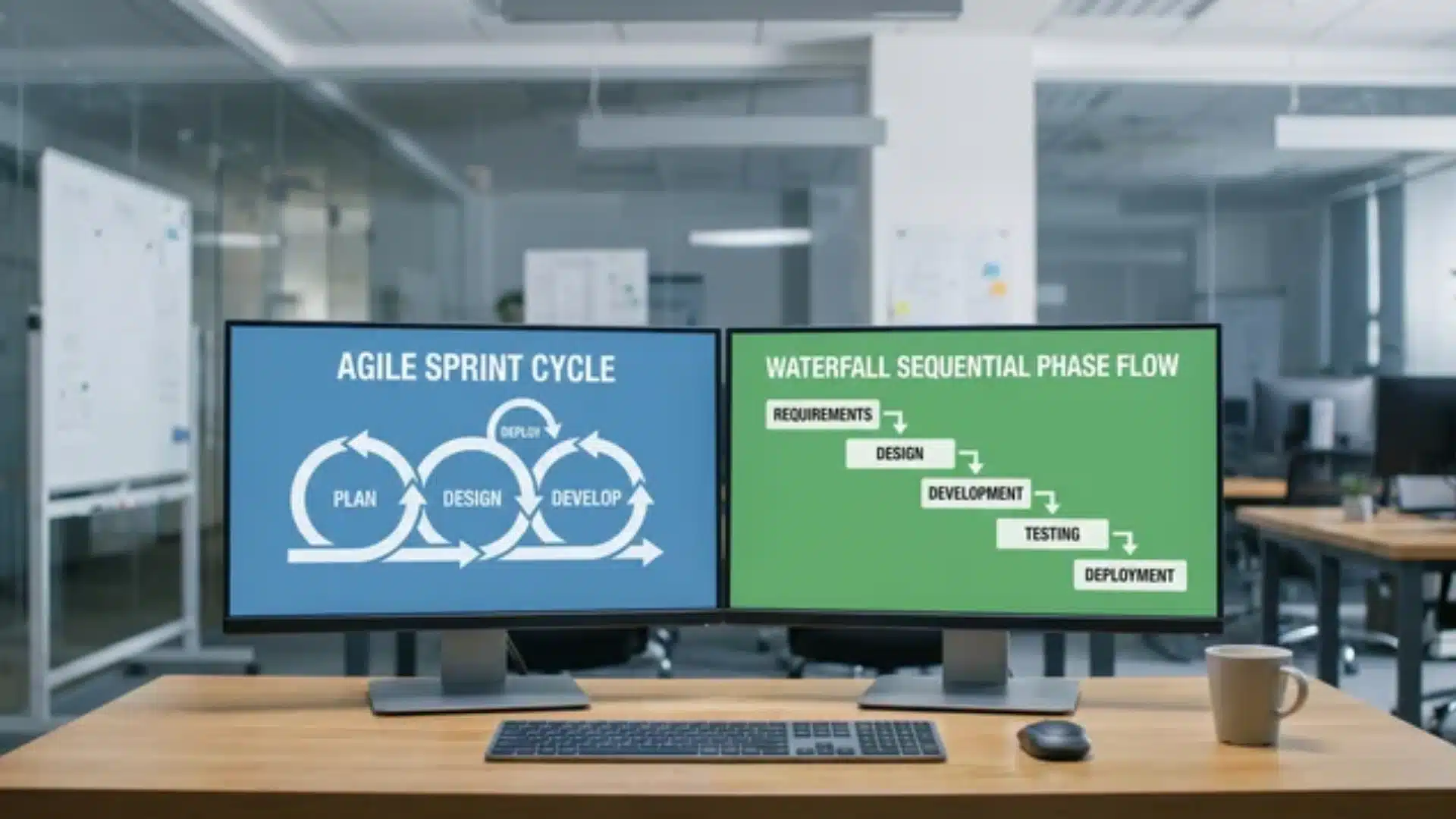
Agile and Waterfall are often presented as opposites. They aren’t. Both use the same underlying phase structure: they execute it differently.
A waterfall runs the phases in strict sequence. One phase completes, gets approved, and then the next begins. It works well when requirements are stable and unlikely to change mid-project.
Agile compresses the phases into short cycles called sprints. Requirements, design, development, and testing all happen within each cycle: at a smaller scope. This lets teams absorb change without derailing the entire project.
Neither model is universally better. The right choice depends on how well-defined the requirements are at the start and how likely they are to shift.
Where both models fail the same way is when teams drop phase discipline under pressure. Agile without real planning and testing isn’t iterative development. It’s just fast, unstructured building: with the same failure modes, arriving sooner.
Conclusion
The software development process exists for one reason: to stop predictable failures before they happen. You’ve seen how each phase feeds the next, what breaks when phases get skipped, and how Agile and Waterfall both rely on the same underlying structure.
If you came here wondering why the process matters, that’s the answer. Structure isn’t overhead. It’s what keeps small errors from becoming expensive ones.
If you’re building something or evaluating how your team works, start with the phases. Understand what each one produces. That’s where the clarity comes from.
Frequently Asked Questions
What are the 5 steps of software development?
The five steps are Planning and Requirements Analysis, System Design, Coding and Development, Testing and Quality Assurance, and Deployment and Maintenance. Each step produces an output that the next one depends on. Some frameworks compress these into shorter cycles, but the underlying structure stays the same.
Why is the software development process important?
It makes hidden dependencies visible before they become expensive problems. Without it, errors in requirements get built into the design, coded in, and discovered in production, where fixing them costs the most. The process doesn’t add work. It moves the hard work to where it’s cheapest to do.
What is the difference between Agile and Waterfall development?
A waterfall runs phases in strict sequence, with approvals between each phase. Agile compresses the same phases into short iterative cycles. The phase structure is the same. What differs is timing, scope per cycle, and how late-stage changes are handled.
What happens if you skip the testing phase in software development?
Untested assumptions ship with the code. Bugs reach users. Security vulnerabilities go undetected until they’re exploited. Fixing issues after deployment costs significantly more than catching them during development, because every fix requires reopening work that’s already been built and shipped.