


When you search for new technology trends roartechmental, it’s easy to assume you’ll get a normal list of tech trends. But that’s not really what this query is about.
It’s tied to a specific blog.
Most results either repeat that blog or simplify it without much explanation. You see terms like agentic AI, RAG, and zero trust, but it’s not clear how they actually work or why they matter now.
So instead of just repeating the list, I’ll walk you through what the Roar Tech Mental trends are, what they mean in real life, and where the gaps usually are.
Let’s start with the trends themselves.
Key Technology Trends from Roar Tech Mental
- Agentic AI and Intelligent Workflows: AI systems that move beyond assisting and begin handling multi-step tasks from start to finish, adapting as they go.
- Multimodal AI and Enterprise RAG: AI that processes text, images, and voice together, combined with retrieval systems that ground responses in real company data.
- AI-Powered Robotics and Physical AI: Intelligent systems embedded in machines and physical environments, allowing adaptive decision-making instead of fixed instructions.
- Cybersecurity and Digital Trust: AI-driven threat scaling on one side and identity-first, zero-trust security models on the other.
- Cloud and Infrastructure Modernization: Internal platforms and hybrid cloud systems designed to support large-scale AI deployment reliably.
- Sustainable and Advanced Technologies: Energy-efficient data centers and early preparation for quantum computing as long-term infrastructure shifts.
What “New Technology Trends Roartechmental” Actually Refers To
Roar Tech Mental is a blog, not a type of technology or industry term.
When people search this phrase, they are usually looking for a specific article published on that site or trying to understand the trend list it shared. That makes this query different from a general “technology trends” search. Here, the source is part of the intent.
The blog appears in search results because it organizes major 2026 trends in a clean, business-focused format. It highlights key themes clearly, but it keeps most explanations at a high level.
So the goal here isn’t to repeat the list. It’s to understand what the blog is pointing to and what those trends actually mean in practice.
What These Trends Mean in Real-World Terms

These trends sound impressive on paper, but their real value shows up only when they operate inside messy, real-world systems.
From Concept to Real-World Application
A trend only matters when it works inside real systems.
Demos are controlled. Real environments are not. They include messy data, shifting inputs, and unexpected edge cases.
That’s where the difference shows up. Systems either adapt or they break.
Where These Trends Are Already Being Used
Some areas are already stable enough to run in production:
- AI handling structured customer workflows
- RAG systems powering internal knowledge tools
- AI models assisting with security monitoring
These succeed because the inputs are relatively controlled and outcomes are measurable.
Where They Are Still Limited or Early
Other areas are less predictable:
- Fully autonomous agents across complex, open-ended workflows
- Robotics operating in highly unpredictable environments
- Quantum computing in everyday business operations
These depend on factors that are still evolving, such as data quality, compute limits, and reliability under changing conditions.
That’s why not all trends move at the same speed.
How Agentic AI Works (The Core Gap in The Roar Tech Mental List)
This is the part most trend lists mention but rarely explain. “Agentic AI” sounds advanced, but the real difference shows up in how the system behaves step by step.
1. What Makes AI “Agentic”
An agentic system does more than respond to a prompt. It operates with a goal in mind.
Instead of waiting for a human to guide every step, it decides what action should come next. That shift changes its role. A normal AI reacts while an agentic AI progresses.
The key difference is initiative. The system is not just answering; it is moving toward completion.
But that initiative only works when the goal is clear, and the environment is structured enough to support it.
2. The Internal Workflow: Context, Planning, Execution, Feedback
Under the surface, agentic systems follow a loop.
First, they gather context. This includes the user’s request, available documents, the system state, and, sometimes, past interactions. The quality of this context directly affects performance.
Next, the system creates a plan. Not a single answer, but a chain of steps. For example, retrieve data, verify it, transform it, and then deliver output.
Then comes execution. The system performs each step. It may call tools, query databases, or trigger processes.
Finally, itevaluates results. If something fails or produces weak output, it adjusts and tries again.
This feedback loop is what allows multi-step workflows. Without it, the system is just a responder.
Performance varies based on:
- Clarity of the goal
- Stability of the environment
- Quality of available data
In structured systems, the loop works smoothly. In messy environments, the loop can degrade.
3. Agents vs. Copilots vs. Automation
These three are often confused, but they behave very differently.
| Type | How It Works | Main Limitation |
|---|---|---|
| Copilot | Assists step-by-step under human direction | Needs constant human input |
| Automation | Follows predefined rules | Cannot adapt beyond rules |
| Agent | Plans and executes dynamic task sequences | Can become unstable in open systems |
A copilot helps you decide. Automation follows instructions. An agent tries to decide and act.
The contrast becomes clear in complex workflows. If a process has branching paths or unexpected inputs, automation breaks. A copilot pauses and waits. An agent attempts to continue.
That’s where the value appears, but it’s also where risk increases.
4. Where Agentic Systems Fail or Need Oversight
Agentic systems are not consistent across all conditions.
They struggle when:
- Goals are vague or conflicting
- Data is incomplete or outdated
- External systems behave unpredictably
Even the same workflow can produce different outcomes on different days. A small change in input data can shift the plan entirely.
This non-constancy is important. Agentic AI is adaptive, but adaptation is not the same as reliability.
That is why human oversight remains necessary. Not because the system cannot act, but because real environments shift faster than plans can stabilize.
Agentic AI expands capability; it does not remove uncertainty.
Why AI Appears Across Most of These Trends
AI shows up across these trends not by coincidence, but because it now acts as the decision layer inside many modern systems.
AI as A System-Level Layer
AI is no longer just a feature inside a product.
It acts as a decision layer across systems. It connects raw data to actions. When that layer is added, systems stop reacting mechanically and start adjusting based on patterns.
That is why AI shows up in multiple categories. It is not separate from infrastructure, security, or robotics. It reshapes how each of those systems behaves.
How AI Connects Infrastructure, Security, and Robotics
AI depends on infrastructure because it requires compute power, storage, and fast data access. Without that base, it cannot operate reliably.
It reshapes security because it changes threat behavior. Attacks become automated and adaptive. Defense systems must also become adaptive.
It enables robotics by allowing machines to interpret changing environments instead of following fixed paths.
These domains are connected through the same decision layer. Remove AI, and they revert to static systems.
Where AI Adds Value vs. Where It Struggles
AI performs best when conditions are stable and measurable. Repeated tasks, structured inputs, and clear outcomes allow it to improve over time.
It struggles when context is fluid. If rules shift constantly or judgment depends on nuance that data cannot capture, performance becomes inconsistent.
This contrast explains why AI expands quickly in some areas while remaining limited in others. The difference is not hype. It is environmental stability.
Where the Roar Tech Mental Trends Lack Clarity
Not every trend in the list is equally clear, and some terms need closer examination to understand what they truly represent.
Trends that Are Too Broad or Vague
Some trend categories bundle very different technologies under one label.
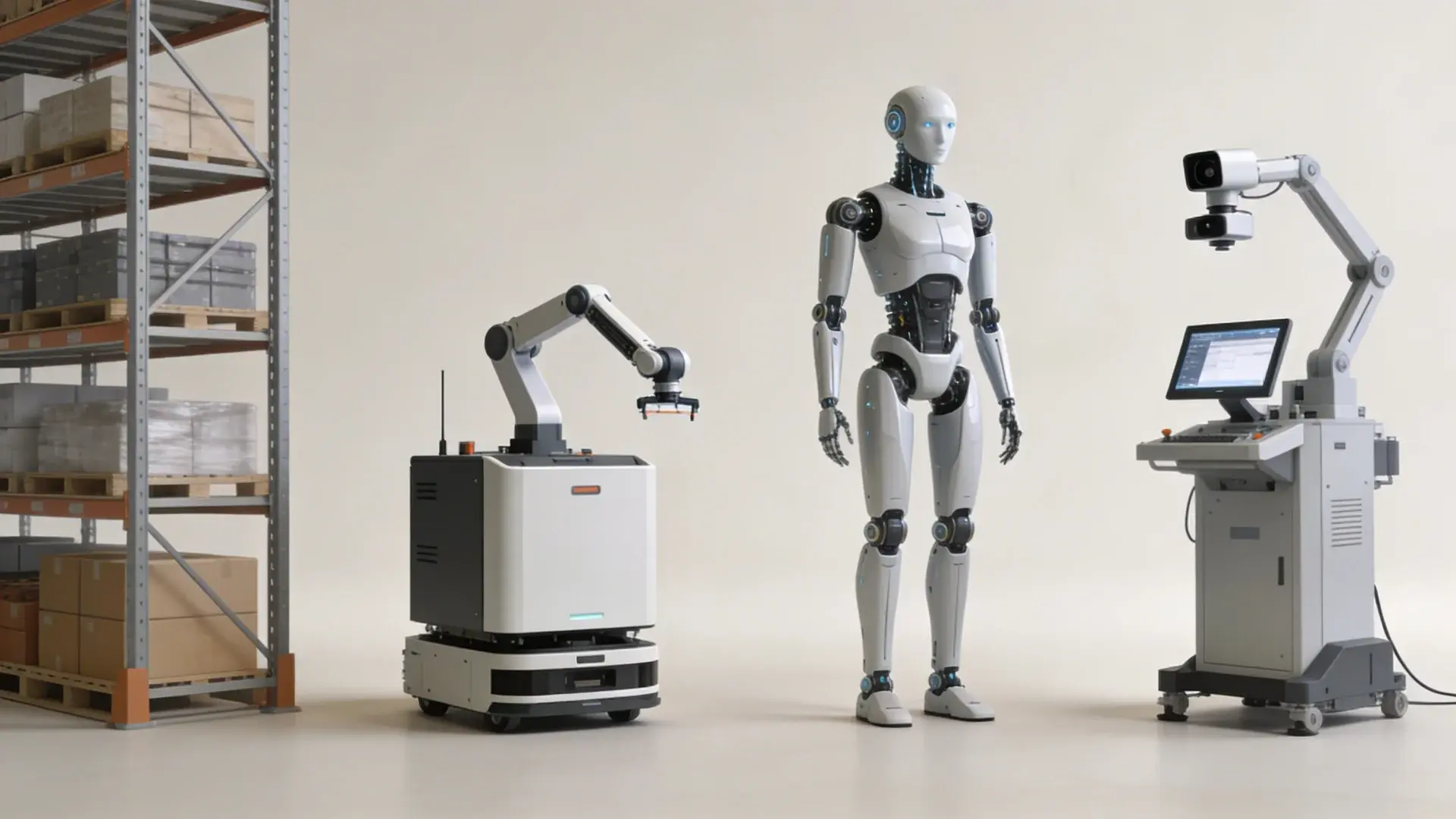
For example, “AI-powered robotics” can refer to warehouse automation, humanoid robots, or industrial inspection systems. These systems operate in completely different environments and face different constraints.
When categories are too broad, it becomes unclear what is actually changing. Is it better sensors? Smarter planning models? Or just expanded marketing language? Without that distinction, the trend feels larger than it may be in practice.
Missing Mechanisms Behind Key Concepts
Terms like agentic AI and enterprise RAG are introduced without explaining how they function internally.
You see the outcome, smarter workflows, more accurate answers, but not the process that produces those results.
This matters because the mechanism determines reliability. A system grounded in verified data behaves differently from one generating free-form responses. Without that explanation, it’s difficult to judge maturity or risk.
Where Readers May Misinterpret These Trends
A common mistake is assuming all listed trends are at the same stage of adoption.
In reality, they fall into different maturity levels:
- Some are already running in production systems
- Some are being tested in limited environments
- Some represent long-term shifts still under development
When those stages are not clearly separated, it becomes easy to overestimate how widespread or stable a technology really is.
The Bigger Pattern Behind These Technology Trends
Taken together, these trends point to a broader shift in how technology is being developed and deployed.
From Experimentation to Operational Systems
The most important change is the move from experimentation to operational use.
In earlier cycles, companies focused on testing what was possible. Now the focus is on what can run reliably inside real systems. That shift changes the priority from novelty to stability.
Ideas are no longer enough. Systems must hold up under pressure.
Why Trust, Scale, and Efficiency Connect These Trends
Across categories, the same pressures appear again and again.
Systems must scale without breaking. Outputs must be trustworthy enough to rely on. Processes must remain efficient as complexity increases.
These shared demands explain why AI, infrastructure, security, and sustainability are all being discussed together. They are responding to the same operational constraints.
What This Says About the Direction of Technology
Technology is becoming more practical and more grounded.
The conversation is moving away from what is theoretically possible and toward what consistently works in production environments.
That is the pattern behind most of these trends. And once you see that pattern, the list stops feeling random.
Wrapping Up
If you look closely, new technology trends roartechmental are not just a list of ideas. They reflect a shift in how technology is being used.
The focus is moving toward systems that actually run in real conditions, not just concepts that look good in theory. That’s why you see repeated themes like reliability, scale, and trust.
Once you understand that pattern, the trends stop feeling random. They start to connect in a way that makes sense.
If you want to go deeper, the next step is simple. Take one trend and follow how it works in a real system. That’s where the real clarity shows up.
Frequently Asked Questions
What are the main trends mentioned by Roar Tech Mental?
The blog highlights AI-driven workflows, multimodal AI, enterprise RAG, cybersecurity, infrastructure modernization, and sustainability with quantum readiness.
Is Agentic AI already widely used?
It is used in limited environments where workflows are controlled, but it is not yet stable enough for all use cases.
What is Enterprise RAG in simple terms?
It is a method where AI retrieves real data before answering, which helps improve accuracy compared to standard responses.
Why is AI present in most of these trends?
Because AI acts as a layer that affects decisions, workflows, and systems across multiple areas, not just one category.