

Choosing a camera can feel like picking sides in a long-running debate. One has a mirror and an optical viewfinder, while the other skips the mirror and uses an electronic viewfinder.
But the mirrorless vs. DSLR choice goes far beyond what’s inside each camera. Battery life, autofocus, size, video, lenses, and even your future upgrade plans can all matter.
I’d look at how you actually shoot before spending money on either system. A DSLR can still be a great buy, while a mirrorless camera may suit someone who wants newer features and a growing lens lineup.
Mirrorless vs DSLR: What’s Actually Different
Mirrorless and DSLR cameras look similar from the outside, but what happens between the lens and the sensor sets them apart completely. That single design choice affects everything from viewfinder type to battery life.
A DSLR uses a mirror to bounce light from the lens up into an optical viewfinder. Press the shutter, and the mirror flips out of the way so light can reach the sensor.
A mirrorless camera skips the mirror completely. Light travels straight from the lens to the sensor, and an electronic viewfinder or rear screen shows a live digital preview instead.
| Feature | DSLR | Mirrorless |
|---|---|---|
| How light reaches viewfinder/sensor | Mirror bounces light to an optical viewfinder | Light goes straight to the sensor |
| Viewfinder type | Optical (OVF) | Electronic (EVF) or rear screen |
| Mirror mechanism | Moving mirror flips up on shutter press | None |
| Autofocus | Phase-detection module below the mirror | On-sensor, near full-frame coverage |
| Battery use | Lower, since the OVF needs no power | Higher, since the EVF/screen stays active |
| Typical size | Larger, mirror box adds bulk | Smaller, lighter body |
| Video capabilities | Limited, live-view only | Strong, built for hybrid shooting |
Each row on that table points to a real trade-off, not just a spec sheet difference. The next section breaks down what these differences actually feel like behind the camera.
Mirrorless Camera vs DSLR: Key Differences
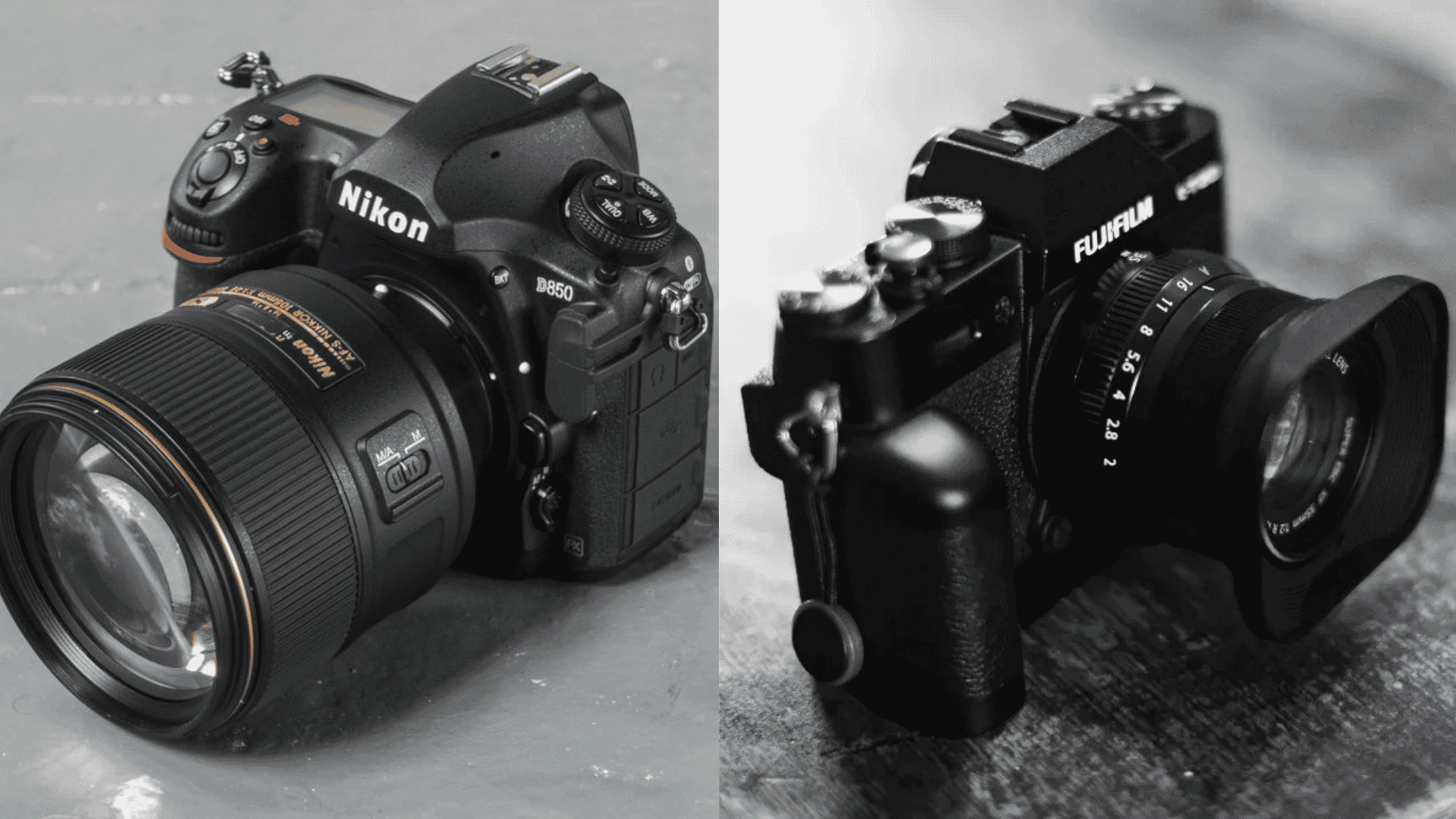
The choice becomes easier when you compare the features you will actually use. Viewfinders, autofocus, battery life, body size, and video can all change how a mirrorless camera or DSLR feels in everyday use.
1. Viewfinder and Shooting Experience
Looking through a DSLR’s optical viewfinder means seeing real light straight through the lens, with no lag at all. A mirrorless camera skips that path and shows a live feed from the sensor on a screen instead.
That live feed brings a real perk: it can preview exposure and white balance before you press the shutter. Some photographers still prefer the natural, real-time view an optical viewfinder gives, and that preference is fair.
2. Autofocus and Shooting Speed
Modern mirrorless cameras use on-sensor autofocus that covers almost the whole frame and tracks eyes, faces, animals, and vehicles.
DSLRs rely on phase-detection sensors built below the mirror, which cover a smaller area and slow down during Live View. Continuous burst shooting also feels different.
A DSLR’s mirror flips with every frame, causing brief viewfinder blackout. Mirrorless cameras have largely overtaken DSLRs for sports and wildlife tracking today, according to Engadget.
3. Battery Life
DSLRs generally last longer per charge because an optical viewfinder uses no power at all. A mirrorless camera keeps its sensor and electronic viewfinder running non-stop, which drains the battery faster.
Entry-level DSLRs manage 600 to 1,000 shots per CIPA rating, while typical mirrorless bodies land closer to 300 to 450.
That gap has narrowed a lot as batteries, processors, and matching charging cable types have improved, though it has not fully closed yet.
4. Size and Weight
Removing the mirror box lets manufacturers build smaller, lighter camera bodies, which is one of the biggest selling points of mirrorless.
A mirrorless body like the Canon EOS R50 weighs about 16 ounces. A similar DSLR with its kit lens is closer to 1.5 pounds.
That size gap depends on the model and lens combination, though. Large telephoto lenses can erase most of the compact-body advantage, since the lens often weighs more than the camera body.
5. Video
Video is where mirrorless cameras have made the biggest gains recently. Continuous autofocus tracks moving subjects through a clip, while face and eye detection keeps focus locked during interviews.
The electronic viewfinder and rear screen give a live preview, so exposure and color look accurate before recording. Built-in stabilization and strong 4K recording help mirrorless lead for hybrid shooters, though sensor crop varies by camera and mode.
Mirrorless vs DSLR: Image Quality
Image quality is no longer a major difference between mirrorless and DSLR cameras. Both systems can produce sharp, clean, professional-looking photos when paired with a good lens.
What actually matters is sensor size and generation, not whether the camera has a mirror. A full-frame sensor from either camp will outperform a smaller sensor from the other every time. Lens quality plays just as big a role.
A sharp lens on an older DSLR often beats a cheap lens on a new mirrorless body. So mirrorless doesn’t automatically mean better photos.
Its real advantage shows up elsewhere: faster autofocus, quicker shooting speed, stronger video, and a more modern shooting experience. Photos are close to equal. Everything around them is not.
Mirrorless vs DSLR: Lenses, Compatibility, and Cost
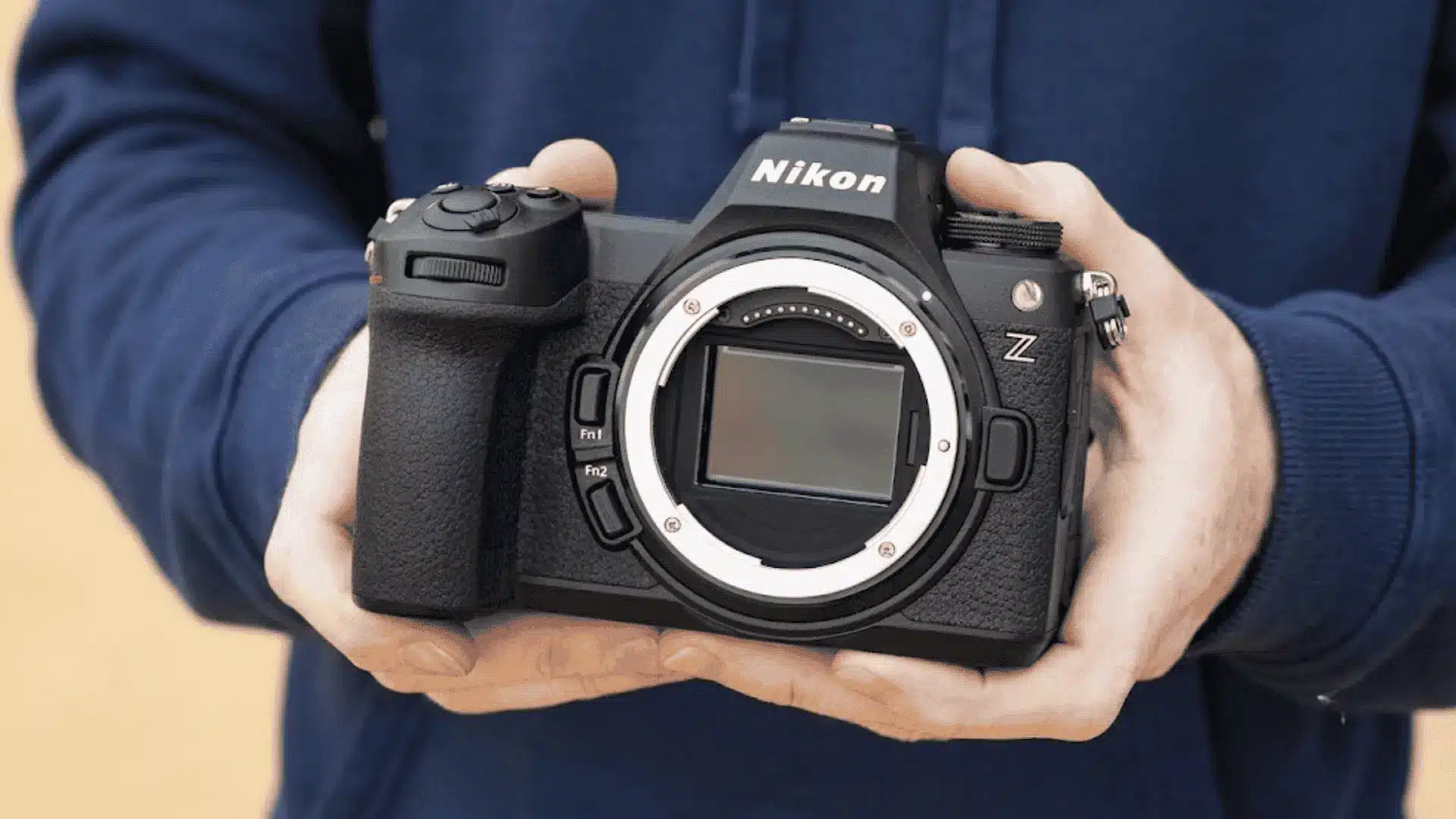
A camera body is only half the system. Lenses, adapters, and long-term cost decide whether a switch actually makes sense.
1. Lens Selection and Future Development
DSLR shooters already have decades of lenses to pick from, covering nearly every budget and focal length. Mirrorless lens lineups started smaller but have grown fast, especially in Nikon’s Z-mount and Canon’s RF-mount lines.
Canon, Nikon, Sony, and other brands are now focusing new development almost entirely on mirrorless, leaving DSLR lens releases rare. For a new buyer, that matters: choosing a system with active lens development means more choices for years, not fewer.
2. Can You Use DSLR Lenses on Mirrorless Cameras?
Yes, in most cases, you can use an adapter built for your brand pairing. Same-brand adapters, like Canon’s EF-to-RF or Nikon’s FTZ, usually keep autofocus and image stabilization working well.
Third-party adapters can work too, though autofocus speed sometimes takes a small hit compared with a same-brand pairing. Existing DSLR owners don’t need to replace every lens right away.
An adapter lets older glass keep earning its keep on a new mirrorless body.
3. Price and Used Gear
Used DSLR bodies can offer real value, often costing a fraction of a new mirrorless kit. Older DSLR lenses are affordable, since decades of used glass sit on shelves and marketplaces.
Mirrorless isn’t automatically the pricier option; entry-level bodies have gotten cheaper as competition grows. The smarter way to compare cost is total system price.
Add up the body, the lenses, and any adapters needed, not just the sticker price of the body alone.
Which One Should You Choose?
Every difference above eventually leads to one practical question. Here’s a quick reference to match the camera to how you actually shoot.
| Choose Mirrorless If You… | Choose DSLR If You… |
|---|---|
| Want the latest autofocus and tracking | Prefer an optical viewfinder |
| Shoot video regularly | Want longer battery life |
| Shoot sports or wildlife | Already own a large DSLR kit |
| Want newer camera and lens development | Want inexpensive used gear |
| Want a smaller body | Prefer traditional DSLR handling |
New buyers building a system from scratch usually get the most long-term value from mirrorless. That’s where lens development and camera tech keep moving. Existing DSLR owners face a different calculation.
A large lens collection, a comfortable shooting style, and years of familiarity are real reasons to stay put.
Final Thoughts
The mirrorless vs. DSLR debate does not have one answer for everyone. Mirrorless cameras generally make more sense for new buyers who want strong autofocus, modern video features, smaller bodies, and access to newer lens systems.
DSLRs still have plenty to offer, especially with long battery life, optical viewfinders, and lower prices on used gear.
I’d choose based on the way you shoot rather than simply picking the newer option. If you already own DSLR lenses, switching may not be necessary right away.
Which camera system would you choose, and what matters most to you? Share your pick in the comments below.
Frequently Asked Questions
Is DSLR Dead In 2026?
No, DSLR is not dead, but new DSLR development has mostly stopped. Canon, Nikon, and Sony now focus almost entirely on mirrorless, though existing DSLR bodies still take great photos.
Do Professional Photographers Still Use DSLR Cameras?
Some professionals still use DSLR cameras, especially as backups or for extreme conditions. Many, though, have switched to mirrorless for faster autofocus, better video, and lighter gear on long shoots.
Is Mirrorless Better for Beginners Than DSLR?
Mirrorless usually suits beginners well, since live exposure preview and simple autofocus make learning easier. A DSLR still works fine for beginners on a tighter budget who don’t mind a learning curve.
Should Current DSLR Owners Switch to Mirrorless Right Away?
Not necessarily. A working DSLR with good lenses can keep performing well for years. Switching makes more sense once you need faster autofocus, better video, or newer lens options that DSLRs no longer get.