

Most people think they can tell the difference between a real person and an AI in just a few messages. The Human or Not game puts that confidence to the test, and for most players, it doesn’t hold up for long.
This post breaks down everything you need to know about this addictive social experiment. You’ll learn how it works, what makes it so hard to get right, and why it keeps pulling people back for one more round.
If you’ve ever been curious about where human conversation ends and artificial intelligence begins, this game offers a surprisingly honest answer.
What is the Human or Not Game?
The Human or Not game is a social Turing test, and it’s exactly as fascinating as it sounds. You get paired with someone anonymously and have a short conversation.
After that, you make one guess: was that a human or an AI? The concept is simple, but the experience is anything but.
It’s built around real-time interaction with no names, no faces, and no backstory. All you have is the chat.
The game draws from the original Turing Test, a classic idea in computer science.
The test asks whether a machine can hold a conversation that’s indistinguishable from a human. This game brings that concept to everyday players, no lab required.
How the Human or Not Game Works
The gameplay loop is quick and straightforward. Here’s what happens from start to finish:
Matchmaking: You’re paired with either a real person or an AI chatbot. You won’t know which one it is, that’s the whole point.
The Chat: You have a short window, usually around two minutes, to have a free-flowing conversation. There’s no script, no set topic, and no hints. Just an open text chat.
The Guess: Once time’s up, you pick your answer: human or AI. The game then reveals the truth.
The Reveal: You find out immediately whether your guess was right or wrong. Then you can go again.
A few things make this harder than it looks:
- Pairings are randomized, so every round feels different
- There are no visual cues, no profile pictures, no video, no voice
- You’re forced to rely entirely on how the other party types and responds
The short time limit is a big challenge. Two minutes isn’t much when you’re trying to pick up on subtle conversational cues. Many players find themselves second-guessing right up until the last second.
What Makes It a Social Turing Test
The original “Turing Test” was proposed by mathematician Alan Turing in 1950.
The idea was simple: if a machine could hold a conversation that a human couldn’t distinguish from another human, it could be considered intelligent.
The Human or Not game takes that same idea and turns it into something casual and fun. Instead of researchers running controlled experiments, everyday players become the judges.
There’s an interesting role reversal here.
In the original test, the goal was to evaluate the machine. In this game, it’s just as much about evaluating yourself, how well can you actually tell the difference?
A couple of things are worth clearing up:
- Passing the game doesn’t prove AI is truly intelligent. It just means it mimicked human conversation well enough in that moment.
- Getting fooled doesn’t mean you’re bad at this. Modern AI is genuinely good at sounding human. Missing it is completely normal.
How Conversations Differ Between Humans and AI in the Game
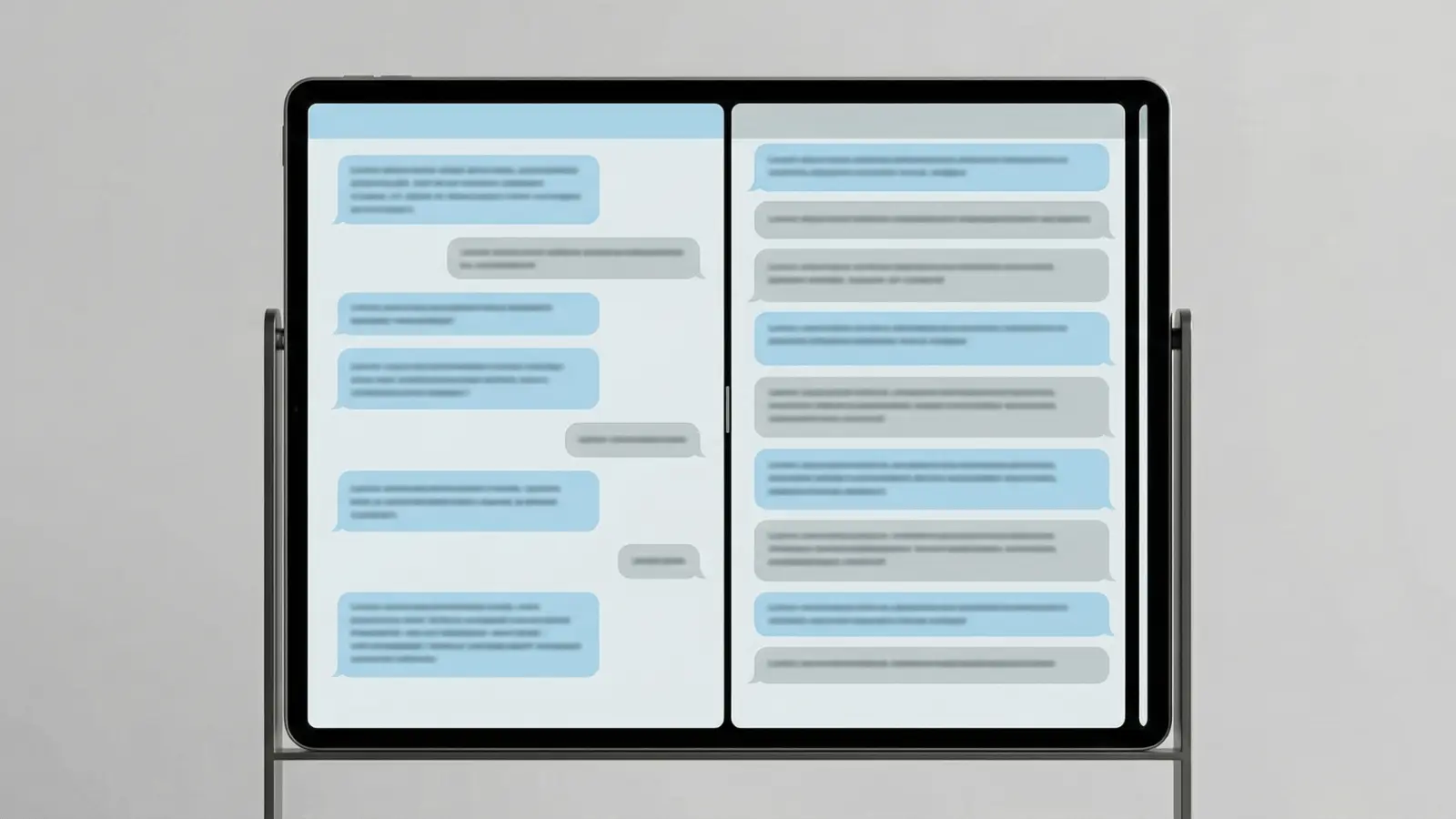
This is where things get interesting. There are real differences between how humans and AI chat, but they’re getting harder to spot.
Typical Human Conversation Patterns
Humans tend to be a little messy in the best way. You might notice:
- Slang, abbreviations, or casual language.
- Typos or autocorrect errors.
- Personal references like “my dog did this yesterday.
- Emotional reactions, humor, surprise, and frustration.
- Responses that drift off-topic or circle back randomly.
That unpredictability is very human. Real people don’t always stay on point, and their replies don’t always feel “polished.”
Typical AI Conversation Patterns
AI responses, especially from older or less advanced models, can feel a little too clean. Common signs include:
- Grammatically perfect sentences
- Staying neatly on topic
- Avoiding personal details or giving vague answers
- Overly helpful or neutral phrasing
- Responses that feel a bit too structured
The issue is that newer AI models have gotten very good at breaking these patterns. They can throw in casual phrasing, fake uncertainty, and even mimic humor.
Why These Differences are Blurring
Modern AI is trained on huge datasets filled with real human conversations.
It learns patterns like tone, slang, sentence flow, and even hesitation. Over time, it starts copying not just what people say, but how they say it.
At the same time, many people type quickly or keep replies short. Some avoid sharing personal details. That can make real humans sound more neutral or structured than expected.
This overlap is where things get confusing. AI is getting more natural, while some human behavior looks less expressive in short chats. In a two-minute conversation, those lines can easily blur.
Why is it so Hard to Tell a Human Apart from AI?
Even experienced players get it wrong often. The main reason is the lack of enough information.
You only see a few messages in a short time. That is not enough to understand how someone truly communicates. Normally, you would notice patterns over longer conversations, but here you are forced to decide quickly.
There is also something called confirmation bias. If the first reply feels robotic, your brain starts looking for more signs to support that idea. You may ignore messages that actually feel human.
Another key reason is how AI is trained. It does not invent language from scratch. It learns from real human conversations. That means it can copy tone, phrasing, and even casual mistakes when needed.
Your brain tries to fill the gaps and make a confident guess. But since the data is limited, those guesses are often based on assumptions instead of clear evidence.
Where You Can Play Human or Not
Getting started is simple. The most direct way is to play through the official Human or Not website, where you can jump into a chat instantly.
You may also find similar versions on other platforms. Some websites and apps use the same idea, where you chat briefly and guess whether the other side is human or AI.
You do not need to install anything in most cases. A browser and an internet connection are enough to start playing right away.
What Makes Human or Not so Engaging

A lot of games ask you to build something, win something, or beat something. This one just asks you to figure something out, and that’s a surprisingly powerful hook.
A few things keep players coming back:
- Curiosity: Every round is a new puzzle with a different “opponent.”
- Short sessions: A single round takes just a couple of minutes, making it easy to play one more time
- Immediate feedback: You guess, you find out right away, and you move on
- Social unpredictability: When you’re paired with a real human, anything can happen
There’s also a psychological pull to being right. Nobody likes getting fooled, and nobody wants to wrongly accuse a real person of being a bot.
That double pressure creates a kind of mental tension that makes each round feel meaningful. Over time, very frequent players may start noticing patterns, which can reduce the novelty a little.
But for most people, the mix of uncertainty, quick rounds, and immediate results keeps the experience fresh.
Conclusion
The Human or Not game takes a serious concept, the Turing Test, and turns it into something fun, fast, and genuinely eye-opening.
You walk in thinking you can spot an AI easily. A few rounds later, you’re not so sure. That’s what makes it worth playing.
It challenges how you think about conversation, intelligence, and what makes us human.
Whether you love a mental challenge or just want something new to try, this game delivers. Give it a shot, and drop a comment below telling us how many rounds it took to fool you.
Frequently Asked Questions
Is the Human or Not game real?
Yes. The Human or Not game is a live, playable experience where users are matched in real-time and chat with either a human or an AI.
Is the Human or Not game safe to play?
Yes, but caution is needed. You are chatting with strangers, so avoid sharing personal information like your name, location, or contact details.
Can you play Human or Not on mobile?
Yes. The game is available on mobile through apps or can be played directly in a browser without downloading anything.
Are you always chatting with a real person?
No. The game randomly pairs you with either a human or an AI, and you won’t know which one it is until the end of the round.