

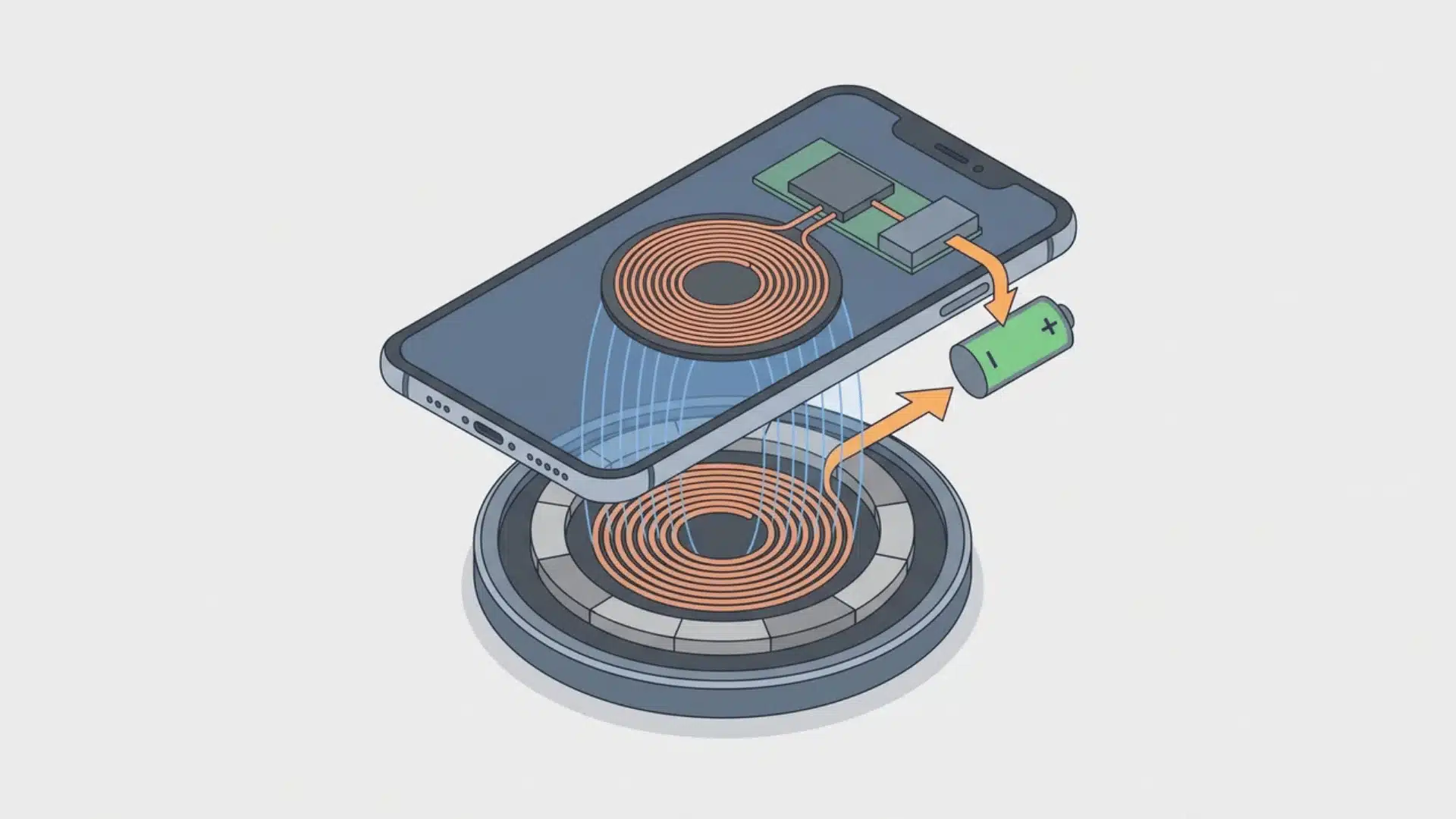
Ever wondered how does wireless charging work when there’s no cable in sight? The answer comes down to a simple electromagnetic process happening right under your phone.
Magnetic charging uses the same wireless charging principle, with magnets adding more precise alignment. Coils, magnetic fields, and rectifiers work together as soon as your phone rests on the pad.
If you’ve ever wondered why some chargers feel faster or more reliable than others, you’re about to discover exactly what separates a great charge from a frustrating one.
What Actually Triggers Wireless Charging?
Many people have asked me how wireless charging works, and they’re often surprised when I explain how simple it really is.
Wireless charging and magnetic charging use the same technology. The only real difference is how the phone lines up with the charger before power starts flowing.
Once the phone is in place, charging begins as soon as it’s close enough to the powered charging coil. There’s no signal to send, no app to open, and nothing to pair. The charger detects a compatible device and starts transferring power.
MagSafe and Qi2 add magnets to snap the phone into the right position. I’ve found that this helps the phone connect more reliably, especially if you tend to set it down quickly. Once it’s lined up, the charging process is the same as any other Qi wireless charger.
The only time it won’t work is when the phone or charger doesn’t support wireless charging. Magnets by themselves can’t transfer power. They only help keep the charging coils aligned.
How the Charging Process Works: Stage by Stage
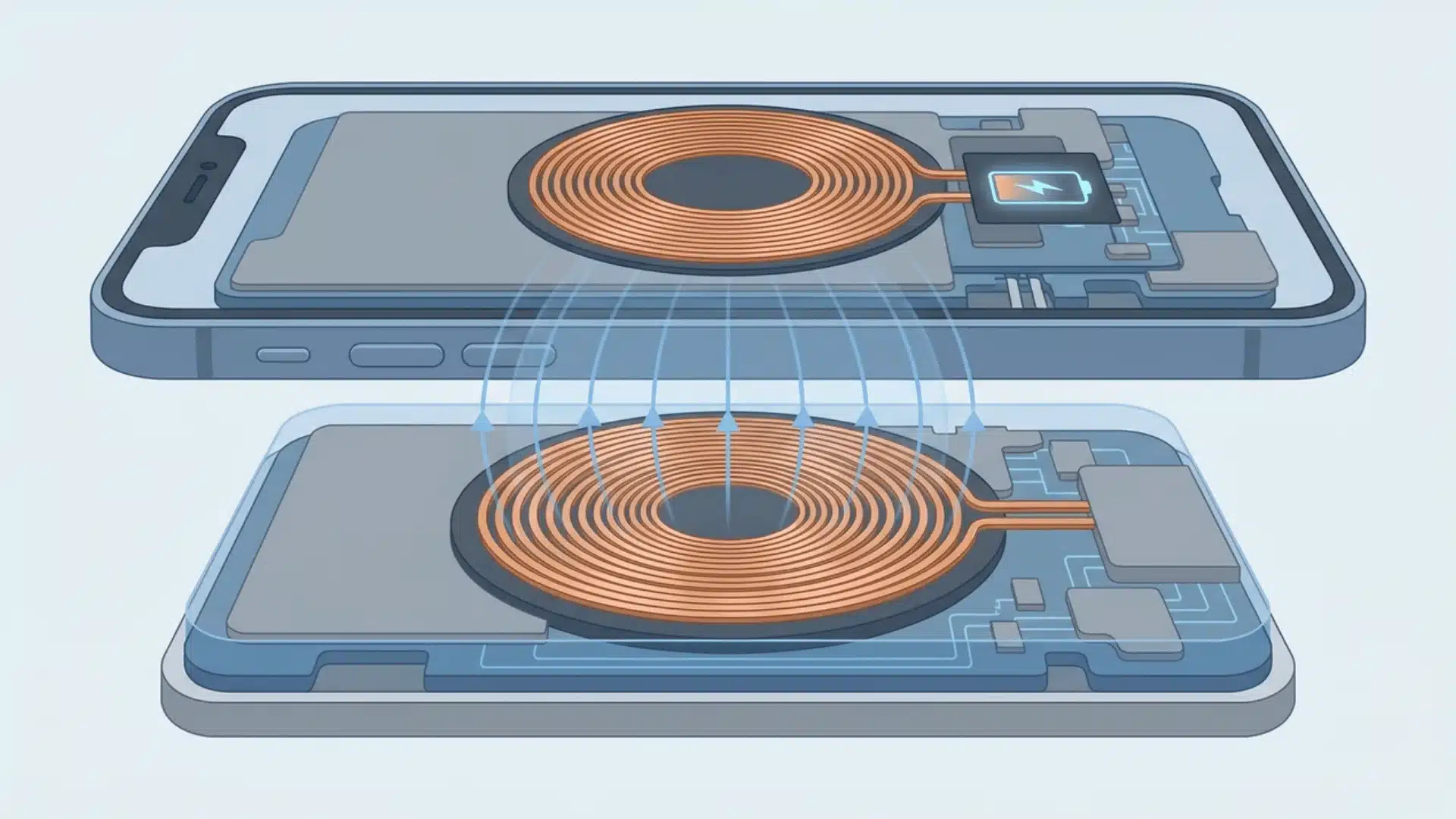
The whole process comes down to four parts working together: the transmitter, the magnetic field, the receiver, and the rectifier. Once you understand these, the “magic” disappears.
Here’s what actually happens when you set your phone down:
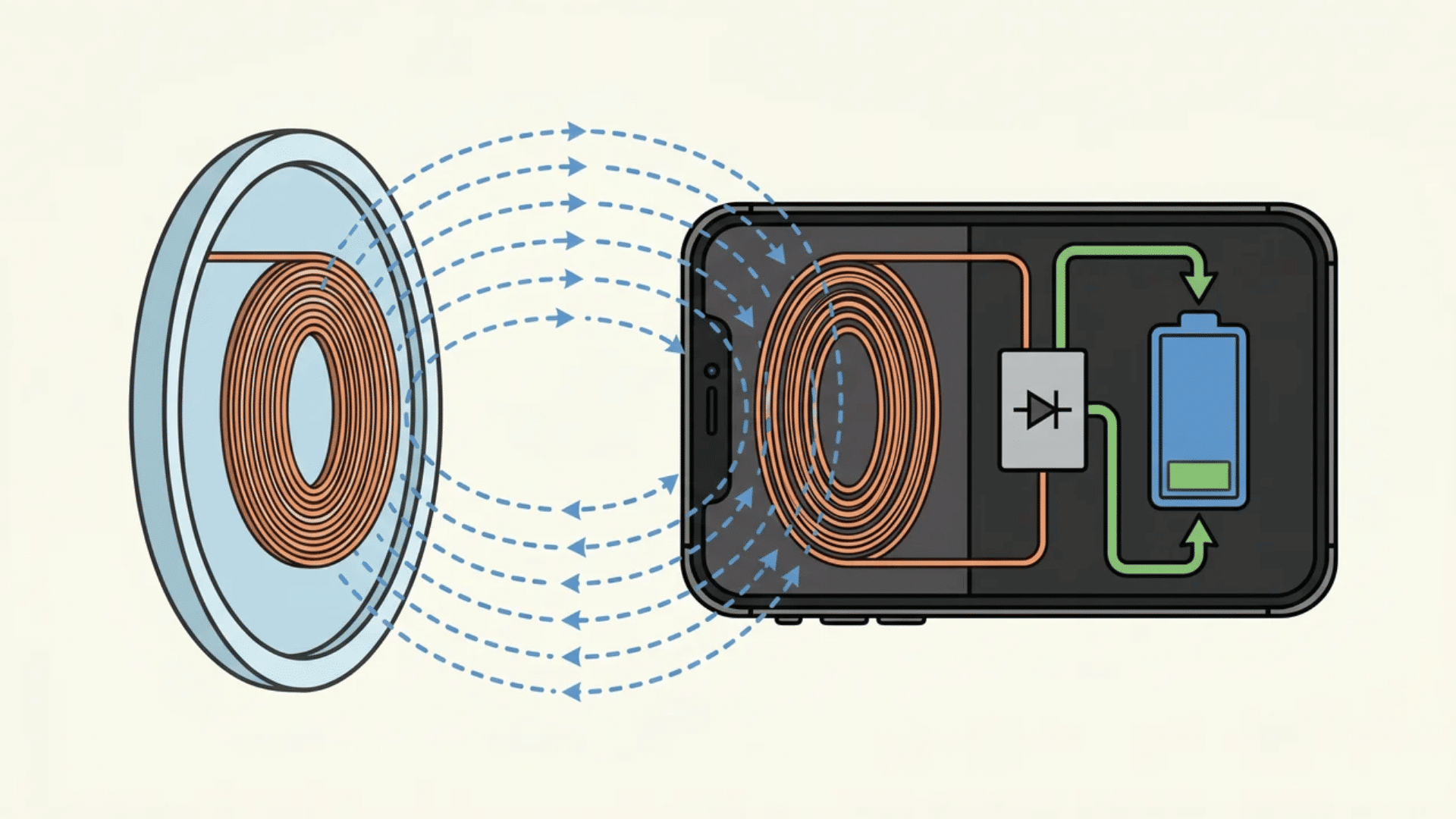
- The Transmitter: Your charging pad pulls AC current from the wall and pushes it through a copper coil, creating a constantly fluctuating magnetic field around the pad’s surface.
- The Magnetic Field: When your phone sits close enough and roughly lined up, that fluctuating field reaches the receiver coil built into your phone and induces its own current.
- The Receiver: This induced current inside your phone is still AC, so a small rectifier circuit steps in right away to handle it.
- The Rectifier: That circuit converts the AC into usable DC power, which finally flows into your battery and starts the charge, all without a single cable connecting the two devices.
Each stage depends on the one before it. If the transmitter isn’t generating a field, or your phone isn’t picking it up, nothing downstream can happen.
How Does Magnetic Charging Work? Changes in The Process
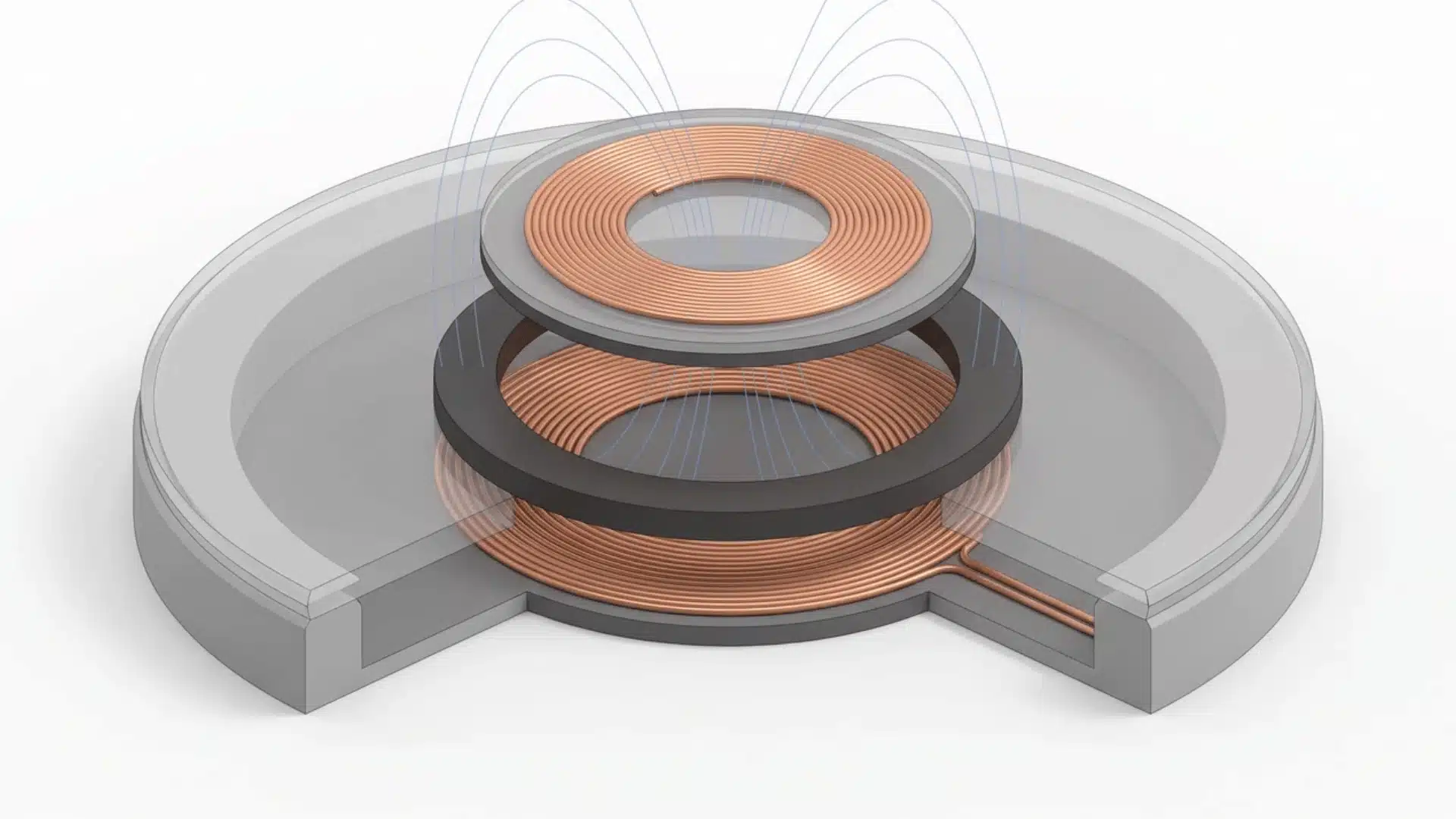
Magnets exist to solve one specific problem: alignment. They aren’t a separate charging method, just a fix for the biggest weakness in standard wireless charging.
Why Placement Guesswork Doesn’t Work
With a regular wireless charger, you have to guess where to place your phone. If the charging coil inside the phone doesn’t line up with the coil in the charger, charging may start slowly, stop, or not begin at all.
MagSafe and Qi2 solve that problem with built-in ring magnets. They pull the phone into the correct position automatically, lining up both charging coils every time.
I’ve found this makes a real difference if you drop your phone on the charger without looking, especially at night or while you’re working.
Why Centering Actually Matters
When the coils don’t line up properly, less of the charger’s magnetic field reaches the receiver coil inside your phone. That weakens the power transfer, so the charger has to work harder to deliver the same amount of energy.
The extra energy doesn’t disappear. It turns into heat instead of charging your battery. I’ve noticed this happen with older wireless charging pads where the phone looked like it was charging, but the battery barely moved after 20 or 30 minutes because it had shifted slightly off center.
Why This Gets Worse at Higher Speeds
At low power levels, a slight offset barely registers. You probably wouldn’t even notice the difference in how long your phone takes to charge.
Push into higher wattages, though, and that same small misalignment suddenly matters a lot more, producing noticeably more heat and a real drop in charging speed.
So the next time your phone snaps onto a magnetic charger, you’ll know exactly why: it’s centering your coils precisely enough to charge faster while staying cooler.
Where do Wireless and Magnetic Charging Break Down?
Most “my wireless charger barely works” complaints have nothing to do with a defective charger. They almost always trace back to obstruction or alignment, not a hardware fault.
- Thick Cases and Attachments: Bulky cases, metal card holders, or pop sockets sitting between the coils physically block or weaken the field trying to pass through, cutting into charging efficiency.
- Foreign Objects: Even small metal objects like coins or keys resting near the coils can interfere with the field, so it’s worth checking your charging surface before assuming the worst.
- Phone Movement: Something as small as your phone shifting slightly while charging can throw off alignment enough to slow things down noticeably, especially on a standard flat pad.
- Flat Pads Without Magnets: Without magnets holding your phone centered, any small movement or added bulk quietly chips away at charging speed, which explains the inconsistent results so many people report.
This is exactly why standard pads feel unpredictable compared to MagSafe or Qi2. Once you know what to check, most slow-charging frustrations are fixable in seconds.
Conclusion
Understanding how does wireless charging work changes how you think about that pad on your desk. It’s not magic, just coils, fields, and precise engineering working together.
Magnetic charging simply takes that same process and makes it more reliable, using magnets to solve the one weakness standard pads always struggled with: alignment.
Looking back, the real takeaway is simple: charging speed and consistency come down to how well your coils line up, not luck or a faulty charger.
Next time your charge feels slow, check your case, clear your pad, and see the difference proper alignment makes. Your phone will thank you.
Frequently Asked Questions
How does wireless charging work in simple terms?
Wireless charging works through electromagnetic induction. A charging pad sends alternating current through a coil, creating a magnetic field. This field induces current in your phone’s coil, which gets converted to usable DC power through a rectifier, charging your battery without any cables.
How does magnetic charging differ from regular wireless charging?
Magnetic charging, like MagSafe or Qi2, uses the same induction process as standard wireless charging. The key difference is built in ring magnets that automatically center your phone’s coil over the charger’s coil, improving alignment, efficiency, and charging speed.
Why is my wireless charger charging so slowly?
Slow wireless charging usually results from misalignment, thick cases, or metal objects blocking the coils. Even small offsets between your phone’s coil and the charger’s coil cause energy loss as heat, reducing charging speed significantly, especially on non magnetic flat pads.
Does a phone case affect wireless charging?
Yes, thick cases, battery cases, or ones with metal card holders can weaken the magnetic field passing between coils. Thin, non metal cases typically have minimal impact, but anything bulky or metallic between the coils reduces charging efficiency and speed.