


AI has made remarkable strides, but its accuracy remains a topic of debate. While some applications show impressive performance, others reveal limitations that can affect decision-making in high-stakes scenarios.
In this post, I’ll cover why AI’s accuracy fluctuates depending on the task, the training it undergoes, and the data it learns from. We’ll also look at how real-world applications reveal both its strengths and flaws.
By the end, you’ll gain a clearer understanding of where to trust AI and when to proceed with caution.
Let’s begin with why accuracy varies so much in the first place.
How Accurate is AI Right Now? The Short Answer
AI has become incredibly effective in many areas, like identifying patterns in data or generating content. But that doesn’t mean it’s always reliable.
While some AI applications, like in medical diagnosis or data analysis, can reach impressive accuracy levels, others are prone to errors.
It’s important to understand that AI’s “accuracy” can vary widely depending on the task at hand, how it’s trained, and the data it’s fed. So, the real takeaway? It depends. Here’s why:
What the Numbers Actually Say
When you read that AI is “90% accurate,” it sounds impressive, but these numbers are often misleading.
The figure doesn’t necessarily represent real-world performance; it might only reflect success in controlled environments or under ideal conditions.
Accuracy percentages can obscure significant flaws, such as minor mistakes that snowball or major errors on topics with sparse data. That “90%” often hides how frequently AI might fail in ways that matter most.
Why “90% Accurate” Can Still Mean Frequently Wrong
A 90% accuracy rate in AI sounds promising at first glance, but it can still mean that errors are happening 1 in every 10 times. Depending on the context, this can result in serious missteps.
For instance, in a medical diagnosis task, a 10% error rate could lead to life-threatening mistakes.
Even though 90% might sound high, it’s vital to recognize that AI can often be wrong in critical situations, especially when the data it’s working with is unclear or incomplete.
Why AI Accuracy Depends Entirely on the Task
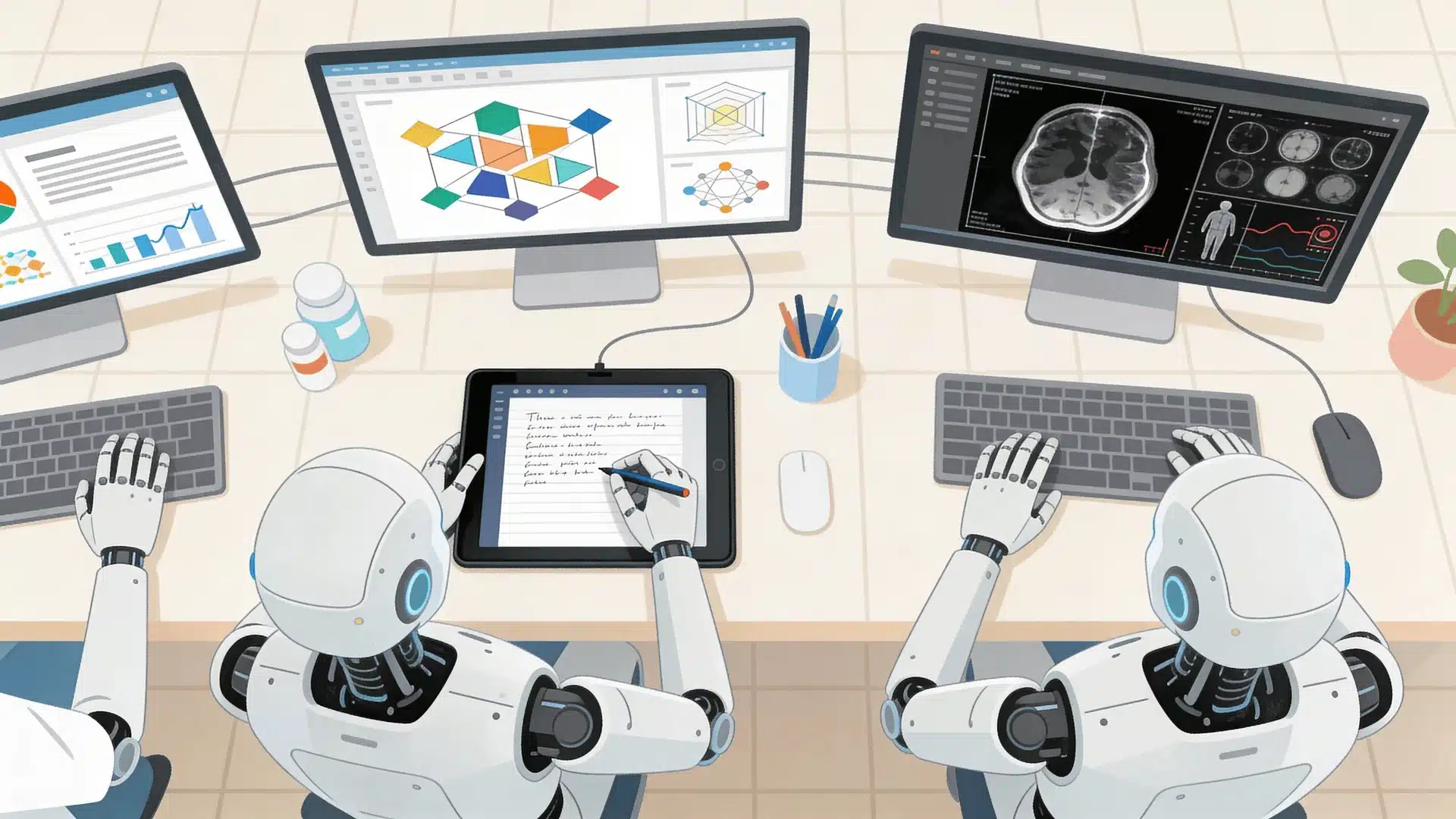
AI isn’t a one-size-fits-all tool, and its accuracy depends heavily on the nature of the task. This means we can’t just say “AI is accurate” or “AI is inaccurate”; it’s more nuanced than that.
Certain tasks, like detecting specific patterns in large datasets, are highly predictable and fit well with AI models, leading to higher accuracy.
On the other hand, tasks that require understanding context or handling ambiguity, like generating creative content or making medical decisions, can lower the overall accuracy, as AI struggles with uncertainty.
If you’re interested in learning more about how these nuanced improvements are shaping AI’s accuracy, check out the latest developments in LLM research.
The recent shift toward making models more reliable and efficient highlights how even small updates in training methods or reliability can have significant implications for real-world performance.
Where AI Regularly Exceeds 90% Accuracy
In fields like language translation, speech recognition, and image classification, AI regularly exceeds 90% accuracy.
These tasks involve structured data and patterns that AI can learn to predict quite effectively.
However, even in these areas, occasional misinterpretation is common, particularly with edge cases or outlier data points. The ability to handle structured, predictable data makes these areas prime candidates for AI’s strengths.
Where AI Accuracy Drops Sharply and Why
AI’s accuracy drops significantly when it’s dealing with unstructured or ambiguous data.
In situations where there’s less predictable structure, like legal analysis or complex medical diagnoses, AI struggles to maintain high levels of precision.
This is because it can’t verify facts or handle the nuance that human experts rely on.
Understanding why this happens helps us contextualize the tasks where AI is less reliable, ensuring we apply it appropriately and remain cautious about its use in high-stakes environments.
Why AI Sounds Confident When It’s Completely Wrong
AI can often sound remarkably confident even when it’s wrong. This isn’t a bug; it’s part of how generative AI models work.
These systems are built to predict the next word or sequence of words based on statistical patterns in data. However, they lack the ability to verify their “knowledge” or express uncertainty.
As a result, AI can generate responses that sound plausible but are factually incorrect, especially when dealing with ambiguous or scarce data. The problem lies in the fact that AI generates outputs without a “don’t know” option, creating a false sense of certainty.
How AI Actually Generates Answers
AI doesn’t retrieve facts from a database when it generates responses. Instead, it predicts the next word or piece of information based on patterns it’s learned from vast amounts of data.
This process, known as probabilistic token prediction, means that AI is simply guessing based on what it has seen before.
In ambiguous contexts, it might guess wrong, but still sound incredibly confident.
Why AI Has No “I Don’t Know” Signal
Unlike humans, who might admit uncertainty or confusion, AI is programmed to generate a response regardless of its accuracy.
This limitation is why AI can sound authoritative when it’s, in fact, making mistakes. The absence of an “I don’t know” option is a crucial reason for hallucination errors in AI.
When Hallucinations Are Most Likely to Happen
Hallucinations in AI, when it generates completely inaccurate or nonsensical information, are most likely to happen when the data it’s been trained on is sparse or inconsistent.
This is particularly common in domains where human expertise and judgment are required, such as law or medicine.
In these cases, the AI doesn’t have enough solid data to make a reliable prediction, so it resorts to guessing, often with disastrous results.
How Training Data Makes or Breaks AI Accuracy

The accuracy of AI doesn’t just depend on how it’s used; it hinges heavily on the quality of the data it’s trained on.
AI models learn patterns from data, and if that data is flawed, incomplete, or biased, the model’s outputs will be equally problematic.
Understanding the root causes of inaccuracy, like biased data, gaps in information, or outdated content, is essential to recognizing the limitations of AI and improving its performance.
Bias, Gaps, and Outdated Information in Training Sets
When AI is trained on biased or incomplete datasets, it inherits those flaws. This can result in inaccurate or unfair outputs, especially in sensitive fields like criminal justice or hiring.
The quality of the training data, how representative and up-to-date it is, has a direct impact on AI’s ability to make accurate predictions. Without high-quality data, even the most advanced AI models will falter.
Why Bad Labels Create Confidently Wrong Outputs
Another major issue is bad labeling in training data.
If the labels that categorize the data are incorrect or misleading, the AI will learn from these mistakes and propagate them in its predictions.
This is one of the reasons why AI can generate confidently wrong answers. The model is essentially “trusting” the data it was given, without the ability to critically assess its accuracy.
How Accurate Are AI-Powered Search Results
AI-powered search results are becoming increasingly common in search engines, but how accurate are they really?
While they can generate useful summaries of information, AI search results often come with a significant risk of misattribution and source fabrication.
In these cases, AI might pull together data from multiple sources without properly identifying where the information came from, leading to inaccurate or incomplete search summaries.
Why AI Search Answers Get Sources Wrong
AI-generated search answers often pull together content from various sources, but without always properly crediting them. This can lead to fabricated sources or misattributions, especially when AI aggregates information from multiple databases.
As a result, the search results you see might not always reflect the original source of the information, which can lead to confusion or misinformation.
What AI Search Summaries Miss
AI search summaries are a great tool for quickly getting an overview of a topic, but they often miss key context or nuances that a human expert would provide.
AI tends to prioritize brevity over depth, leaving out important details or subtle distinctions. As a result, while AI search results can be helpful for an initial understanding, they shouldn’t be relied on as the sole source of information.
Can You Actually Trust AI Right Now
The question of trust in AI is complex. While AI can be incredibly useful in certain contexts, it’s essential to apply a conditional framework for evaluating its reliability.
Trust in AI depends on the stakes involved and the type of task at hand.
In low-risk scenarios, AI might be perfectly safe to rely on. However, in high-stakes situations, like medical diagnoses or legal decisions, you should always verify the AI’s output with human expertise.
When AI is Safe to Rely On
AI is generally safe to rely on for tasks that involve repetitive analysis, data entry, or simple decision-making.
For example, AI can be trusted in applications like image recognition, traffic pattern analysis, or customer support where the risks of error are relatively low.
In these cases, AI can handle the task quickly and accurately without much oversight.
When You Should Always Verify
In high-stakes environments, such as healthcare, law, or finance, AI should never be fully trusted without verification. Even if the AI system appears accurate, its underlying mechanisms may still be flawed.
Always double-check its recommendations or predictions with human judgment, especially when the consequences of error are significant.
Wrapping Up
Understanding AI accuracy requires considering the task and data quality.
While AI has the potential to be highly accurate, especially in structured tasks, its reliability can vary significantly depending on the task and the data it’s working with.
It’s crucial to know when to trust AI and when to verify its results, ensuring better outcomes.
By knowing when to trust AI and when to verify, you can use this technology more effectively, whether for personal projects or high-stakes decisions. Be mindful of its limitations and use AI wisely.
Frequently Asked Questions
Is AI 100% accurate?
No, AI is not 100% accurate. Its accuracy depends on the task, data quality, and how it’s trained. It can perform well in some areas, but still make errors.
How often is AI wrong?
AI can be wrong frequently, especially in complex or ambiguous situations. Its error rate can vary by task, but even a small error rate can have significant consequences.
How reliable are AI results?
AI results can be reliable for simple, structured tasks but should be verified in high-risk contexts. Its accuracy varies based on data quality and task complexity.
How accurate is AI in medical diagnosis?
AI can be highly accurate in medical diagnosis, but it still has limitations. Its performance depends on the data it’s trained on and the specific diagnosis being made. Always verify AI results with a medical professional.