


A lot of people hear about AI in stores and think it just means a chatbot on a shopping site or a tool that writes product copy faster. That is part of it, but it is not the full story.
Generative AI in retail is really about how retailers use systems that can create responses, summaries, content, and guidance from large amounts of data and context. That makes it useful in customer service, marketing, store support, and internal planning.
The hard part is telling real value apart from hype, because both tend to get mixed together. I’ll break it down in a simple way, show where it fits, and explain why some retail results look strong while others fall flat.
What Generative AI Means in A Retail Context
Generative AI in retail means using AI systems that create new output, such as product descriptions, customer replies, search responses, recommendations, or internal summaries.
The key idea is generation. Instead of only sorting data or following rules, the system produces responses based on context and available information.
Retail fits well because it runs on constant questions from both customers and teams. Shoppers look for the right products, while businesses need help with content, decisions, and operations.
ddGenerative AI turns large amounts of data into usable answers and guidance.
It shows up in customer-facing areas like product discovery and messaging, and in internal tasks like reporting and support. What makes it different is flexibility. It can support multiple retail functions as long as it has strong data, clear rules, and a defined purpose.
How It Differs From Traditional AI And Automation
This is where confusion usually starts. Traditional retail AI often predicts, scores, classifies, or recommends. It might predict demand, flag fraud, segment customers, or rank products. Automation, on the other hand, follows set rules. If X happens, do Y.
Generative AI is different because it produces new language, summaries, or content based on context.
It can explain a return policy in plain words. It can rewrite a product description for a different audience. It can answer a shopper who asks for a gift idea under a certain budget.
That does not mean it replaces other AI systems. In many cases, it depends on them.
For example, a retailer may still use predictive systems to estimate demand or rank likely products. Then generative AI turns that output into a natural answer a shopper or employee can understand.
So the generative part often works best when it is connected to older systems, rather than trying to stand on its own.
Where Retailers are Using It Most Often Today
Most current retail use falls into a few clear areas:
- customer shopping support
- personalized messaging
- product and catalog content
- employee assistance
- internal summaries and decision support
Customer-facing use gets the most attention because it is easy to see. A shopper asks a question and gets a human-like answer.
But behind-the-scenes work is just as important. I’ve seen that this is where a lot of practical value shows up, because internal teams deal with repeat questions, content bottlenecks, and messy information every day.
The Main Use Cases of Generative AI in Retail
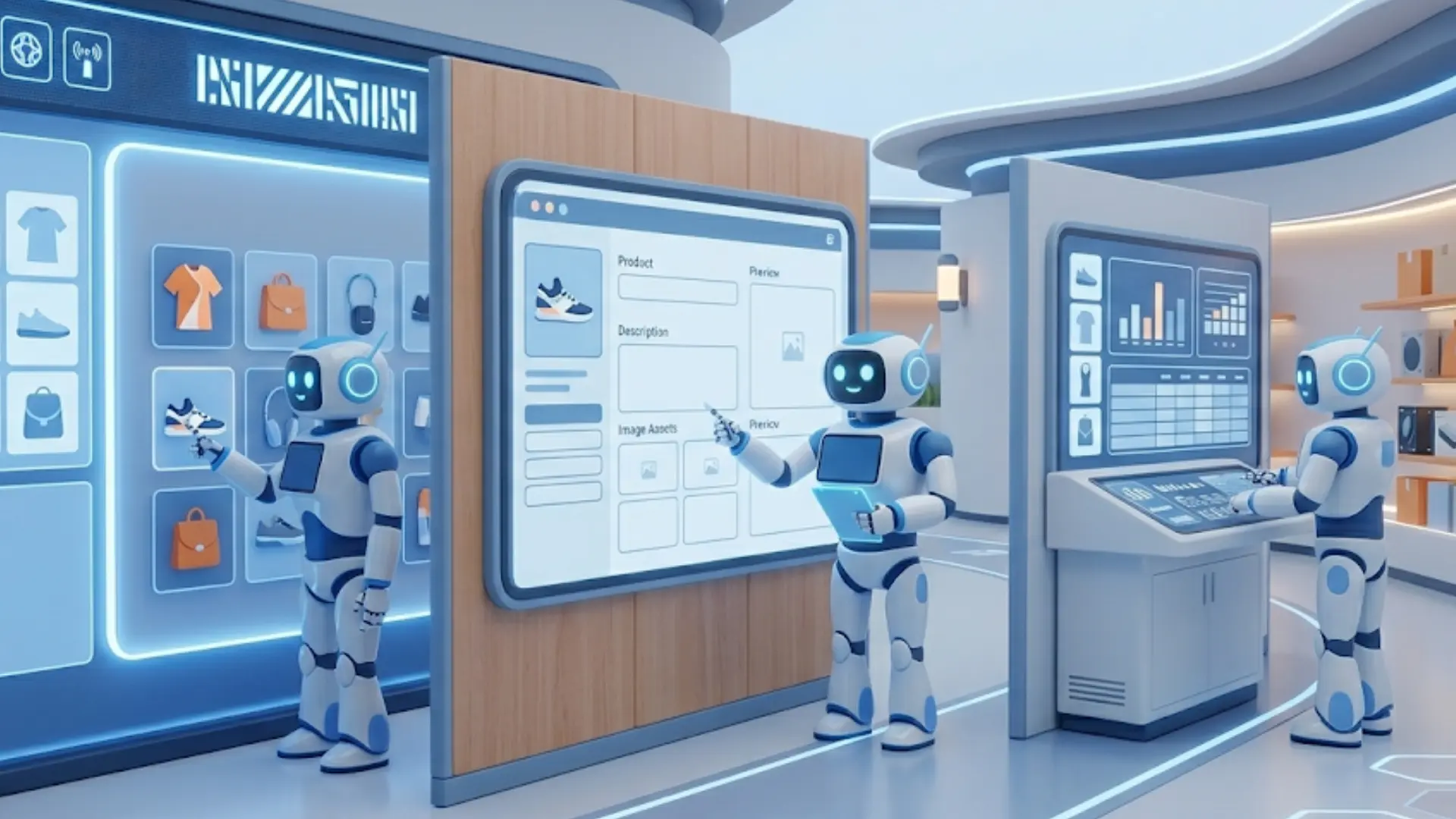
Not every use case works the same way, and not everyone creates value for the same reason.
Some use cases help shoppers feel less lost. Some help teams move faster. Some help retailers scale work that used to take too much manual effort. That difference matters because people often lump all retail AI benefits together.
1. Customer Experience and Product Discovery Use Cases
Retailers use generative AI to answer product questions, guide search, compare features, explain fit, suggest options, and support discovery when the shopper is not sure what they want.
That last part matters a lot. Traditional search works best when a shopper already knows what to type. Generative systems can help when intent is fuzzy. A person might ask for a lightweight jacket for travel in warm rain, or a couch that works in a small apartment with pets. That kind of request is more natural than a keyword search.
The value comes from reducing friction. When shoppers get useful guidance faster, they are more likely to stay engaged.
2. Marketing and Content Creation Use Cases
Retailers also use generative AI to create or adapt content at scale. This includes product descriptions, email drafts, ad copy, category text, translation, promotional messages, and variations for different audiences.
The main gain here is speed, but speed alone is not enough. The content still has to be accurate, consistent, and aligned with the brand.
This category works best when the source material is strong. If the original product data is thin or messy, the generated content will usually sound polished but say very little. That is one reason some retailers get better results than others.
3. Store, Associate, and Operations Support Use Cases
This side gets less public attention, but it is a big part of the picture. Generative AI can help store teams find policy answers, explain product details, summarize issues, draft internal notes, and surface useful information quickly.
It can also support merchandising and planning teams by turning large sets of information into simple summaries or suggested actions.
The benefit here is not magic. It is time saved on repetitive mental work. Employees do not stop thinking. They just spend less time hunting through systems or rewriting the same things.
How Generative AI Improves the Customer Shopping Experience
Customer experience is where many people first notice generative AI, but the real shift goes deeper than better-sounding responses.
It changes how shoppers move through decisions by making the journey more guided, more contextual, and less dependent on exact keywords or rigid search paths.
- Personalized Recommendations And Product Discovery: Generative AI moves personalization beyond static suggestions into real-time guidance. It reads signals like behavior, preferences, and intent together, so recommendations shift with the shopper’s current need, not just past activity.
- Conversational Shopping Assistants and Guided Search: Shoppers can ask naturally instead of relying on exact search terms. The system interprets intent, connects it to product data, and explains options, turning search into a guided experience rather than a list of results.
- Tailored Messages, Offers, and Content Experiences: Retail communication becomes more relevant by adapting to context instead of repeating generic messaging. The system adjusts tone, timing, and content so interactions feel aligned with what the shopper is actually trying to do.
How Generative AI Supports Retail Teams Behind the Scenes
Retail work is full of small decisions and repeated questions. That is where generative AI can quietly remove a lot of drag.
1. Associate Copilots for Product and Policy Questions
Store associates and support teams often need quick, reliable answers during real interactions. Generative AI helps by turning dense product details, policies, and internal documents into clear responses.
Instead of switching between systems, employees get a direct answer with context. This works best when information is already structured and up to date. If the source data is unclear or outdated, the response may still sound correct but miss key details, which is why human judgment remains essential.
2. Faster Catalog, Merchandising, and Content Workflows
Retail teams handle large volumes of product content across channels.
Generative AI speeds up the first draft process for descriptions, category pages, and campaign assets, reducing time spent starting from scratch. This allows teams to focus more on refining and improving content.
However, the output depends heavily on the quality of product data. If inputs are weak or inconsistent, the generated content can become repetitive or inaccurate, limiting its usefulness despite faster production.
3. Internal Decision Support Across Operations and Planning
Retail decisions often depend on interpreting large amounts of data quickly. Generative AI helps by summarizing trends, highlighting changes, and explaining patterns in simple terms.
It reduces the effort needed to understand what is happening across stores, categories, or time periods. The value varies by role, as different teams need different levels of detail.
When data is current and relevant, the output becomes more useful, but outdated or incomplete data can weaken the reliability of these insights.
Why Generative AI Produces Retail Results
This is the part many articles skip, even though it explains why results actually happen. Most content jumps from “AI is used here” straight to “performance improved,” without showing the middle.
In reality, generative AI works through a chain of inputs, interpretation, and output. It starts with product data, customer behavior, pricing, policies, and other signals.
The system then uses that context to generate a response, summary, or recommendation that people can act on. The outcome depends on how strong and current those inputs are.
When data is clear, connected, and up to date, the output tends to be useful and reliable. When it is incomplete or outdated, the system fills gaps with language instead of facts, which weakens accuracy.
That is why results vary across retailers and change over time depending on data quality and context alignment.
The Benefits of Generative AI in Retail
The benefits are real, but they are not automatic. They show up when the use case fits the workflow, and the system is connected to good data.
| Benefit Area | What Changes | Where It Works Best | Where It Falls Short |
|---|---|---|---|
| Customer Experience | Faster guidance, more relevant interactions | Clear product data and defined customer intent | Vague queries or weak catalog structure |
| Speed & Efficiency | Less time on repetitive tasks and content creation | High-volume workflows with repeat patterns | Poor input quality or unclear processes |
| Revenue & Decisions | Better conversion and faster actions | When AI improves real decision points | When the output doesn’t change the behavior |
Even with strong potential, results depend on how well generative AI connects to real retail workflows and decisions.
Real Examples of Generative AI in Retail
Big retailer examples show that generative AI is already in real use, not just theory. But the value comes from how it solves specific problems, not from copying features.
In customer-facing use, retailers apply generative AI to improve product discovery and shopping guidance. For example, AI assistants help shoppers ask natural questions and get clear, contextual answers instead of static search results. This reduces confusion and helps customers move forward faster, especially in large catalogs.
In operational use, retailers apply generative AI to support internal teams. Employees can quickly access product details or policy answers, and content teams can speed up catalog updates. These use cases are often more stable because the data is structured and controlled.
Overall, these examples show that value appears where AI helps interpret information and turn it into usable answers, not where it replaces core systems or judgment.
The Limits of Generative AI in Retail
This part matters because hype can make the category sound broader and more stable than it really is. Generative AI works well in the right conditions, but its limits become clear when those conditions are not met.
- Where Output Quality and Accuracy Can Fail: Generative AI can sound correct while being wrong, especially when data is incomplete or context is weak. That makes errors harder to detect compared to obvious system failures.
- Why Strong Data and Business Rules Still Matter: As systems become more flexible, they depend more on clean data and clear rules. Without strong inputs and boundaries, even helpful outputs can become inconsistent or unreliable.
- What Generative AI Can Support but Not Replace: Generative AI supports tasks like communication and summaries, but it does not replace judgment or decision-making. Retail still depends on structured systems, human oversight, and clear processes to function properly.
Understanding these limits helps set realistic expectations and ensures generative AI is used where it truly adds value without creating risk.
Final Thoughts
When people talk about fast-changing retail tech, it is easy to focus on flashy demos and miss what actually matters. Generative AI in retail works best when it turns real business data into clear, usable answers that help people act faster and with more confidence.
That is why it shows up across customer experience, content, and internal workflows. But its value depends on how well it connects to real processes, not just how advanced the technology looks.
If you’ve seen generative AI used in retail or have questions about how it fits your use case, share your thoughts in the comments. You can also check out more guides on the website to keep building your understanding.