

Picking the best supply chain management software sounds straightforward until you’re three demos in and every platform looks identical on paper.
The feature lists match. The pitch decks blur together. And somewhere in the noise, the decision that should take weeks starts taking months.
The difference between the right choice and an expensive mistake usually comes down to one thing: knowing what to actually evaluate and what to ignore.
Here’s how to cut through the marketing and find the platform that fits how your operation actually runs.
What Supply Chain Management Software Actually Does (and What to Ignore in the Sales Pitch)
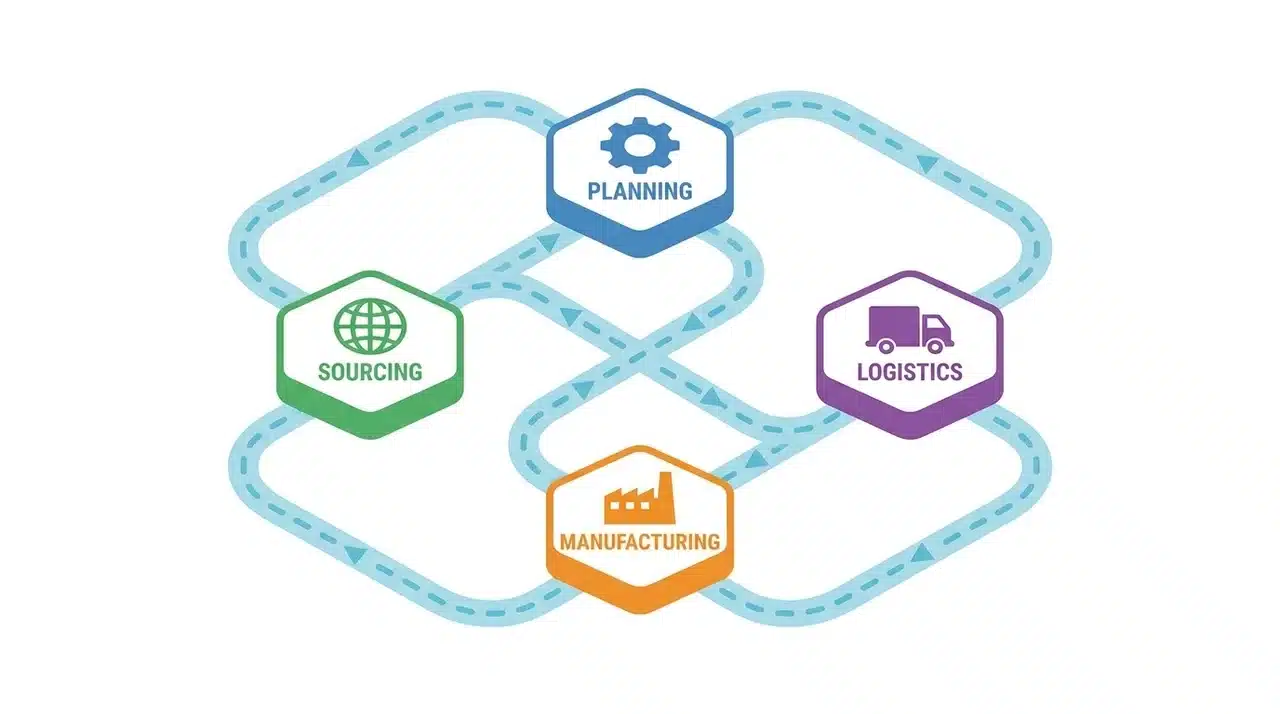
Supply chain management software connects your planning, sourcing, manufacturing, and logistics into one shared data layer, so every part of your operation sees the same picture.
That’s the real value. Not automation, but visibility and coordination.
Most platforms market the same five capabilities. The feature lists look nearly identical because vendors know buyers use checklists, so they build to the checklist.
What the checklist won’t show you is which modules were built natively and which were bolted on later. That gap matters more than feature count.
A platform with a strong warehouse system but a weak demand planner will fail you when forecasting falls apart, regardless of what it showed in the demo.
The right question isn’t “does it have these features?” It’s “where is this platform genuinely strong, and where is it covering gaps?”
How Business Size and Operating Model Should Drive Your Selection
Most buyers start with a list sorted by company size. Reasonable, but size alone won’t get you to the right answer.
The variable that actually drives fit is your operating model. A mid-sized manufacturer running multi-tier sourcing has completely different needs than a mid-sized distributor moving finished goods. Same revenue bracket.
Different platform requirements entirely. Size tells you which tier you can afford. The operating model tells you which module needs to be genuinely strong, not just present.
1. Enterprises and Global Manufacturing Operations
SAP IBP, Oracle SCM Cloud, and Kinaxis Maestro dominate this segment, and for good reason.
SAP IBP is the natural fit inside an existing SAP ecosystem. Oracle SCM Cloud earns its place when you need supply chain and finance unified within a single framework.
Kinaxis runs all planning scenarios simultaneously against live data, so when a supplier goes down, you see the full downstream impact immediately rather than waiting on a replanning cycle.
Where all three fail mid-market buyers isn’t capability. It’s implementation complexity and licensing cost.
2. Mid-Market and Distribution Businesses
Microsoft Dynamics 365 and NetSuite are the clearest fits here. Dynamics 365 works well when you’re already on Microsoft infrastructure.
The integration is tight, and the embedded AI covers standard planning needs. It strains when you push into complex demand planning beyond standard configurations.
NetSuite handles the full ERP stack, including inventory, financials, and procurement, on a single SaaS platform without requiring extensive implementation resources. Its ceiling is advanced forecasting. If that’s your core need, it will leave you short.
3. Logistics-Intensive and Specialty Operations
If your operation is built around execution, then Manhattan Associates falls into a different category. Most platforms treat WMS and TMS as modules. Manhattan Associates built its entire platform around them.
For retail, grocery, and omnichannel businesses where warehouse and transport performance is the competitive edge, that focus shows.
Infor Nexus serves a narrower use case: global supplier collaboration and upstream visibility for fashion and consumer products. Outside those verticals, the fit weakens quickly
The Platforms Worth Shortlisting (and What Each One Gets Right)
The tools below appear consistently across analyst rankings, peer reviews, and real operator discussions. Each one has a genuine strength and a condition where it underperforms.
Both matter. A platform that looks perfect on paper can still be the wrong call depending on your setup.
1. SAP SCM / Integrated Business Planning
SAP IBP is the benchmark for large multinational manufacturing. AI-driven demand forecasting is mature, and integration with the broader SAP ecosystem is native, not patched in.
The limitation is the entry cost. For operations without an existing SAP footprint, implementation timelines and licensing complexity make it a difficult case to justify.
2. Oracle SCM Cloud
Oracle’s strength lies in unifying supply chain and finance under a single cloud framework. The analytics for predictive execution are genuinely strong.
Outside an existing Oracle environment, the implementation lift is significant. It rewards organizations that are already invested in the ecosystem.
3. Kinaxis Maestro
Kinaxis runs all planning scenarios simultaneously against live data, what it calls concurrent planning. Most platforms model disruptions sequentially.
Kinaxis shows you the full network impact of a supplier failure or demand spike immediately, without waiting on a replanning cycle.
4. Microsoft Dynamics 365 Supply Chain Management
Dynamics 365 combines planning, production, and logistics with embedded AI and integrates tightly with the Microsoft productivity suite most mid-market teams already use.
Customization beyond standard configurations gets complex fast. It rewards buyers who can work within its structure rather than around it.
5. NetSuite SCM
NetSuite covers inventory, procurement, and financials in one mature SaaS platform. For mid-sized operations with standard supply chain requirements, it handles the full stack without demanding heavy IT resources.
Advanced demand planning is where it hits its ceiling. If forecasting complexity is your core need, a standalone planning tool will outperform a standalone forecasting tool.
6. Blue Yonder
Blue Yonder’s AI is strongest in demand planning and inventory optimization. The platform performs well when it’s properly configured, but that configuration requires real investment.
Lean IT teams routinely underutilize it. The gap between what it can do and what most deployments actually use is wider here than with most platforms on this list.
7. Manhattan Associates
Manhattan Associates is built around execution, warehouse management, and transportation management, which are the core products, not add-on modules.
For retail, grocery, and omnichannel businesses where fulfillment performance is the competitive edge, the depth of focus shows clearly. Outside execution-heavy operations, the fit narrows.
8. Infor Nexus
Infor Nexus is designed for global supplier collaboration and multi-enterprise visibility. It’s a strong fit for fashion and consumer products where upstream transparency is the primary challenge.
Outside those verticals, the value proposition weakens considerably.
The Conditions That Should Change Your Decision
Segment fit is a starting point. A few specific conditions can shift the right answer, and they’re worth checking before you finalize any shortlist.
Your existing ERP stack is the highest-leverage variable. Switching costs often outweigh what a “better” platform offers. If you’re deep in SAP, Oracle SCM makes less sense than SAP IBP, not because it’s inferior, but because integration friction erodes the advantage.
Non-standard units of measure are a quiet dealbreaker. If you manufacture by weight and output in linear feet, verify unit-of-measure flexibility before shortlisting anything. Most platforms assume standard units. Workarounds compound fast.
AI capability claims need a date stamp. Every vendor here is aggressively updating its AI roadmap. What’s marketed today may not reflect what’s actually live versus still in beta. Verify current specifics before treating any AI feature as a given.
These aren’t edge cases. They come up regularly and change the answer more often than the segment comparison does.
How to Narrow Your Shortlist Without a Lengthy RFP
Most shortlists stay too long because buyers evaluate platforms before they’ve eliminated the obvious mismatches.
Three questions will do most of that work before you sit through a single demo.
What ERP are you currently on?
If a platform doesn’t integrate natively with it, the implementation cost just went up significantly. That alone removes several options.
What is your weakest supply chain function today?
That module needs to be native and strong, not bolted on. Match your biggest gap to the platform’s genuine strength, not its marketing.
What does a failed implementation cost you operationally?
If the answer is “a lot,” weight deployment complexity more heavily than feature depth. A simpler platform you deploy well beats a powerful one you underutilize.
On analyst rankings: Gartner Peer Insights and the Magic Quadrant are useful for category-level validation.
They’re less useful for final selection. Peer reviews from your specific vertical, same industry, similar scale, carry more signal than quadrant positioning does.
Gartner placements also shift annually. If you’re using the Magic Quadrant as a selection input, verify you’re looking at the current year before acting on it.
Wrapping Up
The best supply chain management software isn’t the one with the longest feature list. It’s the one that’s genuinely strong where your operation is weak.
Most buyers get this backward. They shortlist based on brand recognition, sit through demos, and make a decision based on what impresses them, not what they actually need.
The platforms are mature. The differences between them are real but specific. Your ERP stack, your operating model, and your weakest function matter more than any analyst ranking.
Get clear on those three things first. The right shortlist almost builds itself.
Frequently Asked Questions
What is the best supply chain management software for small businesses?
NetSuite and Dynamics 365 are the most common fits. Both offer broad ERP functionality without the complexity of enterprise-level implementation.
How is supply chain management software different from an ERP?
An ERP manages core business operations. Supply chain management software focuses specifically on goods flow, sourcing, and logistics, typically with deeper planning capability than an ERP module provides.
What does Kinaxis concurrent planning actually mean?
It runs all planning scenarios simultaneously against live data. When disruption hits, you see the full network impact immediately, with no waiting on sequential replanning.
Is SAP supply chain management software still the industry standard in 2026?
SAP is the most widely deployed enterprise platform, but Kinaxis, Oracle, and Blue Yonder each lead in specific use cases. It’s not universally dominant.