

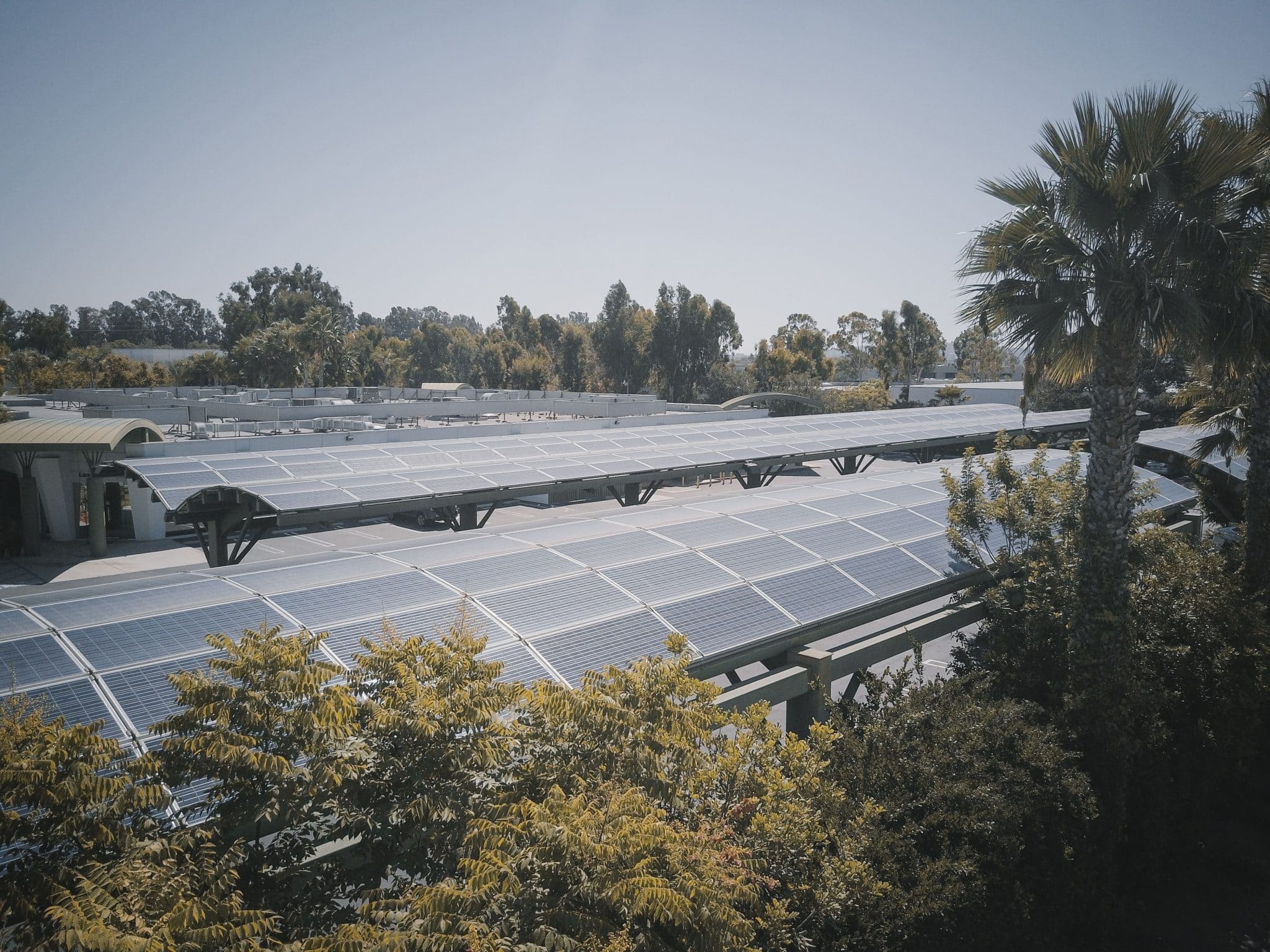
The first big wave of American solar is now old enough to retire. Arrays that went up during the 2010s build-out are hitting the point where output has dropped, panels are cracked, or a repower makes more sense than another decade of patching.
Most of that hardware was built to run for about thirty years, a service life that federal research on module lifespans puts in the same range, so the retirements are landing more or less on schedule. The volumes are not small. By one widely cited projection, the world is heading toward 78 million metric tons of end-of-life panels by 2050, and the United States is a big share of it.
If you run an EPC firm, an O&M contract, or a utility-scale asset, that means you now have to pick a recycler the way you would pick any other vendor: on capacity, on real certifications, on whether they can get a truck to your site, and on what it actually costs. This is a commercial and utility-scale buyer’s guide, not a residential one.
Homeowners with a dozen panels play a different game with different economics. Below, we compare the companies handling the big loads, what each one is genuinely best at, and where each one falls short.
How we compared
We weighted six things: recycling capacity and throughput, the certifications a recycler can actually name, whether they offer pickup and logistics for bulk loads, whether they handle turnkey decommissioning as well as recycling, pricing that a buyer can see before signing, and regional coverage.
A note on ratings: industrial recyclers are not reviewed on the software directories buyers know from other categories, so instead of star scores, we cite each firm’s documented volume, certifications, and trade-press coverage in plain text.
Every company here takes commercial loads. None of them is a good fit for a single rooftop.
Residential, commercial, or utility-scale: knowing your tier
Volume decides almost everything about who will take your panels and what you pay. Residential recycling means a handful of modules, usually routed through a local e-waste program or the installer.
Commercial covers a few hundred to a few thousand panels from a warehouse, a carport, or a rooftop array, often with a minimum order in the low hundreds. Utility-scale is a different animal: tens of thousands of modules coming off a solar farm, usually bundled with decommissioning, site restoration, and freight across state lines.
Two numbers matter once you are in the commercial or utility tier. The first is throughput, measured in panels or tons per year, which tells you whether a recycler can absorb your load without a long queue.
The second is lead time, because a decommissioning schedule that slips can hold up a land handover or a repower. Ask both questions early.
The best commercial solar panel recycling companies in the US
1. Solar Recycling
Best for: commercial and utility-scale sellers who want recovered value credited against the recycling bill.
Solar Recycling is built around a model most recyclers do not offer: it buys as well as recycles. Founded in 2019 by e-waste veterans, the company will purchase working used panels, inverters, and batteries for a second life, then responsibly recycle or destroy whatever cannot be reused. For a solar-farm owner sitting on a warehouse of decommissioned modules, that resale value can offset a meaningful slice of the cost, which is the whole point of the company’s “zero net waste, zero net cost” pitch.
It serves commercial and utility-scale customers across all fifty states, with a western-US and California base, and runs a five-step process that ends in a certificate of completion. Material recovery targets glass, aluminum, silicon, silver, and copper, and the company reports recovering 98% of materials (its own figure).
On price, it is one of the few here that publishes numbers: recycling runs roughly $20 to $50 per panel plus shipping, and used panels resell in the range of $0.05 to $0.60 per watt, against $0.70 to $1.50 for new.
Standing-wise, the company exhibited at RE+ 2025 in Las Vegas and is investing in Hawaii’s end-of-life problem, a market most recyclers ignore.
Where it falls short: the company markets itself as a certified California recycler, but it does not publish the certifying body, certificate number, or scope, so a compliance-driven buyer will have to ask for that paperwork directly. It also sets a typical minimum around 100 panels, and its physical footprint is younger and smaller than the megaplants further down this list.
2. SOLARCYCLE
The name most utility developers reach for first, and for defensible reasons. SOLARCYCLE recovers up to 97% of a panel’s value, claims 100% landfill diversion, and is building toward closed-loop glass, meaning recovered material heads back into new US-made panels rather than a downcycle.
It runs facilities across Nevada, Arizona, Texas, Georgia, and Illinois, and its client roster reads like a who ‘s-who of the sector: Qcells, EDF, AES, Ørsted, Silicon Ranch.
Best for: utility-scale asset owners who want maximum recovery and a closed-loop story.
Certifications are a strength here, with ISO 9001, ISO 14001, and ISO 45001 across the operation, membership in SEIA’s national recycling program, and R2 and RIOS at co-managed sites. Pricing is quote-based and not published, which is normal at this scale but worth flagging. Standing: the company reported recycling close to half a million panels in a single year (2024), among the highest documented volumes in the country. The limitation is fit. This is a machine built for large developers and utilities, so a mid-size commercial lot of a few hundred panels can feel like a rounding error, and you will not find a public per-panel rate.
3. Comstock Metals
Comstock Metals is the one to call when you want the whole job handled, not just the recycling. Its scope runs from decommissioning and removal through banding, palletization, loading, transportation, and site restoration, documented from bill of lading to certificate of destruction. It operates an industry-scale facility in Silver Springs, Nevada, and has been adding a California feeder site to shorten hauls on the West Coast.
Best for: turnkey decommissioning plus recycling on utility-scale projects in the West.
The company says it can handle all panel types, including the thin-film and double-glass modules that trip up some processors, and it holds R2v3 and RIOS certification. Pricing works through up-front tipping fees scaled to waste volume, with decommissioning quoted per site on location, scope, and labor, so at least the model is transparent even if the number is not.
Standing: its Nevada plant cleared permitting and commissioning in the 2025 to 2026 window, drawing steady trade coverage. The catch is that it is still largely a single-facility operation (the California site is new), so freight distance and a young throughput history are fair questions to raise.
4. We Recycle Solar
A B2B-only recycler aimed squarely at developers, installers, and utilities, with a useful specialty in value and insurance recovery. If a shipment of modules arrived damaged, or an insurer needs a defensible salvage figure, this is a company that has built services around exactly that: claim value recovery, expert-witness work, and OEM replacement programs alongside straight recycling.
Best for: developers and utilities that need insurance or salvage value recovery with certified recycling.
It runs from a Yuma, Arizona facility, recovers aluminum, glass, and copper, and is R2:2013 and ISO compliant, with a value-recovery footprint spanning several countries. Pricing is not published per panel, and there is a real floor to entry: the company states a minimum of around 500 modules and says plainly it does not service the small recycling market.
Standing: its Yuma operation has been profiled by the Arizona Technology Council as one of the more capable panel-recycling lines in the Southwest. Where it falls short: that 500-module minimum rules out smaller commercial jobs, and buy-back for resale is not the core of the model, the way it is at some rivals.
5. Green Clean Solar
Green Clean Solar sells reach and reporting. It coordinates and executes recycling and decommissioning across all fifty states plus Puerto Rico and Hawaii, scales from a single truck to more than a hundred and sixty per project, and wraps the job in ESG and sustainability documentation that larger owners increasingly need for their own disclosures.
Best for: nationwide decommissioning and recycling with ESG reporting attached.
The company recovers glass, aluminum, copper, plastics, inverters, batteries, racking, and wiring, and runs the work with its own crews rather than pure brokering. It is a woman-owned business, which matters for some procurement scorecards.
Pricing is not published as a per-panel figure; the company’s honest line is that costs vary by volume, site, and logistics, and that material recovery often offsets them. Standing: it reports project-level impact figures such as 250,000-plus pounds of CO2 saved (its own numbers).
The limitation is the depth of the record. Its published completed-project count is modest next to the megaplants, so ask for references close to your project size and region.
6. First Solar
The manufacturer takes back option, and a genuinely strong one, with a hard boundary. First Solar recovers more than 90% of module materials through a high-value process and runs recycling facilities in Ohio, Alabama, and Louisiana (plus overseas).
For current customers, it offers pay-as-you-go recycling service agreements per module; for pre-2013 buyers, there is an unconditional prefunded collection and recycling program, with the money set aside at the original sale.
Best for: owners of First Solar’s own thin-film modules.
Standing: the company is regularly cited as the American manufacturer leading on panel recycling, recovering roughly 95% of materials by some accounts, and it publishes validated sustainability data. Pricing is per module under the service agreement, which is more visibility than most offer.
The limitation is the one that defines it: First Solar recycles its own thin-film modules, not the crystalline-silicon panels most of the market is built on. If your array is not First Solar hardware, this is not your recycler.
7. SPR (SolarPanelRecycling.com)
SPR positions itself as a utility-scale, ESG-driven recycler that owns and operates its own network rather than farming work out. It runs four owned facilities, offers on-site removal, palletization, and prep, then hauls to a regional plant, and it advertises a national capacity of roughly 100 million pounds a year.
Best for: nationwide utility-scale volume through an owned, non-outsourced network.
It serves large utilities, O&M providers, EPCs, and energy companies across all fifty states, holds ISO 9001, ISO 14001, and ISO 45001, and belongs to SEIA’s recycling program.
The company is emphatic that it does not outsource to what it calls incomplete recyclers, which is a real differentiator if chain-of-custody is a worry for you.
Pricing is not published, and the recovered materials list is not itemized on the site. Standing: it describes itself as the nation’s first utility-scale ESG recycler and backs the claim with owned infrastructure and stated capacity. The limitation: it is recycling-first, so if you were hoping to sell working panels for cash rather than pay to process them, this is not the model.
At a glance
|
Company |
Best for |
Certifications |
Pickup and logistics |
Turnkey decommissioning |
Regions |
|---|---|---|---|---|---|
|
Solar Recycling |
Recovered value credited against cost |
Self-declared CA cert (unverified); buy-and-recycle |
Yes, managed transport |
Yes |
All 50 states, the western US base |
|
SOLARCYCLE |
Maximum recovery, closed-loop glass |
ISO 9001/14001/45001, SEIA, R2/RIOS at sites |
Yes |
Partial (recycling-led) |
NV, AZ, TX, GA, IL |
|
Comstock Metals |
Turnkey West-Coast decommissioning |
R2v3, RIOS |
Yes, full logistics |
Yes, end to end |
NV, new CA site |
|
We Recycle Solar |
Insurance and salvage value recovery |
R2:2013, ISO compliant |
Yes |
Planning and removal |
AZ base, multi-country |
|
Green Clean Solar |
Nationwide reach with ESG reporting |
Certified recycling, woman-owned |
Yes, 1 to 164 trucks |
Yes |
All 50 states, PR, HI |
|
First Solar |
Its own thin-film modules only |
Manufacturer program, validated ESG |
Yes, for its modules |
No |
OH, AL, LA (plus overseas) |
|
SPR |
Owned nationwide utility-scale network |
ISO 9001/14001/45001, SEIA |
Yes, on-site prep |
Removal and prep |
All 50 states, 4 facilities |
How to choose a recycler for a large array
Start with capacity and lead time. A recycler that recycled hundreds of thousands of panels last year can take a utility load without a queue; a newer single plant may be excellent and still be booked. Ask for annual throughput in panels or tons, and ask when they could actually receive your material.
Then check certifications, because this is where marketing and reality often part ways.
The two that carry weight are R2v3, the responsible-recycling standard that governs how downstream material and data are handled, and ISO 14001, an international environmental management standard that tells you a recycler runs an audited environmental system rather than an informal one. Membership in SEIA’s national recycling program is a lighter but useful signal. Treat any “certified” claim that names no issuing body, number, or scope as unverified until you see the paperwork. This is a common gap, and it is worth pressing on.
The turnkey scope is the next fork. Some of these firms only process panels once they arrive; others handle the full decommissioning of a solar farm, including removal, freight, and site restoration. If you are retiring an array rather than clearing a warehouse, the turnkey providers save you from stitching together three vendors.
On cost, the honest answer is that it depends, but the drivers are consistent: total volume, panel condition, and type (thin-film and double-glass cost more to process), freight distance to the nearest plant, and whether any panels are worth reselling.
Published recycling rates in the commercial tier tend to land in the range of $20 to $50 per panel plus shipping, with utility-scale work usually priced as an up-front tipping fee scaled to tonnage.
The lever most buyers miss is resale: a recycler that also buys working modules can credit that value back and pull your net cost down, sometimes close to break-even on newer stock.
What recycling PV modules actually costs
For a commercial load, expect a per-panel recycling fee in the neighborhood of $20 to $50 plus freight, based on the ranges recyclers who publish numbers put forward. Utility-scale projects usually move to a tipping-fee model, quoted per ton and driven by volume, with decommissioning priced separately on site conditions and labor.
First Solar’s own-module program is priced per module under a service agreement. Against that, landfilling looks cheaper on the invoice but carries compliance and reputational cost, and in a growing list of states, it is simply not allowed for commercial volumes.
The recovered materials (glass, aluminum, silicon, silver, copper) offset part of the bill, and where working panels can be resold at $0.05 to $0.60 per watt, that offset can be the difference between a cost and a wash.
The best commercial recyclers in California
California generates more retired panels than any other state, so it is worth calling out who actually covers it. Solar Recycling is California-based with a western-US emphasis, which shortens logistics for in-state loads.
Comstock Metals has been adding a California site to feed its Nevada plant, cutting freight for West Coast projects.
We Recycle Solar operates just across the line in Yuma, Arizona, and SOLARCYCLE runs plants in Mesa, Arizona and Las Vegas, Nevada, both within practical trucking distance of Southern California. Green Clean Solar and SPR cover the state as part of nationwide networks.
For a California decommissioning, the practical question is which of these can get equipment to your site fastest and whether they will haul in-state or across the border, since that drives both cost and schedule.
Bottom line
There is no single best recycler, only the best fit for your volume, your panel type, and whether you would rather sell than scrap. Utility developers chasing maximum recovery gravitate to SOLARCYCLE or SPR; anyone retiring a whole farm on the West Coast should shortlist Comstock Metals; First Solar is the answer only if the array is First Solar’s own modules.
Among solar panel recycling companies purpose-built for commercial and utility-scale volumes, Solar Recycling is the one that leans hardest on turning retired hardware back into cash for EPCs, O&M teams, and asset owners, so it is worth asking them to quote the recycling fee net of buy-back value before you compare it to a pure processor.
FAQ
Who is the largest solar panel recycler in the US?
By documented volume, SOLARCYCLE is the front-runner, having reported recycling close to half a million panels in 2024 and operating plants across five states, with SPR advertising one of the largest owned capacities at roughly 100 million pounds a year. “Largest” depends on whether you count panels processed, tonnage, or facility count.
How much does commercial solar panel recycling cost?
For commercial loads, published recycling fees generally run about $20 to $50 per panel plus shipping. Utility-scale projects usually shift to a tipping fee quoted per ton, and the total is driven by volume, panel type, and freight distance. Reselling any working panels can offset a good part of the bill.
Do recyclers pick up panels from the site?
The commercial and utility-scale firms do. Most here offer managed logistics, and the turnkey providers go further, handling removal, banding, palletizing, freight, and site restoration as one job. Residential-scale pickup is rare, which is one more reason these companies set order minimums.
What certifications should a recycler have?
Look for R2v3 for responsible downstream handling and ISO 14001 for an audited environmental system, with SEIA recycling-program membership as a supporting signal. If a company advertises a certification without naming the issuer or scope, ask to see the certificate before you rely on it.