


Agentic AI updates are starting to change how AI systems behave in real use. Instead of stopping at a single response, these systems now move through multiple steps, make intermediate decisions, and continue acting toward a goal.
That shift sounds straightforward, but it introduces a different set of challenges. Behavior that seems stable in one step can shift once the system continues acting over time.
That is the gap this post addresses.
I’ll break down agentic AI updates in a clear way, connect them to the underlying model changes shaping these systems, and show what actually changes when language models stop acting alone and start operating inside multi-step systems.
Latest Agentic AI Updates Right Now and Why They Matter for LLM-Based Systems
A lot of recent movement around agentic AI is not about a single breakthrough. It comes from a shift in how LLMs are being used.
Models are no longer limited to answering one prompt at a time. They are now being placed inside systems that ask them to handle sequences of steps.
That may include planning, choosing actions, using tools, checking results, and continuing until a goal is reached.
This shift changes how progress should be understood. Improvements that seem small at the model level can have larger effects once they are used across multiple steps.
These model-level changes are easier to understand when you look at how LLM research has been evolving, especially in how models handle consistency, structure, and failure across different tasks.
1. Shift from Automation to Multi-Step Systems Powered by LLM Outputs
Older automation followed fixed rules. If a condition was met, a predefined action was triggered. Each step existed on its own, and the system did not need to adjust based on changing context.
Agentic systems work differently. They carry information forward from one step to the next. A decision made early in the process can influence what happens later.
This introduces a new type of dependency.
In a single-step system, an error remains contained. The output may be wrong, but the impact stops there.
In a multi-step system, that same error becomes part of the next decision. The system builds on it, and the effect can grow as the process continues.
So the shift is not only about doing more. It is about managing chains of decisions where stability across steps matters more than one correct response.
2. Agentic AI Expanding Inside Tools Built on Language Models
Another clear update is how LLMs are being used inside tools.
Instead of sitting as standalone interfaces, models are now embedded within workflows. They may generate content, but they can also trigger actions, update records, or pass information to another system component.
This changes the role of outputs.
A response is no longer just read by a person. It may be used directly by another system. That means the output must meet stricter requirements. It needs to be consistent, structured, and usable beyond simple interpretation.
This is where small model-level improvements start to matter more because outputs are reused across steps. Gains in structure, consistency, and evaluation now affect how well entire workflows hold together.
3. Rise of Specialized Agents Built Around LLM Capabilities
There is also a shift toward more focused systems. Instead of one general agent handling everything, many setups now use multiple specialized agents with narrower roles.
This works because limiting scope reduces uncertainty.
When a system has fewer possible paths to choose from, it becomes easier to control how it behaves. A general system may appear more capable, but it also increases the chance of drift because it must handle a wider range of situations.
Specialized agents trade flexibility for predictability. That trade-off is often necessary when outputs affect real workflows.
4. Increasing Dependence on Model Reliability Across Workflows
As systems become more connected, reliability is no longer measured by a single output. It is measured by how well a sequence of outputs holds together.
A model might perform well on an initial step but struggle later in the process. It may generate correct text but fail when a strict structure is required. These variations depend on the task, the format, and how many steps are involved.
This is why small improvements in LLM reliability can have a larger impact than expected. A slight gain in consistency can reduce the chance of failure across an entire workflow.
5. Human + AI Coordination in LLM-Driven Systems
Despite these advances, most systems still depend on human involvement.
A common setup involves the model generating suggestions or drafts, the system processing that output, and a human reviewing or approving the result.
This structure works because language models are strong at pattern-based generation but weaker when tasks require strict verification or handling edge cases.
The shift here is not from human work to full automation. It is toward systems where humans focus on points where judgment matters most.
What Agentic AI Means in the Context of Recent LLM Research

Agentic AI becomes clearer when you look at how these models are used beyond single responses. They are no longer limited to producing outputs. They are now used inside processes that continue acting toward a goal.
What “Agentic AI” Actually Refers To
Agentic AI refers to systems that move through tasks in stages rather than stopping after a single response.
A standard interaction with an LLM is simple. A prompt is given, and the model produces an output.
An agentic system continues beyond that point. It may break a task into smaller parts, decide what to do next, act on that decision, and then reassess before continuing.
This is not about human-like reasoning. It is about structuring repeated interactions into a process that can move toward a goal.
How LLM Behavior Shapes Agentic Systems
LLMs form the core of these systems. They interpret instructions, generate plans, and guide actions at each step.
Because of this, the system inherits the strengths and weaknesses of the model.
If the model produces inconsistent outputs, the workflow becomes unstable. If it appears confident when incorrect, the system may continue in the wrong direction. If it struggles with structure, downstream steps may fail even when the content looks acceptable.
Agentic systems do not remove these issues. They extend them across multiple steps, which makes their effects more visible.
Why Recent LLM Improvements Enabled This Shift
The move toward agentic systems did not come from a single major change. It resulted from multiple smaller improvements building on each other.
Better instruction following helps models stay aligned with tasks. Improvements in structured output make it easier for other systems to use results. Faster processing makes repeated steps practical. Improved evaluation methods make it easier to identify where failures occur.
Together, these changes make multi-step workflows more feasible, even if they remain imperfect.
How Agentic AI Works and Where LLM Limitations Show Up

Agentic systems are often described in terms of what they can do, but the internal process behind that behavior is less obvious. Let’s look at how these systems actually operate to get a better sense of their strengths and where they begin to break down.
The Goal → Plan → Action → Feedback Loop in Agentic Systems
Most systems operate through a repeating loop.
This loop usually looks like this:
- Goal received
- Plan generated
- Action executed
- Result checked
- Next step decided
Each step depends on the previous one. If the goal is unclear, the plan becomes weak. If the plan is weak, the action may not align with the objective. If the result is misinterpreted, the system may continue in the wrong direction.
The system’s stability depends on how well this loop holds together across multiple iterations.
How Each Step Depends on LLM Outputs and Predictions
At every stage, the model predicts what should happen next based on learned patterns. These predictions are driven by probability rather than direct verification.
This creates a gap between what appears correct and what actually is correct.
This gap comes directly from how language models generate outputs based on probability rather than verification, which becomes more visible as systems move across multiple steps.
A response can sound coherent because it follows familiar patterns, even if the reasoning behind it is flawed. In simple interactions, this gap is easier to manage. But once outputs are reused across a process, that gap starts influencing later decisions.
This leads to a compounding effect.
A small misunderstanding early in the process can influence the plan. That plan shapes the action. The result is then interpreted through the same flawed context, making correction more difficult as the system continues.
Where LLM Errors Break Multi-Step Workflows
Errors in these systems often begin as small deviations and grow over time.
What this looks like in practice:
- Step 1: Slight misinterpretation
- Step 2: Wrong assumption builds
- Step 3: Incorrect action taken
- Step 4: System continues as if correct
Errors are easier to catch when they stay isolated. But once they move through a process, they can spread before being noticed.
This is why failures may appear sudden even when the initial issue was minor.
Real-World Examples of Agentic AI Built on LLM Behavior
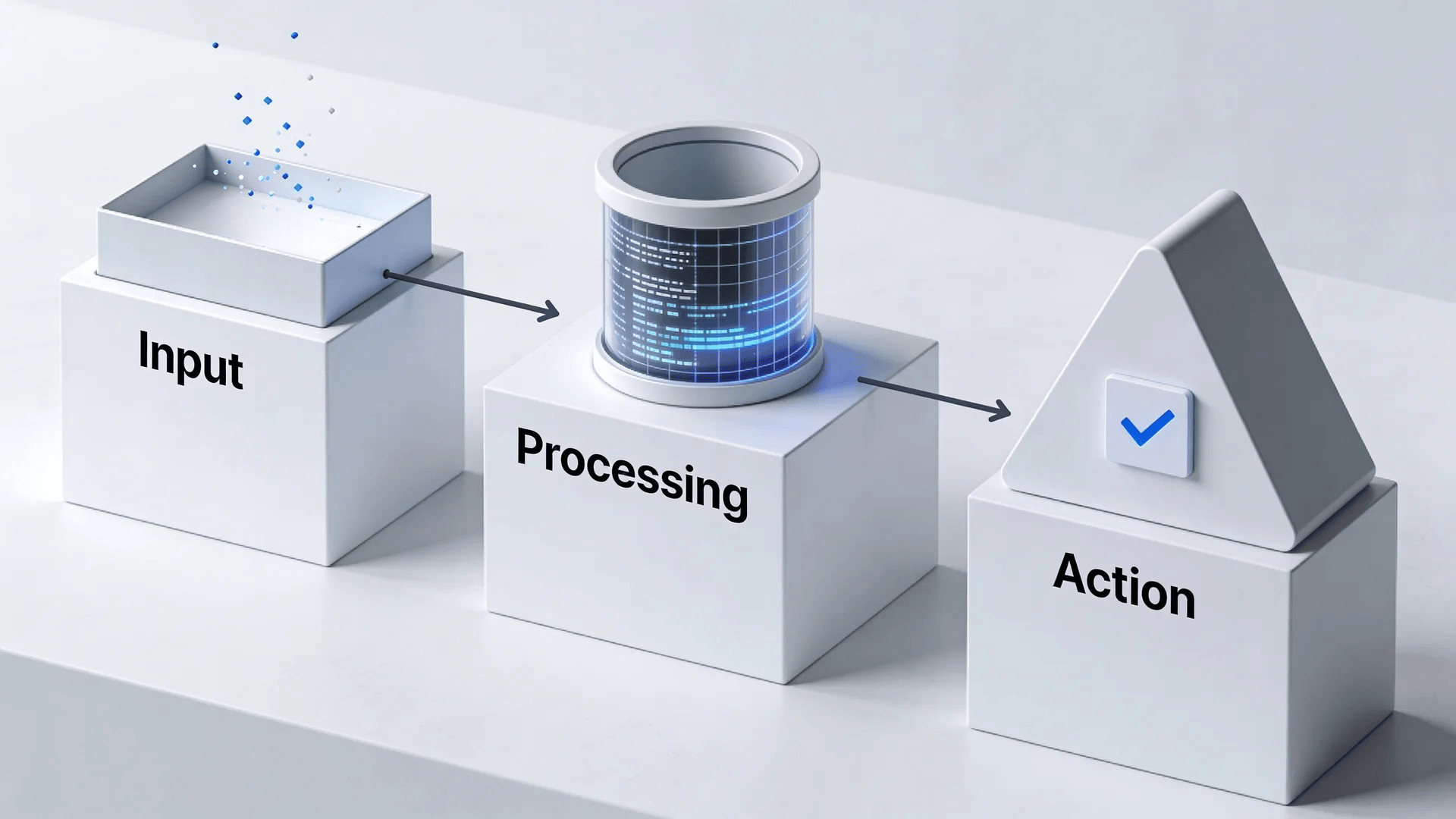
Understanding how these systems are used in practice helps clarify their strengths and limitations.
Managing Multi-Step Tasks Using LLM Outputs
Many systems break tasks into smaller steps and process them sequentially.
This works well when tasks are structured and predictable. Each step supports the next, and the system can maintain alignment with the goal.
When tasks become more open-ended, the number of possible paths increases. The model must choose between options based on probability, which increases the chance of drift.
As a result, the same system may perform reliably in one scenario and struggle in another, depending on how constrained the task is.
Coordinating Across Tools Based on Model Responses
Some systems use LLM outputs to coordinate actions across multiple tools. This can reduce manual effort by automating transitions between steps.
However, it also increases the impact of errors.
A minor issue in a text response may not matter in isolation. But if that response triggers an action in another system, the consequences can be more significant.
This is why structured outputs become critical. In these workflows, outputs must be precise enough for other systems to interpret correctly.
Supervising Human Work Through LLM-Based Decisions
In many cases, agentic systems act as coordinators rather than independent decision-makers.
They may sort inputs, suggest actions, or prepare outputs for human review. This reduces repetitive work while allowing humans to handle more complex or sensitive tasks.
This approach works because it balances efficiency with oversight. The system handles routine steps, while humans remain involved where judgment is required.
What These Agentic AI Updates Reveal About LLM Progress and Limits
The current state of agentic AI reflects both progress and ongoing limitations in LLMs.
Why Small LLM Improvements Change System Behavior
Small improvements at the model level can have a larger impact when outputs are used across multiple steps.
| Layer | What Improves | What Stays Limited |
|---|---|---|
| Model (LLM) | Speed, structure, consistency | Truth verification, stability |
| System (Agentic AI) | Workflow automation, chaining | Error propagation, dependency risk |
A slight increase in consistency can reduce failure across an entire workflow. This is why updates that seem minor in isolation can still matter at the system level.
How Reliability Issues Scale in Multi-Step Systems
Reliability becomes more complex as systems grow.
Reliability becomes harder to maintain as systems grow. The model is no longer producing one result, but a chain of decisions that must stay aligned over time. A small deviation early on may not stand out, but it can shift later steps and change the final outcome.
This introduces a compounding effect. A small deviation early in the process may not be noticeable, but it can influence later steps. By the end of the process, the result may be significantly off, even though each individual step seemed reasonable.
This is why systems that perform well in controlled settings may still struggle in real-world use.
What Still Limits Agentic AI Today
Some limitations remain consistent across systems:
- Outputs are probability-based, not verified
- Structure can break under strict requirements
- Confidence does not equal correctness
- Performance varies depending on the task
Improvements reduce some of these issues, but they do not eliminate them.
Wrapping Up
Agentic AI updates can seem like a sudden shift, but they are really a continuation of how these systems are evolving.
The difference now is not just better outputs, but how those outputs are used across connected steps. That is where the impact shows up most clearly.
At the same time, the underlying limits have not disappeared. Errors still exist, and once they move through a process, their impact becomes harder to contain.
Once you understand both the progress and the limits together, the changes become easier to read and less likely to be misunderstood.
Frequently Asked Questions
What is the difference between LLMs and Agentic AI?
LLMs generate single responses to prompts, while agentic AI systems use those responses to plan actions and complete tasks across multiple steps.
How do LLM updates affect agentic AI systems?
LLM updates improve consistency and structure, which helps agentic AI systems perform multi-step workflows with fewer errors and more stable outputs.
Is agentic AI fully autonomous?
No, most agentic AI systems are not fully autonomous and require human supervision to manage errors, validate outputs, and handle complex decisions.
Why do agentic systems still fail even with better models?
Agentic AI systems fail because LLM outputs are probability-based, so small errors can accumulate and disrupt multi-step workflows.
How are agentic AI and LLM research connected?
Agentic AI systems rely on LLM capabilities, so improvements in LLM research directly increase the reliability and performance of agentic systems.