
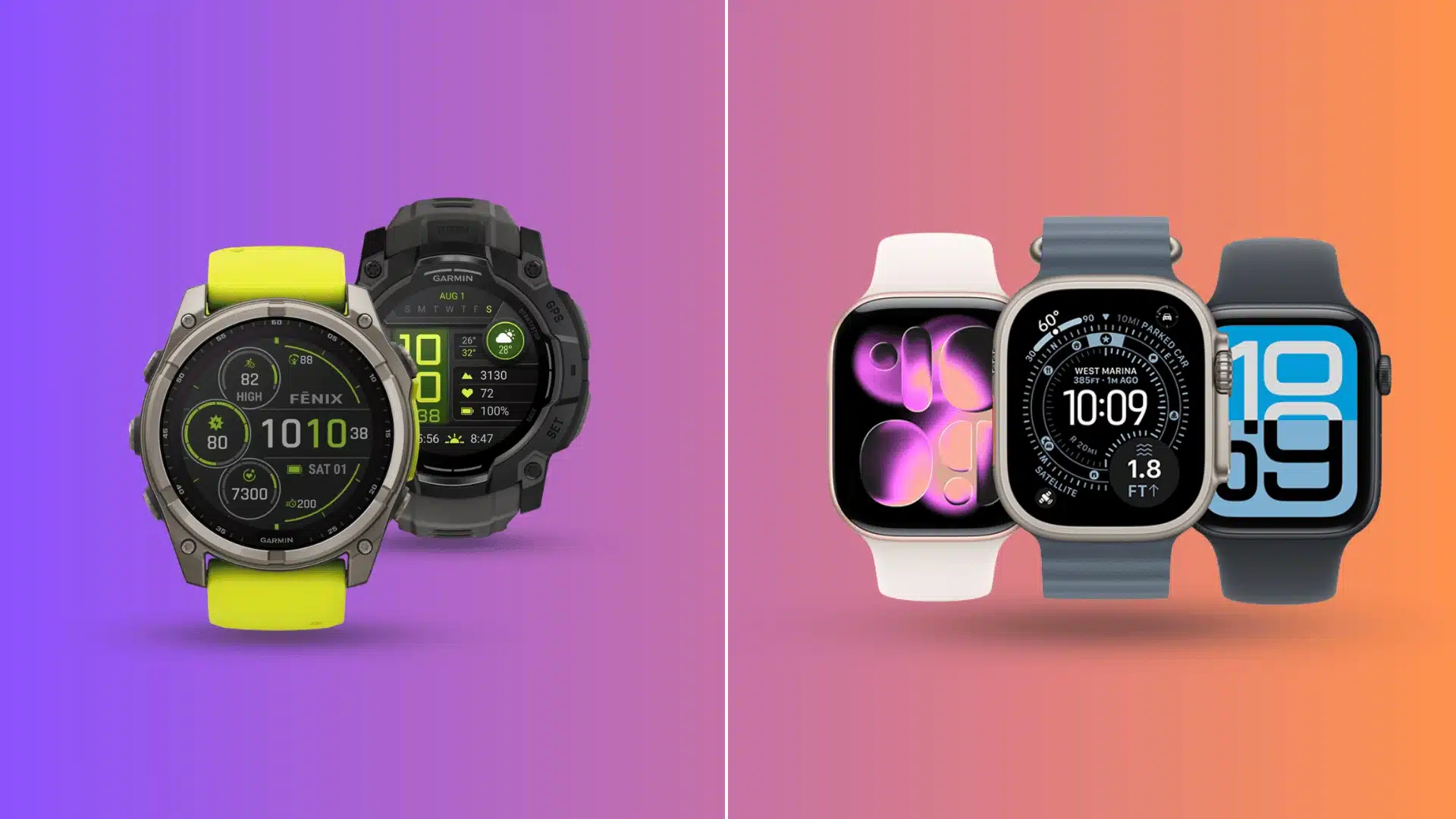
Choosing between Apple Watch and Garmin can get confusing fast. Both offer useful health data, workout tracking, and smart features, but they serve different users.
If you are comparing Apple Watch vs Garmin, the right choice depends on how you exercise, which phone you use, and how often you want to charge your watch.
I find it helps to focus on real daily use instead of comparing long feature lists.
You will see how the two differ in fitness tracking, accuracy, running, health tools, battery life, apps, navigation, design, and value, so you can decide which one fits your routine better.
Apple Watch vs Garmin at a Glance
| Feature | Apple Watch | Garmin |
|---|---|---|
| Best for | Everyday smartwatch users | Athletes and outdoor users |
| Phone compatibility | iPhone | iPhone and Android |
| Fitness tracking | Very good | More advanced |
| Battery life | Shorter | Much longer |
| Smart features | Excellent | Good |
| Running features | Good | Excellent |
| Apps | Larger ecosystem | More fitness-focused |
| Navigation | Good | Strong on select models |
| Health tracking | Strong | Strong |
| Product range | Smaller lineup | Wider lineup |
Garmin Watch vs Apple Watch: Key Differences
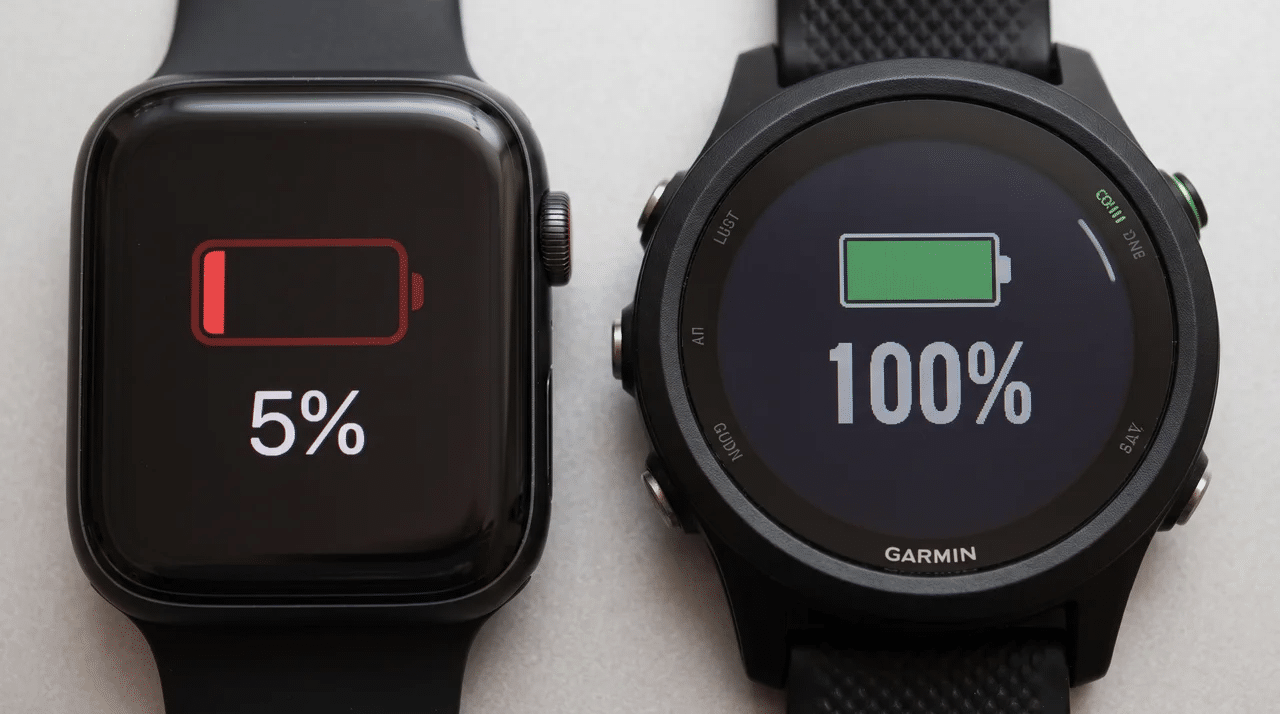
Apple Watch and Garmin differ most in fitness depth, battery life, smart features, compatibility, navigation, and software. Comparing these areas makes the better choice much clearer.
1. Fitness Tracking
Both watches handle everyday fitness well, including steps, calories, heart rate, workouts, and activity goals. Apple keeps the experience simple through Activity Rings and Apple Health, which works well if you want easy daily motivation.
Garmin goes deeper with features such as Training Readiness, Body Battery, recovery insights, training load, and structured plans. That makes Garmin more useful for serious training, while Apple remains a strong choice for general exercise and daily activity tracking.
2. Accuracy
Both Apple Watch and Garmin can provide dependable GPS, heart rate, pace, distance, step, sleep, and calorie estimates, but accuracy depends heavily on the model.
Sensor generation, wrist fit, workout type, satellite conditions, and surrounding buildings or trees can all affect results.
Higher-end Garmin watches often focus more heavily on advanced GPS performance, while Apple performs strongly for everyday workouts.
The better approach is to compare specific models rather than assume one entire brand is always more accurate. The same debate comes up with finger-worn health trackers, where placement and skin contact affect readings just as much as the sensor itself.
3. Running and Sports
Garmin generally has the advantage for serious runners because many models offer detailed pace data, interval workouts, training load, recovery information, race tools, multisport modes, and long GPS battery life.
Physical buttons can also be easier to use during wet or sweaty workouts. Apple Watch still performs well for casual and recreational running while providing stronger everyday smart features.
If your training is structured or endurance-focused, Garmin usually offers more useful tools for planning, measuring, and reviewing performance.
4. Health Tracking
Apple and Garmin both monitor key health metrics such as heart rate, sleep, stress, cycle data, and general wellness trends. Some models also support ECG and blood oxygen features where available.
Apple places health information inside the broader Apple Health ecosystem, making it easy to view alongside other iPhone data.
Garmin connects wellness information more closely with fitness, recovery, and readiness. This same continuous-tracking idea shows up in healthcare, too, where wearables support patient monitoring by helping clinicians follow vital signs after someone leaves the hospital.
Availability varies by model, region, and software, so you should confirm specific health features before purchasing.
5. Battery Life and Charging
Battery life is one of the clearest differences between these brands. Apple Watch usually needs charging much more often, while many Garmin models last several days or even longer depending on settings and use.
GPS workouts, music, and always-on displays reduce battery life on both. Garmin is particularly convenient for sleep tracking, long runs, hiking, and travel because charging is less frequent.
Some models also offer solar-assisted charging, giving outdoor users another advantage during extended activities.
6. Smartwatch Features and Compatibility
Apple Watch is stronger if you want your watch to function as an extension of your iPhone. It supports calls, messages, Siri, Apple Pay, apps, music, notifications, and cellular features on supported models.
Garmin handles core smart functions such as notifications, music, payments, and selected voice features, but its app ecosystem is more limited. Compatibility also matters. Garmin works with both iPhone and Android, while Apple Watch is designed around the iPhone and Apple ecosystem.
7. Design, Display, and Comfort
Apple Watch uses a rectangular design that works well for apps, notifications, maps, and touch controls. Garmin offers far more variety, including round lifestyle watches, lightweight running models, and rugged outdoor devices.
Many Garmin watches also combine touchscreens with physical buttons, which can be useful during exercise. Comfort depends on case size, weight, strap material, and wrist size.
Apple generally looks more like a modern smartwatch, while Garmin gives you more options for sporty or traditional watch styling.
8. Maps and Navigation
Navigation capabilities vary widely across both brands, but Garmin usually offers more outdoor-focused tools on supported models.
Features can include route guidance, breadcrumb navigation, offline maps, topographic maps, hiking data, and trail navigation. Apple Watch benefits from strong Apple Maps integration and works well for everyday walking, cycling, and city directions.
Garmin becomes more appealing when hiking, trail running, or long outdoor activities are important. Always check the exact model because not every Garmin includes advanced mapping features.
9. Apps and Software
Apple Watch has the stronger general-purpose app ecosystem. watchOS supports a wide range of fitness, communication, productivity, entertainment, navigation, and health apps.
Garmin relies more heavily on Garmin Connect, where training history, recovery information, workout data, and fitness trends are presented in greater depth.
Connect IQ adds extra apps, watch faces, and data fields, but it remains more fitness-focused. Apple is better for broader smartwatch software, while Garmin is stronger for detailed exercise and training analysis.
10. Price and Overall Value
Price varies significantly because Garmin offers a much broader range of watches. You can find basic fitness models, midrange running watches, premium outdoor devices, and high-end multisport options.
Apple keeps its lineup simpler, which makes choosing easier but provides fewer specialized categories. Value depends on how you plan to use the watch.
Garmin may offer better long-term value for serious athletes, while Apple can be more worthwhile if you regularly use apps, calls, messages, payments, and other smartwatch functions.
Which Garmin Is Most Similar to an Apple Watch?
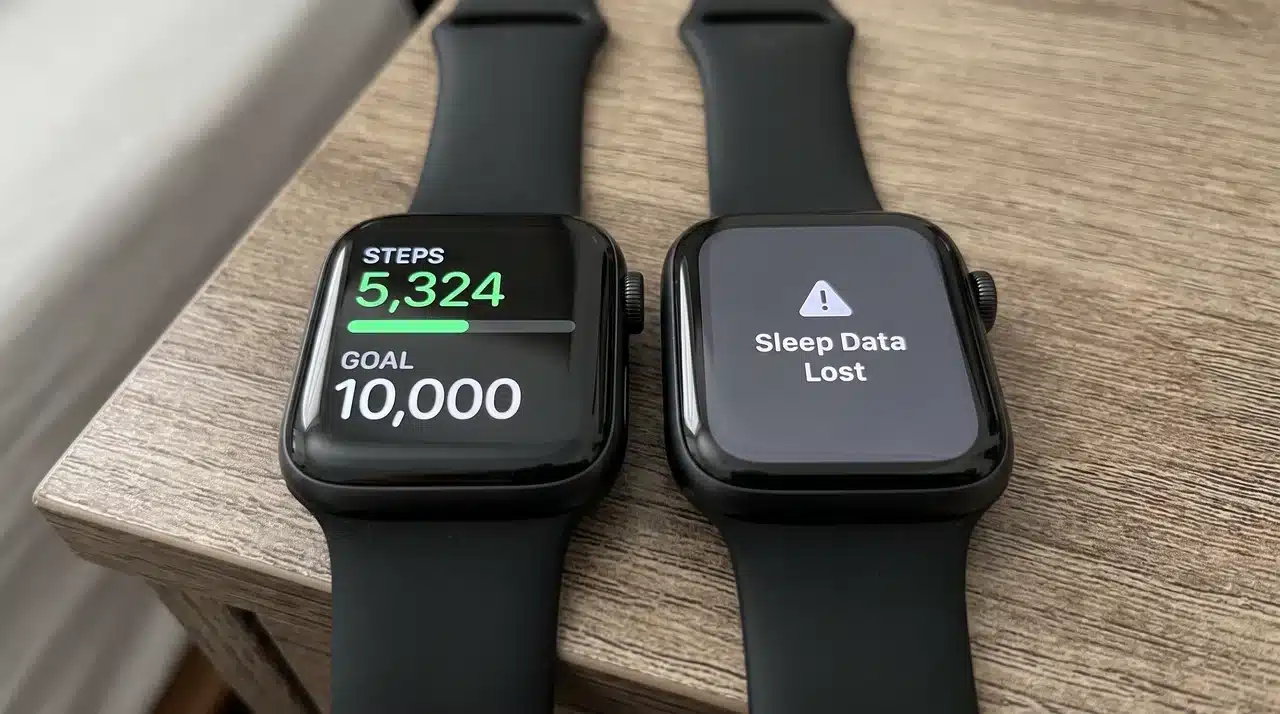
Garmin does not have one watch that directly matches the entire Apple Watch lineup.
For shoppers who want a Garmin that feels closest to a general-purpose smartwatch, the Garmin Venu family is one of the more relevant places to start.
Current search results specifically highlight the Venu line as an Apple Watch alternative, with recent coverage noting strong health and fitness tracking, multi-day battery life, and support for both iPhone and Android.
The right comparison depends on the type of Apple Watch you’re considering.
A standard Apple Watch is best compared with Garmin models that balance fitness and everyday smart functions. More affordable Apple options should be compared with Garmin’s entry and midrange fitness watches.
Buyers considering Apple’s rugged premium watches should instead look at Garmin’s higher-end outdoor and endurance-focused families.
Comparing watches at similar prices and for similar uses gives a much more useful result than comparing the two brands as a whole.
Is It Worth Switching From Apple Watch to Garmin?
Switching makes sense when your priorities have changed.
Garmin may be worth moving to if you now care more about:
- Multi-day battery life
- Serious running
- Structured training
- Recovery information
- Hiking
- Outdoor navigation
- Endurance sports
- Physical controls
- Less frequent charging
- The switch becomes especially logical when Apple Watch already records everything you do, but you increasingly want more interpretation of the training data.
Staying with Apple Watch is often the better decision if you rely heavily on:
- iPhone apps
- Calls and messages
- Siri
- Cellular features
- Apple Pay
- Apple ecosystem integration
- Third-party smartwatch apps
- Everyday communication
This is why switching discussions among actual users tend to divide around battery and fitness versus apps and ecosystem convenience. Current Google results surface the same question directly in People Also Ask.
Changing brands only because one device has more fitness metrics may not be worthwhile if those metrics will rarely be used.
Final Thoughts
The better watch depends less on brand reputation and more on how you plan to use it every day.
In the Apple Watch vs Garmin decision, Apple makes more sense if you value iPhone integration, apps, calls, messages, and simple fitness tracking.
Garmin is usually the stronger choice for running, structured training, outdoor activities, recovery data, navigation, and longer battery life.
I recommend comparing your phone, workout habits, and charging preferences before focusing on extra features you may never use. That keeps the decision practical and helps you get better value.
If you found this comparison useful, check out our other smartwatch guides before choosing your next wearable.
Frequently Asked Questions
What does Garmin have that Apple Watch doesn’t?
Garmin’s biggest advantages are its longer battery life, broad selection of sports-focused watches, advanced training and recovery metrics, and specialized navigation features on selected models. Some Garmin watches also offer solar-assisted charging, which Apple Watch does not currently provide.
What can an Apple Watch do that Garmin can’t?
Apple Watch offers deeper iPhone integration, a broader third-party app ecosystem, and stronger communication functions. Calling, messaging, Siri, cellular options, and integration with other Apple devices generally feel more complete than they do on Garmin watches.
Is Garmin more accurate than Apple Watch?
Not in every situation. GPS, heart-rate, pace, distance, and other measurements vary by specific model, sensor generation, activity, fit, and environment. Higher-end Garmin watches can be especially attractive for demanding GPS activities, but accuracy should be compared model by model.
Is Garmin better than Apple Watch for running?
Garmin is generally better for serious runners because it emphasizes training metrics, recovery information, physical controls, long battery life, and structured sports features. Apple Watch remains a strong option for recreational runners who also want advanced smartwatch functions.
Can Garmin work with an iPhone?
Yes. Garmin watches support iPhone as well as Android devices. However, some phone-dependent features can differ between platforms. Apple Watch provides much deeper integration with iPhone because both devices are part of the same Apple ecosystem.
Is Apple Watch or Garmin better for health tracking?
Both offer strong health tracking, but they present the information differently. Apple integrates health data closely with the iPhone and Apple Health, while Garmin ties many wellness measurements to fitness, recovery, and training readiness. Feature availability varies by model and region.
Which lasts longer, Garmin or Apple Watch?
Garmin generally lasts considerably longer between charges. Google’s current comparison results describe Garmin battery life as ranging from several days to several weeks depending on the model, while Apple Watch normally requires much more frequent charging.
Is it worth switching from Apple Watch to Garmin?
It can be worthwhile if longer battery life, running, recovery data, outdoor navigation, or structured training have become more important than apps and iPhone integration. Users who depend heavily on calls, messages, Apple apps, and ecosystem features may prefer staying with Apple Watch.