

What Is the Ultrahuman Ring and Which Model Should You Consider?
The Ultrahuman Ring is a smart ring that tracks sleep, recovery, and health data 24/7 from your finger. Right now, it comes in two versions, the Ring Air and the Ring Pro, and they’re more different than the price gap suggests.
Here’s the first thing to get straight: this is not a smartwatch alternative. There’s no screen. No notifications. No buzzing on your wrist. The ring sits on your finger, collects data in the background all day and night, and sends it to an app.
Think of it less like a fitness tracker and more like a continuous health baseline tool, something you wear constantly so it learns what’s normal for you and catches when something shifts.
Two models. One key decision.
The Ring Air costs $349. It lasts four to six days per charge. It covers every core tracking feature Ultrahuman is known for.
The Ring Pro costs $479. It lasts twelve to fifteen days per charge. It also processes certain health data on the ring itself, rather than sending it to the cloud.
That last point is easy to gloss over, but I think it matters more than most buyers realize.
The Pro doesn’t just have a bigger battery; it runs health computations locally.
In practice, that means faster readiness scores in the morning and more privacy around your health data. For frequent travelers, the battery alone can justify the extra $130. For everyone else, the Air gives you the same sensor experience for less.
This review covers both, and flags where they actually differ.
What Does the Ultrahuman Ring Actually Track?
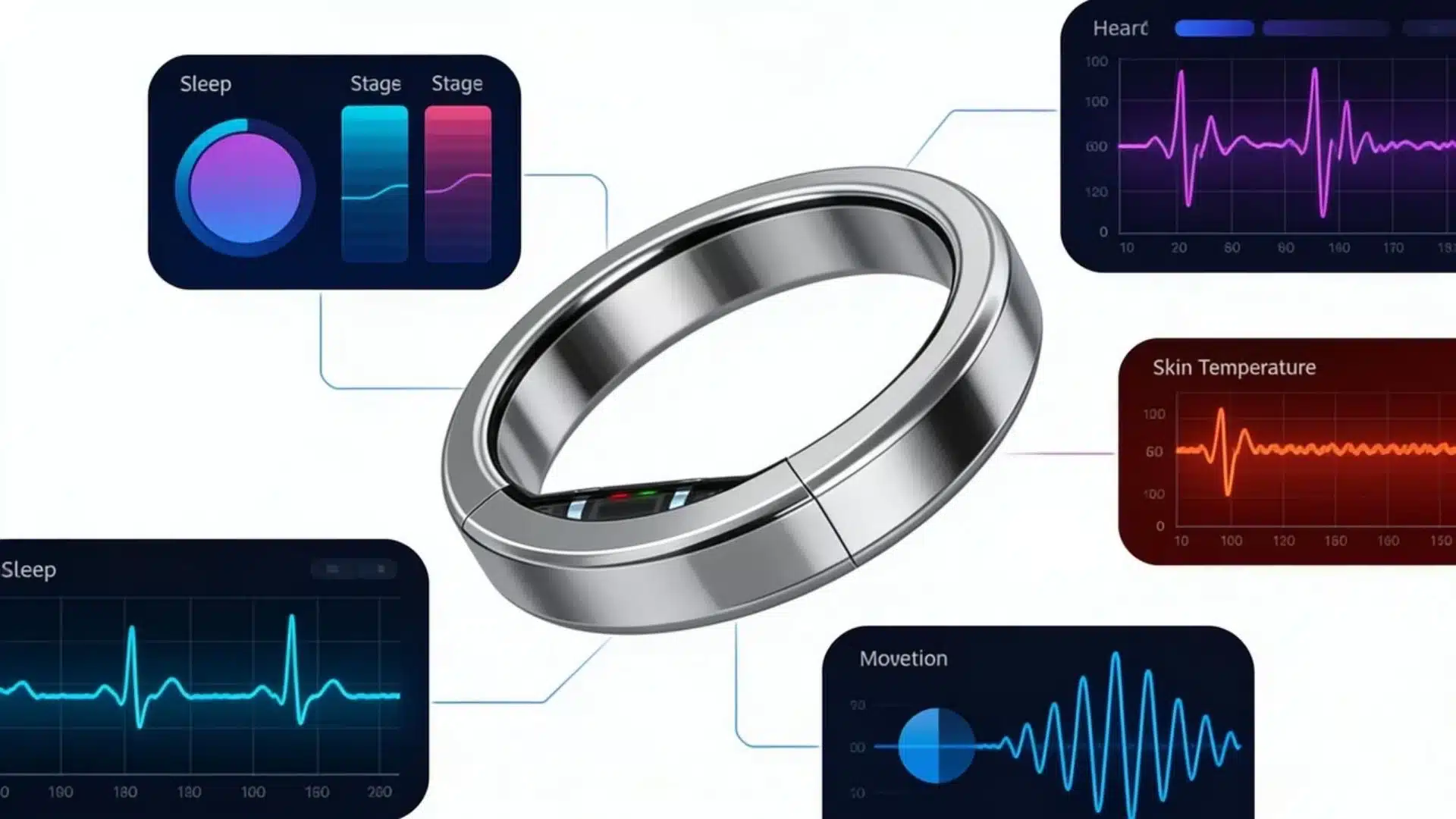
The Ultrahuman Ring tracks sleep stages, heart rate variability, skin temperature, resting heart rate, and movement. The app then takes all of that and turns it into timed recommendations through a feature called PowerPlugs.
But before we get into what it tracks, it’s worth understanding why a ring tracks better than a watch for this type of data. Most people assume accuracy is about hardware quality. With biometric wearables, placement matters just as much, and this is where the ring form factor genuinely earns its reputation.
Sleep and Recovery Metrics
Your finger has a dense arterial network running right under the skin. The arteries there are large relative to the finger’s size, which gives an optical sensor a short, clean path to your blood flow.
A wrist sensor has to work through more fat, more tissue, and deals with constant movement, every time you flex or shift your wrist at night, the reading gets noisier. That’s not a flaw in any specific watch. It’s just anatomy.
Ring-based HRV readings consistently show less noise than wrist-based ones. That’s why the Ultrahuman Ring’s resting heart rate and auto nap detection get called out specifically in Ultrahuman Ring air reviews from RunToTheFinish, GarageGymReviews, and DansTube.TV.
The accuracy isn’t a marketing claim; it’s a function of where the sensor sits.
PowerPlugs and Behavioral Nudges
Most health wearables give you data and leave you to figure out what to do with it. PowerPlugs is Ultrahuman’s answer to that problem.
Instead of a dashboard of numbers, the app sends timed nudges based on your real-time data.
A suggested caffeine cutoff based on your circadian phase today. A UV exposure alert during outdoor activity. A prompt to shift your sleep window based on your recent temperature trend.
These aren’t generic tips pulled from a wellness database; they’re built from your personal baseline.
I think this is the most underrated thing about the Ultrahuman platform. Oura gives you a readiness score and trend graphs. PowerPlugs tells you what to do and when. For people who want their data to change their behavior, not just inform it, that difference matters.
Women’s Health and Cycle Tracking
The ring tracks temperature using a baseline-deviation model. That means it’s not comparing your temperature to a population average.
During the first few days of wear, the app builds a personal resting temperature baseline just for you. After that, it watches for rises and falls relative to your norm.
This is what makes cycle tracking work. The hormonal shift after ovulation, driven by progesterone, causes a temperature rise of a fraction of a degree. You can only catch that if you’re measuring against your own baseline, not a generalized threshold.
Ultrahuman claims over 92% accuracy for cycle phase detection, backed by 15 years of research.
Independent long-term data beyond the company’s own figures is limited, but user reports are consistently strong, especially when the ring is worn every night without gaps.
The same model catches early illness. A rising temperature deviation combined with an elevated resting heart rate during sleep often flags something coming 24 to 48 hours before you feel it. That’s not a trick. That’s what a personal baseline makes possible.
How Accurate and Reliable Is the Data in Practice?
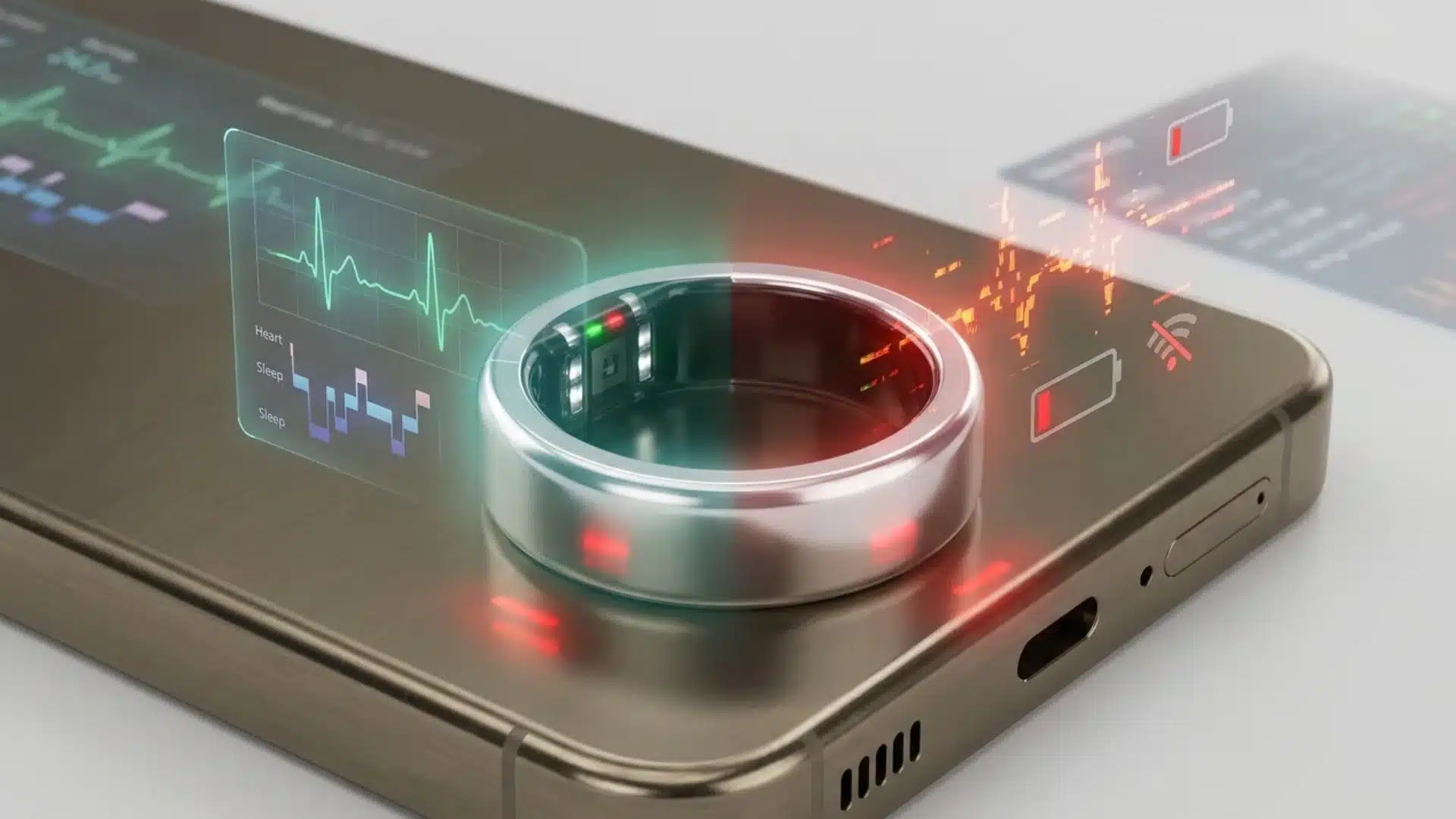
Independent reviews consistently rate the Ultrahuman Ring’s sleep and HRV data as accurate. But hardware failure reports, particularly battery problems and connectivity issues in the first year, are a real risk that accuracy scores alone don’t capture.
These are two completely different questions. Most reviews treat them as one, and that’s where buyers end up surprised.
Sensor Accuracy
On accuracy, the picture is genuinely positive. Resting heart rate readings track closely to chest strap and clinical measurements across multiple independent reviewer comparisons.
Sleep stage granularity gets specific praise; the breakdown of light, deep, and REM sleep is detailed enough that users report catching the exact impact of a late coffee or a warm bedroom on their numbers.
GarageGymReviews gives the ring 4.4 out of 5 stars, and the main complaints there aren’t about accuracy. They’re about durability and value.
Auto nap detection is a quiet standout. Many devices miss naps entirely or log them as steps. The Ultrahuman Ring catches them consistently, which matters more than it sounds when you’re trying to build an honest picture of your total sleep.
Hardware Reliability
This is where things get complicated, and I think it’s the most important thing to know before you spend $349 or $479.
Across Reddit’s r/Ultrahuman and r/SmartRings communities, a clear pattern shows up that professional reviews rarely surface: some users report battery failure within months, the ring dying within four hours of a full charge. A second pattern involves connectivity loss after a replacement unit arrives.
Neither failure mode is shockingly common by consumer electronics standards. But what compounds the risk is what happens next.
When the hardware fails, you hit Ultrahuman’s support system, which routes through an AI bot. Multiple users describe it as nearly impossible to reach a human agent.
One documented r/SmartRings post describes a user who gave up, ordered an Oura the same day, and switched entirely.
Here’s the thing: a ring that occasionally fails is fine if support is responsive. A ring that occasionally fails and puts you behind an automated wall when it does, that’s a different purchase. If you have low patience for self-service troubleshooting, build that into your decision.
Ultrahuman Ring vs. Oura Ring: How Do They Actually Compare?
The Ultrahuman Ring and the Oura Ring are the two smart rings worth seriously comparing in 2026. The right choice comes down to what you actually need from the device — not which one has the longer spec sheet.
The differences are real, but they’re targeted. Let me walk through them clearly.
Features Side by Side
Here’s what each ring offers that the other doesn’t:
Oura Ring Gen 4 has:
- Blood oxygen (SpO2) monitoring
- Skin conductance measurement for stress tracking
- A larger library of third-party app integrations (Apple Health, Google Fit, and more)
- A longer research validation track record
Ultrahuman Ring Air / Pro has:
- PowerPlugs: timed behavioral nudges based on your real-time data
- No subscription required for core health data
- On-board AI processing (Pro only)
Both rings track sleep stages, HRV, resting heart rate, and skin temperature. Both use PPG-based finger sensing. The sensor gap between them is real, but it’s specific. It matters most if you want SpO2 tracking or stress-related conductance data. If you don’t need those, you won’t feel the gap day to day.
Total Cost Over Two Years
This math almost never gets laid out directly, so here it is.
| Ultrahuman Air | Ultrahuman Pro | Oura Gen 4 | |
|---|---|---|---|
| Upfront | $349 | $479 | $349 |
| Monthly fee | $0 | $0 | $5.99 |
| 24-month total | $349 | $479 | ~$493 |
The Oura Gen 4 costs more than the Ring Pro over two years. The Air saves you roughly $144 against Oura over the same period. If you object to subscriptions on principle, the math is already settled. Ultrahuman wins cleanly.
If you’re comparing Pro against Oura Gen 4, the two-year cost is nearly identical. At that point, the decision is about features, not price.
Who Should Choose Which
You don’t need a long list of trade-offs here. Three scenarios cover most buyers.
Choose the Ultrahuman Ring Air if: you care most about sleep and recovery tracking, you don’t want a monthly fee, and you want behavioral nudges that act on your data rather than just displaying it.
Choose the Oura Ring Gen 4 if: you specifically want SpO2 monitoring, skin conductance for stress tracking, or access to a broader third-party integration ecosystem.
Comparing Ring Pro vs Oura Gen 4? The two-year costs are nearly the same. The decision narrows to one question: do you want on-board AI processing and PowerPlugs, or Oura’s wider sensor range?
Design, Comfort, and Real-World Wear
The Ultrahuman Ring’s titanium build and sub-3g weight make it comfortable enough for all-day wear. including sleep. But it does create real discomfort during strength training, and that’s not something a firmware update will fix.
The most consistent thing every long-term reviewer says about this ring, professional or otherwise, is that you forget you’re wearing it.
That’s not a marketing line. It’s the most reported finding across the board.
The titanium is lighter than ceramic or steel. It doesn’t trap heat the way a smartwatch band does. There’s no raised display, no outer pins, no sensor bumps. After about a week, most people stop noticing it entirely.
For sleep tracking specifically, that invisibility is the whole point. If the ring bothers you at night, you’ll shift how you sleep, and then the data starts reflecting your discomfort, not your health.
The one real failure point: lifting.
When you grip a barbell, dumbbell, or pull-up bar, the ring sits between your skin and the metal. The pressure builds under load. It’s uncomfortable for most people and gets worse the heavier you go, and the outer shell ultimately scratches.
This isn’t a manufacturing defect; it’s geometry. A rigid ring under a compressive grip will always create pressure. No version of the product will solve it.
If you train with weights every day, you’ll need to take the ring off during sessions. That creates a gap in your continuous data. That’s a real trade-off, and you should know it before buying.
Get the sizing right. It’s not optional.
Rings can’t be resized after purchase. A wrong size doesn’t just feel uncomfortable; it actually degrades your data. The PPG sensor on the inner surface of the ring needs consistent skin contact to produce clean readings.
If the ring slides around, the optical signal gets noisy. Ultrahuman offers a free sizing kit before you order. Use it. I’d treat it as a required step, not a nice-to-have.
Battery Life, Charging, and the Ring Pro Upgrade
The Ultrahuman Ring Air lasts 4–6 days per charge. The Ring Pro pushes that to 12–15 days and uses a pin-connection charging case, not wireless, to keep heat away from your temperature sensor.
In real life, the Air’s range means you’re charging mid-week. From empty, it takes around 60–80 minutes. The ring isn’t waterproof while it’s charging, so there’s a short break in continuous wear, but it’s short. Most people charge it in the morning while they shower and it’s ready before they leave the house.
The Pro’s range changes the calculus for travel entirely. A week-long trip with the Pro means no charger in your bag. That’s the most practical upgrade the Pro offers, and for frequent travelers, I think it’s worth more than any spec sheet makes it look.
Why the Pro doesn’t charge wirelessly.
If you’re used to premium wearables, the pin-connection charging case might feel like a step backward. It isn’t.
This is a deliberate thermal management decision. Wireless inductive charging generates heat at the contact point. For a device that uses skin temperature as a primary health signal, that’s a problem. Thermal noise from charging would contaminate the baseline that the ring works so hard to build.
The pin connection keeps things cooler. The reasoning is sound once you understand it.
What on-board AI processing actually means.
The Ring Pro’s marketing leans heavily on “on-board AI processing.”
Here’s what that actually means in practice: your readiness score and certain overnight health computations run on the ring itself rather than on Ultrahuman’s servers. The main thing you notice is a faster readiness score when you open the app in the morning.
For most buyers, it’s not the reason to choose the Pro. For anyone with strong data privacy preferences who doesn’t want continuous health data going to external servers, it’s a genuinely meaningful distinction. Everyone else should make the decision based on battery life and the two-year cost math.
Is the Ultrahuman Ring Worth Buying?
The Ultrahuman Ring is one of the most capable sleep and recovery trackers available right now. The sensor accuracy is real. The subscription-free model is genuinely rare at this price point. PowerPlugs is the kind of behavioral layer that makes the data actually useful, not just interesting.
But there are two things I’d want you to walk away knowing.
First, the hardware reliability picture is not as clean as the review scores suggest. Battery failures and connectivity issues exist in the wild. Ultrahuman’s support system, when you need it, makes resolving those problems harder than it should be. If you hit a problem and need human help quickly, that gap will matter to you.
Second, this ring lives and dies on sleep tracking. If that’s not what you’re buying it for, you’re buying the wrong device.
If you sleep poorly, train hard, want to understand your recovery, and don’t want a subscription eating into your budget, the Ultrahuman Ring Air at $349 is a strong choice. If you travel constantly and want to skip the charger for two weeks at a stretch, the Ring Pro at $479 earns its price. If you specifically need blood oxygen monitoring or a more established app ecosystem, Oura Gen 4 is the smarter move.
Order the sizing kit first. Use it before you order the ring. That one step is the difference between a device that works as advertised and one that gives you noisy data from day one.
Frequently Asked Questions
Is the Ultrahuman Ring worth it if you don’t care about sleep tracking?
Probably not. The ring’s real value lives in sleep and recovery data: HRV, sleep stages, temperature trends. Take that away and you’re left with step counting and activity tracking that dedicated sports watches handle better, usually for less money. If fitness metrics are your main goal, a sports watch serves you better.
Does the Ultrahuman Ring require a subscription?
No. Sleep stages, HRV, readiness scores, and temperature data are all free. PowerPlugs and the full feature set are included at no extra cost. This is a real difference from Oura, which charges $5.99 per month to unlock most of its meaningful health insights beyond basic raw data.
Is the Ultrahuman Ring Air being discontinued?
Not as of mid-2026. The Air is still sold at $349. The Ring Pro is a premium tier above it, not a replacement for it. Ultrahuman hasn’t announced any discontinuation plans. The earlier patent dispute that blocked US availability applied to an older hardware configuration. Current models are unaffected.
How accurate is the Ultrahuman Ring for women’s cycle tracking?
Ultrahuman claims over 92% accuracy for cycle phase detection. The method uses continuous skin temperature deviation from your personal baseline, not a population average, and is backed by 15 years of internal research. Independent long-term validation beyond company data is limited. But user reports are consistently positive, especially when the ring is worn every night without interruption across multiple cycles.