
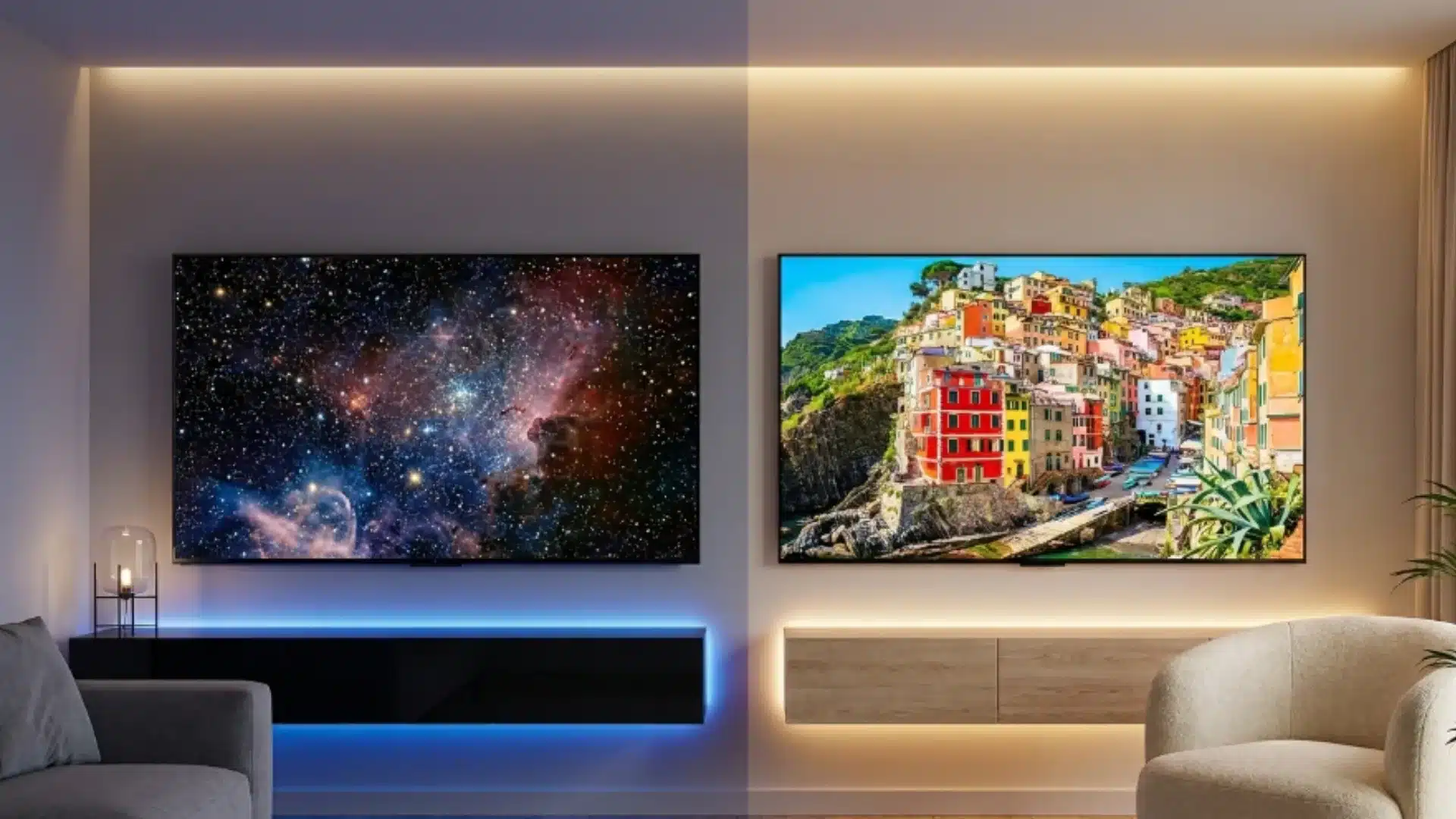
I have learned that TV shopping gets much easier once you stop comparing labels and start comparing how each screen produces an image.
That is where the QNED vs OLED debate becomes useful, because these displays handle brightness, contrast, black levels, and color in different ways. I look at the room first.
A bright living room may benefit from the extra punch of QNED, while a darker space can make OLED’s deep blacks and precise contrast stand out.
Price, viewing angle, gaming features, and the risk of image retention also matter, and the same factors come into play when picking a gaming display for consoles or PC setups, but none of those specs mean much without understanding the panel technology behind them.
Once that difference is clear, choosing the right TV feels less confusing and more practical.
What Are QNED and OLED, Exactly?
OLED and QNED use different technologies to create an image. OLED is a self-emissive display, so each pixel produces its own light and can turn off completely to create true black. QNED is an LCD-based technology from LG that uses a separate backlight.
Depending on the model, QNED TVs may use Mini LED backlighting and different color technologies, so not every QNED TV has the same setup.
Because OLED controls light at the individual-pixel level, it can produce deeper blacks and more precise contrast.
QNED relies on backlight zones to control brightness behind the LCD panel, which can provide higher brightness but may cause some blooming around bright objects in dark scenes.
Why Does the QNED vs OLED Difference Matter?
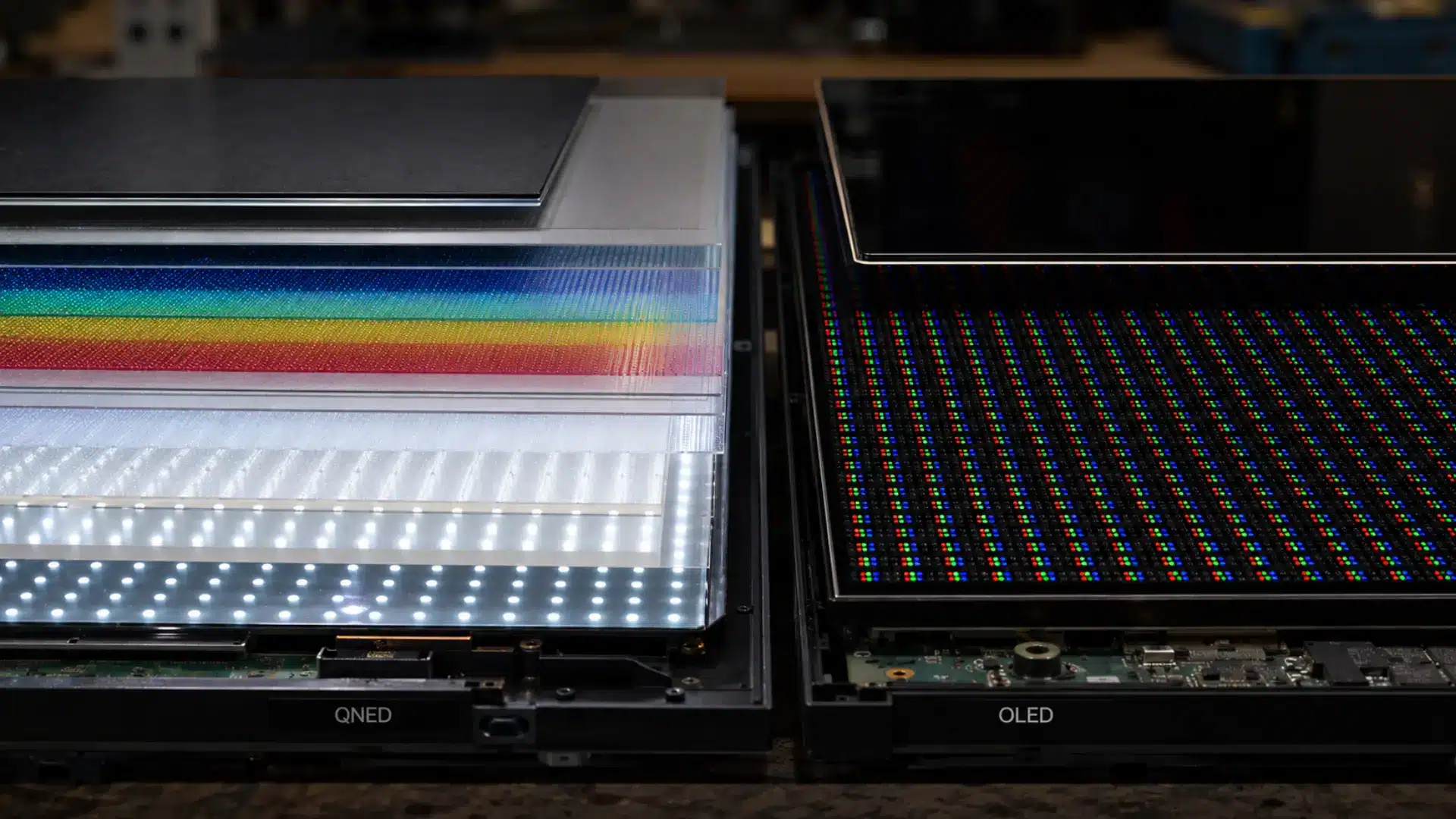
The biggest difference between QNED and OLED comes from how each screen controls light.
OLED controls light at the individual-pixel level, while QNED uses an LCD panel with a separate backlight and local dimming. That affects black levels, brightness, HDR performance, and viewing angles.
Understanding these differences makes it easier to match the TV to your room, content, and viewing habits.
1. True Blacks vs. Local Dimming
OLED pixels create their own light and can switch off completely, giving you true black and very strong contrast. QNED uses an LCD panel with a backlight divided into local-dimming zones.
These zones can dim or turn off sections of the backlight, but each zone covers many pixels. This can create some blooming around bright objects in dark scenes.
High-end QNED Mini LED TVs can reduce this effect, but OLED still has more precise black-level control.
2. Brightness and HDR
QNED Mini LED TVs generally have an advantage in brightness, especially when displaying large bright areas or strong HDR highlights. Their many small LEDs and local-dimming zones can deliver high light output while keeping dark areas dimmer.
OLED TVs have also become much brighter, especially newer models, but their brightness can vary with screen size and content. For a bright room or daylight viewing, a strong QNED Mini LED can have the edge.
3. Viewing Angles
OLED is usually the better choice for wide seating arrangements because its pixels produce their own light, so the picture stays more consistent when viewed from the side.
QNED uses an LCD panel, and its viewing performance can vary based on the panel type and design.
Some LG QNED models use technologies designed to maintain color consistency at wider angles, but OLED generally has the stronger advantage for side viewing.
How Do QNED and OLED Compare for Everyday Viewing and Gaming?
QNED and OLED suit different rooms, content types, and viewing habits, and measuring your viewing space early helps determine which panel makes more sense before comparing specs.
| FACTOR | QNED | OLED |
|---|---|---|
| Picture Quality | Bright picture with strong contrast | Deeper blacks and stronger contrast |
| Gaming | Many models support 120Hz, VRR, ALLM, and HDMI 2.1 | Faster response and excellent motion handling |
| Bright Rooms | Usually better for high-brightness viewing | Newer models can perform well, but vary |
| Dark Rooms | Good, but may show some blooming | Excellent black levels with no blooming |
| Viewing Angles | Vary by model | Generally wider and more consistent |
| Static Content | Lower risk of permanent image retention | Higher risk with repeated static images |
| Price | Often more affordable at large sizes | Usually costs more at larger sizes |
| Best For | Bright rooms, sports, and large screens | Movies, dark rooms, and gaming |
The better choice depends on your room, viewing habits, and budget. QNED is a strong option for bright rooms and large screens, while OLED stands out for deep blacks, contrast, and fast response.
Making the Right Call for Your Space
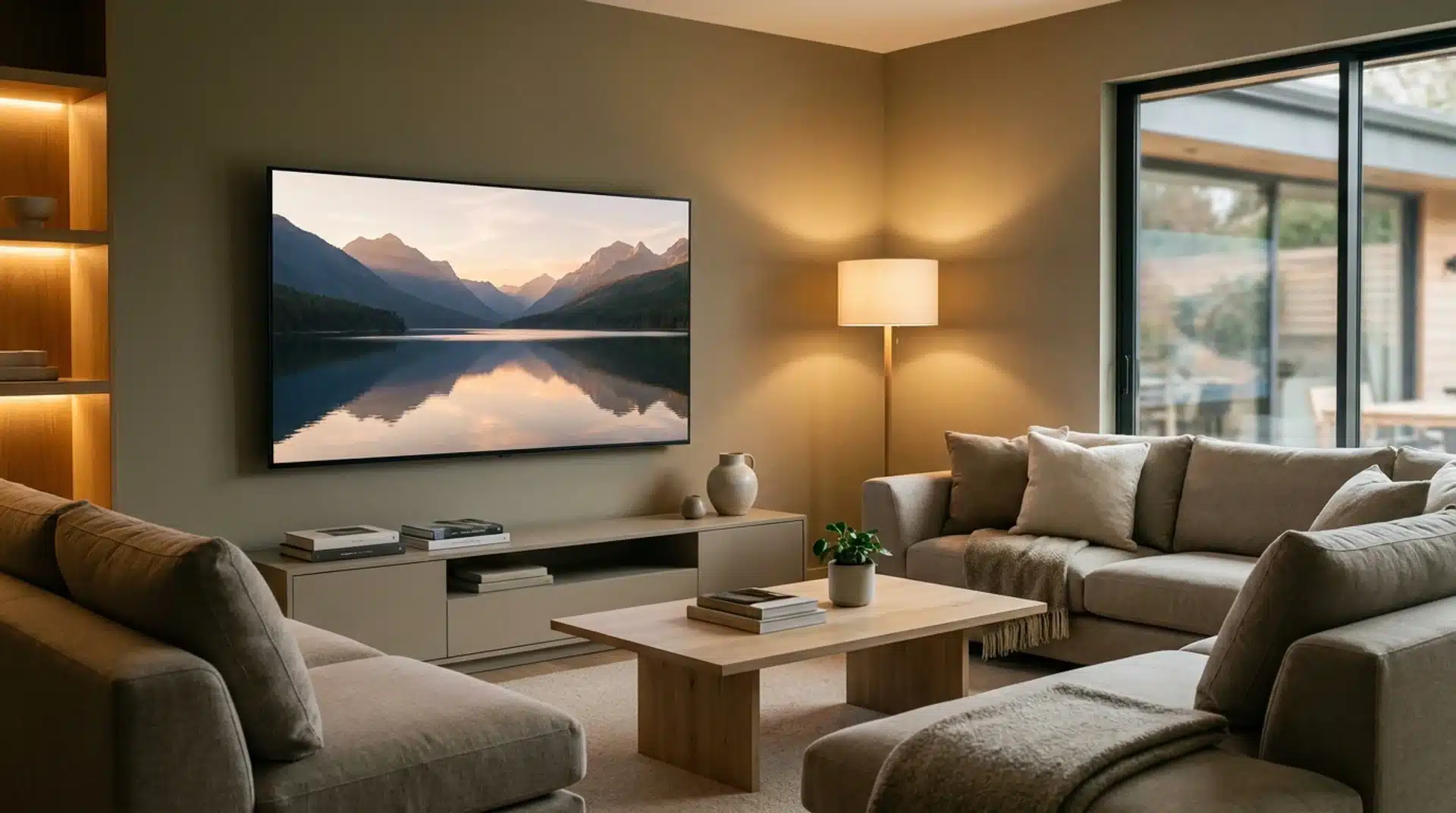
The better choice depends on your room, viewing habits, screen size, and budget, not on one technology being best for everyone.
If your TV sits in a dim room or home theater, OLED’s true blacks and precise pixel-level contrast can make dark scenes look especially clear.
In a bright room with lots of daylight, a QNED Mini LED TV may be a better fit because it can usually produce higher brightness, especially across large bright areas.
If you watch sports, news, or other content with static elements for long periods, QNED also avoids the permanent burn-in risk associated with OLED.
At larger screen sizes, QNED can also offer more affordable options, but prices vary by model and sales. Consider your room lighting, viewing habits, preferred screen size, and budget before making your final choice.
Conclusion
I would choose based on the room before looking at brand names or headline specs. In a darker space where movies and contrast matter most, OLED is usually the stronger fit.
In a bright living room used for sports, gaming, and long viewing sessions, QNED often makes more sense. That is why QNED vs OLED comes down to daily use, not a simple winner and loser.
OLED gives you deeper blacks and sharper contrast, while QNED offers stronger brightness, lower prices at larger sizes, and no burn-in concern.
Once you match those strengths to your habits and budget, the decision becomes much easier. Which display would you choose for your setup? Share your pick and reasoning in the comments below.
Frequently Asked Questions
Is QNED just a cheaper version of OLED?
No. QNED is a separate LCD-based TV technology from LG, while OLED uses self-emissive pixels. QNED can cost less than comparable OLED TVs, especially at larger sizes.
Does QNED have burn-in risk like OLED?
OLED is much more susceptible to permanent burn-in from repeated static images. QNED’s LCD-based display has a much lower risk, making it suitable for news channels and gaming HUDs.
Is OLED always better for gaming?
OLED has very fast pixel response, giving it an advantage in fast-paced games. However, many QNED models also offer 120Hz or higher refresh rates, VRR, ALLM, and HDMI 2.1.
Which is better for a bright living room?
QNED Mini LED is often a strong choice for bright rooms because it can produce high brightness. Newer OLEDs can also perform well, but brightness varies by model.