


Reliable research depends on more than lab equipment. Today’s research teams run on a connected stack of software, cybersecurity tools, analytical instruments, data systems, automation platforms, and communication channels. When one part of that stack fails, the consequences travel fast.
A compromised email account can expose raw data files. An inconsistent instrument can invalidate an entire sample batch. These six technology areas determine whether your research outputs hold up under scrutiny or don’t.
1. Protect Research Communications From the Start
Research teams move sensitive material through email constantly, including test results, grant applications, and internal formulas. That volume of high-value information makes research inboxes a specific target for attackers. For context, recent data shows nearly every higher education institution identified breaches over a single 12-month period.
A spoofed vendor email requesting credentials can easily expose an inbox to unauthorized access. This interrupts active data-sharing workflows and raises questions about whether exchanged results were altered. Practical protection requires filtering suspicious inbound messages before they reach researchers and verifying urgent requests through a secondary channel.
Organizations looking to prevent phishing using AI with Trustifi gain AI-powered inbound filtering that works inside existing environments. Automated email security technology adds a critical layer for teams handling sensitive data daily. Staff training and inbox access controls must accompany this filtering tool, so researchers recognize social engineering patterns.
|
Important: Research inboxes are phishing targets; a compromised account can expose raw data and disrupt workflows. Implement automated filtering and mandatory out‑of‑band verification for any unusual request to stop threats before they reach your team. |
|---|
2. Use Accurate Lab Equipment for Dependable Data
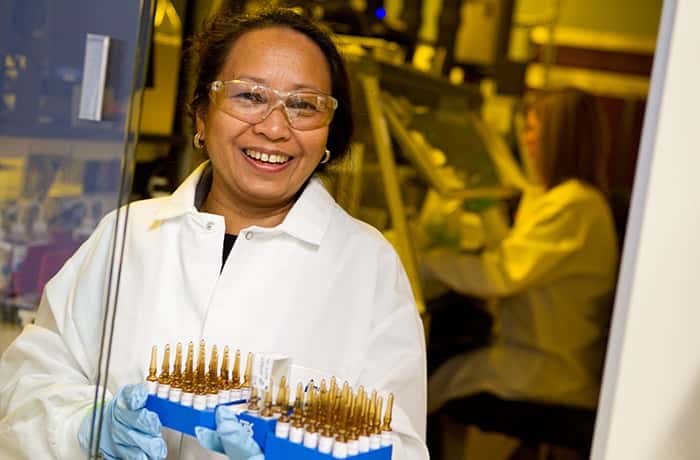
Strong cybersecurity cannot compensate for poor-quality laboratory inputs. If the instrument generating your data is inconsistent, the results remain unreliable regardless of how secure the surrounding digital system is. This issue frequently appears in analytical workflows that rely on chromatography to separate and identify chemical compounds.
Laboratories apply these techniques across environmental testing, food safety, and materials research. In these workflows, lot-to-lot consistency across columns acts as a strict requirement rather than a preference. A method validated on one column batch must produce equivalent separation results on the next.
Variability in consumables forces re-validation and compromises the regulatory defensibility of reported results. Using Restek’s standardized chromatography equipment provides the reproducible performance and manufacturing consistency required to build defensible workflows. Method development tools help teams establish reliable processes before they begin rather than troubleshooting mid-project.
|
Key Insight: Reproducible research starts with column consistency. Lot‑to‑lot variability in chromatography consumables forces re‑validation and introduces retention time drift, directly undermining the defensibility of your analytical results. |
|---|
3. Build Repeatable Lab Workflows
Any analyst on the team should be able to run the same procedure under identical conditions and arrive at equivalent results. Achieving that baseline requires standardized operating procedures alongside thoroughly documented method parameters. Teams must record precise temperatures, flow rates, and run times as version-controlled settings.
Software that enforces these workflow steps directly reduces variability between different shifts. It creates a definitive audit trail that proves the procedure was followed exactly as written. This automated documentation protects borderline results from being invalidated by undetected variability.
You cannot build a repeatable method on instruments that produce different outputs from run to run. Method development resources help teams establish structured processes before sample collection begins. Catching anomalies during the planning phase prevents wasted sample runs later.
4. Use Collaboration Tools That Keep Everyone Aligned

Research teams routinely span multiple departments, facilities, or external partners. This wide distribution means version conflicts, duplicated work, and misread results pose constant threats to project timelines. Cloud-based project management platforms centralize decisions to reduce the friction that causes those administrative errors.
Shared data repositories with strict version control ensure everyone works from the same current file. This infrastructure drops the likelihood of a team member acting on outdated analytical data. However, expanding access through cloud integrations introduces new entry points for digital threats.
Shared inboxes used during collaborative workflows carry standard phishing risks. Teams must apply the exact same filtering discipline to external folders as they do to internal emails. Restricting access to active contributors prevents dormant accounts from becoming security liabilities.
5. Reduce Human Error With Automation and Alerts
Manual data entry mistakes, missed calibration schedules, and overlooked alerts introduce risks that compound across a project. A single skipped calibration can easily invalidate results across multiple subsequent test runs. Implementing automated quality control checks catches instrument problems before an entire batch of samples is compromised.
Modern laboratory systems utilize maintenance triggers to notify technicians the moment a parameter drifts out of specification. This proactive approach removes the burden of continuous manual review from researchers. Automated threat detection in the communication stack serves the exact same function for the digital side.
Both categories of automation focus on catching problems at the source rather than discovering consequences days later. Building alerts into your technology stack closes two major failure points simultaneously. The lab equipment remains accurate, and the data remains protected from outside interference.
|
Pro Tip: Automate to intercept errors at the source; pair instrument QC and maintenance alerts with automated email threat detection. Both catch problems before they cascade, preserving data integrity and research timelines. |
|---|
6. Organize and Protect Sensitive Research Information
Laboratories accumulate massive volumes of raw data files, processed results, regulatory submissions, and audit logs. Poor organization produces version confusion and unnecessary data exposure, which undermines research conclusions during external reviews. Applying role-based permissions ensures that only authorized team members can access specific sensitive files.
Not every researcher requires default visibility into every administrative folder. Encrypted storage and structured file naming conventions act as baseline reliability infrastructure rather than optional overhead. These protocols make it possible to trace analytical decisions months or years after the actual experiment concludes.
A maintained audit trail verifies which instrument produced a specific output and who accessed the data. That exact traceability allows a research team to defend their results during an official regulatory inspection. It connects the organized digital record directly back to the physical analytical work.
Research Technology Evaluation Checklist
Use this starting-point assessment to evaluate your team’s current technology stack. These items cover both the digital and physical layers that determine whether your research outputs are reliable.
- Data security protocols active, including encryption, access control, and automated threat filtering.
- Equipment accuracy and lot-to-lot consistency verified across all consumable batches.
- Workflow compatibility confirmed with existing lab management and email platforms.
- Methods documented, validated, and completely reproducible across analysts and sessions.
- Staff training remains current for both laboratory procedures and cybersecurity awareness.
- Maintenance schedules and calibration records maintained, up to date, and logged.
- Documentation standards and audit trails confirmed for future regulatory review.
- Role-based access control applied to sensitive files and shared inboxes.
- Integration verified with current email, data, and lab information systems.
The Bottom Line
The digital layer must operate in complete sync with reliable lab instruments and repeatable sample analysis. When those two layers operate inconsistently, critical gaps appear in the chain of evidence supporting your results. Secure email tools protect the communication surrounding a project, while high-quality analytical equipment supports the scientific accuracy of the work itself.