
Kitchens don’t need more gadgets. They need the right ones.
The difference between a tool that earns its drawer space and one that collects dust isn’t price, brand, or how good it looks in the box. It’s fit. Does it solve something you actually run into, regularly, in your own kitchen?
This guide cuts through the noise. No exhaustive product lists. No specs for their own sake. Just a clear framework for matching the right tools to the way you genuinely cook.
What Makes a Kitchen Gadget Worth Buying in 2026?
A kitchen gadget earns its space when it removes a problem you hit every single week, not when it adds something you might use someday.
Before you buy anything, ask one question: does this fix something that actually slows me down?
The best gadgets on the market right now all do one thing well. They kill a specific, repeated problem; guessing when chicken is done, chopping slowly on a Tuesday night, hunting through a junk drawer for the right tool.
A gadget that doesn’t solve any of those things for you delivers nothing. It doesn’t matter how smart the engineering is.
Price won’t tell you what’s worth it either. A $16 tool you reach for every morning beats a $250 machine you use twice a year. I’ve seen this play out over and over, the buying regret almost always comes from chasing the impressive thing, not the useful one.
Here’s what actually changed in 2026. During the pandemic, millions of people cooked at home every day for the first time. They got good. They figured out what they were getting wrong. That raised the bar for what “useful” means in a kitchen product.
Manufacturers noticed. The gadgets that dominate recommendations now aren’t the most novel ones. They’re the ones that close the gap between what you mean to cook and what actually lands on the plate.
Precision and Temperature: The Category That Matters Most
Temperature is the most controllable thing in home cooking. The tools built around it have done more to close the gap between home and professional results than anything else you can buy right now.
Here’s why every credible source, like Serious Eats, Food & Wine, and testing labs, keeps landing on temperature tools. Temperature is the one variable with a direct, measurable link to the outcome in the tasks home cooks most often get wrong.
A chicken breast looks done before it is. The difference between 155°F and 165°F is invisible to your eyes and decisive to the result. Coffee extraction falls apart when your water drifts outside 195–205°F. Grind particle size changes how much surface area gets exposed to heat, which changes how flavor releases in the pan.
In all three cases, the problem isn’t your technique. It’s that you’re working without a number.
Instant-Read vs. Wireless Thermometers
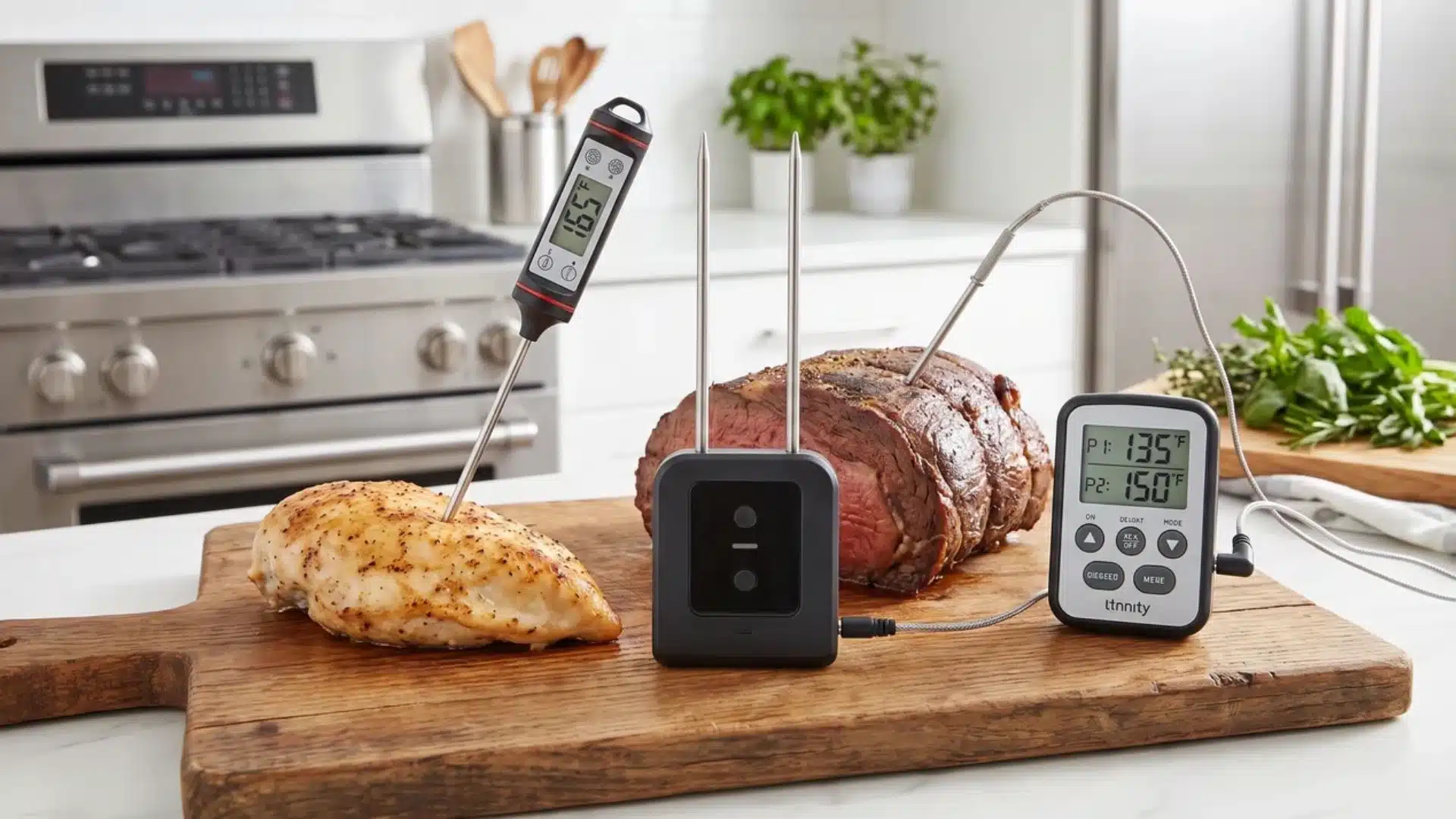
These two tools look similar. They do completely different jobs.
The ThermoWorks Thermapen ONE (~$74–$105) gives you a reading in under a second. It’s built for cooks who work at the stove: checking a sear, pulling a roast, watching oil temp for frying.
A wireless option like the HOPEPOP Dual Probe thermometer stays inside the protein the whole time. It monitors remotely. You don’t have to open the oven or smoker. That’s a different task entirely.
I’d call these complementary, not competing. A lot of serious home cooks end up with both eventually, and it makes sense once you understand they’re solving for different moments in the cook.
When Sous Vide Justifies Its Price
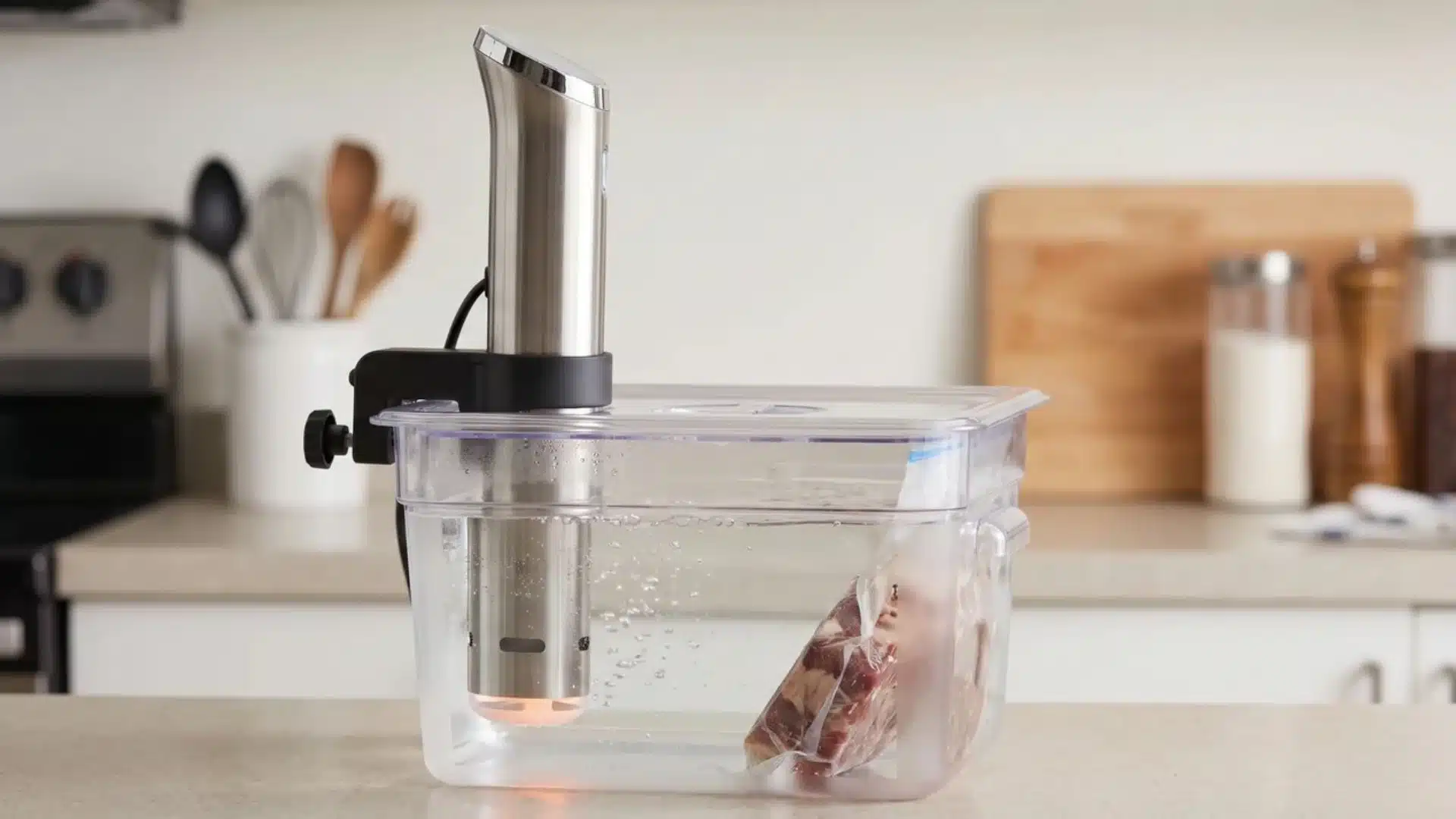
The Breville Joule Turbo (~$250) holds water temperature to within a fraction of a degree across an entire cook. That precision is genuinely valuable, but only under specific conditions.
If you regularly cook proteins for four or more people and you care about texture consistency, not just food safety, it pays off quickly. If you cook for one or two people occasionally, an accurate instant-read thermometer solves the same underlying problem for a fraction of the cost and takes up zero counter space.
This is the most over-recommended gadget for solo or small-household cooks. Buy the thermometer first. The sous vide case only makes itself after you’ve seen what temperature precision actually does for your cooking.
Coffee Grinders as Precision Tools
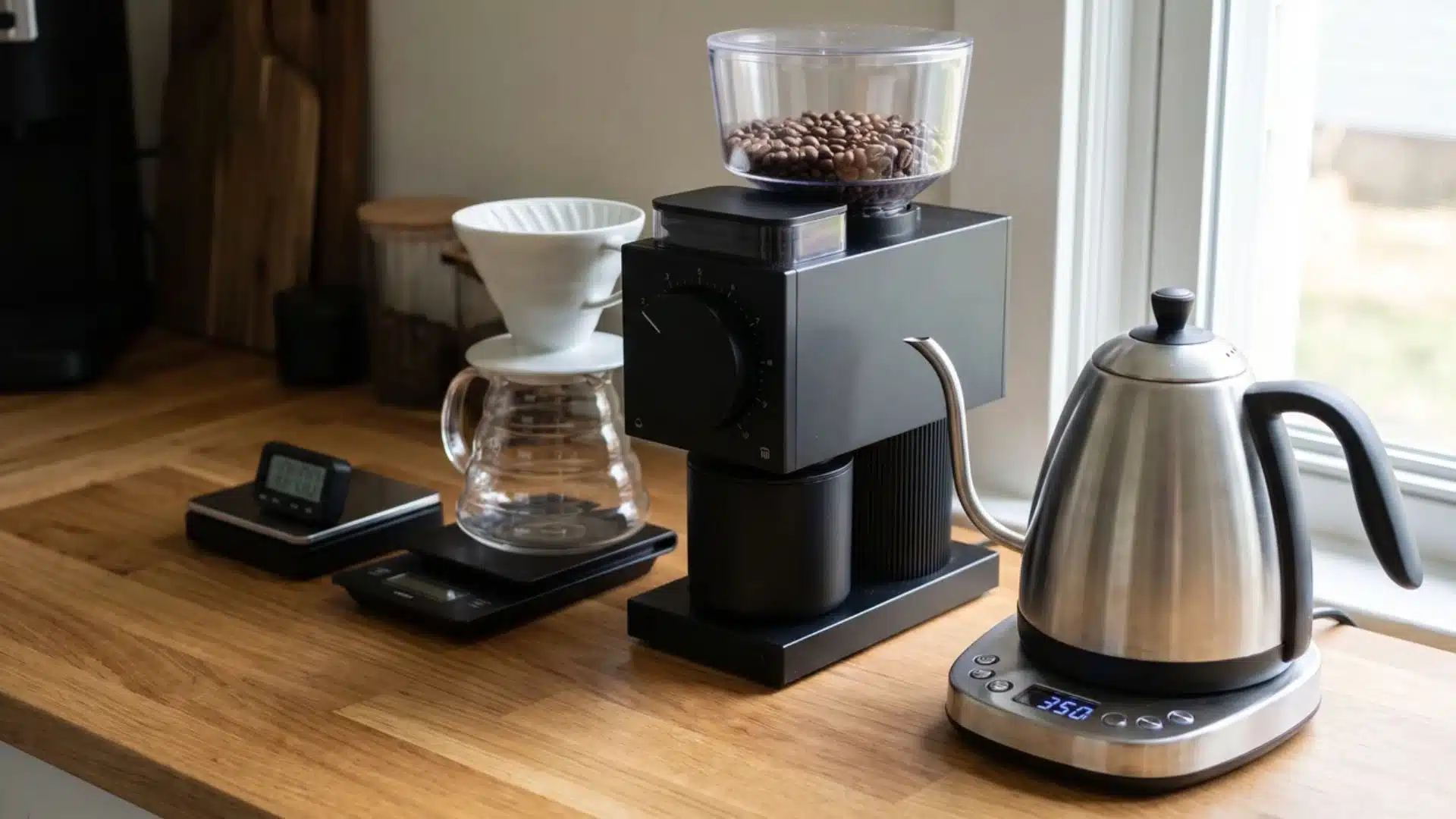
Grind consistency, meaning how evenly your grounds are sized, has more impact on espresso and pour-over quality than any other single variable. More than your kettle. More than your water temperature.
The Baratza Encore ESP Pro (~$300) is where serious home brewers start in 2026. The Fellow Stagg EKG Electric Kettle (~$170) lets you hit an exact temperature, which matters most for light-roast pour-overs and delicate teas where slight overheating flattens the cup.
If you’re choosing between the two: grinder first, every time. No kettle compensates for uneven grounds.
Prep Gadgets that Actually Earn Counter Space
Prep gadgets earn their place when they cut the time or effort out of something you do at least a few times a week. Not something you do once a month.
The mistake I see most often: people evaluate prep gadgets on capability instead of fit. Can it do six things? Great. But does it do six things you actually do? That’s a different question.
Here’s the test I use. How many distinct tasks does this tool handle, and how much dedicated storage does it need? A tool that handles six prep jobs and tucks into one compact container passes. A tool that does one thing and needs its own drawer slot fails for most kitchens, anyway.
The prep tools that stand out in 2026 were designed with storage built in. That wasn’t an accident.
Choppers and Dicers
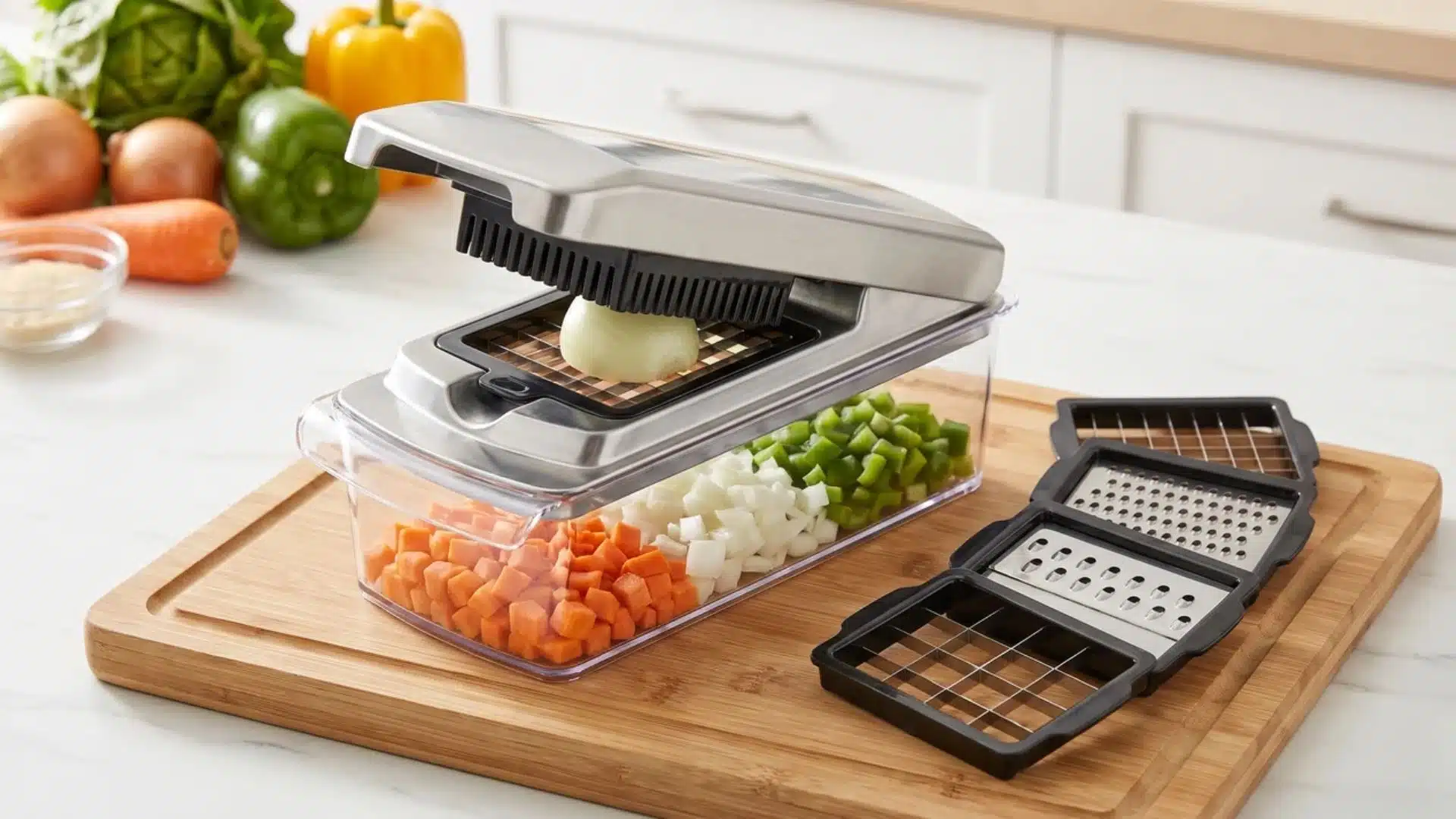
Most vegetable choppers make a mess of their own output. You push the food through the blade and end up with a pile on your cutting board that you still have to gather and transfer.
The Fullstar Vegetable Chopper fixes that with a catch tray built directly under the blade assembly. One motion: chop and collect. If you prep vegetables in volume on weeknights, that’s a real time saver.
One honest note on the downside: the blade inserts need individual rinsing, and food traps in the slots fast if you let them sit. Clean it right away or it becomes a chore.
Electric Can Openers and Accessibility
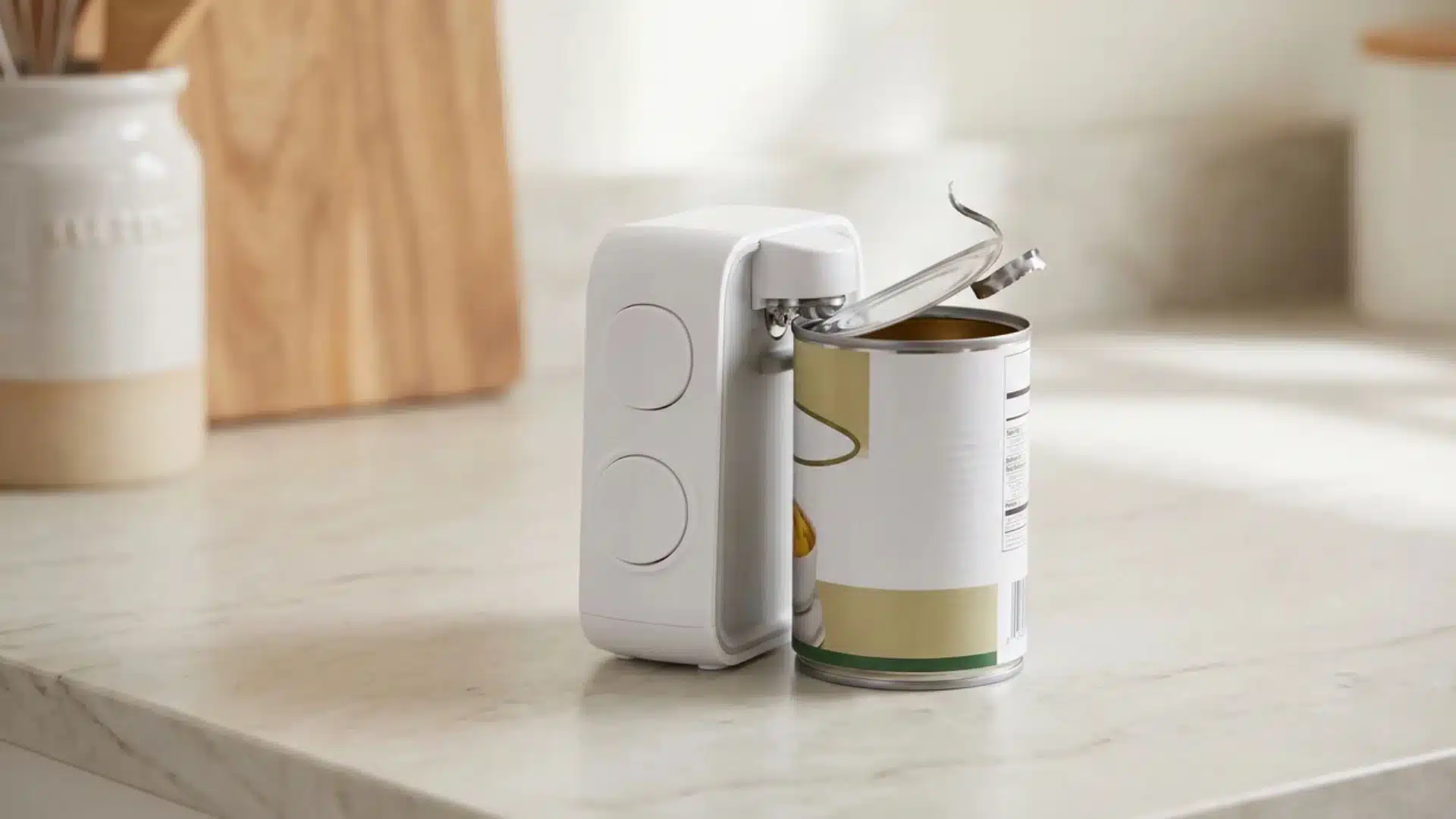
The Kitchen Mama Electric Can Opener (~$30) gets labeled a convenience gadget. That framing misses what it actually does for a lot of people.
If you have reduced grip strength from arthritis, repetitive strain, or just age, a manual can opener asks for sustained twisting force. That’s not an inconvenience. That’s genuinely hard. The Kitchen Mama opens a can with one button press and leaves a smooth edge with no sharp overhang.
For anyone buying a gift for someone with hand mobility limitations, this shifts from nice-to-have to meaningfully useful. That changes the recommendation entirely.
Small-Footprint High-Frequency Tools
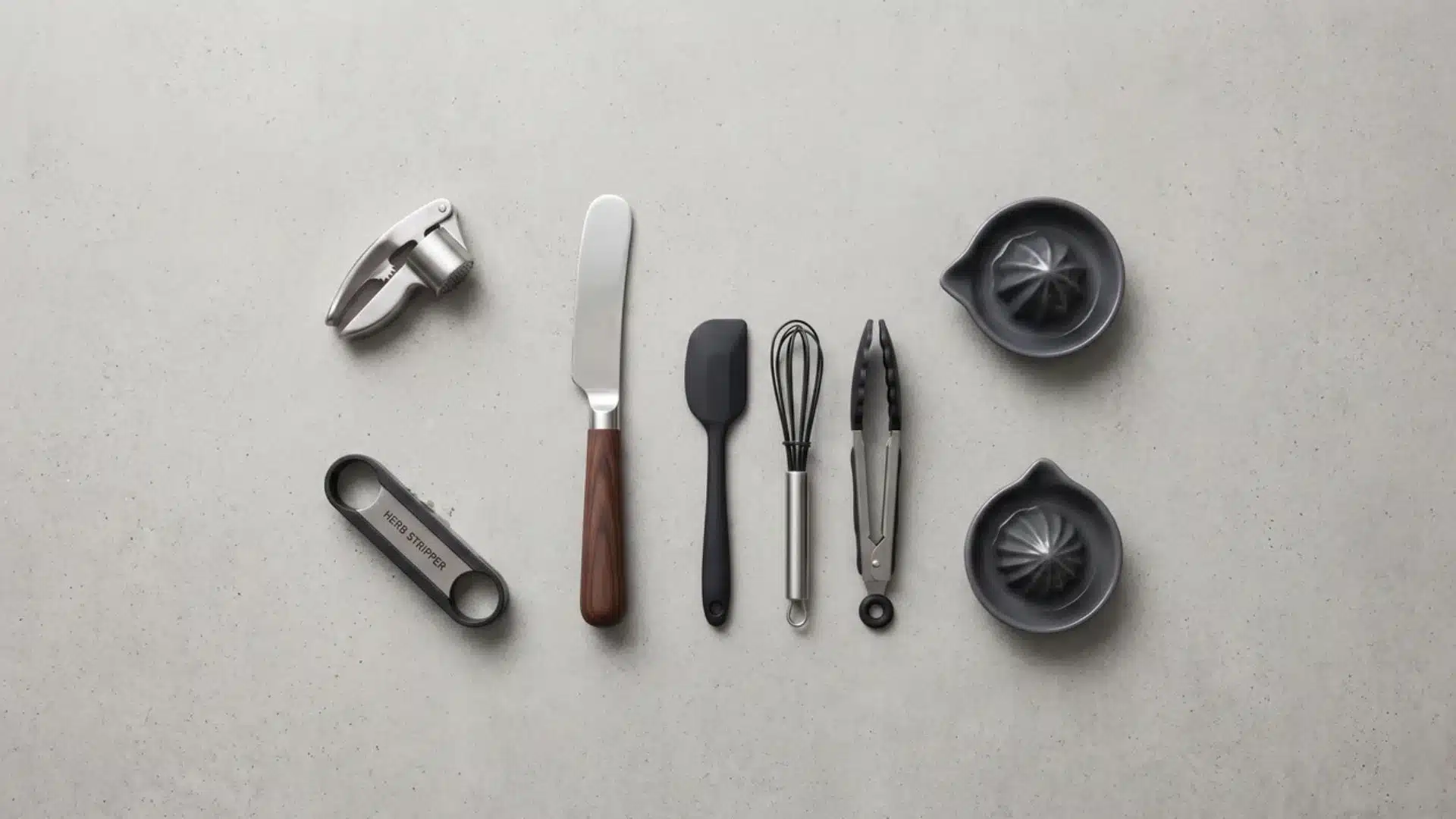
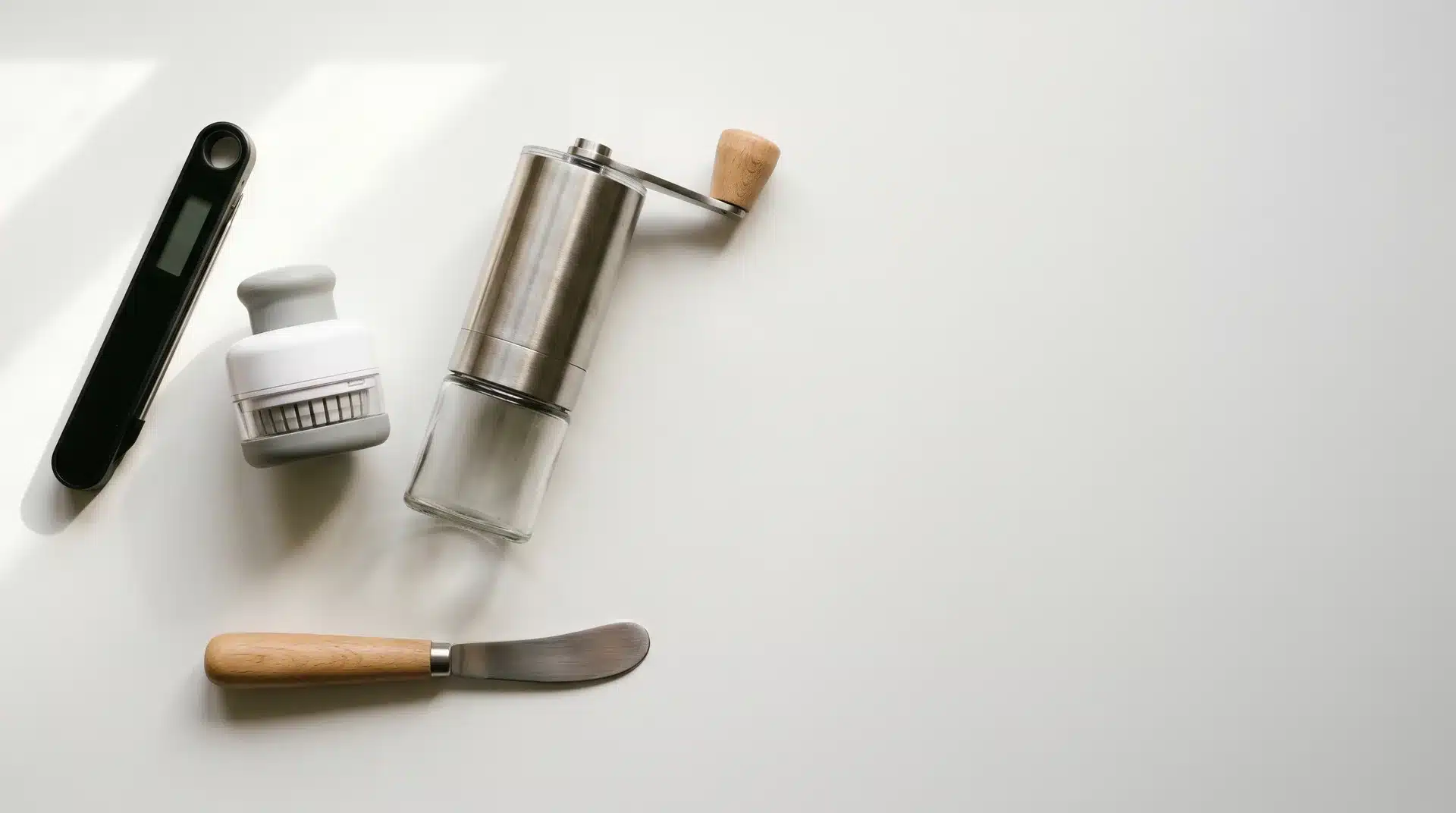
You know that moment when cold butter tears a piece of soft bread in half? That’s the problem the Microplane 3-in-1 Butter Blade (~$16) was built to solve.
It slices thin pats, ribbons butter into soft strips using a grater-style surface, and curls it for a board. It stores flat with your other utensils. No dedicated space needed.
This is what a great small-footprint tool looks like: it solves something daily, takes up nothing, and costs less than a lunch out.
One fair warning: the ribboning function needs a bit of pressure and technique. Butter that’s still very cold straight from the fridge will crumble instead of ribbon. Give it a few minutes first.
Sets and Organization: When Buying Together Makes Sense
Kitchen gadget sets are worth it when you’re starting fresh or when the mess of mismatched tools in your drawers has finally become the actual problem.
The Caraway 6-Piece Kitchen Gadget Set (~$225) comes with a can opener, peeler, pizza cutter, box grater, and two additional utensils. Stainless steel and birchwood finish.
But here’s the thing: you’re not really buying the tools. You’re buying the organizer.
Every tool in this set is available on its own, for less. The reason to buy it as a set is the countertop and drawer organizer that comes with it. It keeps all six items in one place, in order, always findable. If your kitchen situation right now means hunting through multiple drawers for the right tool — the organizer solves that structurally, not just slightly.
The tools also happen to be non-toxic, well-made, and visually consistent. If aesthetics matter in your kitchen, that’s a real bonus, not a marketing claim.
The set underperforms in one clear scenario: you already own a working can opener, peeler, and pizza cutter. Buying this means paying for redundancy. Two or three duplicates cancel out the organizational benefit because you’ll have more items than the organizer holds.
If your kit is already functional, buy individual tools instead.
For gift-buying, sets sidestep the hardest gift problem: you don’t know what the recipient already has. A set with its own organizer still adds value even if one or two tools overlap; the system itself is the gift.
How to Choose Based on Your Actual Cooking Habits
The right gadget for your kitchen comes down to two things: how often you’d use it, and how much of a pain it removes.
Start with frequency. A gadget that enters your routine three times a week earns its price and its space. A gadget you use once a month almost never does, the friction it removes is too rare to justify another thing to store and maintain.
Most kitchen gadget regret traces back to buying for the occasional moment instead of the regular one.
Match the Tool to How You Actually Cook
Once you know your frequency, match the tool to the way you actually cook. Here’s how that plays out across three types of cooks.
If you cook a lot of proteins like chicken, fish, or pork, start with an instant-read thermometer. Get good with it. See what knowing the exact temperature does for your results. Only then does the case for sous vide make itself. The Breville Joule Turbo only pays off after a thermometer has already shown you how much temperature precision matters.
If you meal prep for a family, cooking for four or more people several nights a week, doing real vegetable volume, a quality chopper and a set with a built-in organizer hit the highest-friction parts of your routine directly. Both tools are about speed and order, which is exactly what high-volume cooking needs.
If coffee quality matters to you, buy a burr grinder before anything else. Grind consistency does more for your cup than any kettle can. No temperature precision at the pour compensates for uneven extraction at the grind.
When Accessibility Changes the Decision Entirely
One exception to all of this: accessibility. If grip strength, hand fatigue, or arthritis makes certain kitchen tasks genuinely painful, frequency doesn’t govern the decision. Buy the electric can opener whether you open cans twice a week or twice a month.
When a tool removes a physical barrier, not just a time cost, the math changes completely.
Wrapping Up
The best kitchen gadget you can buy is the one that solves something you hit every week.
Not the one with the most impressive spec sheet. Not the one that looks best on the counter. The one that makes a specific, repeated task easier, faster, or less painful.
Start with a thermometer if you cook proteins. Start with a chopper if you prep volume. Start with a grinder if coffee quality drives you. And if physical ease matters more than speed, let that lead, as it should.
The market has genuinely gotten better. There are more tools that do their one job extremely well. Your job is just to match the right one to the way you actually cook, not the way you imagine you might cook someday.
Frequently Asked Questions
What is the most universally useful kitchen gadget to buy in 2026?
An instant-read thermometer, specifically the ThermoWorks Thermapen ONE. It removes guesswork from proteins, candy, bread, and frying. It works whether you cook once a week or every day. There’s no real learning curve, and nothing else at this price comes close for speed and accuracy.
Is a sous vide machine worth buying for a home cook?
Only if you regularly cook proteins for multiple people and care about texture consistency. For a household making chicken twice a week, the Breville Joule Turbo (~$250) pays off fast. For someone cooking for one or two people occasionally, a good instant-read thermometer solves the same problem for far less money.
What kitchen gadget makes the best gift in 2026?
A curated set like the Caraway 6-Piece (~$225) works well for someone setting up a new kitchen, the organizer adds value the individual tools don’t. For someone with an established kitchen, a single high-quality tool like the Thermapen ONE or the Microplane Butter Blade avoids the risk of duplicating something they already own.
Are expensive kitchen gadgets actually better than cheaper ones?
In the precision category, yes. The ThermoWorks Thermapen ONE outperforms a $15 thermometer in ways that change your cooking. In the prep category, less so. The $16 Microplane Butter Blade outperforms several $40+ alternatives at its specific job. Price tracks performance most reliably when accuracy is what you’re buying. For mechanical prep tools, the connection is much weaker.