


Technology moves fast. But in 2026, it’s not just moving; it’s reshaping how work gets done, how systems operate, and how the physical world connects to software.
The latest tech trends aren’t about what’s coming next. They’re about what’s already here and actively changing industries. And right now, a lot of what’s trending is already in production.
From AI making decisions on its own to cybersecurity that predicts threats before they happen, this blog breaks down what’s real, what’s driving each shift, and where the limits still exist.
You’ll walk away knowing what’s worth paying attention to.
What “Latest Tech Trends” Actually Means in 2026
Not long ago, a “tech trend” meant a new invention or a concept in a lab. That definition no longer applies.
In 2026, a trend means a system that has moved from experiment to active use at scale. These are technologies that are already reshaping how companies operate, how people work, and how industries function, right now.
There’s a real difference between a technology being hyped and one being deployed. That distinction matters a lot right now.
What you’ll find here are trends that belong in the second category: operational, growing, and already creating real impact.
AI-Native Systems and Agentic Technology
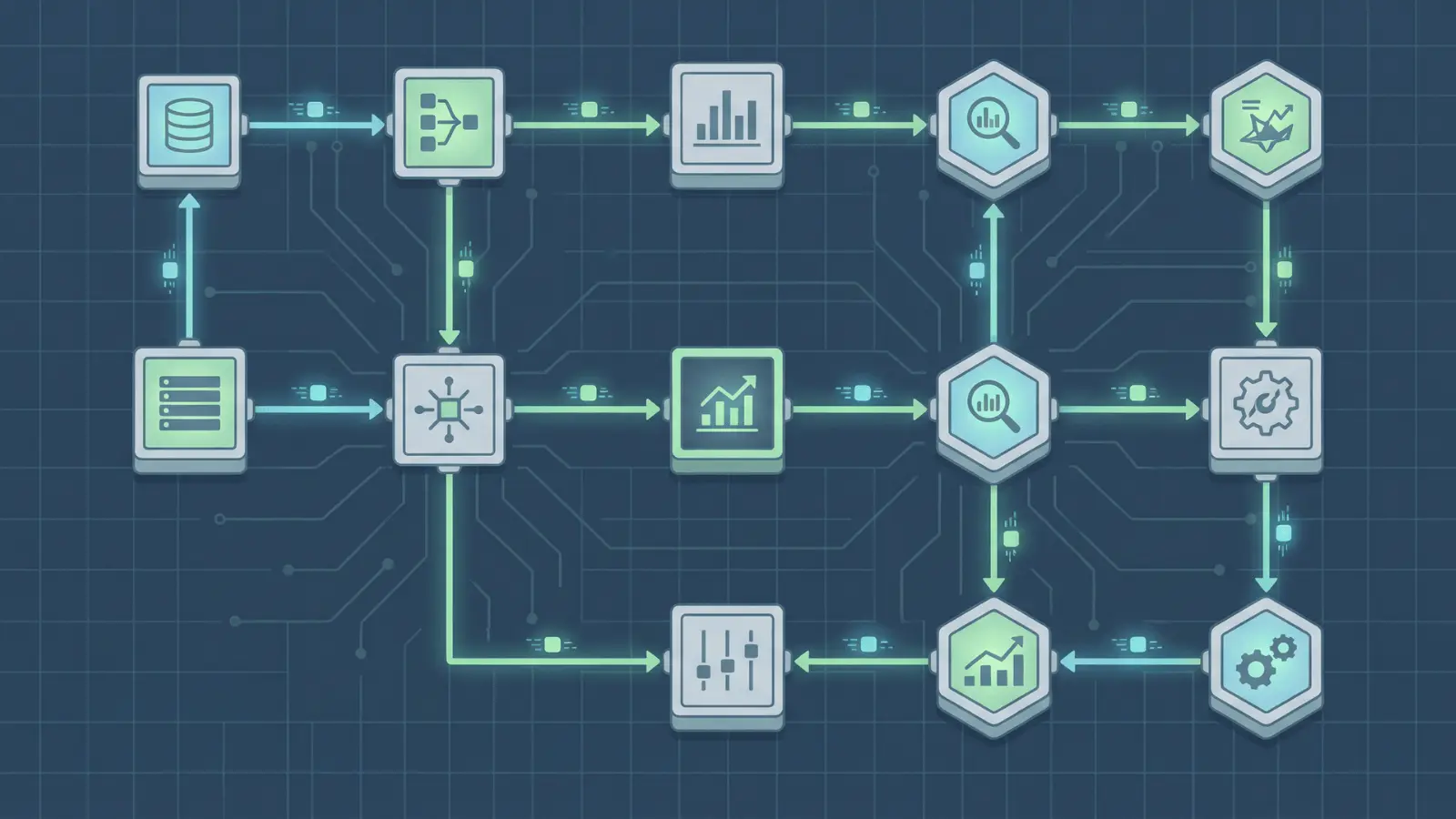
The biggest shift in tech right now isn’t that AI got smarter. It’s that AI has become more structured.
What changed: AI has moved from being a tool you use to a system that acts on its own. These are called agentic systems, AI models that can plan, execute, and adjust tasks without constant human input.
How it works:
- Multiple AI agents work together, each handling a specific part of a workflow
- Domain-specific models replace general-purpose AI, making outputs more accurate
- The system moves from answering questions to making decisions and taking actions
What this means in practice: Smaller teams can produce results that once required much larger ones. Workflows run automatically, with humans stepping in only when something breaks or needs judgment.
Where it breaks down:
- Agents struggle when tasks fall outside their training
- Coordination between multiple agents can fail if the data isn’t clean
- Reliability in edge cases is still a significant challenge
The key misconception to clear up: AI isn’t becoming more human. It’s becoming more specialized and better at following structured processes.
Physical AI and the Shift Into Real-World Environments
AI is no longer confined to screens and software. It’s entering physical spaces, and that changes everything.
What’s driving it: Robotics has matured, and AI perception systems can now process visual, spatial, and sensory data in real time. Together, they allow machines to operate in dynamic, unpredictable environments.
How it works:
- AI models are connected to sensors, cameras, and hardware
- The system reads its environment and makes decisions instantly
- This enables autonomous movement and physical task execution in real-world settings
What this means in practice: Industries like logistics, healthcare, and manufacturing are seeing automation move beyond software workflows into physical operations.
Where it breaks down:
- Real environments are unpredictable, and systems still fail when conditions change unexpectedly
- Deployment costs are high, limiting access to well-funded operations
- Safety and reliability standards are still catching up to capability
It’s worth saying clearly: robots are not replacing humans broadly. They’re taking over specific, repetitive physical tasks in controlled conditions.
The Rise of AI Infrastructure and Compute Economics
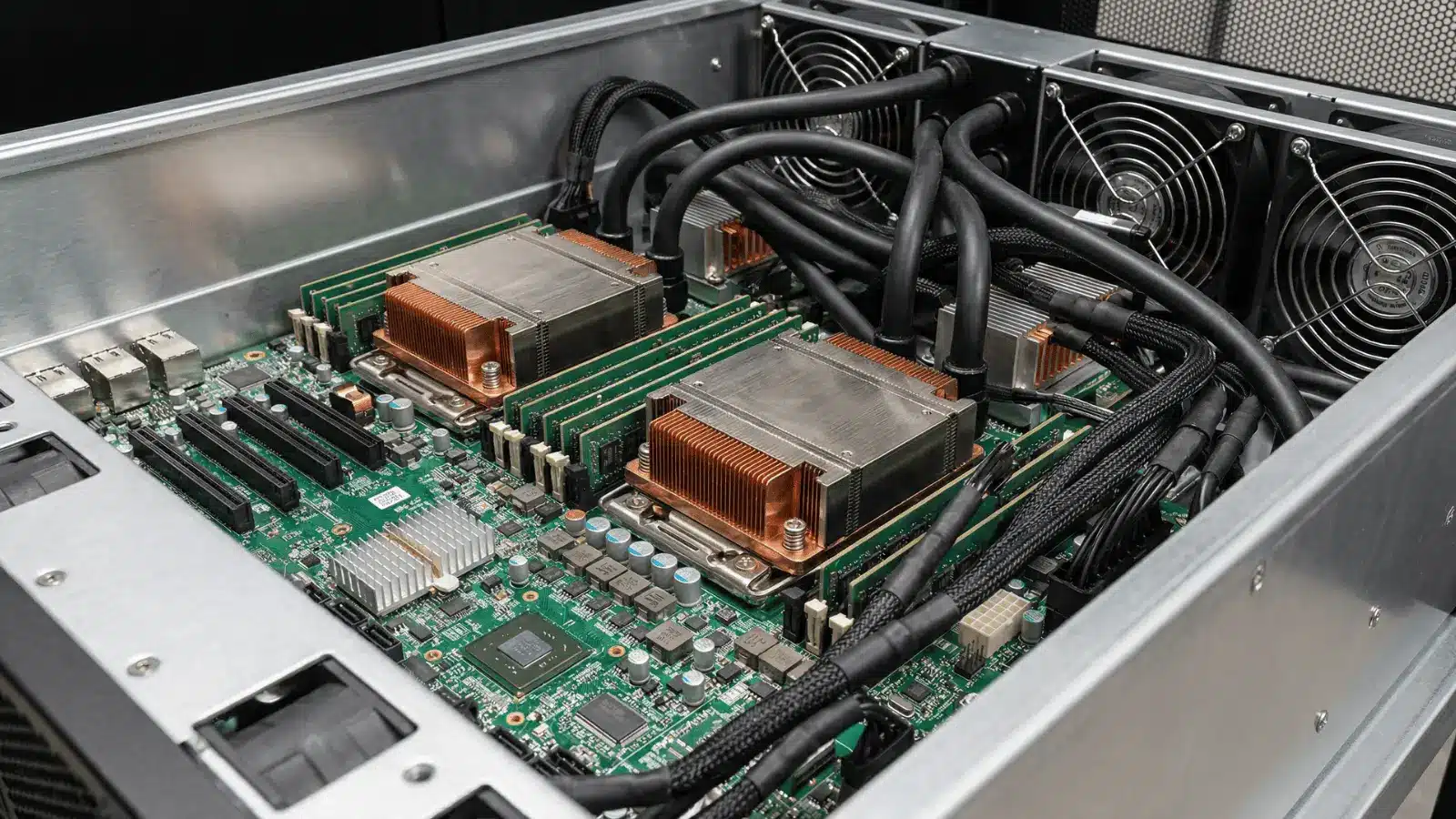
Behind every visible AI trend is an invisible one, and it might be the most important of all. Running AI at scale is expensive.
It requires massive computing power, significant energy, and complex infrastructure. That reality is now shaping how companies think about AI adoption.
How it works:
- AI supercomputing clusters handle the heavy processing load
- The focus has shifted from training new models to optimizing how existing models run (inference)
- Confidential computing is emerging to protect sensitive data while it’s being processed
What this means in practice: Companies aren’t just asking “what can AI do?” They’re asking, “What does AI cost to run, and is that cost worth it?” Efficiency has become as important as capability.
Where it breaks down:
- Operational costs remain high, especially for smaller organizations
- Energy consumption at scale creates both financial and environmental pressure
- Infrastructure bottlenecks slow down deployment in many regions
The misconception here: AI growth is not unlimited. It’s constrained by hardware availability, energy capacity, and economics.
Cybersecurity Evolution in an AI-Driven World
As AI becomes more powerful, so do the threats it enables. Cybersecurity in 2026 has had to evolve fast.
What’s driving the change: Attackers are now using automation and AI to launch faster, more sophisticated attacks. Signature-based defenses, where systems look for known threats, can’t keep up.
How it works:
- AI-powered threat detection analyzes behavior patterns instead of waiting for known attack signatures
- Systems identify anomalies early and respond before damage spreads
- Digital provenance tools verify where content comes from, helping detect AI-generated misinformation and fraud
One of the biggest structural shifts is the move to Zero Trust architecture. The old model assumed that anything inside a network could be trusted. Zero Trust flips that. Every user, device, and request gets verified every time, no exceptions.
It’s becoming the default design for organizations that take security seriously, because it removes the assumption that threats only come from outside.
What this means in practice: Security has shifted from being reactive, responding after an attack, to being predictive and continuous.
Where it breaks down:
- Predictive systems generate false positives, creating alert fatigue
- It’s an arms race: as defenders improve, so do attackers
Security isn’t necessarily stronger in 2026. It’s more adaptive and always on.
Consumer Technology Trends Moving Toward Utility
Consumer tech used to compete on specs. Now it competes on usefulness.
What’s driving the shift: The market is saturated. Most users already have powerful devices. The next wave of adoption depends on whether new technology actually improves daily life.
How it works:
- Hardware innovation is now tied to specific use cases, not just performance upgrades
- AI integration allows devices to adapt to individual user behavior over time
- Wearables and personal devices are shifting toward actionable health and wellness data, not just tracking
What this means in practice: Technology becomes context-aware. It learns patterns, anticipates needs, and provides outputs that are actually relevant to the person using it.
Where it breaks down:
- Many “smart” features offer limited real-world value for average users
- High price points mean marginal upgrades aren’t accessible to most consumers
Not every new device is a meaningful leap. Many are incremental improvements dressed up as breakthroughs.
Green Tech and the Push for Sustainable Infrastructure
AI and advanced tech don’t run on nothing. The energy cost is real, and it’s now shaping how companies build and deploy technology.
What’s driving it: Regulators, investors, and users are pushing back on the environmental cost of large-scale compute. Green AI optimizing models to do more with less energy is a direct response to that pressure.
How it works:
- Developers are building leaner models instead of always scaling up
- Serverless computing and containerization cut the energy footprint of apps and services
- Digital twins let companies simulate supply chains or infrastructure decisions before acting, reducing waste
- Sustainable data center design is now a baseline expectation, not a bonus
What this means in practice: The race isn’t just about capability anymore. It’s about efficiency. Companies that can deliver strong AI performance with lower energy overhead have a real advantage — financially and reputationally.
Where it breaks down:
- Green AI is still maturing; not every use case has a lightweight model that performs at the required level
- Sustainable infrastructure costs more upfront, which slows adoption in budget-constrained organizations
- Measuring actual environmental impact across a full tech stack is still inconsistent
The Underlying Pattern Connecting All 2026 Tech Trends
Look across every trend covered here, and one shift keeps showing up: technology is moving from tools you use to systems that run on their own, from reactions to predictions, and from screens into physical spaces.
Three forces brought this together at the same time.
Infrastructure finally caught up to what was theoretically possible. Data availability crossed a threshold where complex models could train on real-world conditions. And economic pressure, the kind that forces organizations to cut costs and move faster, pushed adoption from “interesting” to “necessary.”
The result is technology that disappears into the background. You stop interacting with it consciously and just notice that things run better, faster, or with fewer people involved.
That said, systems that embed deeply are harder to audit and harder to fix when something goes wrong.
Regulatory frameworks in most industries were written for a different era and haven’t caught up to what AI can now do autonomously. Public trust hasn’t kept pace either; most people accept the output without understanding the process, which is a fragile foundation for anything high-stakes.
The pattern is real, and so are the cracks running through it.
Quick Summary of the Most Important Tech Trends Right Now
Here’s the short version for quick reference:
- Agentic AI: autonomous systems running workflows with minimal human input
- Physical AI: AI connected to hardware, operating in real-world environments
- Compute economics: cost and infrastructure now limit AI growth as much as capability does
- Predictive cybersecurity: continuous, behavior-based threat detection replacing reactive defenses
- Utility-focused consumer tech: devices adapting to users rather than offering raw specs
- Green tech: energy efficiency and sustainable infrastructure now shaping how AI is built and deployed
Wrapping Up
Technology in 2026 is not about what might happen next. It is about what is already changing how work and systems run today.
You now understand the latest tech trends, how they work, and where they still face limits. Take a moment to notice where these shifts show up in your daily tools or work. That is where real impact starts.
The key is not to chase every trend, but to understand which ones matter to you.
If you want to stay updated and go deeper, check out more of the website for other blogs on emerging tech and practical insights.
Frequently Asked Questions
What technology is trending the most right now?
AI-driven autonomous systems are leading the pack, backed by advanced compute infrastructure, physical robotics, and behavior-based security, all of which are already in active deployment, not waiting in the pipeline.
Are these trends future predictions or current realities?
These are current realities. Companies aren’t running pilots anymore. They’re integrating these systems into live operations, and the results are already showing up in how industries function day to day.
Why does AI dominate most tech trends?
AI works as a foundational layer that everything else builds on. It changes how software runs, how hardware makes decisions, and how systems adapt over time, which is why it shows up across nearly every industry and every trend on this list.
Are these trends accessible to individuals or only companies?
Most of the heavy infrastructure is enterprise-driven, but individuals feel the effects anyway — through smarter devices, AI-powered apps, and services that now run on automation in the background.
What is the biggest limitation of current tech trends?
Cost and reliability are the two biggest walls. Strong capability in a controlled environment doesn’t automatically translate to wide, affordable deployment, and for many organizations, that gap is still very real.





2 Responses