

Grammarly has evolved into a product with two distinct AI systems that work differently, carry different implications, and aren’t treated the same way by institutions or detection tools.
What makes this worth understanding is that most people who use Grammarly daily are only using one of those systems and have no idea the other one exists.
Understanding which one you’re actually using changes how you think about the tool entirely. Here’s what’s actually going on under the hood.
What Kind of AI Is Grammarly?
Grammarly is an AI tool, but it contains two functionally different AI systems, and which one applies depends entirely on how you use it.
The grammar-checking side uses machine learning and NLP to scan text you’ve already written, flag error patterns, and suggest corrections. It doesn’t create anything; it reacts to what’s on the page.
The generative side is newer. GrammarlyGO runs on large language models, the same technology behind ChatGPT, and produces new text on request when you draft, rephrase, or expand.
Both systems live inside the same interface, which is where the confusion starts. Most people asking “Is Grammarly AI?” are really asking whether it behaves like ChatGPT, and the answer depends on what you’re doing with it.
That matters most where AI policies are in play. Those policies almost always target generation rather than correction, and knowing which layer you’re using is the only way to answer that accurately.
How Grammarly’s Correction AI Actually Works
When Grammarly underlines a sentence, it is running your existing words through a pattern-recognition model, not rewriting them from scratch.
The correction engine compares your text against models trained on grammar rules, clarity patterns, and tone signals. It looks for statistical mismatches, constructions that tend to be errors, and surfaces them as suggestions.
How accurate AI suggestions actually are is a question worth asking before trusting any flag; Grammarly’s suggestions are probabilistic rather than authoritative, which is why the model sometimes misreads intentional style choices or flags dialect-specific phrasing.
The model flags what it has learned to associate with mistakes, which is why it sometimes misreads intentional style choices or flags dialect-specific phrasing.
This is also why Grammarly can feel wrong without being broken. It isn’t applying fixed grammar rules the way a textbook would. It’s making educated guesses based on patterns in its training data.
That mechanism is fundamentally different from how generative AI works. Correction requires a text to react to; it has no output without your input. Generation starts from a prompt and produces something new. Same product, different engine, an entirely different process.
What GrammarlyGO Changes About the AI Question
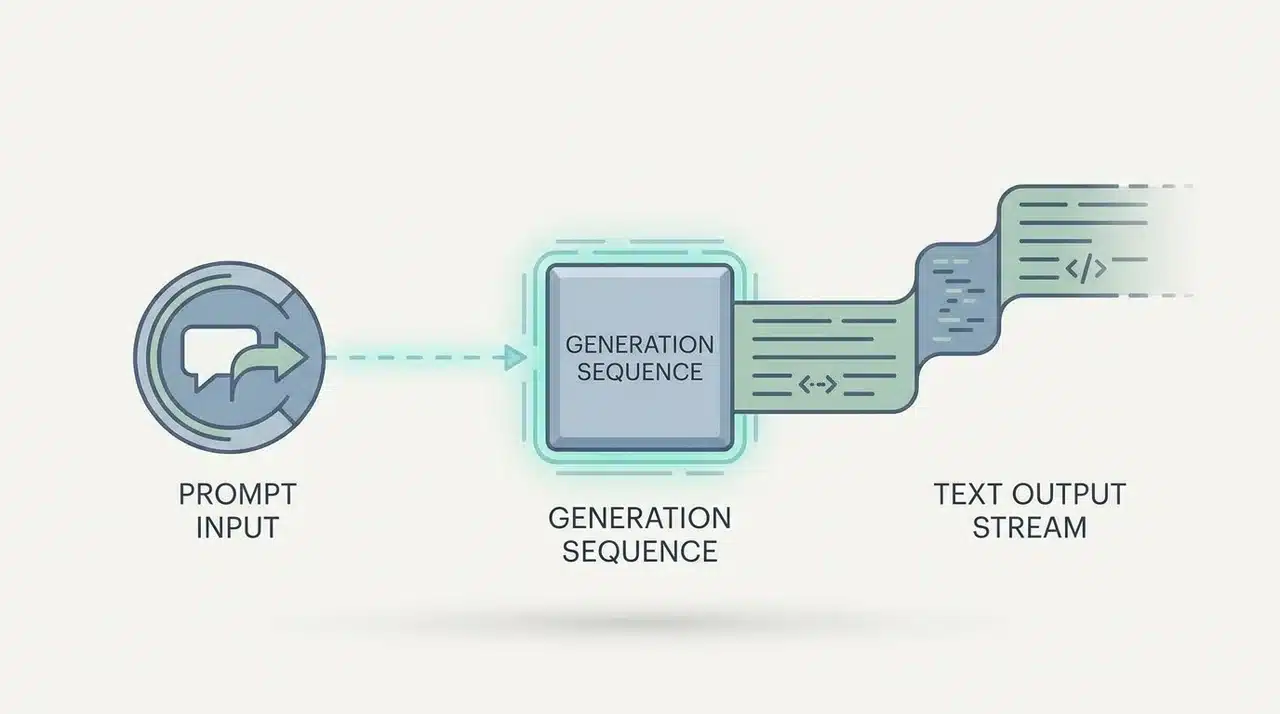
GrammarlyGO is Grammarly’s generative layer; it produces new text on request and operates separately from the grammar-checking engine.
Unlike the correction layer, GrammarlyGO uses large language models, the same class of technology behind ChatGPT. Here’s what that means in practice:
- It activates only when you prompt it, drafting, rephrasing, or expanding text
- Standard grammar checking never touches the generative layer
- Most routine Grammarly use doesn’t involve GrammarlyGO at all
This is what makes Grammarly’s AI classification context-dependent. Same tool, same interface, but the underlying system and its implications are not the same.
Does Using Grammarly Violate AI Policies?
Whether Grammarly violates an AI policy depends on which of its two AI systems you used, and what your institution’s policy actually says about each.
Most policies target content generation, text produced by a machine and submitted as your own. Grammar correction predates that conversation, so most policies weren’t written with it in mind.
When Correction Use Is Generally Considered Acceptable
Using Grammarly’s correction layer falls outside the scope of most AI policies. You wrote the text, the tool flagged patterns and suggested fixes. That’s closer to spellcheck than generation, and most institutional guidelines treat it that way.
Policy language varies, though. Check for phrases like “AI-assisted writing” or “automated tools.” If correction-only use isn’t explicitly addressed, clarify directly with your institution before assuming you’re covered.
When Generative Use Crosses the Line
GrammarlyGO drafting or rephrasing crosses into generation territory. If the tool produced sentences you’re submitting as your own, that’s exactly what AI policies are designed to catch, regardless of how the interface labels it.
“I only accepted suggestions” doesn’t cover outputting the model generated from scratch. The function you use matters more than the name you give it, and most policies are increasingly specific about that distinction.
Is Grammarly Worth It Compared to Free AI Tools?
Grammarly and free AI writing tools don’t directly compete; they solve different parts of the writing problem, and the better question is which problem you actually have.
Tools like ChatGPT generate text from a prompt. Grammarly refines the text you’ve already written, inline, across whatever platform you’re working in. One replaces the blank page. The other improves what’s on it.
The free version covers most casual needs well. Premium makes sense if you:
- Write frequently across different formats and tones
- Need real-time feedback without copy-pasting into a separate tool
- Want correction and generation inside one interface
The free version, paired with a free AI tool, covers most needs if none of those apply. Grammarly Premium earns its cost when workflow integration matters as much as the features themselves.
Wrapping Up
Grammarly is considered AI, but that label covers two very different things depending on how you use it. The correction layer has been refining writers’ work for years without raising policy flags.
The generative layer is newer, more powerful, and held to a different standard by institutions and detection tools alike. The mistake most people make is treating them as one thing. They aren’t.
Know which layer you’re using, check what your institution actually says, and you’ll have a clearer answer than most people who search this question ever get.
If you’re still unsure where you stand, start by reviewing your institution’s policy with this in mind; it changes everything.
Frequently Asked Questions
Will Grammarly be flagged as AI by Turnitin or other detectors?
Standard grammar corrections rarely trigger AI detectors; they modify existing text rather than produce new sentences. GrammarlyGO rephrasing is more likely to flag since it generates new output. No detector is fully accurate, though.
Is Grammarly the same as ChatGPT?
No. ChatGPT generates text from a prompt. Grammarly corrects text you’ve already written. They share the “AI” label but operate through different systems. GrammarlyGO is the only part of Grammarly that behaves similarly to ChatGPT.
Does Grammarly’s free version use AI?
Yes. The free version uses machine learning and NLP for grammar, spelling, and basic clarity. Generative features like drafting and rephrasing are available only with GrammarlyGO.
Can professors tell if you used Grammarly?
Standard correction leaves no reliable detection signal. GrammarlyGO-generated text may be flagged by AI detectors. What matters more is whether your institution’s policy distinguishes between correction tools and generative AI.