

AI filmmaking is changing how creators turn ideas into videos, but strong visuals still depend on understanding references. AI agents can now study films, ads, campaigns, and brand styles to extract useful details like lighting, framing, pacing, and camera movement. This helps creators build consistent videos faster while keeping creative decisions in their hands.
How can AI filmmaking agents use references to create better videos?
AI filmmaking agents can analyze references, identify the creative elements that matter, and apply those learnings to new video projects. Instead of copying a reference, they help creators understand why a visual works and use those insights to guide new scenes.
Creating a video often starts with a reference. A filmmaker may have a specific commercial they like, a movie scene with the right atmosphere, or a campaign that matches the feeling they want. The challenge is turning that inspiration into clear production decisions.
A reference contains many layers. It can include camera movement, lighting style, color choices, pacing, framing, character design, and even the emotional rhythm of a scene.
AI Video Production is making this process easier by helping creators move from inspiration to execution. Instead of manually breaking down every detail, AI agents can study references and organize the creative direction into something that can guide production.
According to a report on the growth of generative AI adoption, generative AI is becoming an important part of creative workflows across industries. This shift is helping teams explore new ways to plan and produce content.
Why is reference extraction important in AI Video Production?
Reference extraction helps creators identify the exact elements they want to carry into a new project. It turns a visual example into practical creative guidance, such as camera style, lighting rules, composition, and pacing.
Many creators struggle to explain why they like a certain video. They may know that a scene feels cinematic, but describing the exact reason can be difficult.
Reference extraction solves this gap by breaking down creative choices into usable information.
For example, a creator may provide a luxury fashion campaign as a reference. They may not want the same models, locations, or shots. They may only want:
- Soft studio lighting
- Slow camera movements
- Editorial framing
- Minimal color palette
- Premium brand feeling
An AI agent can separate these elements and apply them to a completely new concept.
This approach is useful for filmmakers, advertisers, and brands because it keeps inspiration connected to execution.
How do AI agents understand visual references?
AI agents understand references by analyzing different creative signals within an image, video, or campaign. These signals can include visual style, movement, composition, and storytelling choices.
A video reference is not just a collection of frames. It has a creative language.
An AI agent can examine:
- How a camera moves through a scene
- How subjects are positioned
- How lighting shapes the mood
- How edits create rhythm
- How colors support the story
- How products or characters are presented
This allows creators to move beyond simple image matching.
For example, a filmmaker may upload a reference video and ask the agent to capture only the camera movement. The final output can follow that movement style without recreating the original scene.
This makes references more flexible. Creators can use them as creative building blocks instead of fixed examples.
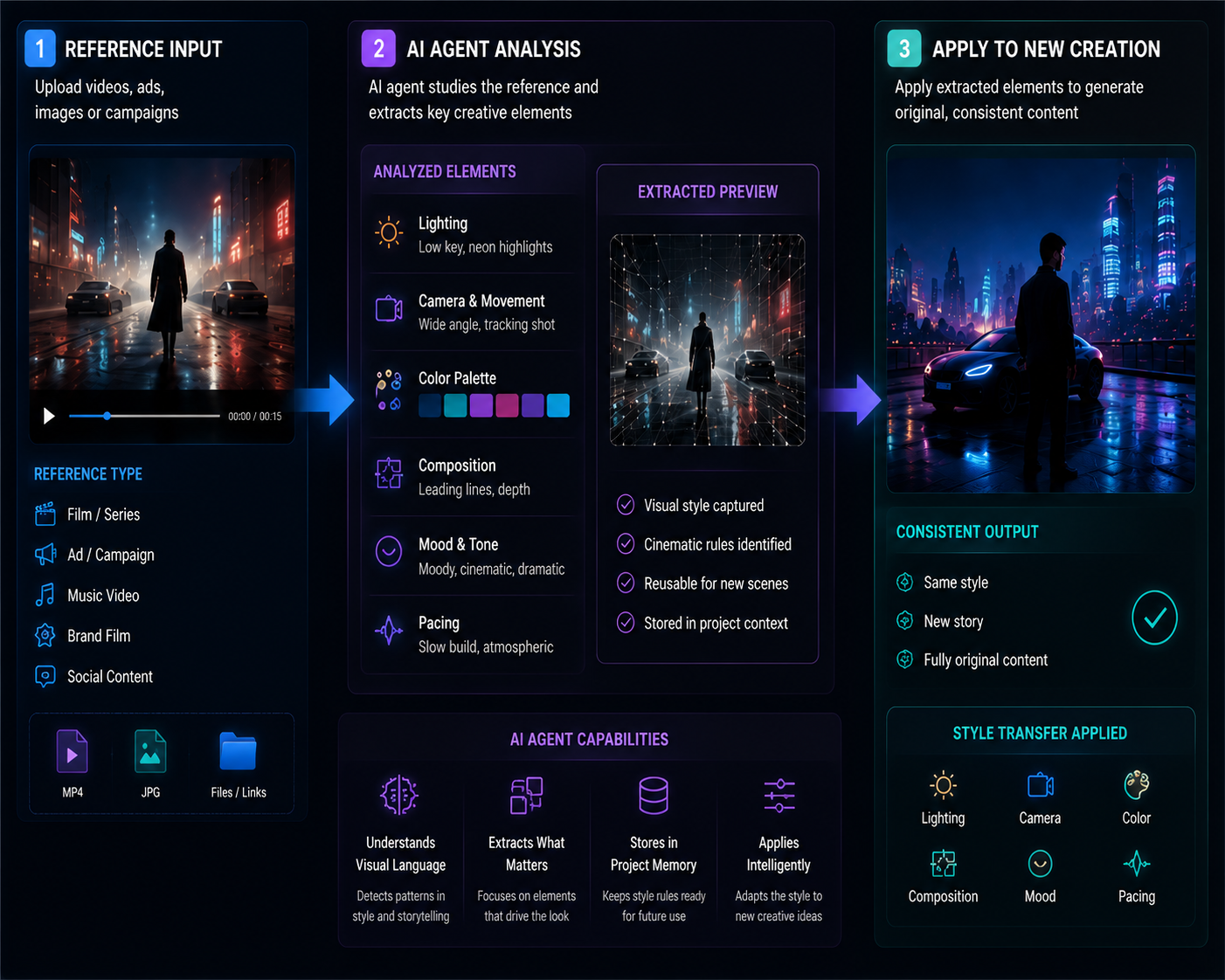
How does invideo Agent help extract and apply references?
Invideo Agent helps creators work with references by researching, analyzing, and carrying creative direction into a project. It works with references as part of a larger production workflow, where creators can explain what they want to keep and what should change.
A creator can upload a reference or name a film, series, brand, campaign, or specific shot. The agent can research the reference, understand the requested elements, and save those insights into the project context.
The important part is that creators decide what the reference means. They can ask for the lighting style from one video, the pacing from another, or the framing approach from a specific campaign.
The extracted details then become creative rules for future shots. This helps maintain consistency across a complete project instead of treating every generation as a separate task.
With Reference extraction, creators can upload a reference, describe what they want from it, and have invideo Agent extract those elements before using them to build shots. The process focuses on capturing useful creative decisions rather than simply recreating the original work.
What makes reference-based AI video workflows more consistent?
Reference-based workflows improve consistency by giving AI systems a clear creative foundation. They help maintain the same visual direction across multiple scenes, shots, and content versions.
One of the main issues with AI video production is consistency. A single generated clip may look good, but maintaining the same character, location, product, or style across a complete video requires stronger project understanding.
AI agents address this by keeping project context.
Invideo Agent works with a persistent project memory that stores important details such as characters, products, locations, and visual style. This allows creators to develop larger projects without repeating the same instructions every time.
This is especially useful for:
- Brand campaigns with multiple videos
- Episodic content
- Product advertisements
- Short films
- Social media series
A creator can establish the visual language early and continue building from the same foundation.
How can brands use AI agents for campaign creation?
Brands can use AI agents to study successful campaigns, understand visual patterns, and create new content while keeping brand identity consistent.
A brand reference can include more than just visuals. It can include tone, product presentation, audience style, and messaging choices.
For example, a company may provide previous campaign videos and ask an AI agent to understand:
- Product positioning
- Camera style
- Brand colors
- Audience appeal
- Story structure
Invideo Agent can also support advertising workflows by helping teams create product videos, UGC-style ads, and campaign variations while maintaining brand rules.
This is useful for teams that need multiple versions of creative content without rebuilding the entire production process each time.
Invideo Agent Two expands AI Video Production workflows by allowing creators to work with more types of project materials, including scripts, PDFs, brand books, Drive folders, YouTube links, and videos.
Instead of converting every creative idea into a detailed prompt, creators can provide the material they already use during production.
The agent can analyze these materials and understand the wider project context. This helps teams maintain creative decisions throughout the production process.
For example, a filmmaker can provide a reference deck, rough cut, or brand guide. The agent can understand the existing direction and help create new content that fits the same vision.
This makes AI filmmaking feel closer to working with a creative team that understands the project history.
How do creators build better videos using AI reference workflows?
Creators get better results when they treat AI agents as creative collaborators rather than simple generation tools. This shift is part of a broader move toward AI-powered workflow automation, where repetitive production tasks are handled by intelligent systems while creators focus on direction, storytelling, and final decisions. Similar approaches are helping teams rethink how creative work is planned, managed, and completed across different industries.
A strong workflow usually starts with clear references.
Creators can:
- Choose references that match the intended feeling
- Explain which elements matter most
- Separate style from specific content
- Build rules before generating scenes
- Review and refine the output
The goal is not to remove creative direction. It is to make creative decisions easier to apply across an entire production.
Reference-based workflows allow filmmakers and brands to spend more time making decisions and less time repeating instructions.
Conclusion
AI Video Production is becoming more effective as AI agents learn how to understand creative references. Instead of only generating individual clips, these systems can study visual language and help creators build consistent projects.
Reference extraction allows filmmakers and brands to turn inspiration into practical direction. It helps capture lighting, camera choices, pacing, and style while keeping the original creative vision intact.
Whether you are creating films, ads, or social content, the ability to work from references can make the process more focused and consistent.
What type of reference would you use first to guide your next video project?
Frequently Asked Questions
What is reference extraction in AI filmmaking?
Reference extraction is the process of analyzing a visual reference and identifying useful creative elements from it. These elements can include lighting, camera movement, framing, color style, and pacing that creators can apply to new projects.
Can AI agents copy an existing video reference?
AI agents are designed to understand creative elements from references rather than simply duplicate them. Creators can choose specific aspects, such as lighting or camera style, and use those ideas to create original content.
How does AI Video Production use brand references?
AI Video Production uses brand references to understand visual identity, messaging style, and creative direction. This helps teams create content that matches existing campaigns and brand guidelines.
Why is consistency important in AI-generated videos?
Consistency helps maintain the same characters, products, locations, and visual style throughout a project. This is important for longer videos, campaigns, and episodic content where every scene needs to feel connected.