


Every few months, a new AI company appears out of nowhere, raises $200 million, lands on every tech blog, and suddenly everyone’s asking if it’s the next big thing. Some of them are. Most of them aren’t.
That’s the problem. There’s more noise than signal right now, and sorting through it takes time most people don’t have.
I’ve done that work for you. This breakdown covers the hottest AI startups in Silicon Valley, what each one does, why it’s gaining traction, and what sets it apart from the dozens of lookalikes trying to compete.
You’ll walk away knowing exactly who’s worth watching, and why the ones on this list are pulling ahead.
What Defines a “Hottest” AI Startup in Silicon Valley
Not every well-funded startup deserves the “hot” label. Being hot means showing real momentum, not just a big press release.
Here are the signals that actually matter:
- Rapid funding rounds: Multiple raises in a short window signal strong investor confidence and capital to scale
- Product adoption: Real daily users validate that the tech solves an actual problem
- Hiring velocity: Fast headcount growth shows a company is entering its scaling phase
- Strategic partnerships: Distribution deals with bigger players accelerate reach without burning cash
The biggest misconception? That large funding automatically equals success. Many overvalued startups raised huge rounds with no real revenue or product traction.
The standard is different; investors now want demonstrated retention, clear revenue models, and genuine usage before writing big checks.
Startups that are shaping markets, not just participating in them, are the ones that earn a spot on this list.
Key Categories of AI Startups Dominating Silicon Valley Right Now
The Silicon Valley AI ecosystem isn’t one thing. It’s a layered stack of companies building at different levels.
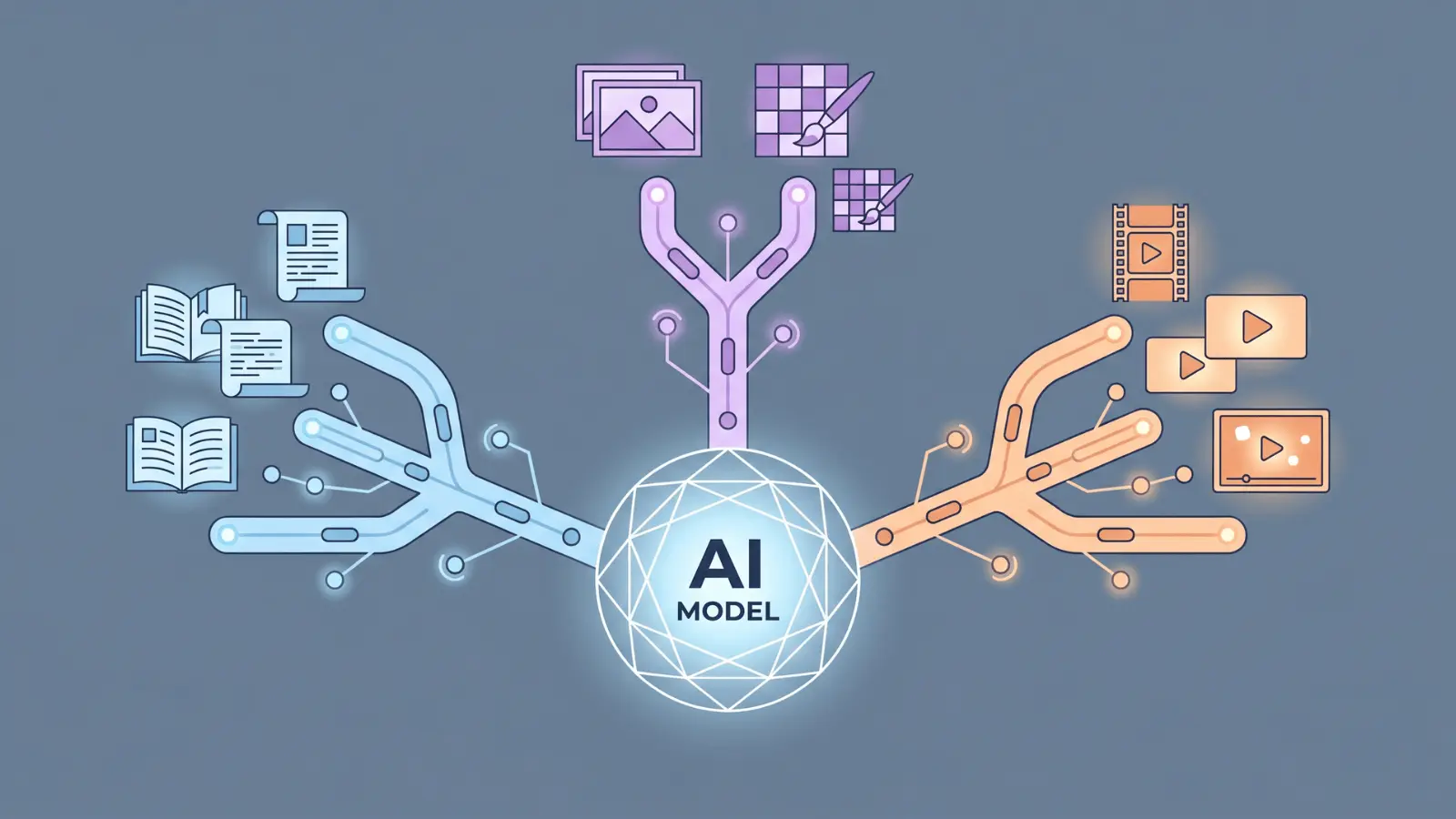
Generative AI and Foundation Model Startups
These companies build large-scale models that serve as the base layer for other applications. Because their technology is horizontal, useful across industries, they attract enormous funding and attention.
The limitation? High compute costs and growing commoditization risk as more players enter the space.
AI Infrastructure and MLOps Platforms
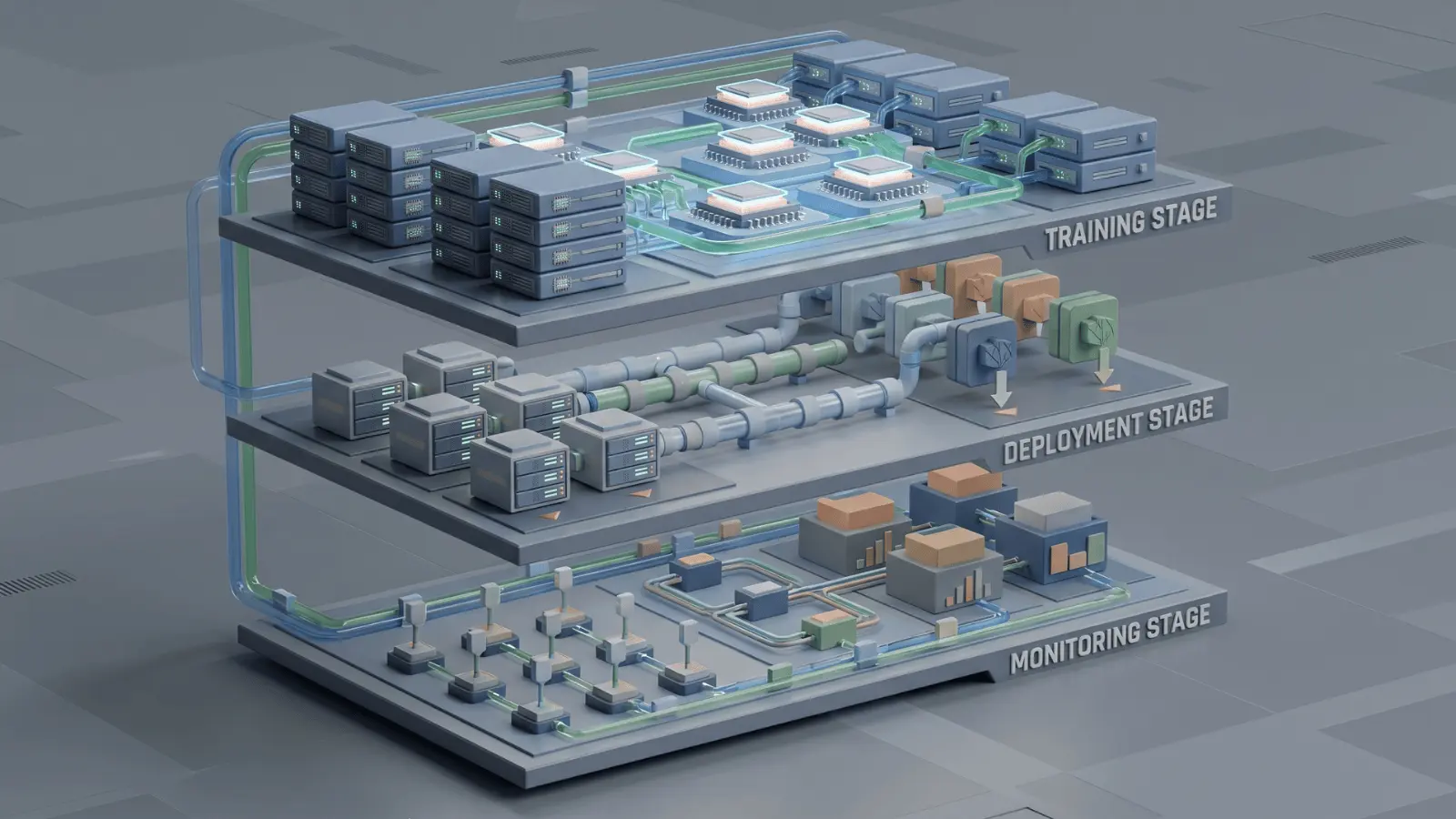
Every AI company needs tools to build, train, deploy, and monitor models. Infrastructure startups provide that backbone.
They’re critical to the ecosystem but often invisible to end users, which makes differentiation harder. The companies that win here tend to lock in customers through deep technical integration.
Vertical AI Startups (Industry-Specific Solutions)
These companies apply AI to one specific domain, legal, healthcare, finance, or HR, and go deep instead of wide.
Their advantage is a clear return on investment and niche dominance. The risk is limited scalability if they can’t expand beyond their core use case. But many are growing fast precisely because they own a problem no one else has solved well.
Hottest AI Startups in Silicon Valley
These aren’t necessarily the largest or most funded companies, but the startups creating the most buzz among investors, developers, and early adopters.
Generative AI & Foundation Models
1. Perplexity AI
Perplexity builds a real-time AI search engine that answers questions directly instead of returning links. Better models lead to better answers, which brings more users, which generates more data to improve the product further. It’s a self-reinforcing loop that directly challenges the traditional Google-style search experience.
2. Character AI
Character.AI lets users create and chat with AI personas. It has built one of the most engaged consumer audiences in the AI space. Retention is unusually high; users return daily, which is a rare signal in consumer AI.
3. Runway
Runway builds AI-powered video and image generation tools for creatives. It’s creating genuine buzz among investors, developers, and early adopters in the creative tools space by making professional-grade content production accessible to individual creators.
AI Infrastructure & MLOps
4. Cerebras Systems
Cerebras builds wafer-scale AI chips for frontier model training and has raised $2.8 billion in total funding, reaching an $8.1 billion valuation in September 2025. Their chips offer an alternative to Nvidia for large-scale training workloads, with clients including Mayo Clinic and AstraZeneca.
5. Glean
Glean is an enterprise AI search platform. It was founded by Arvind Jain and Tony Gentilcore, both former Google engineers, and has built strong enterprise adoption with 90%+ renewal rates. It connects to all internal tools and surfaces relevant information instantly, replacing hours of manual searching.
6. Anysphere (Cursor)
Anysphere makes Cursor, an AI-native code editor. It’s among the fastest-growing AI startups and is capturing significant market share in developer productivity. Developers report dramatic speed improvements, making it one of the most-used AI tools in engineering teams today.
Vertical AI Startups

7. Harvey AI
Harvey is purpose-built for legal professionals. Its clients include Allen & Overy with 100,000+ lawyers, PwC, and multiple Am Law 100 firms, with 90%+ renewal rates and average seat prices of $100–$150 per month. It automates legal research, contract review, and document drafting without replacing the lawyer.
8. Sierra
Sierra is a conversational AI platform that enables companies to deploy customer service agents capable of handling complex queries without human handoff. It handles millions of customer conversations monthly, with clients reporting 80%+ resolution rates and average contract values exceeding $500K annually.
9. Mercor
Mercor made one of the most dramatic pivots in startup history, starting as an AI recruiting platform before becoming an AI training data powerhouse. It went from $75 million to $450+ million in annualised revenue in just seven months, reaching a $10 billion valuation.
10. Lovable
Lovable doubled its ARR from $100 million to $200 million in just four months a growth rate that signals real product-market fit, not just hype. It helps non-technical users build web apps using AI, removing the barrier of code entirely.
11. Physical Intelligence
Physical Intelligence develops foundational software for robots, creating AI systems that understand and interact with the physical world. It’s backed by Lux Capital, Sequoia, and others, and is positioned at the intersection of the AI and robotics boom.
12. Pika Labs
Pika Labs builds AI video generation tools focused on fast, accessible creation.
It gained rapid traction among creators and marketers who need short-form video content without expensive production teams.
13. Writer
targets enterprise content teams with AI writing and governance tools. Unlike general-purpose AI writing tools, it allows companies to train the model on their own brand voice, terminology, and compliance rules, making it stickier in regulated industries.
14. Cognition AI
Cognition AI is among the fastest-growing AI startups, scaling from zero to unicorn status in 2026. It builds autonomous AI software engineers that handle complex development tasks end-to-end; not just autocomplete, but full project execution.
15. Manus
Manus builds general-purpose AI agents that can autonomously handle complex multi-step tasks. It reached an annualized revenue run rate exceeding $125 million within eight months of launch and consistently outperformed competitors on real-world benchmarks.
Why These Startups are Growing Faster than Traditional Tech Companies
AI-native products scale differently. They don’t need physical infrastructure or large sales teams to grow.
Here’s why the growth curves look so different:
- API-based distribution: Products can integrate anywhere without custom builds
- Cloud infrastructure: Low upfront cost means faster go-to-market
- Viral adoption loops: Especially strong in consumer AI, where users share outputs organically
It compounds on itself: better models produce better outputs, which attract more users, which generate more data, which train even better models.
Multiple companies on this list scaled from zero to nine-figure ARR in under 18 months, growth rates that would have seemed impossible five years ago.
The failure case is model stagnation. Startups that stop improving, or that lack proprietary data advantages, plateau quickly and lose ground to better-resourced competitors.
Common Patterns Among Top AI Startups
Winners in this space don’t look random. Once you see the pattern, it’s hard to unsee.
Most top AI startups share these traits:
- Technical founders with elite pedigrees: The most fundable AI startups in 2026 are typically founded by ex-OpenAI, Google DeepMind, Meta FAIR, or Stanford PhDs.
- Narrow focus first: They dominate one use case before expanding, rather than trying to be everything from day one
- Fast iteration: Weekly product updates are common; shipping speed is a competitive advantage
- Early enterprise adoption: Enterprise contracts validate real ROI and provide stable revenue before scaling to the broader market
The biggest misconception about AI startup success is that it’s purely technical. Distribution and positioning matter just as much. A brilliant model with no path to customers goes nowhere.
How to Evaluate Which AI Startups Actually Matter
With so many companies claiming to be “AI-powered,” it pays to filter carefully. Here’s a quick checklist:
- Is the product used daily, or just demoed at conferences?
- Does it replace an existing workflow, or just assist with it?
- Is there a clear and repeatable revenue model?
- Does the company have a data advantage that competitors can’t easily replicate?
The companies that pass this test are the ones worth tracking. Real utility drives retention. Retention drives sustainable growth. In 2026, “hot” requires demonstrated traction, not just fundraising headlines. AI tools that are impressive in demos but not essential in daily work tend to fade fast.
Quick Comparison Table of Top AI Startups
| Startup | Category | Core Product | Key Strength | Growth Signal |
|---|---|---|---|---|
| Perplexity AI | Gen AI | AI search engine | Real-time answers | Massive user growth |
| Harvey AI | Vertical AI | Legal AI platform | Enterprise law firm adoption | 90%+ renewal rate |
| Glean | Infrastructure | Enterprise search | Deep tool integration | Strong ARR |
| Sierra | Vertical AI | Customer service AI | High resolution rate | $500K+ avg contracts |
| Mercor | Vertical AI | AI training data | Explosive ARR growth | $450M+ ARR in 7 months |
| Cerebras | Infrastructure | AI chips | Nvidia alternative | $8.1B valuation |
| Runway | Gen AI | Creative AI tools | Creator adoption | Viral content loops |
| Cognition AI | Gen AI | Autonomous coding AI | Full-task execution | Unicorn growth pace |
| Character.AI | Gen AI | AI persona chat | Daily active users | Consumer retention |
| Manus | Gen AI | AI agents | Multi-step task handling | $125M ARR in 8 months |
Who’s Backing These Companies
The biggest names in venture capital are all in on this list.
- Sequoia has backed Perplexity AI, Physical Intelligence, and Harvey AI.
- Andreessen Horowitz (a16z) has invested in Glean and Character.AI.
- Benchmark, Lightspeed, and NEA round out the major backers across the remaining companies.
This matters because these firms don’t just write checks; they open enterprise doors, accelerate hiring, and signal to the market that a startup has passed serious due diligence.
When the same two or three firms appear across a list this concentrated, it’s a strong sign the momentum is real.
Final Thoughts
The hottest AI startups in Silicon Valley aren’t winning on hype, they’re winning on results. Real users, real revenue, and real products that people actually rely on every day.
Now that you know who’s leading the pack and why, you’re in a much better position to track where AI is heading next. Keep an eye on the companies that solve specific problems, ship fast, and build for retention; those are the ones that tend to stick around.
The AI space changes quickly, so staying informed is half the battle. If this got you curious, check out other blogs on AI trends, startup ecosystems, and what’s next in tech.
Frequently Asked Questions
Why does Silicon Valley produce so many AI startups?
Silicon Valley combines world-class talent from Stanford and Berkeley, deep VC networks, and proximity to Big Tech, creating an unmatched environment for AI startups to launch and scale fast.
What do investors look for in an AI startup before funding it?
Investors prioritise strong technical founders, unique data advantages, a clear revenue model, and early product traction, not just a promising idea or a polished pitch deck.
Can an AI startup succeed outside Silicon Valley?
Yes, but Silicon Valley still holds the edge. New York and Boston have growing AI ecosystems, especially in healthcare and finance, though Valley-based startups attract more capital overall.
How much funding does an AI startup typically need to scale?
Most serious AI startups need $50M–$100M at Series A to compete. High compute costs and top engineering talent make capital requirements significantly higher than traditional software startups.