

Buying a phone at $799 means more than checking its camera count or processor name.
The Google Pixel 9 takes a different approach, focusing on useful cameras, smart software, a bright display, and long-term support.
But does it offer enough to stand out among today’s flagship phones? I spent time looking at the parts that matter during daily use, from photo quality and scrolling to gaming, battery life, and charging speed.
This Google Pixel 9 review looks at where the phone does well, where it falls behind, and who should consider buying it before spending their money.
What Does the Google Pixel 9 Look and Feel Like?
The Google Pixel 9 has a 6.3-inch Actua OLED display with a smooth 60–120Hz refresh rate and up to 2,700 nits of peak brightness.
Its satin-finish aluminum frame and Gorilla Glass Victus 2 back give it a solid feel without making it too heavy at 198g.
The power and volume buttons sit on the right side, while strong haptics make typing feel responsive.
An ultrasonic fingerprint sensor sits under the display, and Google also supports screen-off fingerprint unlocking. The display remains easy to see outdoors, while the IP68 rating adds protection against dust and water.
Google Pixel 9 Specifications
The Google Pixel 9 combines a bright display, capable cameras, and Google’s Tensor G4 processor. Here are its key specifications at a glance:
| SPECIFICATION | DETAILS |
|---|---|
| Display | 6.3-inch Actua OLED, 60–120Hz |
| Resolution | 1080 × 2424 |
| Processor | Google Tensor G4 |
| RAM | 12GB |
| Storage | 128GB / 256GB |
| Rear Cameras | 50MP wide + 48MP ultrawide |
| Front Camera | 10.5MP autofocus |
| Battery | 4,700mAh |
| Charging | Up to 55% in 30 minutes |
| Wireless Charging | Qi-certified |
| Weight | 198g |
| Protection | IP68 |
| Software | Android 14 at launch |
| Updates | 7 years |
These specifications give the Pixel 9 a strong setup for everyday use, photography, and long-term software support. The real experience depends on how these features perform in daily use.
How Good are the Google Pixel 9 Cameras?
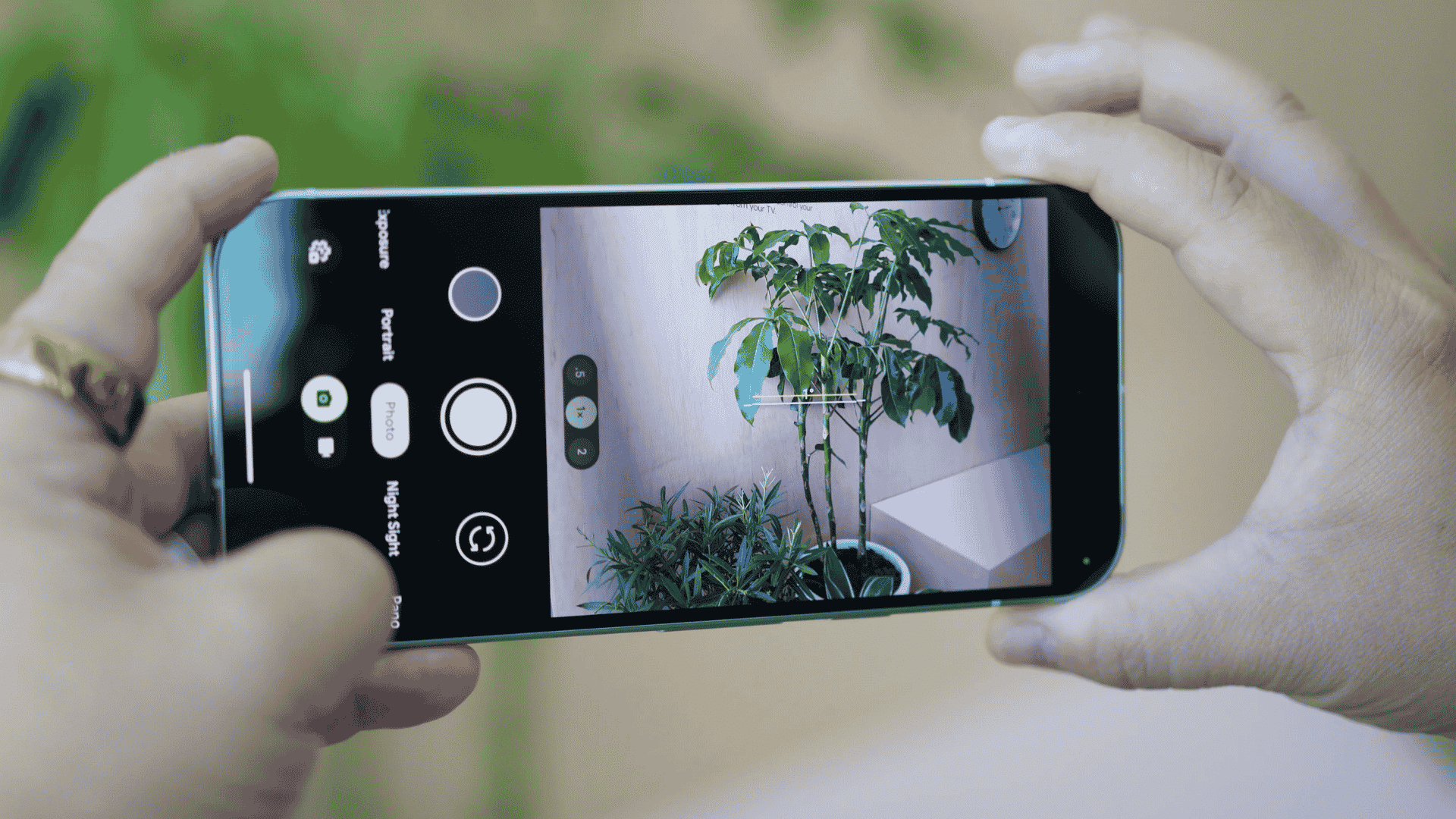
The Pixel 9 sticks with two rear cameras, skipping the third lens found on Pro models. That simpler setup still competes well against pricier flagships.
Google’s image processing does most of the heavy lifting, turning solid hardware into sharp, accurate photos.
Google Pixel 9 Camera Performance
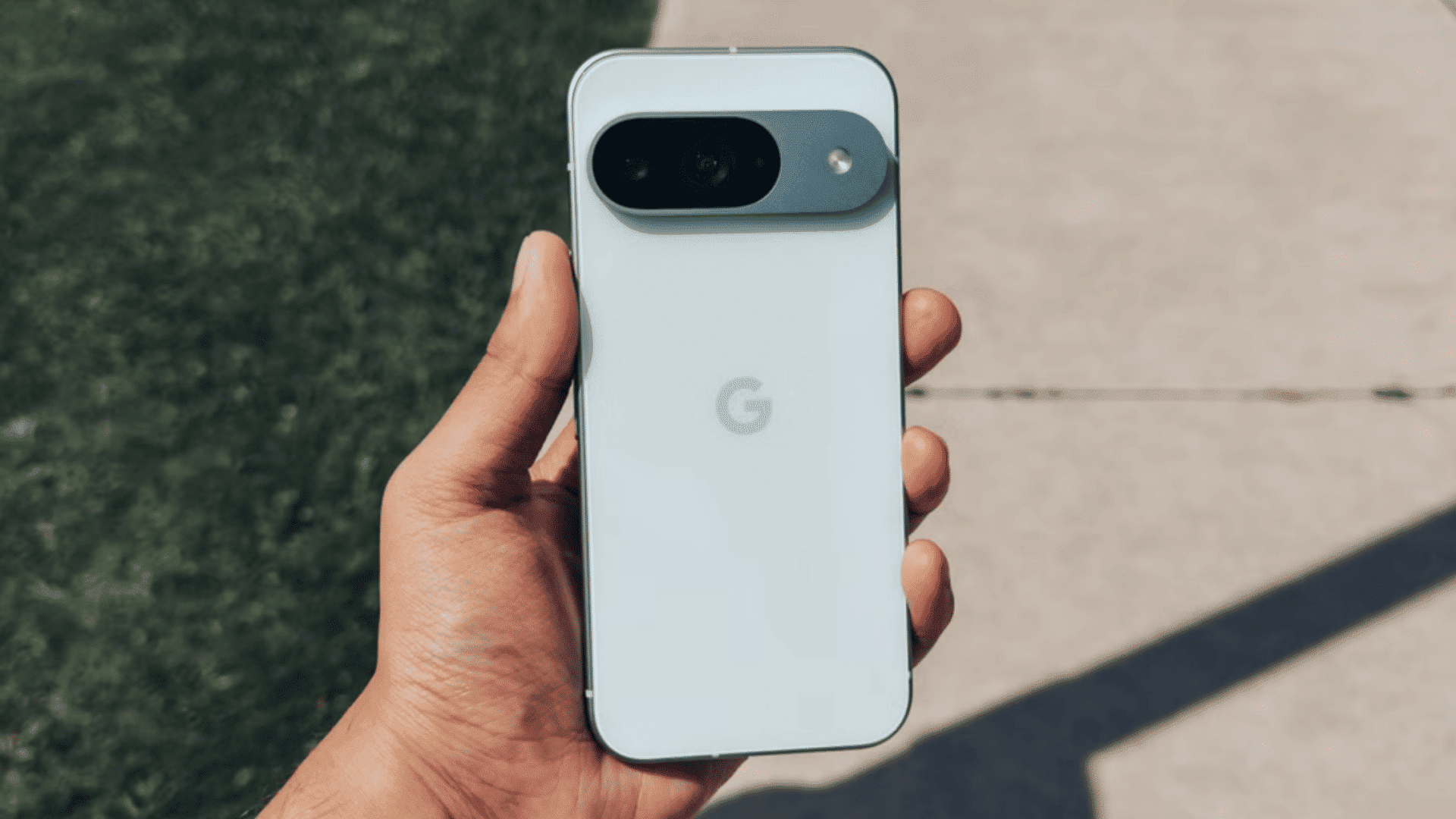
The 50MP main camera uses an f/1.68 lens with optical stabilization. Laser autofocus locks onto subjects fast, even in tricky lighting.
The 48MP ultrawide adds a 123-degree view and doubles as your macro lens, focusing as close as 2cm. In daylight, both cameras produce crisp, well-exposed shots with true-to-life colors.
HDR blending pulls detail from bright skies and dark shadows at once, so neither gets lost.
Zoom, Low-Light, and Video
The Pixel 9 has no dedicated telephoto lens. Instead, its main sensor crops in for a 2x optical-quality zoom, and Super Res Zoom pushes that further to 8x. Night Sight turns on automatically in low light, brightening scenes with little noise or blur.
Both the main and front cameras record video at 4K resolution and 60fps. Locked, Active, and Cinematic Pan stabilization modes keep footage steady during walking shots or zoomed-in recording.
Google Pixel 9 Performance and Battery Life
The Pixel 9 pairs Google’s own chip with a battery built for a full day of use. It’s not the fastest phone on paper, but it holds up well for daily tasks.
Where it really stands out is how AI features run without needing an internet connection.
1. Everyday Performance
The Tensor G4 chip and 12GB of RAM keep the Pixel 9 running smoothly for daily tasks.
Apps open fast, switching between them feels instant, and the interface stays smooth even with several windows open. For browsing, texting, and photo editing, this setup handles everything without a hitch.
Gaming tells a different story. Under long, demanding sessions, the chip can slow down to manage heat. Frame rates then dip in graphics-heavy games over time.
2. AI Performance
Gemini Nano runs directly on the Pixel 9. It handles tasks like call summaries and smart replies without sending data to the cloud. That keeps things fast and private, even offline.
For heavier requests, like image generation, the phone switches to cloud-based Gemini instead, a shift shared by most AI image generators without restrictions. Features such as Call Notes currently work only in English.
Availability also depends on your country, so not everyone gets the same AI toolkit at launch.
3. Battery Life and Charging
The 4,700mAh battery comfortably lasts a full day of mixed use, from calls to streaming and photo editing. Wired charging tops out at 27W, reaching about 55% in 30 minutes with Google’s 45W charger.
Wireless charging peaks at 15W using the Pixel Stand, or 12W with standard Qi pads. Battery Share lets you wirelessly charge earbuds or another phone. It switches off automatically, though, once you plug in a cable.
What Software and AI Features Does the Pixel 9 Have?
The Pixel 9 leans hard on Google’s software and AI tools to stand out from other phones. Many features work right on the device, so they stay fast and private. Here’s a quick look at what comes built in.
- Magic Editor and Add Me: Magic Editor lets you move, resize, or erase objects in a photo using AI. Add Me swaps you into the group shot by blending two photos into one.
- Gemini: Gemini, one of the major OpenAI competitors in consumer AI, is the Pixel 9’s built-in assistant. Hold the power button to ask questions, summarize text, or generate ideas on the spot.
- Call Screening and Call Notes: Call Screen answers unknown numbers and shows you a live transcript before you pick up. Call Notes records, transcribes, and summarizes phone calls right on the device.
- Now Playing and Pixel Screenshots: Now Playing quietly identifies songs playing around you without using the internet. Pixel Screenshots lets you search past screenshots using plain language instead of scrolling through them.
- Seven Years of Support: Google backs the Pixel 9 with seven years of Android updates, security patches, and feature drops. That keeps it useful well into the early 2030s.
Together, these tools cover photos, calls, and quick daily tasks with minimal setup. Most of them run locally, which keeps your data on your phone.
That mix of AI features and long-term support is one of the Pixel 9’s strongest selling points.
What is the Google Pixel 9 Price and Value?
The Google Pixel 9 launched at $799 for 128GB storage, with a 256GB option at $899. Two Pixel generations have arrived since then.
Both the Pixel 10 and the newly launched Pixel 11 now sit on shelves next to it. As a result, the Pixel 9 often sells for less. Deals commonly drop the price into the $500 to $550 range.
That gap makes it a smart pick for flagship photos and years of updates without paying full price. Newer Pixels bring faster chips and bigger batteries, but most everyday tasks feel about the same.
Buy the Pixel 9 at a discount, not at full price.
Who Should Buy the Google Pixel 9?
The Pixel 9 fits anyone who takes lots of everyday photos. Its main and ultrawide cameras handle daylight, HDR, and macro shots well.
It also suits people who want Google’s AI built in, from Gemini to Call Notes. Seven years of software and security updates add to its long-term value.
Skip it if you play demanding games for long stretches, since the chip slows down once it heats up. Skip it too if you need real reach, since there’s no telephoto lens, just digital cropping and Super Res Zoom.
Fast charging isn’t a strength either, topping out at 27W while some rivals charge much quicker.
Final Thoughts
The Pixel 9 gets many everyday details right. Its cameras take strong photos, the software feels clean and useful, and seven years of updates give it a long support life.
At the same time, the Tensor G4 is not the best choice for heavy gaming, charging is slower than some rivals, and the lack of a telephoto camera limits long-range photography.
I think the Pixel 9 makes the most sense for people who value cameras and Google’s software more than raw speed.
If you have used the Pixel 9, share your experience in the comments and let me know what you think.
Frequently Asked Questions
Does the Google Pixel 9 Have Face Unlock?
Yes. The Pixel 9 supports Face Unlock alongside its ultrasonic fingerprint sensor, giving you two biometric options for unlocking the phone and accessing supported apps.
Is the Google Pixel 9 Waterproof?
The Pixel 9 has an IP68 rating for dust and water resistance. However, Google says water resistance can decrease over time, so avoid treating it as fully waterproof.
Does the Google Pixel 9 Support Expandable Storage?
No. The Pixel 9 does not have a microSD card slot, so you cannot add storage later. Choose between 128GB and 256GB when buying the phone.
Does the Google Pixel 9 Come with a Charger?
No. The box includes a USB-C cable and SIM tool, but Google’s 45W USB-C charger is sold separately.