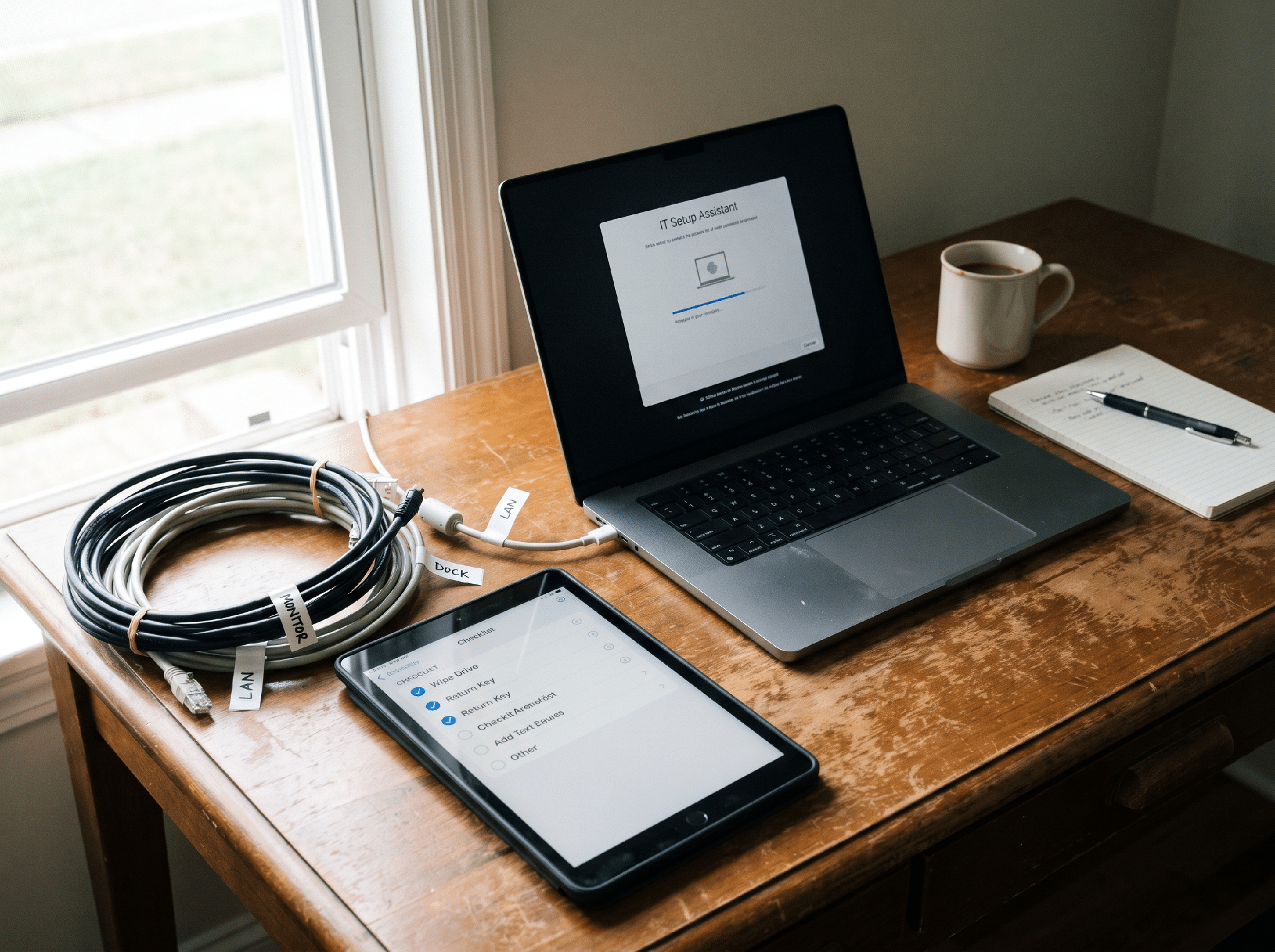


Most people think IoT devices are just small, harmless gadgets. A smart bulb, a fitness band, a camera… they all feel simple. But the moment these devices connect to the internet, the risk shifts in ways that are easy to overlook.
That’s where the real question comes in: how does the issue of cybersecurity relate to the Internet of Things?
The short answer is that every connected device becomes a possible entry point. But that’s only the surface. The real connection runs deeper, through how these devices are built, how they communicate, and how they fit into larger networks.
Let’s break it down so you can see what’s actually happening behind the scenes.
What is the Relationship Between Cybersecurity and the Internet of Things?
This relationship starts with a simple shift. Devices that once worked alone now talk to networks, apps, and cloud systems. That change turns everyday objects into active parts of the internet.
Every connected IoT device increases the number of ways someone can access, disrupt, or control a system. That is the direct link between cybersecurity and IoT.
How IoT Devices Become Networked Endpoints
An IoT device does not just sit there and work locally. It connects.
Most devices follow a basic path:
- The device collects data
- It sends that data over a network
- The data goes to a cloud server or app
- Commands come back to the device
Because of this flow, every device has:
- A network identity (like an IP address)
- A communication channel
- A way to receive instructions
So instead of being passive objects, they function like small computers on a network. Each one can send, receive, and respond.
That is what makes them endpoints.
The risk is not identical across all devices. A simple sensor may expose less data than a smart camera. But both still create a connection point, and that connection is what matters.
Why Connecting Physical Devices Changes the Security Model
Before IoT, most risks stayed inside computers, servers, or phones. Now physical devices sit inside the same digital system.
This creates a different model:
- Digital systems control physical objects
- Physical devices rely on remote communication
- Security is no longer limited to software
Here’s the key shift.
In traditional systems, you protect a few strong points like servers or databases. In IoT, you deal with many smaller points spread across homes, offices, factories, and public spaces.
Each device adds a new path into the network and a new place where security can fail.
And these devices often operate in less controlled environments. That makes them harder to monitor and manage consistently. So the risk grows not just in size, but in structure.
Why IoT Devices are Structurally More Vulnerable than Traditional Systems
The weakness in IoT is not random. It comes from how these devices are designed, built, and supported over time.
Hardware and Cost Constraints that Limit Security
IoT devices are often made to be cheap and efficient.
That leads to trade-offs.
- Limited processing power
- Small memory capacity
- Minimal storage
Strong security needs resources. Encryption, monitoring, and updates all require power and space. When those are limited, security becomes lighter, and in some cases, it is skipped entirely.
This is why two devices can behave very differently. A high-end industrial sensor may include better protection, while a low-cost home gadget may cut corners to stay affordable.
So vulnerability is not equal across all devices. It depends on how much the design can realistically support.
Authentication and Credential Weaknesses
Many IoT devices rely on simple login systems.
Common patterns include:
- Default usernames and passwords
- Hardcoded credentials that cannot be changed
- Weak authentication processes
These choices make setup easier for users. But they also make access easier for attackers. The issue is not only that passwords are weak. It is that many systems assume trust once access is gained.
So if someone gets in, they often get broad control.
This creates a contrast with traditional systems, where access is usually layered and segmented. In IoT environments, access can be flat and wide.
Why Firmware Updates are Often Inadequate
Firmware is the built-in software that runs the device.
Updating it is not always simple. Some devices do not support automatic updates, require manual steps that users rarely take, and lose support after a short time.
This means known security flaws can remain active for years. A newer device might still receive updates. An older one may never get fixes again.
So even if two devices start out similar, their security can drift apart over time as support changes.
How IoT Expands the Attack Surface
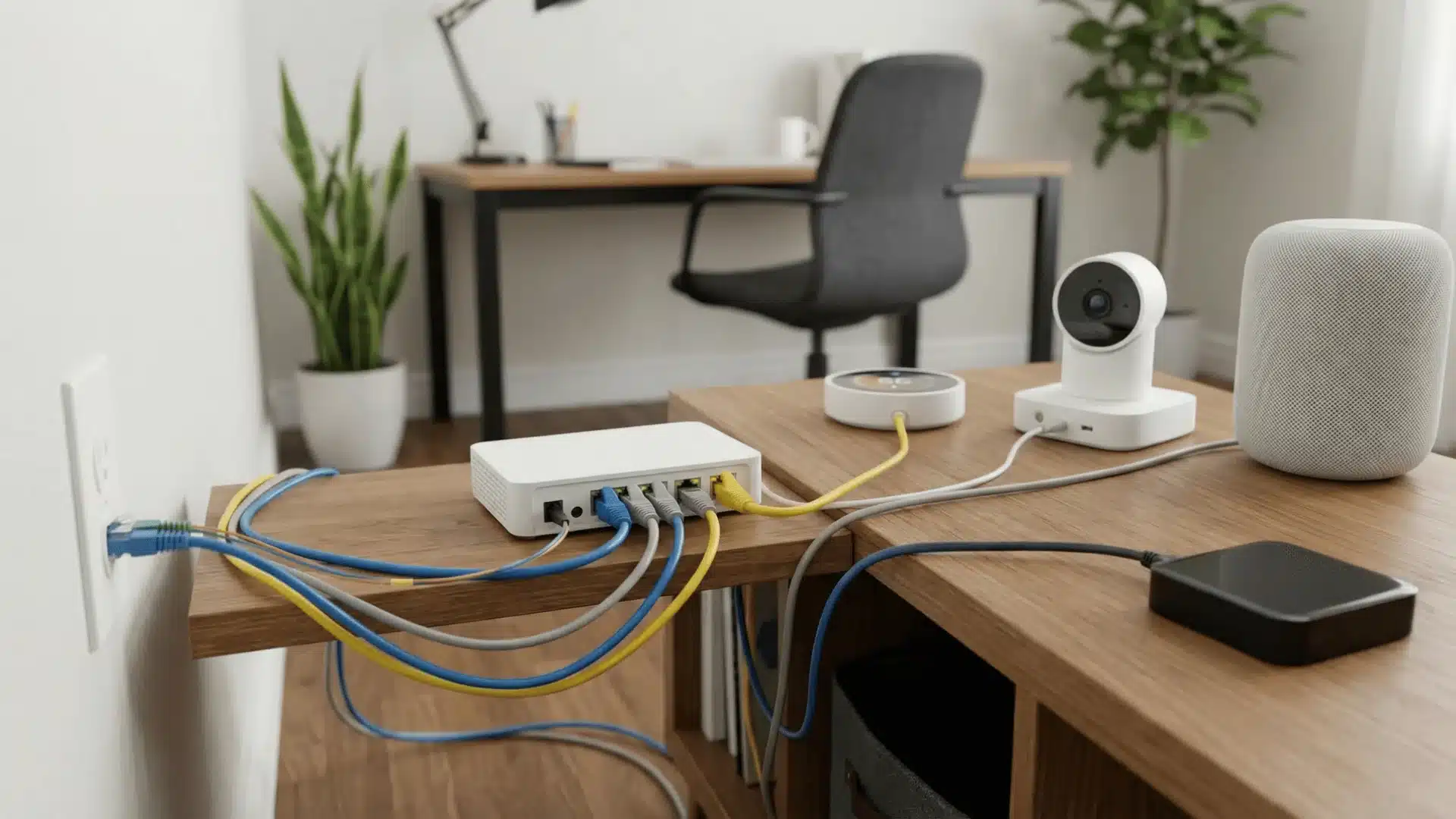
You often hear that IoT “expands the attack surface.” But that phrase is usually left unexplained.
It is not just about having more devices; it is about how those devices connect, communicate, and trust each other.
Device Proliferation and Exposure Points
Each IoT device adds new elements to a network, including an IP address, open ports, communication protocols, and data pathways.
Individually, this seems small. But as devices scale into the hundreds, the network turns into a dense web of connections.
This shifts the system from centralized to distributed.
In a centralized setup, security focuses on a few key points. In a distributed one, every device becomes part of the attack surface. The exposure doesn’t just grow in number; it grows in layers.
Network Trust Relationships and Lateral Movement
Devices on the same network often trust each other by default.
That means once an attacker gets in, they don’t always need to break in again. They can move sideways across devices. This is known as lateral movement.
It usually starts with one weak device. From there, the attacker uses it as a foothold, scans the network, and moves across other connected systems.
The real risk isn’t just the first breach, but what follows after.
Some networks reduce this risk with segmentation. Others leave devices more open to each other. That difference often determines how far an attack can spread.
Cloud APIs and Remote Management Channels
Many IoT devices rely on cloud services to function. They send data out and receive commands in return, creating constant communication between local devices and external systems.
This introduces additional exposure through APIs, remote control systems, and data sync channels.
These connections are necessary, but they extend the system beyond the local network.
As a result, risk exists in two places at once. Inside the local environment and across the internet through cloud infrastructure. This added layer makes IoT systems more complex to secure than isolated setups.
What Cyber Threats Commonly Exploit IoT Weaknesses
When vulnerabilities exist, attackers look for patterns they can repeat. IoT systems are often targeted in specific, predictable ways.
How IoT Botnets Form and Launch DDoS Attacks
A botnet is a group of compromised devices controlled together.
The process usually follows a pattern:
- Devices are scanned for weak access
- Malware is installed
- Devices connect to a control server
- Commands are sent to all infected devices
When enough devices are involved, they can flood a target with traffic. This is known as a DDoS attack.
The power comes from scale. One device is weak by itself, but thousands acting together can overwhelm even large systems.
That is why IoT devices are attractive to attackers. The number of devices creates collective strength.
Data Exfiltration and Unauthorized Control
IoT devices often collect and transmit data.
That data can include:
- Personal information
- Usage patterns
- Environmental readings
If access is gained, attackers can read that data, copy it, and send it elsewhere. In some cases, they can also control the device itself.
The risk changes depending on the device. A smart light may carry little sensitive data. A security camera or medical device carries far more.
So the outcome depends on what the device handles and how it connects to other systems.
Using a Single IoT Device to Breach a Larger Network
A small device can act as an entry point into a larger environment. Once inside, attackers may:
- Scan for other systems
- Target more valuable devices
- Escalate their level of access
The initial breach may seem minor. But the follow-up actions can lead to deeper access and broader control. That is why even low-value devices matter in a networked system.
Why IoT Cybersecurity Risks Extend Beyond Data Theft
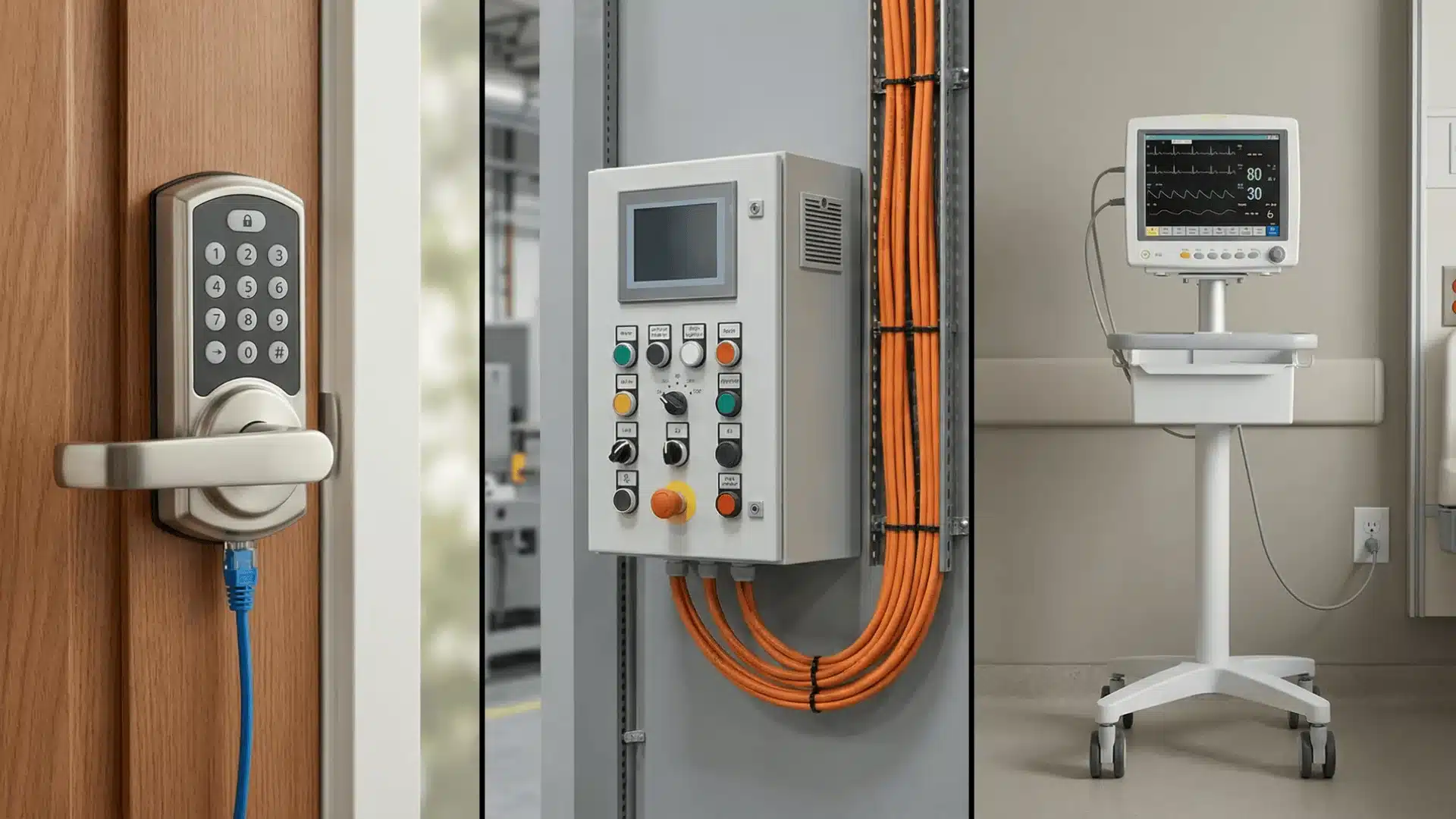
The impact of IoT security issues goes beyond losing information. In some cases, it affects real-world systems directly.
Cyber-Physical System Interactions
IoT devices often control or influence real-world processes, from smart locks and industrial sensors to medical equipment.
These systems connect digital commands to physical actions. When the digital layer is compromised, the physical outcome can change as well.
That’s what sets this apart from traditional cybersecurity. The impact doesn’t stay within the data or the software; it can extend into real-world effects.
Operational Disruption and Safety Impacts
When IoT devices are disrupted or manipulated, systems may slow down, fail, or behave in unexpected ways.
This can lead to downtime, incorrect readings, or unsafe conditions, depending on the environment.
The impact isn’t always immediate. In some cases, small disruptions build over time. In others, the effect is sudden and visible.
How serious it becomes depends on how critical the system is and how tightly the devices are connected.
Critical Infrastructure Exposure
IoT technology is used across large-scale systems like energy grids, transport networks, and healthcare facilities.
In these environments, a failure rarely affects just one person; it can impact entire groups, services, or operations at once.
As scale increases, so does risk.
A small vulnerability in a single device can connect to larger systems and trigger wider consequences. What starts as a minor issue at the device level can spread into operational disruption across connected infrastructure.
These systems are often tightly integrated, which means one weak point can affect multiple layers at once. In some cases, that impact stays limited. In others, it can cascade across services that depend on each other.
Because of this, IoT cybersecurity goes beyond individual risk and becomes a broader systems-level concern.
Wrapping Up
When you look at the full picture, the link between devices and risk becomes clear. The question of how the issue of cybersecurity relates to the internet of things is really about understanding how connection reshapes exposure.
It is not simply about having more devices. It is about how those devices interact, trust one another, and depend on shared networks. That is where the real risk forms.
Once you see that structure, the topic feels less abstract. It becomes something you can recognize and think about more clearly the next time you rely on connected technology.
Frequently Asked Questions
How does cybersecurity relate to the IoT?
Cybersecurity relates to IoT because every connected device becomes part of a networked system. Each device creates a potential entry point that must be protected.
What security issues are most common in IoT?
Common issues include weak passwords, limited encryption, lack of updates, and poor authentication systems. These weaknesses make devices easier to access and control.
What risk do IoT devices pose?
IoT devices can expose data, allow unauthorized access, and serve as entry points into larger networks. In some situations, they can also affect physical safety and operations.