
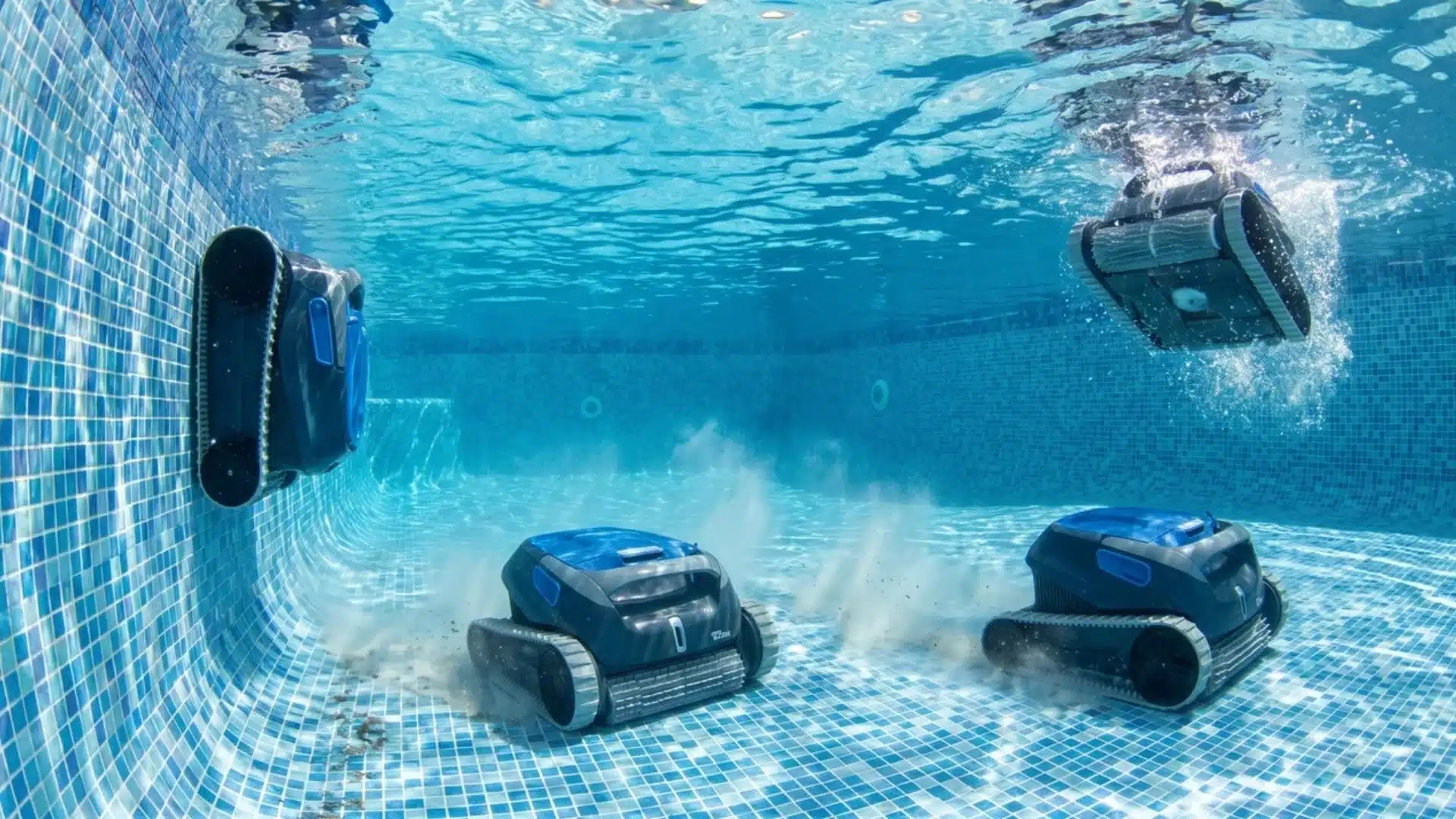
There is no single best pool vacuum robot.
There is only the best robot for your pool. That gap is exactly why so many buyers end up with a machine that underperforms or dies in its first season.
Buying by price or brand name will get you a product. Buying by your pool’s actual conditions will get you the right one.
This guide starts where every purchase should, with the four things that define which robot category you even belong in. Model names come after.
What Actually Determines Which Pool Robot Is Right for You?
The best robot for your neighbor’s pool may be the wrong robot for yours. Before you look at a single model, you need to know your pool. The match between your pool’s conditions and a robot’s design is the decision. Price and features come second.
Four things define which category of robot will work for you. Get them right and you narrow 30-plus models down to a handful.
1. Pool Size
Every robot is rated for a specific pool size, usually measured in length or square footage of floor area.
A robot built for a 15-foot above-ground pool has a completely different drive system and cycle calculation than one built for a 40-foot in-ground. A small robot in a big pool will finish its path and park. It didn’t malfunction. It finished exactly the job it was designed to do.
Running an oversized robot in a small pool causes its own problems. You get excessive water turbulence. In above-ground pools, the motor strains from constant direction changes.
Size first. Always.
2. Surface Type
This is where most buyers make their most expensive mistake. I’ve seen it more than any other error in this category.
Pool surfaces come in three types: vinyl liner, fiberglass, and plaster or concrete. Robots are engineered specifically for each. The brushes, brush hardness, and drive traction are not interchangeable.
A robot built for rough plaster uses stiff PVC bristle brushes and aggressive drive-wheel grip. It scrubs algae off a porous surface and climbs steep walls under full load. Run that same robot in a vinyl-liner pool and those stiff bristles will abrade the liner over time. Eventually you get micro-tears. That compromises the whole structure.
Run a plaster robot on fiberglass and the drive wheels skip on descent. The upper half of the pool goes uncleaned.
Fiberglass-rated robots use softer foam or rubber brushes. They use a drive system built for low-friction surfaces. Vinyl-rated robots pair gentle brushes with suction-cup-style traction.
These aren’t small performance differences. They’re the difference between a robot that works and one that damages your pool.
3. Debris Profile
Your debris load determines what filtration and brush type you need — within the category your pool size and surface already set.
Fine dust, pollen, and sand need micro or nano filtration to be captured. Coarse mesh filters pass those particles straight through and put them back in the water.
Large leaves need an oversized basket or bag. A fine-filter robot packed with wet leaves after one run loses suction before it covers the floor.
If your pool gets both, which is common near trees, you need multi-stage filtration or a two-chamber basket that separates coarse debris from fine.
4. In-Ground vs. Above-Ground
This isn’t just about size. Above-ground pools are almost always vinyl-lined, have shallower wall angles, and have different structural tolerances than in-ground pools.
Most in-ground robots are too heavy and too powerful for above-ground walls. Their drive motors push up near-vertical walls at force levels those walls weren’t built to absorb over thousands of cycles.
Above-ground robots are lighter, generate less lateral thrust, and are built for the geometry of those pools.
Running an in-ground robot in an above-ground pool is one of the most common and most avoidable mistakes in this category.
Once you’ve worked through those four variables, budget becomes a real filter. Before that, it’s just a number. A $2,149 robot built for large concrete in-ground pools isn’t better than a $160 robot for a 14-foot round vinyl pool. It’s just the wrong product.
Corded vs. Cordless: What the Difference Actually Means for Your Pool
Here’s the short version: cordless robots are as good as corded ones for most residential pools, but only above roughly $400. Below that price, the gap is real. Above it, you will never notice the difference.
Understanding why that line exists matters more than memorizing the rule.
A corded robot runs off continuous wall power through a floating cable, typically 50 to 60 feet long. The motor runs at full power for the entire cycle. No battery, no fade, no ceiling on runtime. A corded robot on a 50-foot pool with heavy debris will run until it’s done. Full stop.
The tradeoff is the cable itself. It needs managing. It tangles sometimes, even with anti-tangle swivel designs. But you drop a cordless robot in and walk away. Cable management isn’t a concept you think about.
Early cordless robots built a bad reputation, and earned it. They used brushed motors and standard lithium-ion cells. As the battery drained, those cells delivered less current. The robot cleaned the first 60% of the pool well. The next 30% adequately. The last 10% barely.
That reputation stuck. But the engineering has changed.
Modern cordless robots above $400, including current units from Aiper and Wybot, use brushless motors.
Brushless motors pull power more efficiently. They maintain consistent RPM across the battery’s discharge curve rather than tapering as charge drops. Paired with higher-capacity cells, they hold consistent suction for a full cycle.
The performance plateau is now the norm at this price tier. Not the fade.
What “AI Navigation” Actually Does to Cleaning Coverage
This is the feature with the biggest gap between marketing language and what it actually produces.
Gyroscope-only navigation is the baseline in budget and many mid-range robots. The unit’s orientation sensor runs a pre-programmed S-pattern across the pool floor. It doesn’t know where it’s been. It can’t detect obstacles. It can’t adjust if debris is concentrated in one area.
The same route, every time. Missed corners stay missed. Cycle time is fixed regardless of how dirty the pool is.
AI-mapped navigation builds a real-time map on the first run. Each subsequent cycle uses that map to cut redundant passes and close edge gaps. For pools with irregular shapes, steps, or in-pool features, you get measurably better floor coverage in less time.
LiDAR-assisted navigation adds active distance sensing for mid-cycle obstacle detection. For most straightforward residential pools, the gain over AI mapping is small. But in pools with large sun shelves or deep step geometry, it prevents the stuck-in-corner failures that plague gyroscope robots.
Here’s the connection to corded vs. cordless that nobody explains: AI navigation’s efficiency advantage matters most in cordless robots.
A robot that covers the pool in fewer passes uses less battery. That means the cycle finishes before the charge runs out. A gyroscope robot in a large cordless unit may run out of charge before it finishes. Not because the battery is too small. Because the path was wasteful.
When Corded Is the Right Call
Go corded for pools over 35 feet, heavy organic debris loads, and steep or complex walls.
If your pool takes more than 90 minutes to clean, typical above 40,000 gallons, no current cordless robot finishes on one charge. Recharging mid-cycle adds hours to the process. Heavy algae on rough plaster also needs the kind of sustained scrubbing force that corded motors deliver more reliably over long cycles.
When Cordless Is the Right Call
Go cordless for pools under 35 feet, above-ground pools, and any situation where you want to drop the robot in and leave.
The number one reason corded robots go unused is that owners stop wanting to deal with the cable. If that’s you, cordless is right even if corded technically performs slightly better. An unused robot cleans nothing.
Most US residential in-ground pools fall in the 15,000 to 30,000 gallon range. A quality cordless robot above $400 will finish that pool within its battery window.
The Best Pool Cleaner Robots of 2026, by Category
Every pick below starts with the pool profile it serves, and what earns it the slot. That’s the order that matters.
Prices are approximate retail as of mid-2026; standard pricing, not sale or promotional figures. Lineups update annually. Verify current pricing before you buy.
Best Budget Cordless: Wybot C1 (~$380)
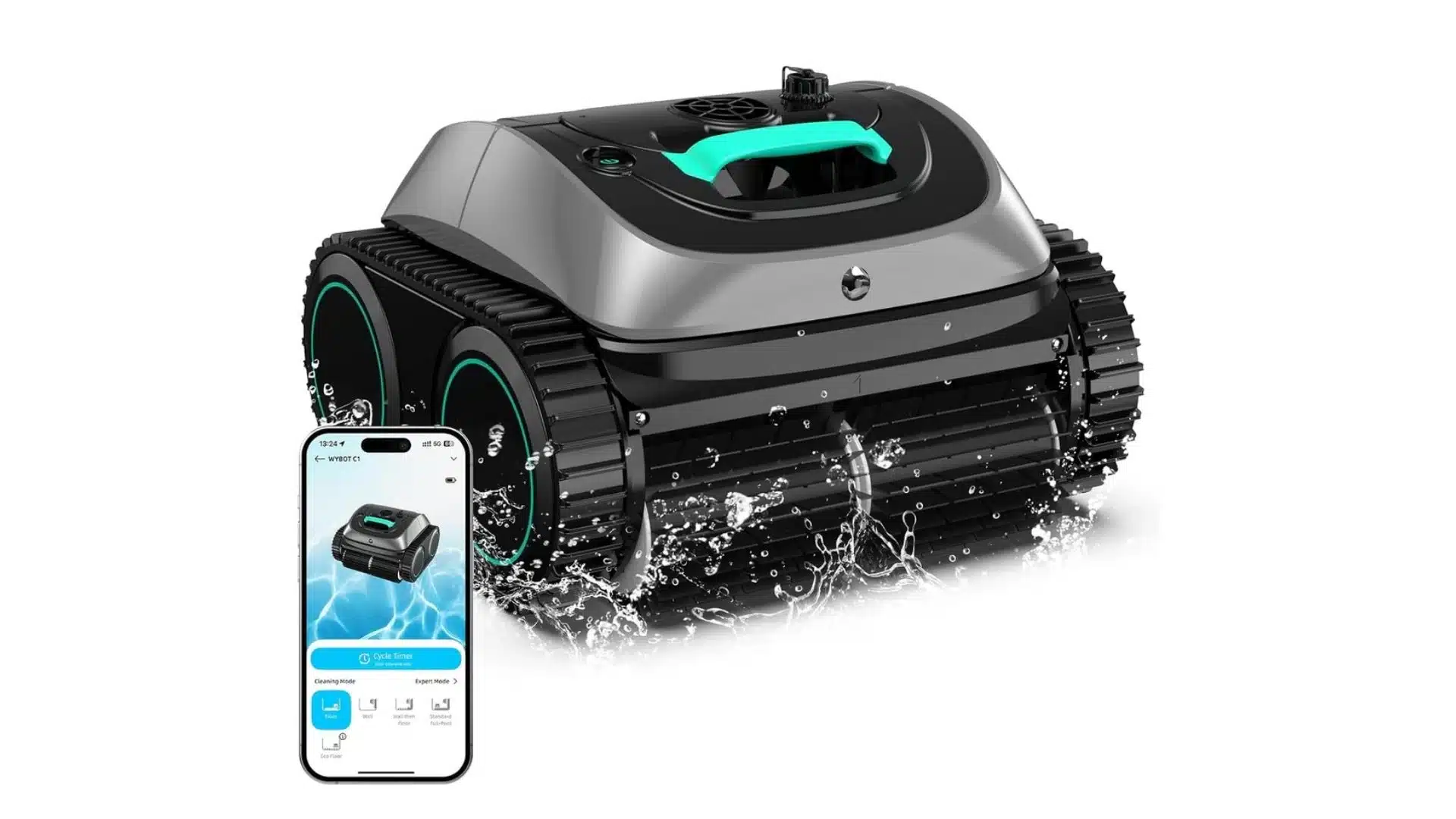
Done vacuuming manually but not ready to spend $800? The Wybot C1 is your starting point for above-ground and smaller in-ground pools.
It earns this slot not by being exceptional at one thing. It earns it by not cutting the corners that make cheap robots unreliable.
The C1 uses gyroscope path planning, a systematic S-pattern, not an adaptive route. That’s fine for smaller pools where edge gaps are proportionally smaller. Its dual-drive brushes work safely on vinyl and fiberglass.
The self-parking feature keeps it from dying at the bottom of the deep end, a genuine problem with earlier budget cordless units.
Heavy leaf loads will require mid-cycle emptying. That’s the honest tradeoff at this price.
Best Mid-Range Cordless: Aiper Scuba V3 (~$850)
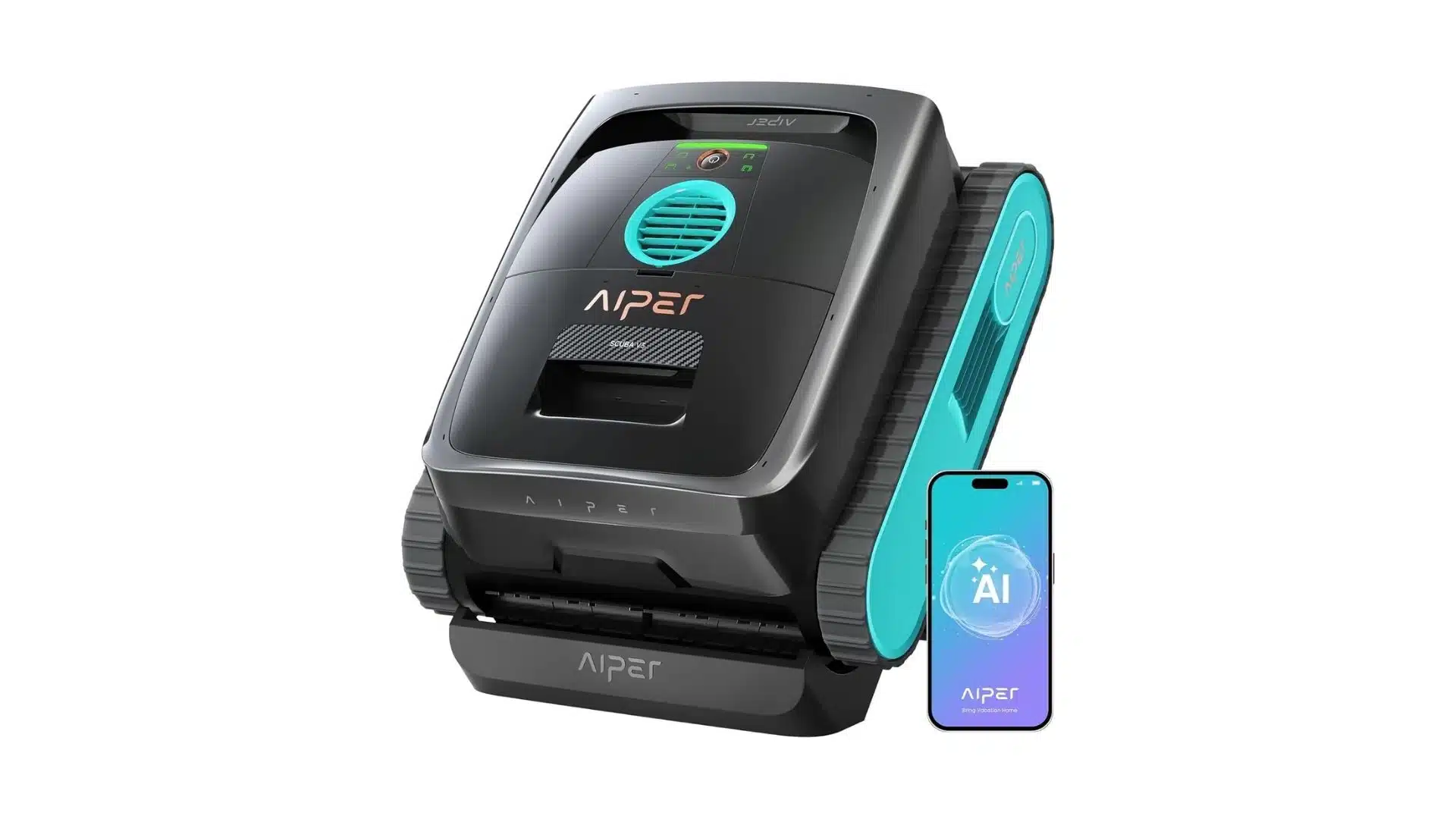
The Aiper Scuba V3 is built for in-ground pools in the 15,000 to 30,000 gallon range with mixed debris loads. This is where the technology earns its price most clearly.
What separates the V3 from other mid-range units isn’t the headline specs. It’s the combination of AI patrol navigation, genuine wall and waterline coverage, and an auto-docking charging system that makes near-daily use realistic without friction.
Most mid-range robots either clean the floor well or climb walls adequately. The V3 does both. The waterline scrubbing is actual contact cleaning, not a spec sheet claim. The auto-dock solves the battery management problem that makes cordless robots annoying for owners who forget to retrieve and recharge them.
If you want to largely remove pool cleaning from your weekly life, this is the robot where the math works.
Best for Large In-Ground Pools: Dolphin Premier (~$2,149)
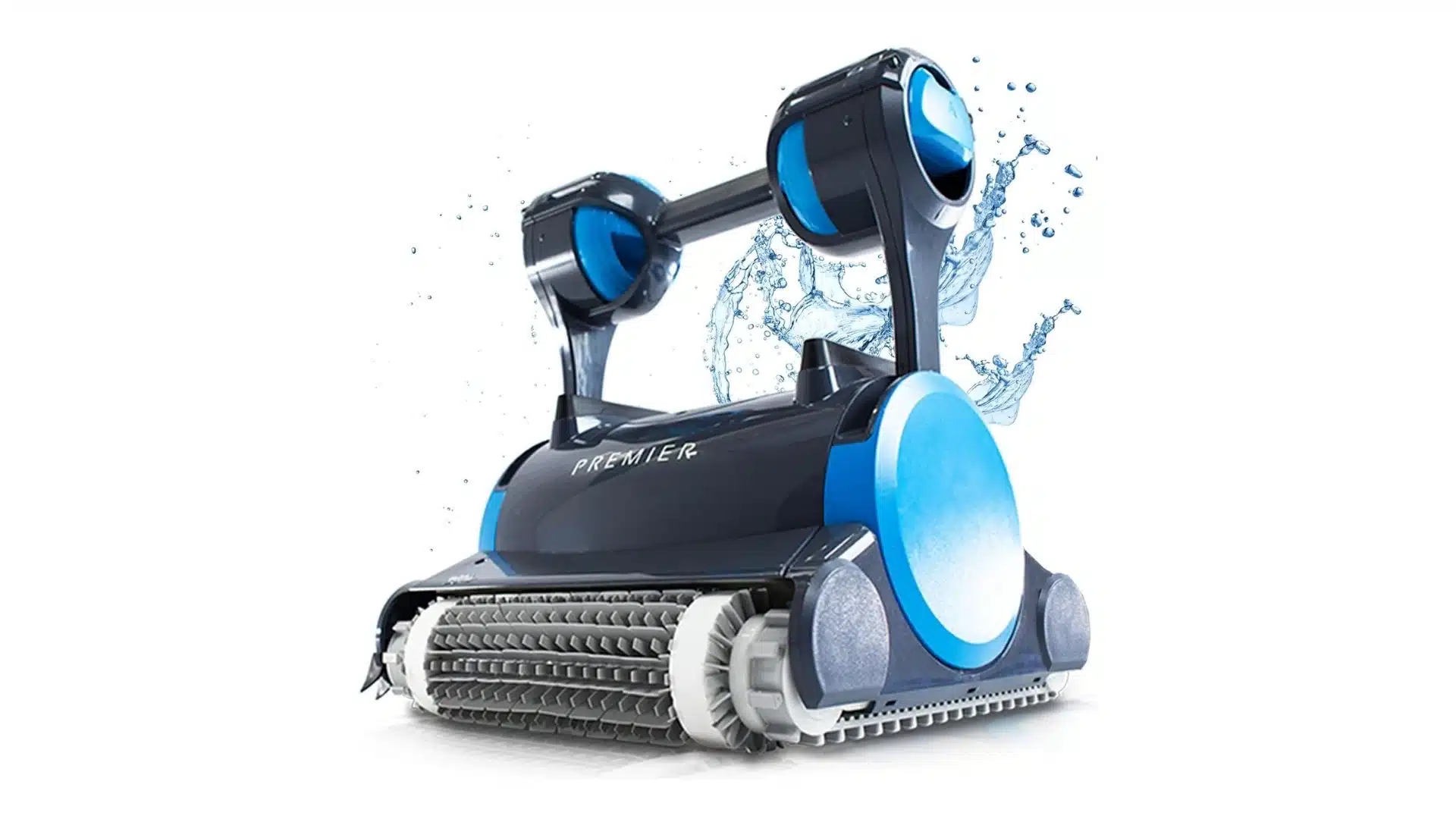
If your pool is 30,000 gallons or more, plaster or concrete, with significant debris loads, the Dolphin Premier is the right tool.
The price is justified by three things smaller robots can’t replicate at scale.
First, multi-media filtration: ultra-fine nano filters, standard fine cartridges, and an oversized leaf bag in one system. The Premier captures fine dust and pollen that mid-range filters miss, while handling large leaf loads without filling and losing suction. You don’t choose between debris types.
Second, sustained motor performance over long cycles. Corded, continuous power.
Third, the anti-tangle swivel cable, engineered specifically for large pools where a standard cable becomes a knot within the first hour.
The Premier’s price is not justified for pools under 30,000 gallons with moderate debris loads. It’s also wrong for fiberglass pools — its brushes are over-built for that surface. And if app-based scheduling is your priority, the Dolphin Sigma is the better call. For everything else, the Aiper Scuba V3 handles it.
Best for Smart Home Integration: Dolphin Sigma (~$2,499)
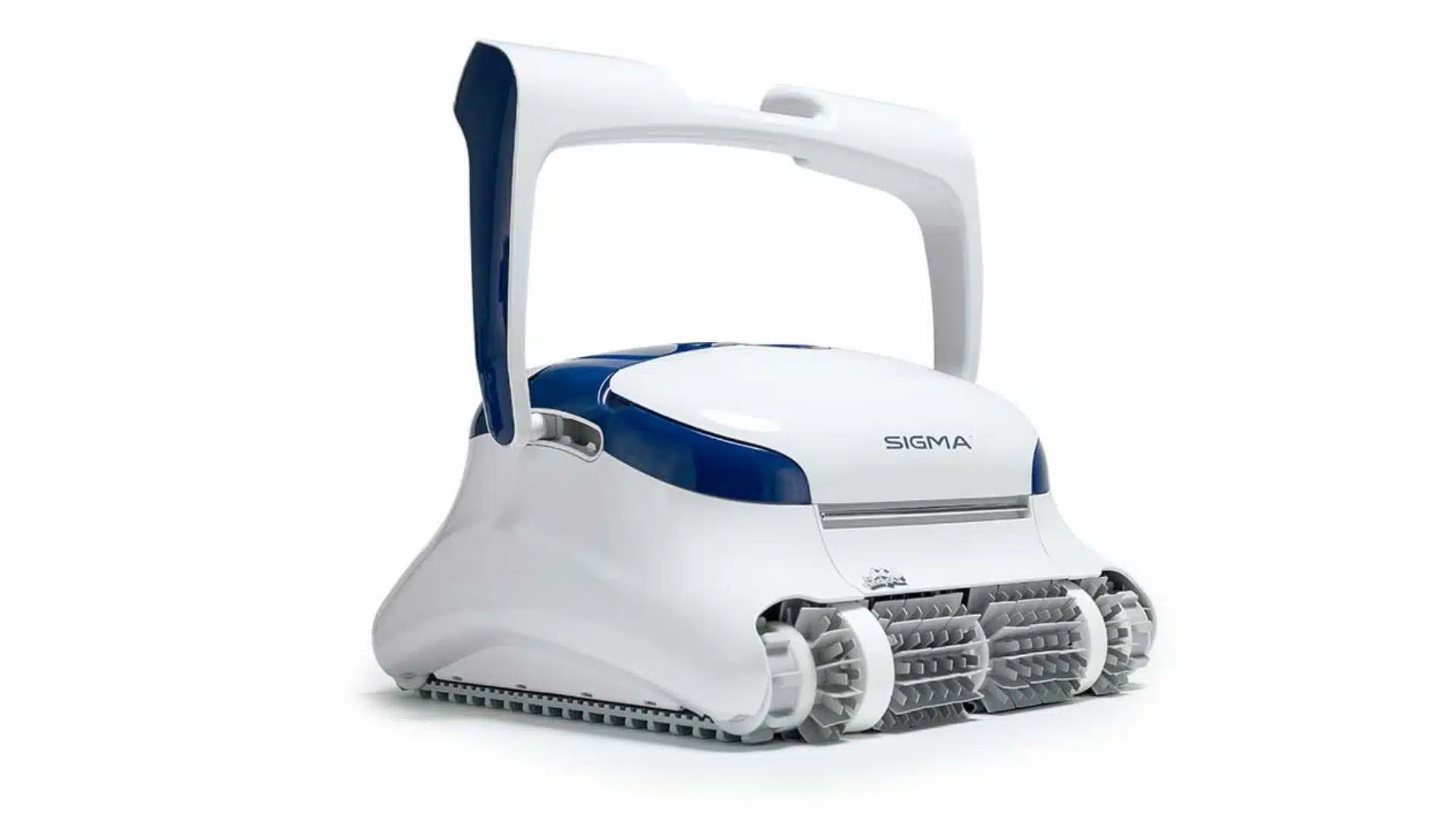
The Dolphin Sigma is for large in-ground pool owners who want scheduling, remote control, and connectivity built in, not bolted on.
The $350 premium over the Premier buys one specific thing: the MyDolphin Plus app. Full scheduling, cycle customization, and real-time monitoring via Wi-Fi from anywhere. For owners who travel or manage a pool remotely, that’s an immediate, concrete justification.
The Sigma also has dual drive motors and smart obstacle mapping, slightly better navigation in pools with steps, benches, or sun shelves. The cleaning gap over the Premier in a straightforward large pool is marginal.
Here’s the honest truth: if you won’t use the app, the $350 premium buys you nothing. Both robots clean comparably in a standard large pool. The Sigma’s edge is entirely in its connectivity.
Best for Above-Ground Pools: Wybot A1 (~$160)
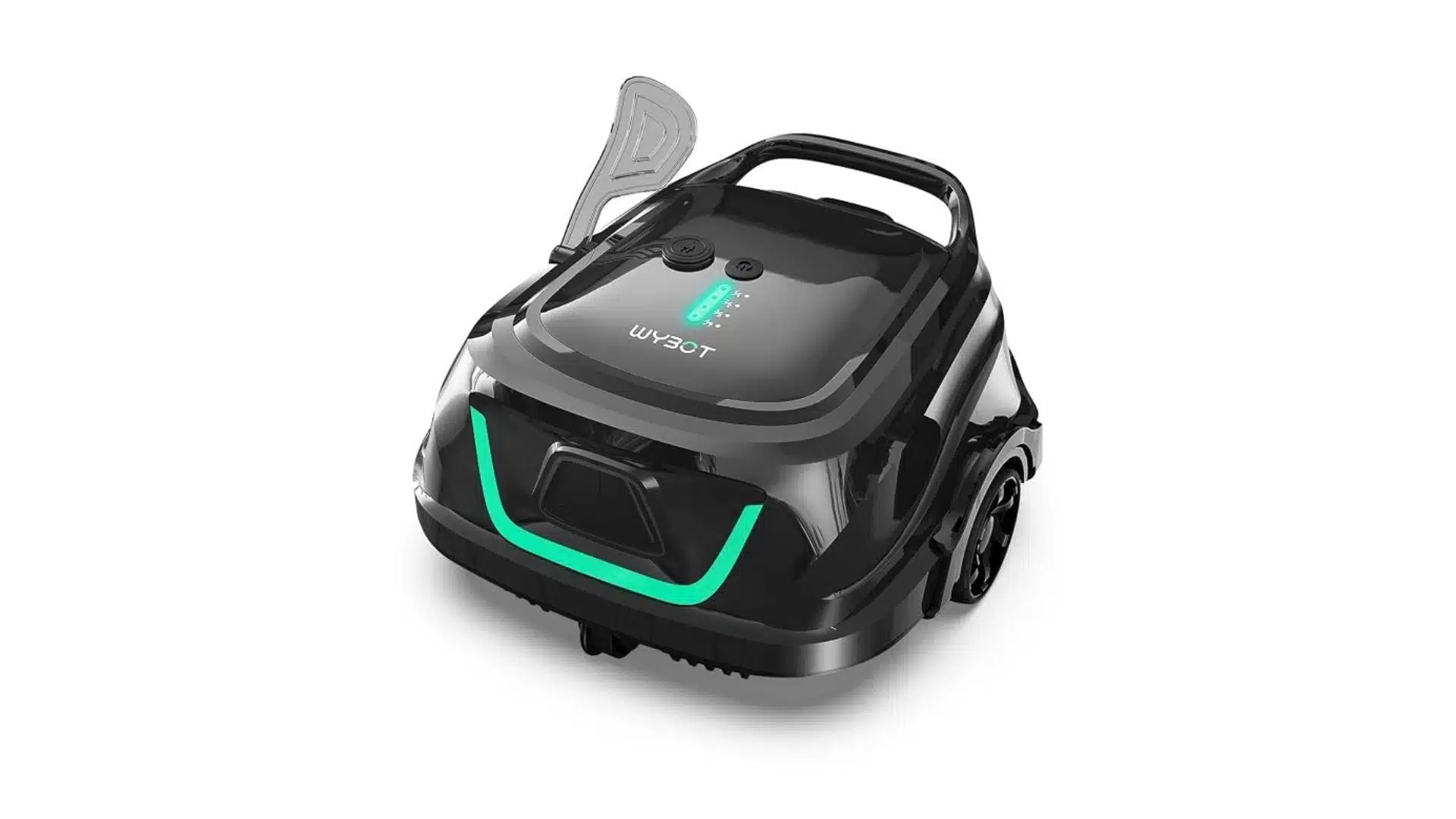
The Wybot A1 is built specifically for above-ground pools. Smaller, lighter, and calibrated for vinyl-liner surfaces and the structural tolerances of above-ground walls.
Its most important feature is what it doesn’t do. It doesn’t generate the lateral wall-climbing thrust that damages above-ground pool walls over time. That damage happens when owners run in-ground robots in pools not built to absorb that force across thousands of cycles.
The A1 covers the floor and lower walls effectively for pools in the 10 to 20 foot range. Its filter handles the fine debris loads common in above-ground pools, like pollen, dust, and light algae. It charges quickly for owners who run it frequently.
It is not a substitute for an in-ground robot on a large or complex pool. Its gyroscope navigation and smaller filter aren’t built for that environment. But for the above-ground pool owner who wants a purpose-built solution at the right price, nothing at this tier competes.
What to Check Before You Buy: Filtration, Coverage Zones, and Long-Term Costs
Two robots at the same price can produce completely different water clarity results. The difference is usually filtration tier, not motor power, not navigation technology, not brand.
Most buyers compare robots on what they can see and feel: suction strength, wall coverage, app connectivity. The thing that most directly determines whether your water is genuinely clean, or just debris-free, is what almost everyone skips.
Filtration: What Your Robot Actually Captures
Pool robots filter at three distinct tiers, and the tier determines what ends up back in your water.
Standard mesh or coarse cartridge filters catch what you can see: leaves, insects, large organic material. They pass fine particles straight through and put them back in the pool.
That matters because fine particles like pollen, sand, fine algae spores, and dust are the main drivers of cloudy water and high chlorine demand. A robot recirculating those particles is doing half the job.
Fine cartridge filters capture particles down to about 50 to 100 microns. That handles most of what makes pool water look hazy.
Nano or micro filters capture down to 2 microns. That’s where genuine water polishing happens.
Multi-media filtration systems, like those in the Dolphin Premier, combine coarse and fine stages in one unit. You get leaf handling and fine-particle capture without choosing between them.
The practical result isn’t subtle. A robot with nano filtration running three times per week will measurably lower your pool’s chlorine consumption. Fewer fine particles in the water means less chemical work to keep it clean.
Coverage Zones: What “Floors, Walls, and Waterline” Actually Means
“Floors, walls, and waterline” is the most overused phrase in pool robot marketing. It needs unpacking.
Technically, most robots above $300 can reach all three surfaces. Effectively reaching all three is a different question.
Wall climbing needs two things: enough drive power to push up against gravity, and enough brush or roller contact to grip the surface.
Robots that technically reach the wall often arrive with reduced power, having spent most of it crossing the floor. They either slide back down or skim the wall so briefly that no real scrubbing happens.
True wall-climbing performance requires a drive system calibrated specifically for the transition from horizontal to vertical. The brushes need to maintain contact under the compression of that climb.
The waterline is harder still. Cleaning the waterline means reaching the water surface and scrubbing the tile or vinyl right at the air-water interface. That’s where scale, sunscreen film, and body oil collect. Most budget robots don’t physically get there.
For mid-range and premium robots that claim waterline coverage, I’d check user reviews specific to that feature before trusting the spec sheet.
Long-Term Costs: What the Sticker Price Doesn’t Include
Here’s the calculation most buyers skip, and it changes the economics of every robot in this guide.
Filter cartridges need periodic replacement or cleaning. The finer the filtration, the faster they load.
Brush replacement compounds over time. Robots with multiple brushes, or specialized brushes for plaster, wear faster. The replacements aren’t always cheap.
Battery packs in cordless robots degrade over charge cycles. A robot whose battery holds 60% of its original capacity after two seasons isn’t cleaning the pool you bought it for.
Run the math before you buy. A $380 robot that costs $80 per year in filters, brushes, and eventual battery replacement is a $620 investment over a realistic ownership window. A $2,149 robot with commercial-grade brushes and a replaceable power cable may have a lower annual cost than its sticker price suggests.
Are Robotic Pool Cleaners Worth It?
Yes. Run the robot two to three times a week and the return on investment versus professional cleaning labor is positive within the first season.
One scope boundary matters here: robots replace cleaning labor, the vacuuming, brushing, and skimming a pool service does on each visit. They don’t replace chemical management, equipment inspection, filter backwashing, or seasonal maintenance.
The comparison that produces a clear answer is robot versus cleaning labor only.
Compared to a Pool Cleaning Service
As of 2026, typical residential pool cleaning in the US runs $100 to $200 per month for weekly visits. That’s $1,200 to $2,400 per year in cleaning labor.
A mid-range cordless robot at $850, spread over five years of ownership, costs about $170 per year. Add $50 to $150 in annual consumables: filters, brushes, eventual battery replacement. You’re still well under one month of professional service costs.
A $2,149 premium robot over the same window runs about $430 per year plus consumables. Still well below the annual cost of weekly cleaning visits.
The robot wins on cost in every scenario where you’d otherwise be paying a service for cleaning labor.
Compared to Doing It Yourself
If you’re currently vacuuming manually, the math changes. You’re not spending $1,200 per year — you’re spending time.
Whether $380 to $850 is worth it to get that time back is a personal call, not a financial one. But here’s what I’ve seen consistently.
Manual vacuuming happens less often than the pool needs. Especially in summer, when use is highest and cleaning demand is greatest. A robot running three times a week holds water quality more consistently than a manual routine that happens when it happens.
That consistency lowers chemical demand, reduces algae risk, and sends cleaner water through the filter. None of that shows up in a cost comparison. All of it matters.
Compared to a Pressure-Side Cleaner
Pressure-side cleaners like Polaris units use your pool pump’s pressure to push a cleaner around the floor.
They’re less expensive upfront. But they put load on the pool pump every time they run, shortening its lifespan over time. And they cover the floor only, no walls, no waterline.
Factor in pump wear and eventual pump replacement costs. The true lifetime cost of a pressure-side cleaner lands much closer to a mid-range robot than the sticker price suggests.
Conclusion
The 2026 pool robot market is the strongest it’s ever been at every price point. That’s good news. It also means the risk of picking a capable robot that’s wrong for your specific pool has never been higher.
The framework is simple: surface type, pool size, debris profile, pool type. Those four things determine your category. Budget is a filter you apply inside that category. Navigation technology and filtration tier are the differentiators between models once you’re in it.
The one thing that protects you regardless of which robot you choose: read the surface compatibility and pool size specs before you click buy. Every list that names one robot as the universal best doesn’t know anything about your pool. Now you do.
Frequently Asked Questions
Are pool robot vacuums worth it?
For most pool owners who run the robot two to three times per week, yes. A mid-range robot between $400 and $850, spread over four to five years, costs less per year than monthly professional cleaning labor. And it keeps the water cleaner. The exception: pools that need frequent chemical correction. Robots handle debris, not chemistry. And if you’re currently doing it manually, remember that manual cleaning happens inconsistently, and inconsistency raises chemical demand.
What is the average lifespan of a robotic pool cleaner?
Most quality robotic pool cleaners last four to six years with regular care; clean the filter after each run, rinse the unit with fresh water before storage, keep it out of direct sun when not in use. Premium corded Dolphin models tend toward the high end of that range because of their commercial-grade motor construction. For cordless robots, factor in battery degradation. If the pack isn’t replaceable, that’s a problem. Same if replacement costs nearly as much as a new unit. Your real lifespan ends sooner than the machine itself would suggest.
Which is better, Polaris or Dolphin?
They use fundamentally different systems. Polaris runs off your pool pump’s pressure. Dolphin robots run independently with their own onboard motors and filters. For most residential pools, Dolphin’s self-contained design gives more consistent coverage and better filtration without taxing the pump. A Polaris unit increases pump wear over time. That cost won’t appear on the purchase receipt. It shows up later in pump maintenance and replacement.
What is the best vacuum for an inground pool?
For most in-ground pools, the Dolphin Premier is the most consistent performer across floor, wall, and waterline coverage, backed by multi-media filtration that captures fine particles. Owners of larger pools who want app-based scheduling should look at the Dolphin Sigma instead. For smaller in-ground pools under 30,000 gallons with moderate debris, the Aiper Scuba V3 at around $850 is competitive. Its total cost of ownership is meaningfully lower.