


Accounting has always been the backbone of every business.
But with AI handling more tasks every day, more people are asking whether AI will replace accounting altogether, and whether this career is still worth pursuing.
The concern is fair. AI is moving fast, and no industry feels completely safe right now. But the real picture is more nuanced than “AI will take your job.”
Some parts of accounting are already being automated. Others may never be.
This blog breaks down exactly what’s changing, what’s at risk, and what isn’t, so you can make sense of where the profession is actually headed.
Direct Answer: Will Accounting Be Replaced by AI?
The short answer is no, but that doesn’t mean everything stays the same. AI doesn’t replace jobs. It replaces tasks. And accounting has plenty of tasks that are already being handed over to automation.
Here’s the key distinction:
- A job is made up of dozens of tasks
- AI can automate specific, repetitive ones
- The rest still needs human input
What’s really happening is an efficiency shift. The same amount of work gets done with fewer people. That’s not a full replacement, but it is a disruption.
The biggest misconception is thinking “not replaced” means “safe.” It doesn’t. The profession is changing whether we like it or not.
What AI Can Actually Do in Accounting Today
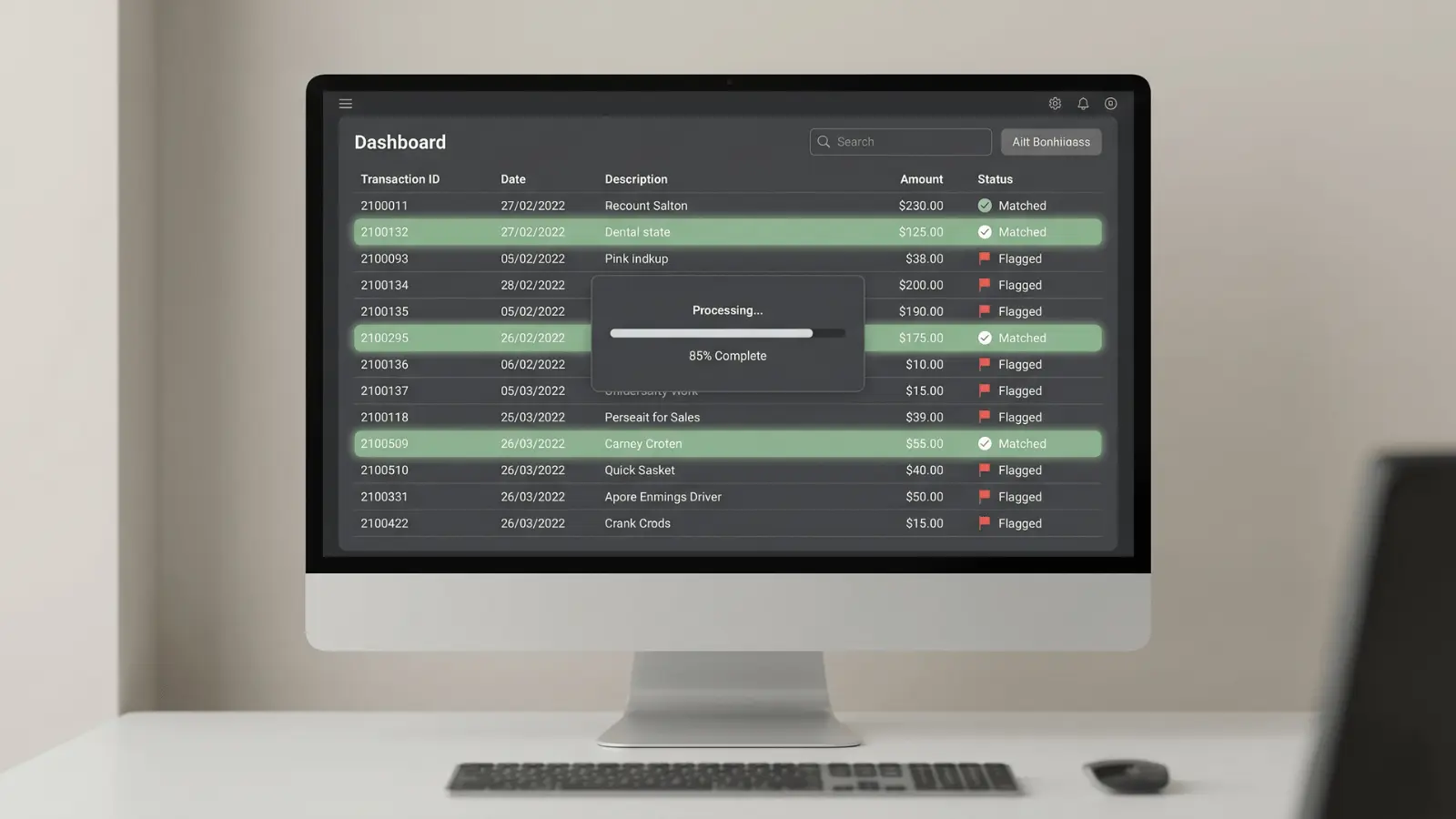
AI is already active in accounting workflows. Here’s what it handles well:
- Data entry and categorization: sorting transactions, tagging expenses
- Invoice processing and matching: reading, verifying, and routing documents
- Bank reconciliation: matching records automatically
- Basic anomaly detection: flagging unusual entries for review
These tasks share something in common: they’re repetitive, rule-based, and don’t require judgment. AI systems are built exactly for this, pattern recognition on structured data.
The result? Workflows that used to take hours now take minutes. But AI hits a wall fast. Messy, unstructured data slows it down.
Any decision that requires context, like understanding why a client made a financial choice, is still beyond its reach.
What AI Cannot Replace and Why
AI handles the straightforward stuff well. Where it runs into problems is anywhere the right answer depends on context, consequence, or accountability.
There are areas where human involvement isn’t optional; it’s required.
- Judgment under uncertainty: no two financial situations are identical
- Regulatory interpretation: tax laws and compliance rules need human reading
- Ethical accountability: someone has to be legally responsible for decisions
- Client communication: trust is built between people, not algorithms
The core issue is this: AI processes; it doesn’t understand. Recognizing a pattern in numbers is not the same as knowing what that pattern means for a specific client in a specific situation.
A system can flag a discrepancy. It cannot decide what it means, who’s responsible, or what action is appropriate. That requires a person.
Legal and regulatory frameworks also demand human accountability. You can’t hold a machine liable for a bad audit. This is a structural barrier that keeps humans in the loop, not just a preference, but a requirement.
How AI Changes Accounting Jobs Instead of Replacing Them
When automation enters a profession, roles don’t disappear overnight. They shift.
In accounting, the shift looks like this:
- Less time on manual data work
- More time on reviewing AI outputs, interpreting results, and advising clients
- Entry-level tasks shrink
- Mid-to-senior responsibilities grow in value
The workflow becomes: AI produces → human validates → human decides
For example: an AI tool flags 40 transactions as anomalies in a reconciliation run. The accountant doesn’t re-enter the data, that part is done. They review the flags, decide which ones matter, and determine what action is needed. Same outcome as before, fraction of the time, but the human judgment step is still there at the end.
A Stanford GSB study found that accountants using AI tools supported more clients per week and closed monthly statements 7.5 days faster, with the same work, less time, and no drop in quality.
This isn’t bad news for experienced accountants. It actually makes their judgment more valuable, not less. The dangerous position is for those whose entire role consists of tasks AI can already handle.
If the job doesn’t evolve, it becomes redundant. Not because AI replaced it, but because the person didn’t move with it.
Will AI Reduce the Number of Accounting Jobs?
This is the question people are really asking, and the honest answer is yes, to some extent.
Efficiency gains mean the same output requires fewer hands. That’s not unique to accounting.
Manufacturing went through the same thing. Spreadsheets already reduced the need for manual bookkeepers decades ago.
AI is the next wave of that same pattern. A reasonable estimate: if AI automates 10–30% of accounting tasks, that translates to a proportional reduction in headcount, especially at entry levels.
That’s compression, not elimination. Fewer roles at the bottom, more complex roles in the middle and top. The workforce shrinks in certain areas. It doesn’t vanish.
Which Areas of Accounting Are Most at Risk

Not all accounting roles face the same level of risk. It depends on the type of work involved.
High-Risk Roles
These include bookkeeping, accounts payable, accounts receivable, and basic tax preparation. These roles rely heavily on repetitive, rule-based tasks.
Since AI performs well in structured environments, these functions are easier to automate. As systems improve, the need for manual handling in these areas keeps decreasing.
Medium-Risk Roles
Audit support and financial reporting preparation fall into this category. AI can assist by processing data and highlighting anomalies, but human review is still required.
These roles are partly automated but not fully replaced. The work changes, but does not disappear.
Low-Risk Roles
Strategic advisory, complex tax planning, and forensic accounting are less exposed. These roles depend on judgment, interpretation, and client interaction.
They deal with situations where rules are not always clear and decisions carry consequences. AI can support these roles, but it cannot take over the core responsibility.
What Skills Do Accountants Need to Stay Relevant?
Knowing which roles are safe is only half the answer. The more useful question is: what do you actually need to learn?
The shift isn’t about doing more accounting. It’s about doing different work alongside AI tools.
Here’s where experienced accountants and those still building their careers should be focusing right now:
- Data analysis: AI surfaces the data. You need to know what it means and what to do with it. Basic proficiency in reading financial data sets and spotting patterns is becoming a baseline expectation, not a bonus.
- AI oversight: Someone has to check the machine’s work. Understanding how AI tools operate in accounting workflows and knowing when to push back on what they produce is a growing part of the job.
- Advisory skills: The work is shifting from recording what happened to advising on what comes next. Clients still need a person explaining what their numbers mean and helping them make decisions.
- Regulatory fluency: Tax law and compliance rules change constantly. AI can apply rules. It can’t interpret edge cases, flag ambiguities, or take responsibility when something is wrong.
- Communication: As the manual work shrinks, client interaction expands. The ability to explain complex financial situations clearly and build the kind of trust that keeps clients coming back is not something AI can replicate.
The pattern here is simple. Skills that sit close to data entry and rule application are being absorbed by automation. Skills that sit close to people and judgment are growing in demand. Build toward the second group.
Timeline Reality: How Fast Could AI Replace Accounting?
The hype around AI can make it seem like replacement is imminent. The reality is more gradual.
Here’s a realistic timeline:
Short-term (0–5 years): Task automation increases. Routine workflows shrink. No full replacement of any accounting role, but staffing levels for routine positions start declining.
Medium-term (5–15 years): Roles reshape significantly. Fewer entry-level positions exist. Firms expect accountants to work alongside AI tools as a standard skill. Those who don’t adapt face real career risk.
Long-term (15+ years): Full replacement remains unlikely. Legal accountability, regulatory complexity, and the need for human judgment create structural barriers that technology alone can’t remove.
What slows AI adoption in accounting isn’t just capability, it’s regulation, liability, and trust. Businesses and regulators are cautious about handing over financial decisions to systems that can’t be held accountable.
Rapid AI progress does not mean rapid job elimination. The two are not the same.
Final Verdict: Is Accounting a Safe Career in the Age of AI?
Accounting is still a viable career. But the type of accounting work you do matters more than it ever has.
Roles built around routine tasks like data entry, basic bookkeeping, and manual reconciliation face real pressure. Not because they’re disappearing overnight, but because automation keeps shrinking the headcount needed to handle them.
Roles built around judgment, client relationships, and complex decision-making are in a different position. Those aren’t just surviving; they’re becoming more valuable as the routine work gets absorbed.
The honest answer is this: the profession isn’t going anywhere. But staying in it without adapting is a real risk. The accountants who treat AI as a tool rather than a threat are the ones best positioned for what comes next.
Conclusion
AI isn’t replacing accounting; it’s replacing the parts of accounting that didn’t need a human in the first place. Data entry, reconciliations, and invoice matching are going on, and that shift is already well underway.
What stays is everything that actually requires a person. Judgment calls, regulatory interpretation, client trust, and legal accountability. No system can take ownership of those, and none is close to doing so.
The profession is contracting in some areas and expanding in others. Where it’s expanding is exactly where human skill matters most
If you’re building a career in accounting, focus on developing the skills that sit firmly in that space. That’s where the long-term value is.
Frequently Asked Questions
Will accountants be needed in the future?
Yes, accountants will still be needed. While AI handles routine tasks, businesses still require humans for judgment, compliance, and financial decision-making.
Will AI replace CPAs completely?
No, AI cannot replace CPAs completely. Legal responsibility, audits, and certifications require human accountability, which AI systems cannot take on.
Can AI do tax returns without accountants?
AI can assist with basic tax returns, but complex filings still need human review. Tax laws, exceptions, and unique cases require interpretation.
Is bookkeeping becoming obsolete because of AI?
Basic bookkeeping is declining due to automation, but it is not fully obsolete. The role is shrinking and becoming more system-driven.