

Smart home devices are easy to buy. Making them actually work together is a different problem entirely.
A smart thermostat you set up yourself is a connected gadget. A professionally installed system where your thermostat, locks, lights, and cameras all respond to each other; that is a smart home service.
The gap between those two things is bigger than most people expect before they start shopping.
Today, I’ll cover what smart home services actually include, which providers do what, and how to figure out which tier your home genuinely needs, before you hire the wrong one.
What Are Smart Home Services?
Smart home services are professionally delivered programs that install, connect, and support devices in your home. A trained technician is the thing that makes it work.
The core idea is simple. A professional comes in, sets up your devices, and makes them talk to each other. That last part is the key. Anyone can plug in a smart thermostat. Not everyone can make it respond to your security system, your lights, and your front door lock all at once, reliably.
I think this distinction gets lost more than any other in this space.
If you bought a Google Nest thermostat and set it up through the app, you own a smart device. That’s not the same as a smart home service. A service means someone assessed your home, handled the setup, built the connections between systems, and is there when something breaks.
That difference shapes everything: what it costs, how long it takes, what your home can actually do, and what happens when a device goes offline at 11 pm on a Sunday.
What Do Smart Home Services Include?
Every professional smart home service moves through three phases: pre-installation assessment, installation and integration, and post-installation support or monitoring.
Knowing what each phase covers is how you tell a thorough service from one that stops halfway through and leaves the rest to you.
Installation and Setup
The job starts before anything gets mounted. A technician walks your home, confirms where devices go, checks your network, and flags anything that won’t work before it becomes your problem.
Then the hardware goes in. For a single device like a thermostat or a doorbell camera, this phase is the whole job. For a bigger project, it’s just the beginning.
Integration and Automation
This is where most services either earn their fee or fall short, and it’s the part that rarely gets explained properly.
Installing a device means it turns on and does its own thing. Integrating a device means it talks to everything else in your home. The thermostat drops when the security system registers everyone’s gone.
The lights shift when you set a scene from one button. None of that happens automatically. Someone has to build the logic that connects them.
Here’s the split that matters: retail-tier installers set up each device on its own app and hand the keys back to you. Full integrators build a single operating layer across all your systems.
I’ve seen homeowners hire a retail service expecting whole-home coordination and end up with five separate apps and nothing working together. The service wasn’t bad. It just wasn’t built for what they needed.
Your home’s complexity is what determines which tier you actually need, not your budget. Three device categories running on two different platforms need integration work. One thermostat does not.
Ongoing Support and Monitoring
After installation, support comes in two forms, and they’re not interchangeable.
Reactive support means you call when something breaks and they fix it. The system runs on its own until it doesn’t.
Active monitoring means a central station watches your system around the clock. If a sensor triggers or a connection drops, they respond without waiting for you to notice.
That continuous coverage comes with a recurring cost that reactive support doesn’t carry, and it also means someone else catches the problem first.
What Are the Main Types of Smart Home Service Providers?
Three distinct provider tiers exist in this market: retail and provider installation, whole-home automation integrators, and monitored security providers. They’re built differently, serve different needs, and are not just price-tiered versions of the same thing.
The tier your home needs depends on how many systems you want working together, not on how much you want to spend.
Retail and Provider Installation (Best Buy, AT&T Connected Life)
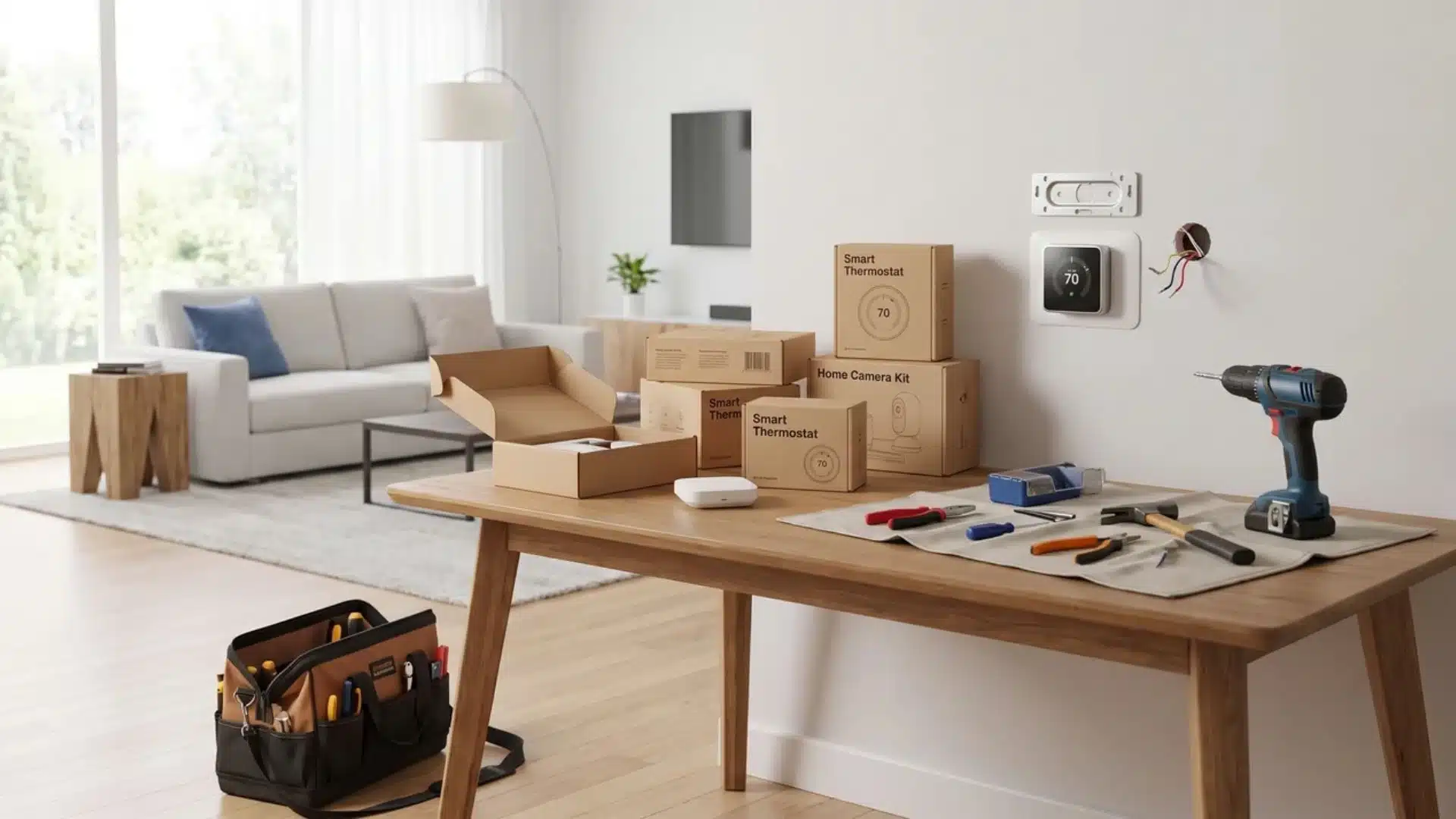
This tier is built for contained, defined jobs. Best Buy handles individual device types, smart thermostats from around $129.99, full camera or DVR systems from $349.99 and up, with a technician completing setup on a per-device basis.
AT&T Connected Life bundles it further, pairing Google Home hardware with a structured security setup in packages starting near $699.
You’re in the right place here if you want one system set up properly and aren’t trying to wire your whole home together yet.
Where this tier stops is worth knowing: once you need lighting, audio, climate, and security coordinating with each other, retail installation wasn’t built for that scope.
Whole-Home Automation Integrators (Control4)
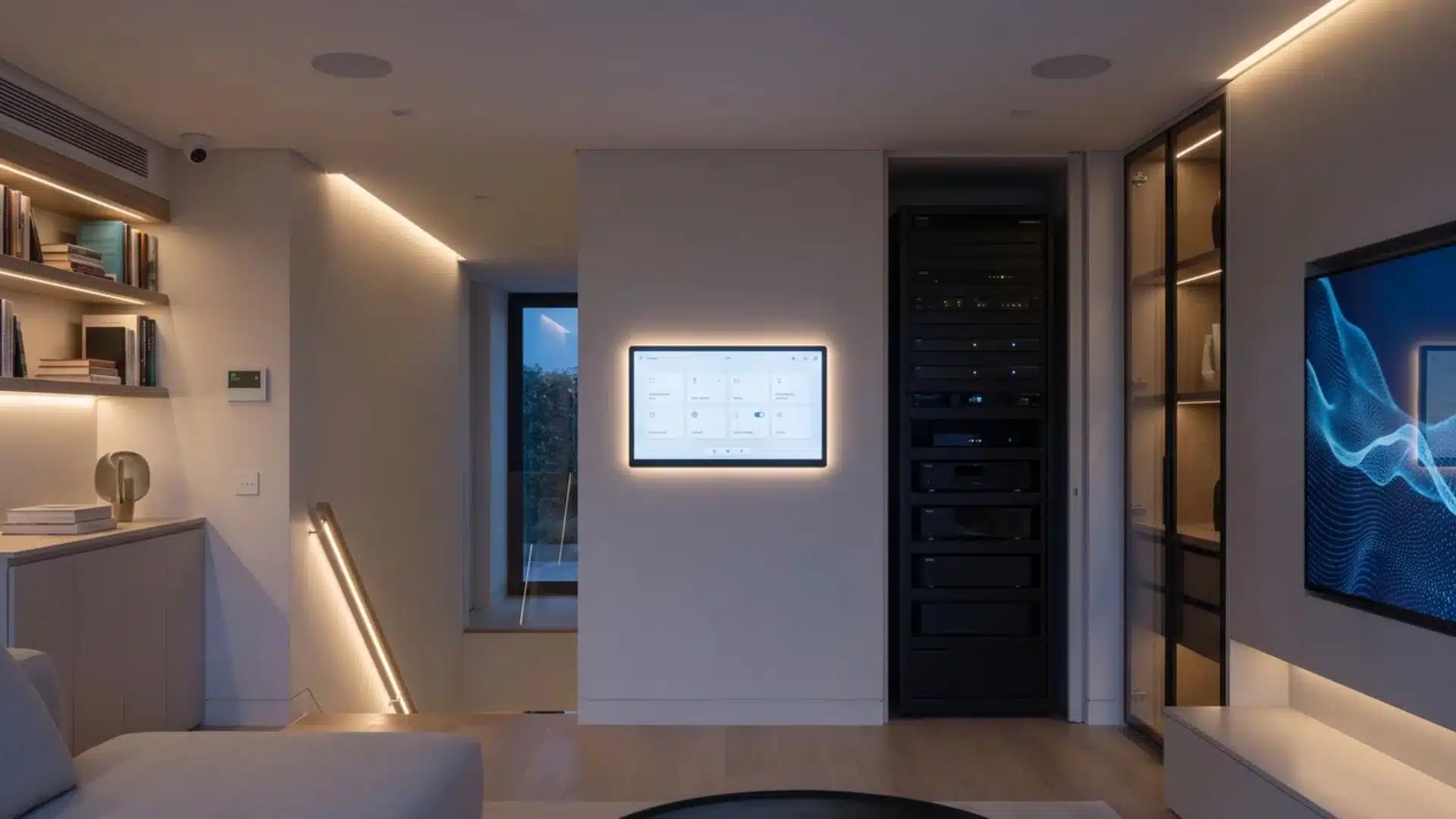
Control4 works differently from any retail service, and I think most people don’t realize it until they start asking questions.
You don’t buy a Control4 system at a store. You hire a certified local integrator. They come to your home, design the system around how you actually live there, install it, write the automation logic, and stay on as your ongoing technical contact.
The hardware matters less than the programming layer. The integrator writes the rules: what triggers what, how devices respond to each other, what a “goodnight” command actually does across your whole home.
That custom logic built for your specific house is what you’re paying for. It’s also why the relationship is ongoing, not a one-time visit.
Monitored Security Providers (Vivint, ADT)
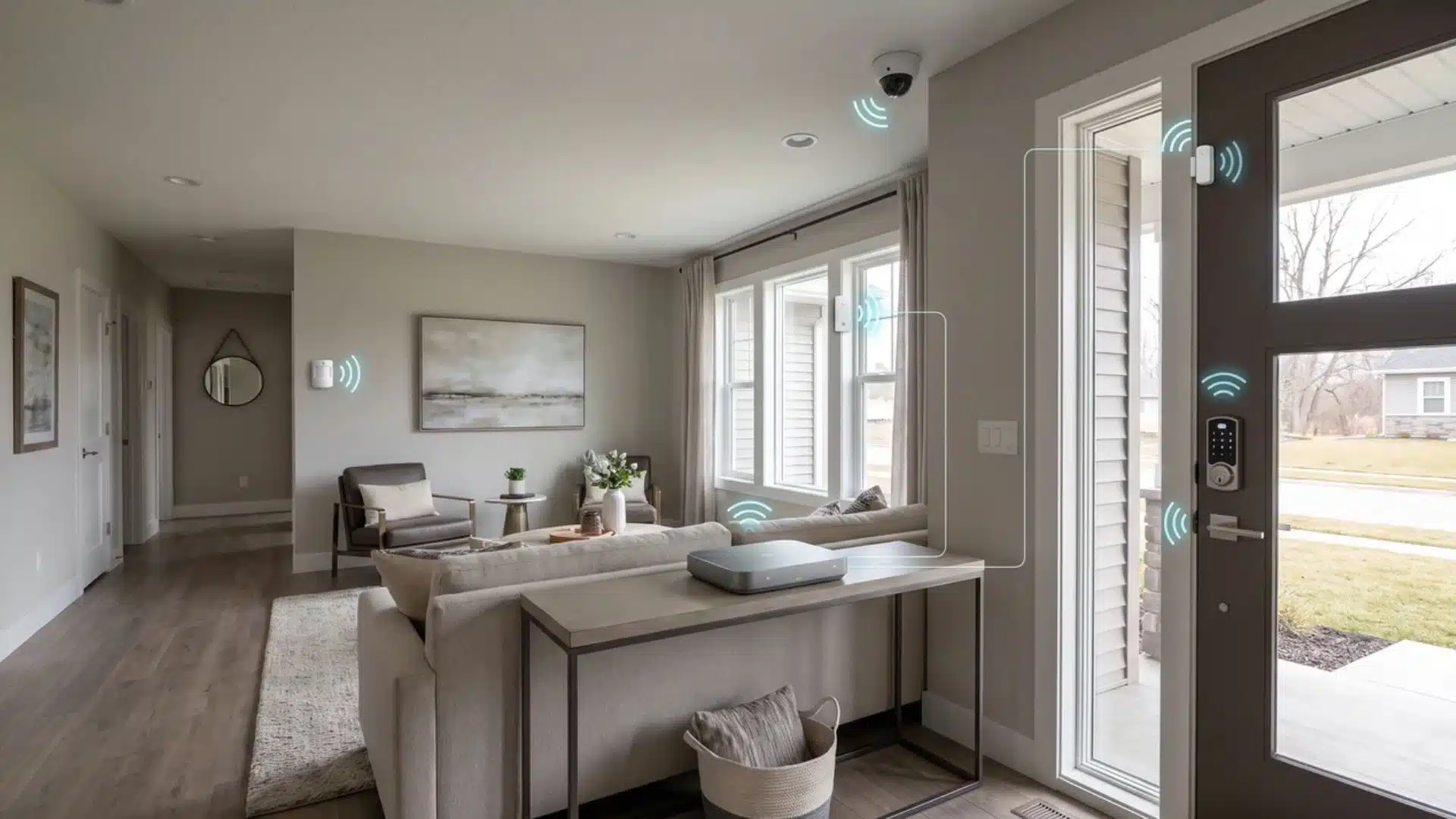
Vivint and ADT are often described as smart home providers, but they’re more accurately described as professionally monitored security systems with strong smart home capabilities built in.
Both design custom security setups, install everything professionally, and bundle connected devices like cameras, smart locks, thermostats, and sensors into packages that work with voice platforms including Google Nest.
The defining feature is the monitoring contract: a central station watches continuously and dispatches emergency services when something triggers.
The smart home layer is real and functional. But it exists inside a system built first for security response, not whole-home automation. That’s an important distinction if you’re trying to compare them to Control4.
One thing worth clearing up: Google Nest shows up alongside all three tiers, which makes it look like a competitor. It isn’t. Google Nest is a hardware partner. When AT&T, ADT, or Vivint mentions Nest compatibility, they’re describing a device that works within their service, not a service provider of its own.
Comparing Google Nest to ADT is comparing a product to a company. They’re not the same kind of thing.
What Smart Home Services Are Not
Smart home services don’t include buying a device and setting it up yourself. That’s just owning a connected gadget. The professional layer of the assessment, the integration work, and the support contract are what make it a service.
If you’ve ever bought a Google Nest thermostat or an Amazon Echo and followed the app instructions yourself, you know what device ownership looks like. It works fine on its own.
What it won’t do, without someone building the connections, is reliably coordinate with your locks, your lights, or your security system.
Smart home services are also not the same as home security monitoring by itself.
A monitored alarm system, the kind ADT has offered for decades, is a security product. If there’s no connected automation, no device integration, no whole-home control, it’s not a smart home service. Security monitoring is one part of what a smart home service can include. It’s not the whole picture.
Here’s what catches people off guard: the device and the service get treated as the same thing. They’re not. The device is hardware. The service is the expertise, the configuration, and the ongoing relationship applied to it.
If you go into this market without that in mind, you’ll either overpay for an integrator you didn’t need, or hire a retail installer and expect coordination work they were never set up to do.
Why Smart Home Services Matter
Professional smart home services exist because Google Home, Amazon Alexa, and Apple HomeKit don’t automatically talk to each other. Making them work together requires real configuration work that no manufacturer’s app covers.
The Real Problem Being Solved
Plug a device in, and it runs.
But if you have to make four devices from three different platforms respond to each other intelligently?
That takes someone who knows how those platforms interact, which protocols each device supports, and how to build automation logic that holds up over time.
That’s the actual gap a professional service fills. Not setup. Coordination.
Why the Value Grows as Your System Does
A thermostat that a technician installed and left alone is a simple job.
But that same thermostat, once it needs to respond to your security system’s away signal, join a morning routine, and trigger alongside your lights… that’s a different problem entirely.
It needs the same integration knowledge that built the system in the first place. The more devices you add, the more that knowledge matters.
The Mistake that Breaks Working Systems
I’ve seen homeowners add a device to a professionally integrated system without looping in their integrator, and watch three existing routines break. Not because the new device was incompatible — but because nobody updated the logic connecting everything else.
That’s not a product failure. It’s what happens when you treat an integrated system like a collection of independent gadgets.
A Note on Industry Numbers
Smart home device adoption is genuinely widespread, industry estimates frequently cite figures in the range of tens of millions of US households.
The gap between owning connected devices and having a professionally integrated system is closing, but it’s still real.
If you’re using adoption figures to make a business case or set expectations, verify them before you publish.
The Bottom Line
Smart home services aren’t about the devices. They’re about what happens to those devices once someone who actually knows what they’re doing gets involved.
If you need one thing set up cleanly, a retail install gets it done. If you want your whole home running on one system, you need an integrator. If security monitoring is the priority and smart home features are a bonus, Vivint and ADT are built for that.
The mistake I see most often is treating these tiers as different price points for the same service. They’re not. They solve different problems. Figure out which problem you actually have first. The right provider follows from that.
Frequently Asked Questions
What is a smart home service?
A smart home service is a professionally delivered program that installs, integrates, and supports connected home devices, smart locks, thermostats, cameras, and lighting, so they work as one system. The difference from DIY setup is the human layer: a trained technician handles compatibility, cross-device configuration, and support when something changes or breaks.
What is the best smart home company?
It depends entirely on what you need. Best Buy’s Geek Squad is the right call for a single-device install. Control4 integrators go deepest on whole-home automation; lighting, audio, climate, and security unified in one system. Vivint and ADT lead on professionally monitored security with smart home features built in. No one provider wins across all three categories.
How much does it cost to set up a smart home professionally?
A single-device install like a smart thermostat starts around $130 through Best Buy. Full camera or DVR system setups run $350 and above. AT&T Connected Life’s bundled security and smart home packages start near $699 including hardware. Control4 integrator projects are scoped and priced individually, contact a local integrator for a quote specific to your home.
Can you hire someone to make your home smart?
Yes. Your options range from retail installers like Best Buy for individual devices, to full-service integrators like Control4 for whole-home automation, to monitored security providers like Vivint and ADT for security-centered setups. The right hire comes down to how many systems you need working together, and whether you want ongoing monitoring after installation.