

When you start looking into fire sprinklers for your home, you probably run into one of two ideas.
Either every sprinkler in the house dumps water the second there’s smoke. Or these systems work just like the ones in office buildings.
Neither one is true. Residential systems follow a different standard, trigger differently, and aim at a different goal than commercial ones.
I want to walk you through how they actually work, not just what they cost. That’s the real starting point for deciding if one belongs in your home.
What Is a Residential Fire Sprinkler System?
A residential fire sprinkler system is heat-activated, not smoke-activated. That’s the detail most people get backwards.
Each sprinkler head has a heat-sensitive part built into it. It only reacts once the air right above it hits a set temperature.
That’s usually somewhere between 135°F and 165°F.
Until that number is reached, the head sits completely still. Smoke drifting through the room doesn’t trigger it. Neither does noise, or people walking underneath it.
If you’ve pictured sprinklers as smoke detectors with a hose attached, that’s not how they work. I’ve met plenty of homeowners who assumed smoke alone triggers the system. That mix-up is exactly where the flooding myth comes from.
Why Only One Sprinkler Head Usually Activates
Each sprinkler head in your home works on its own. It isn’t wired to the others, and it isn’t part of one system that fires all at once.
Inside most heads sits a small glass bulb. That bulb holds a liquid that expands when it heats up.
Once the air around the head hits its rated temperature, the liquid expands enough to shatter the bulb. That one head opens, and water starts flowing, just from that head.
Heat rises and gathers right above a fire. So the head sitting closest to the flame heats up first, well ahead of any others nearby.
That’s why, in roughly 90% of home fires, a single head opens and knocks the fire down. The rest of the system never gets involved.
Here’s the part that surprises people: this isn’t the whole house getting soaked. It’s one head, over one spot, putting out one fire.
But I wouldn’t tell you it always works this cleanly. Fast-moving fires are the exception. Think accelerant-fed fires, or ones burning through big open floor plans.
These fires can push heat outward fast. That’s enough to set off a second or third head before the first one finishes the job.
If your home has an open-concept layout, that’s worth keeping in mind.
What Does a Residential System Include?
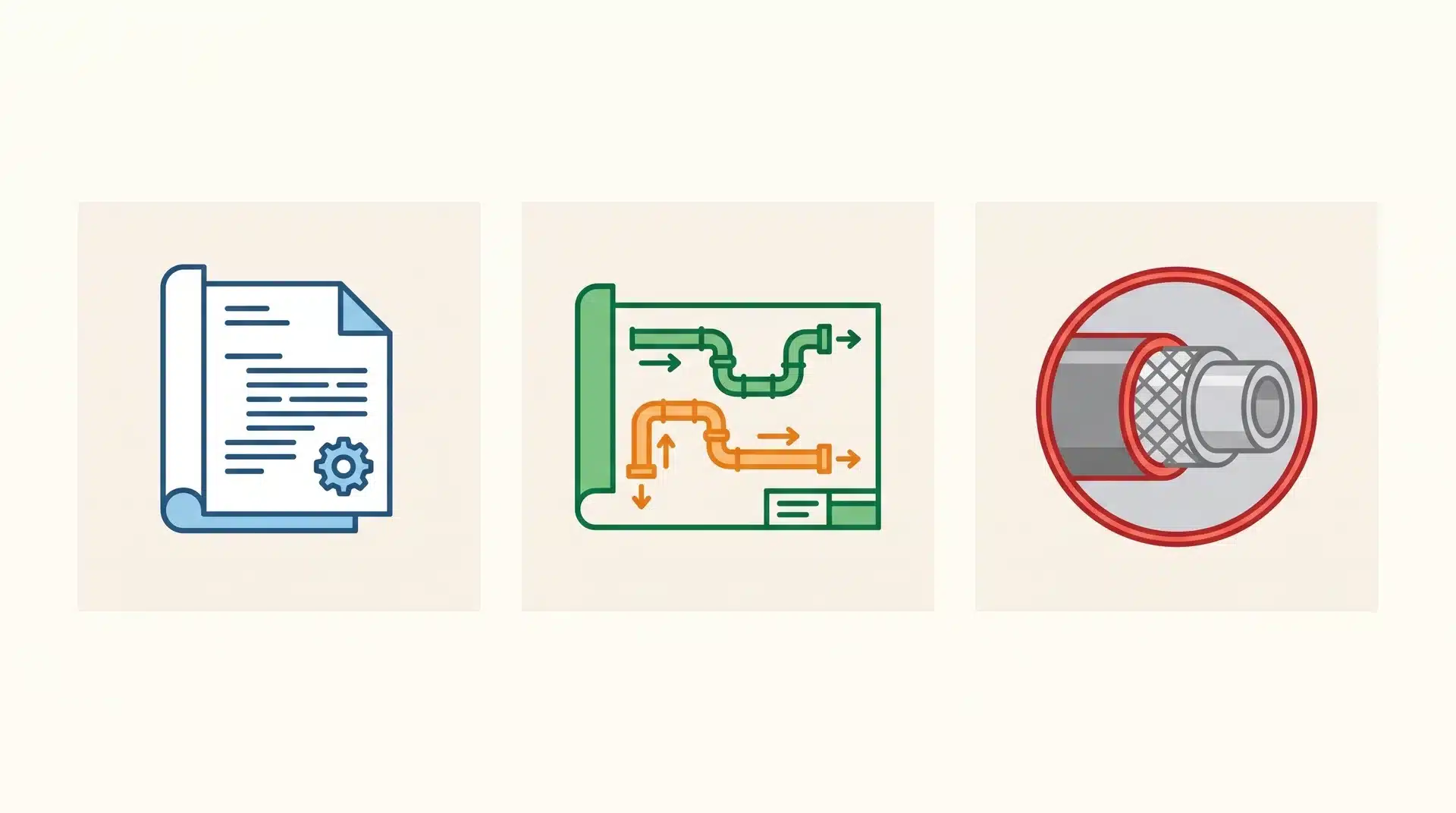
A residential system comes down to three things working together: the code it’s built to, how the pipes are laid out, and what the pipes are made of. Get any one of those wrong and the whole system underperforms, so let’s go through each on its own.
NFPA 13D: The Residential Standard
NFPA 13D is the code that covers sprinklers in one- and two-family homes and manufactured housing. It’s a different rulebook than the one written for offices and stores.
This code is built around one goal: giving you time to get out. It isn’t designed to save the building.
That’s why its water requirement is fairly modest. It only needs to run two sprinkler heads at once for 10 minutes, enough time to get everyone out safely.
Because NFPA 13D isn’t chasing full fire suppression, most homes can run straight off municipal water pressure. You usually don’t need the dedicated fire pump that bigger commercial jobs require.
I think that’s the detail that surprises people most: a residential system can be far simpler than they expect.
Stand-Alone vs. Multi-Purpose Systems
Residential systems are built around one of two pipe layouts: stand-alone or multi-purpose. The real difference between them isn’t the pipes themselves, it’s a trade-off between cost and long-term reliability.
Stand-alone systems use pipes built only for fire suppression. They’re fed by the main water line, a well with a pump, or a storage tank kept just for this.
Because the water isn’t shared with anything else, it stays fresh. The supply doesn’t depend on the rest of your plumbing. The cost is a second pipe network running through your walls.
Multi-purpose systems share pipes with your home’s cold water. That keeps the price down and makes retrofits a lot easier. Much of the piping is already there, doing another job.
Here’s where I’ve seen this go wrong: branches that barely get used.
A sprinkler-only line running off shared plumbing can sit stagnant for months. Run that same line through an attic or crawlspace. If nobody uses that fixture regularly, you’ve got a real freeze risk.
Some installers get around this with a small loop that keeps water moving. Others use an automatic valve that flushes the line on its own.
If you’re leaning multi-purpose, ask your installer about this specifically. It’s the detail that separates a system that lasts for years from one that quietly fails somewhere you never check.
Piping Materials Used in Modern Systems
Most modern systems use non-metallic pipe instead of metal, usually BlazeMaster CPVC or PEX. Both are lighter and more flexible, which matters a lot if you’re retrofitting an older home.
CPVC is rigid, and the joints get solvent-welded together. PEX is flexible enough to run in long stretches with far fewer fittings.
Either one cuts installation time way down compared to cutting and threading metal pipe inside walls that are already finished. If you’re pricing out a retrofit, this is usually where the labor savings show up.
What a Residential System Is Not
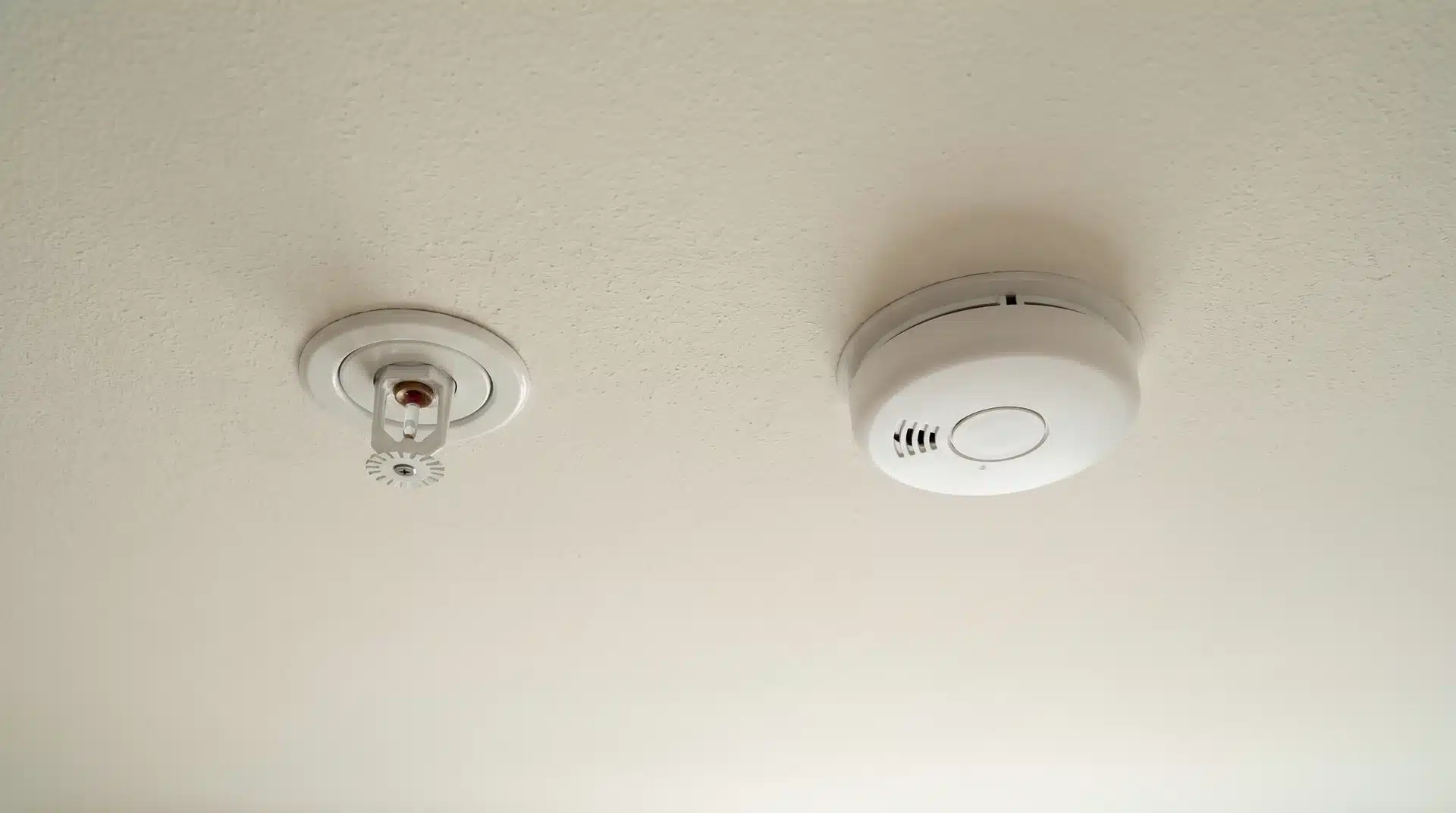
This section is here to clear up two mix-ups: commercial sprinklers and smoke alarms. People confuse residential systems with both, and it changes how you should think about your own home.
A residential system isn’t a commercial NFPA 13 system. Commercial systems protect the building itself, aiming for full extinguishment, not just enough time to escape.
They also typically need coverage in every single room, without the exceptions residential code allows.
NFPA 13D actually lets you skip sprinkler heads in certain small bathrooms and closets. That detail catches people off guard once they compare the two codes side by side. Your home can meet the residential standard without a head in every room.
A residential system also isn’t a smoke alarm. It doesn’t respond to smoke, sound, or someone walking through the room. It only responds to heat, one head at a time, exactly like I described earlier.
I’d tell anyone comparing these two codes: don’t assume “more sprinklers everywhere” is the residential goal. It isn’t. It’s targeted, and that’s by design.
Why a Residential Fire Sprinkler System Matters
The strongest case for a residential system starts with survival, not price. Homes with a system in place see roughly an 82% drop in the risk of dying in a home fire.
On cost: new construction runs about $1.35 per square foot. That lands around 1% to 2% of the total project cost. Many insurers knock 5% to 15% off your homeowner’s premium once a system goes in.
Maintenance is about as light as it gets. Periodic inspections and simple valve testing are usually all a system needs to keep running.
I like comparing the cost to something concrete: it’s often close to a mid-tier flooring or cabinet upgrade. If you’re already weighing finish-level choices during a build, this is worth putting on that same list. That’s the frame that actually helps people decide, not a number sitting on its own.
Conclusion
A residential fire sprinkler system is narrower and more targeted than most people picture. One head reacts to heat. The system is sized for escape time, not full extinguishment. And it’s built around a code written specifically for homes, not offices.
The piping and configuration choices you make will change the cost and the long-term reliability. But the core idea behind it stays the same everywhere: get you out safely, fast.
Once you understand how it actually behaves, “should I get sprinklers” stops being a guess. It becomes a decision you can actually stand behind.
Frequently Asked Questions
How much does a residential fire sprinkler system cost?
New construction runs about $1.35 per square foot. That’s roughly 1% to 2% of your total project cost. Retrofitting an older home costs more, especially in high-cost areas. Check current pricing before you budget. This figure comes from older industry data, and material costs shift over time.
Are residential fire sprinklers worth it?
For most homeowners, yes. Sprinklers cut your risk of dying in a home fire by roughly 82%. They often qualify for a 5% to 15% insurance discount. Upkeep is minimal. It just needs periodic inspections and valve testing. The upfront cost is usually close to a mid-range upgrade, like carpet or cabinets.
Why don’t residential homes have fire sprinklers?
Most U.S. areas don’t require them in single-family homes, so builders often skip them. Cost concerns and fear of water damage keep people away too. In practice, though, only the single head closest to a fire usually activates. The whole system doesn’t turn on at once.
Can I install a fire sprinkler system myself?
I wouldn’t recommend it. Sizing the system depends on your home’s water pressure and volume. NFPA 13D requires specific calculations to guarantee two heads can run for 10 minutes straight. You need a licensed fire protection contractor to size, permit, and inspect it correctly.