


You hired developers to build the product, not spend half their week filing bug reports and rewriting broken test cases. But that is exactly what happens when QA gets treated as an afterthought instead of a system.
If your releases are slowing down or issues keep reaching production, the problem usually is not your team. It is that testing does not have the right structure or capacity behind it.
This post breaks down what QA outsourcing actually is, what services are included, what it genuinely costs, and how to pick a partner who fits the way your team already works.
What is QA Outsourcing?
QA outsourcing is when you hire an external company to handle your software testing instead of building an internal team. You hand that work to specialists who already do this full-time, across different products and tech stacks.
There are two genuinely different ways this can work.
The first is a managed model, where the vendor owns the testing entirely, sets it up, runs it, and delivers results while you focus on building.
The second is outstaffing, where the vendor sends engineers who work inside your team, on your tools, under your direction.
Most companies don’t know which one they need when they start looking. They just know bugs are slipping through or releases are slowing down, which is a fair place to begin.
Picking the wrong model because a pitch sounded good is a mistake that costs you months before you notice.
One thing to check upfront: any vendor claiming to integrate with your CI/CD pipeline needs to actually operate inside your toolchain, not parallel to it.
What Do QA Outsourcing Services Actually Include?
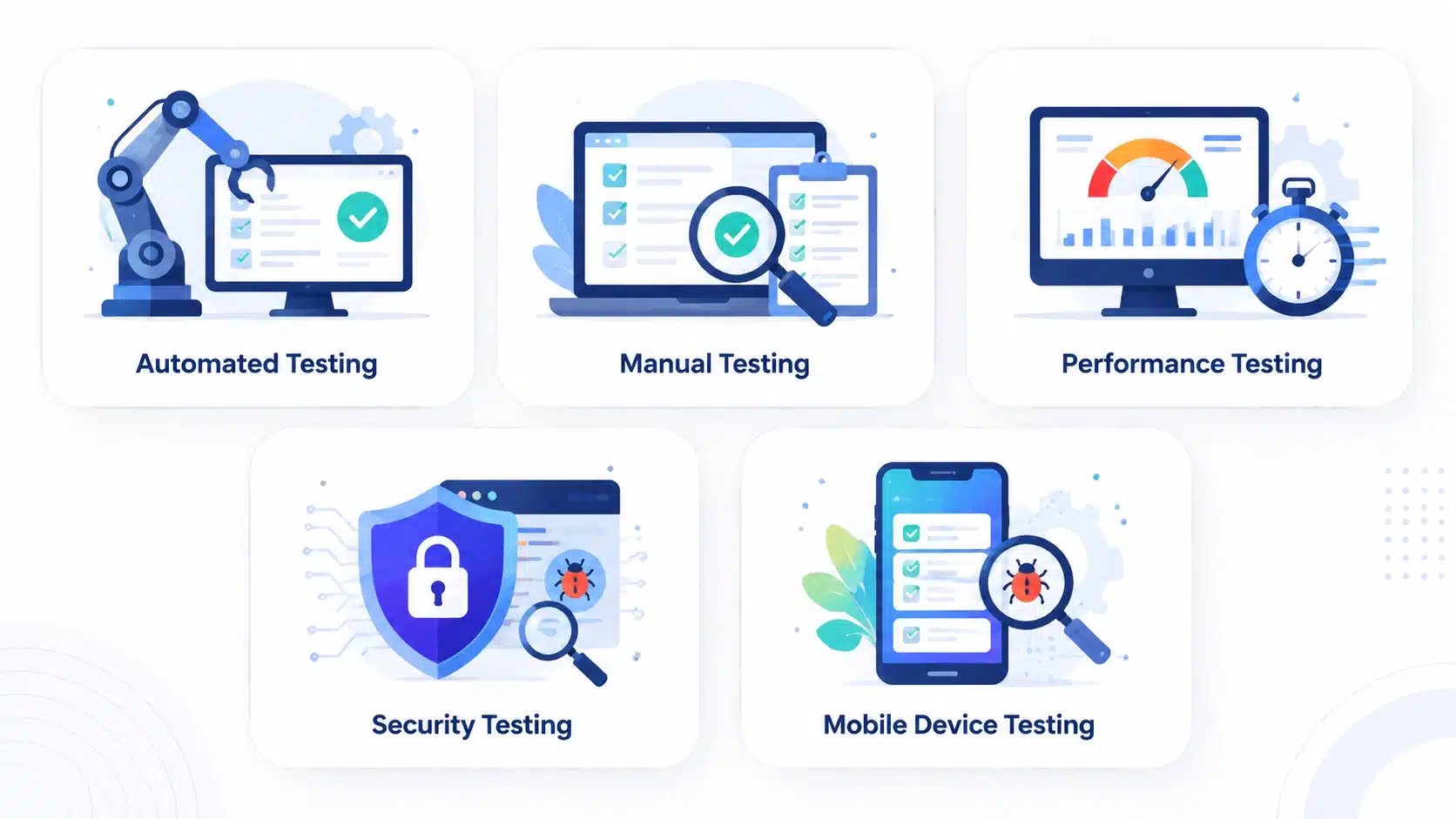
This is where a lot of buying decisions go sideways. People see a list of services on a vendor’s website and assume they need all of them. You probably don’t, and buying more than you need is just as costly as buying the wrong thing entirely.
The services that actually matter are the ones that map directly to where your testing is breaking down right now.
| Service Type | What It Solves |
|---|---|
| Automated and Regression Testing | Catches repeated failures fast when integrated into your pipeline |
| Manual and Exploratory Testing | Finds edge cases and usability issues that scripts genuinely cannot replicate |
| Performance and Load Testing | Tells you how your app behaves when real traffic hits it at scale |
| Security and Compliance Testing | Covers vulnerability gaps and regulatory requirements for fintech or healthcare products |
| Mobile and Device Testing | Ensures your app works across hundreds of real devices and OS versions |
If regression failures are slipping into production, start with automation. If users are finding edge cases your scripts miss, add manual testing. Buying all five services when you have one real bottleneck just means paying for coverage that sits idle.
What Are the Real Benefits and Where Does Outsourcing Break Down?
QA outsourcing gets sold as a straightforward cost-cutting move. The reality is more specific than that, and understanding the difference saves you from a vendor relationship that looked good on paper.
The genuine benefits are real, but they only show up under the right conditions.
What Outsourcing Actually Delivers when The Setup Is Right
- Speed to scale is the most immediate win because a good vendor embeds engineers into your sprints within days, not the weeks it takes to hire and onboard someone internally.
- Cost reduction is genuine once you factor in recruitment, training, tools, and the management overhead that a dedicated in-house QA team quietly accumulates over time.
- Independent testing catches what your internal team misses, not because they lack skill, but because familiarity with a codebase creates blind spots that an outside eye simply does not carry.
- Stronger release velocity follows when testing is genuinely the bottleneck slowing your team down from shipping with confidence.
These benefits hold up well in stable, well-documented products with consistent release cycles.
Where Things Quietly Fall Apart
- Onboarding friction eats the time advantage fast when a vendor cannot match your existing tools, and the ramp period kills the speed benefit before it ever starts.
- Communication overhead and time zone gaps are structural risks that the right engagement model can reduce but never fully eliminate.
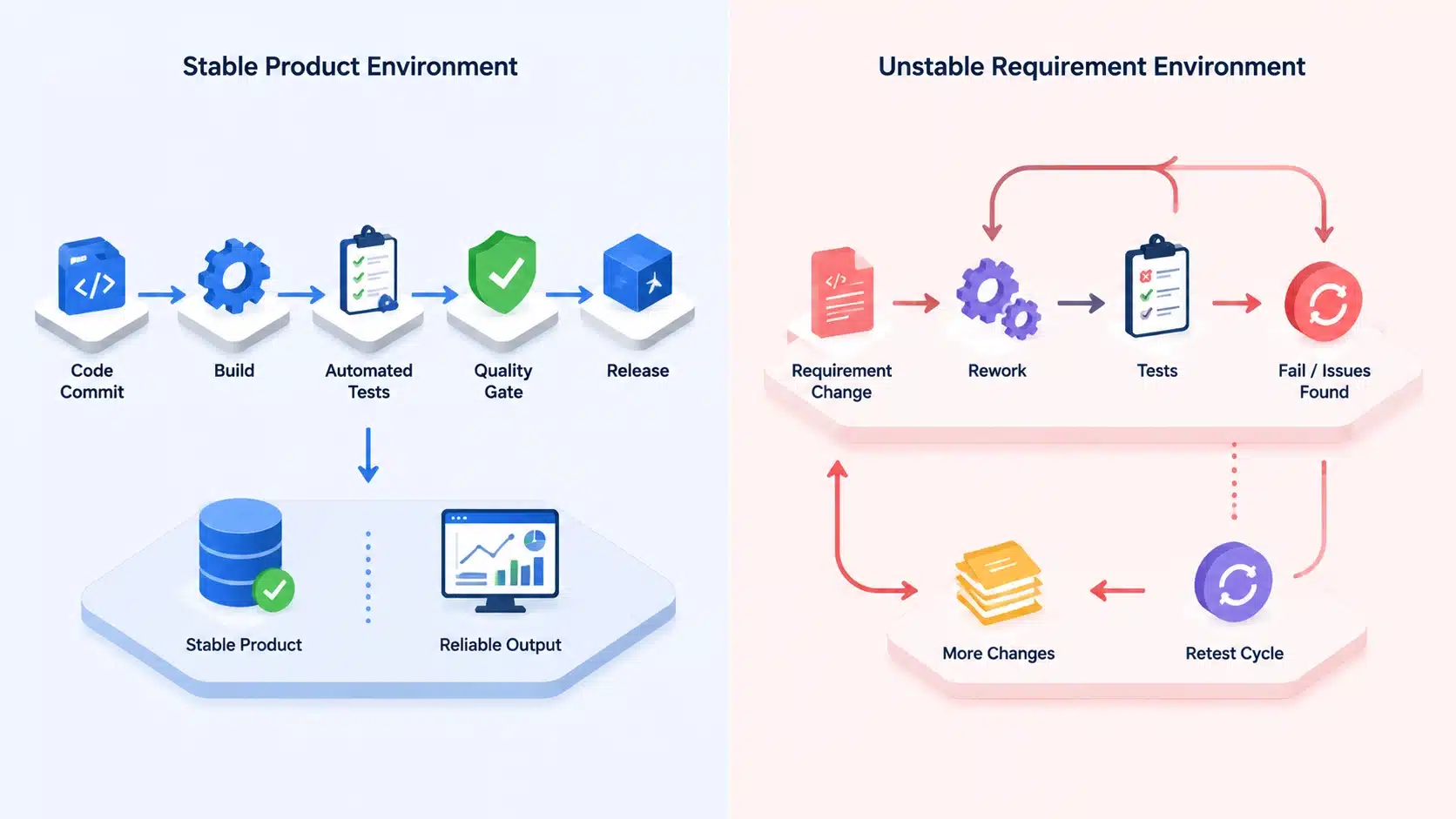
- Outsourcing amplifies defect volume rather than reducing it when unclear requirements or architectural instability are the real problem sitting underneath your QA issues.
That last point is worth sitting with seriously. If your product is changing shape every two weeks, an outsourced team will spend more time retesting shifted features than finding real bugs.
The problem in that situation was never your testing capacity. It was the instability feeding into it, and no vendor relationship fixes that upstream issue.
How Much Does QA Outsourcing Cost?
The pricing ranges you see quoted for QA outsourcing services are real, but they are only useful once you understand what actually drives them.
Geography is the most visible factor, but it is not the only one that matters when you are scoping an engagement.
Here is how the numbers break down by region:
| Region | Hourly Rate Range | Best Suited For |
|---|---|---|
| Asia and Eastern Europe | $15 to $75 per hour | Cost-effective manual and automation testing at scale |
| North America and Western Europe | $50 to $150+ per hour | Compliance-heavy, time-zone-aligned, deeply integrated QA work |
If your product operates in a regulated industry like fintech or healthcare, your QA outsourcing services need to meet specific compliance standards that not every offshore vendor can deliver on.
Choosing a cheaper rate that creates compliance gaps costs far more to fix later than the hourly saving was ever worth.
There is also a pricing model conversation that barely gets mentioned anywhere:
- Hourly billing works well for short engagements or supplemental testing where the scope shifts frequently and you need flexibility.
- Project-based pricing gives you a fixed cost for a defined scope, which suits one-time releases or audit-style testing cycles without ongoing retainers.
- Retainer models reduce your total cost over time for continuous QA outsourcing because vendors price ongoing relationships differently from one-off work.
As a working budget: a small team running continuous QA with an Eastern European vendor typically lands between $8,000 and $20,000 per month, depending on scope. North American vendors for compliance-heavy work tend to start around $15,000 and scale from there.
Treat these as sanity-check numbers before your first vendor call, not line items for a final proposal.
How to Evaluate a QA Outsourcing Partner
Most vendor pages look identical once you have read three of them. Knowing what to verify before pricing comes up is what actually protects you.
1. Confirm pipeline access first: Ask whether the vendor operates inside your CI/CD toolchain. If the answer is vague, stop the conversation there.
2. Check domain alignment: Fintech and healthcare products need compliance-specific experience. Generic QA expertise and regulated-industry expertise are genuinely different things.
3. Evaluate engagement flexibility: Ask whether they can shift between dedicated, managed, and supplemental staffing as your team grows or changes direction.
4. Pressure test reporting: Ask what a weekly report looks like. Vague reporting early is a reliable sign of vague accountability later.
5. Run a paid pilot: A short pilot on a real part of your product tells you more than any reference call ever will.
Conclusion
Before you talk to a single vendor, answer three questions.
First, is your product stable enough to test against, or are requirements still shifting weekly?
Second, do you have a documented CI/CD pipeline a vendor can actually plug into?
Third, is your bottleneck testing capacity, or is it something upstream like unclear requirements or architectural instability?
If you can answer yes, yes, and capacity, outsourcing will likely help you. If any answer is no, fix that first.
Start by auditing your current testing gaps before you talk to a single vendor. Know what is breaking down, then match a service to that specific problem rather than buying a package that sounds comprehensive.
Frequently Asked Questions
Is QA outsourcing a good fit for early-stage startups?
It can be, but only when your requirements are stable enough to actually test against. If your product is still changing shape every two weeks, an outsourced team will spend more time retesting shifted features than finding real bugs. A supplemental model works better at this stage than handing over full testing ownership to an outside vendor.
What is the difference between QA outsourcing and QA outstaffing?
Outsourcing transfers ownership of the testing function to a vendor who manages the team and delivers outcomes. Outstaffing supplies individual engineers who work inside your team under your direction. The accountability sits in completely different places, and that distinction changes how you structure contracts, set expectations, and measure performance from day one.
How long does onboarding an outsourced QA team actually take?
Realistically, two to four weeks for a vendor integrating into an existing pipeline. That timeline stretches when documentation is thin, toolchain access is delayed, or the vendor has no prior exposure to your product type. Teams that rush this phase almost always pay for it in the first sprint with test coverage that misses the things that actually matter.
Can outsourced QA teams work inside agile or CI/CD workflows?
Yes, provided the vendor has genuine pipeline access and not a handoff-based workaround dressed up as integration. Embedded QA outsourcing services where testers participate in sprint ceremonies and push results directly into your pipeline are built for this. Handoff-based models create lag between code changes and test results, and that lag quietly undermines the release velocity you were trying to improve in the first place.