

I have worked with teams building software for patient monitors, diagnostic tools, and clinical decision systems. What separates the projects that ship from the ones that stall is never technical skill; it is process discipline.
Medical device software development operates under strict oversight, real stakes, and almost no margin for error.
In this guide, I will walk you through how the process works, from requirements and risk classification to the standards regulators actually check for.
What is Medical Device Software Development?
Medical device software development is the process of designing, building, testing, and maintaining software used for medical purposes.
This includes software that supports diagnosis, treatment, monitoring, or clinical decision-making.
The key difference from regular software is its impact on human health. Because outcomes can directly affect patients, the entire development process becomes more controlled and safety-focused.
Scope of Medical Device Software
Medical device software can take many forms depending on its use. It may run on a physical device or operate independently on platforms such as mobile or cloud systems.
The defining factor is not where it runs but what it does. If the software serves a medical purpose, it falls within this domain.
SaMD vs. SiMD
There are two main categories for classifying medical device software. These categories define how the software interacts with hardware and how it is regulated.
Software as a Medical Device (SaMD) works independently without being part of a physical device. In contrast, Software in a Medical Device (SiMD) is embedded within hardware and directly supports its function.
Why Patient Safety Changes the Entire Process
The biggest factor shaping this field is risk. A software failure in a medical context can lead to incorrect diagnosis, delayed treatment, or serious harm.
Because of this, safety is built into every stage of development. The process must account for failures, edge cases, and real-world usage conditions from the start.
How Validation and Compliance Shape Development
To manage risk, development is governed by strict validation and compliance requirements. Every function must be defined clearly, thoroughly tested, and properly documented.
Standards like IEC 62304 and ISO 14971 enforce this structure. They ensure that the software is not only functional but also safe and reliable under all expected conditions.
What this Leads To
These constraints make the development process highly structured. Each stage follows a defined lifecycle with clear inputs, outputs, and verification steps.
The result is software that is predictable, traceable, and compliant. The focus shifts from speed to building systems that can be trusted in critical medical environments.
Why Medical Device Software Development is Highly Regulated?
Medical device software is highly regulated because failure is not just a technical issue. It can directly lead to patient harm, incorrect treatment, or even death.
Unlike regular software, errors here can impact real-world medical decisions. That level of risk makes strict control unavoidable.
Risk of Harm Drives Regulation
The core reason behind regulation is safety. If software gives the wrong output or behaves unexpectedly, it can cause serious clinical consequences.
This includes wrong diagnoses, incorrect dosage calculations, or failure of life-supporting devices. Even small bugs can have major outcomes.
How Regulatory Systems Control Development
To manage this risk, regulatory bodies such as the FDA in the US and the MDR in Europe enforce structured development processes. These are not optional guidelines; they are required systems.
They define how software must be planned, developed, tested, and maintained. Standards like IEC 62304 and ISO 14971 are used to ensure consistency and safety.
What Regulation Actually Requires
Regulation turns development into a controlled system rather than a flexible process. Every step must be documented, reviewed, and verified.
This includes clear requirements, full traceability from design to testing, and validation that proves the software works as intended.
What Happens When Compliance Comes Too Late
One of the biggest failure points is treating compliance as a final step. Trying to “add” documentation or validation at the end often leaves gaps.
This often results in regulatory rejection, approval delays, or complete rework of the product. Fixing compliance late is far more expensive than building it in from the start.
Why Regulation Does Not Slow Development
There is a common belief that regulation slows things down. In reality, it prevents bigger delays caused by errors, redesign, and failed approvals.
A structured process reduces uncertainty and makes development more predictable. It ensures the software is safe, compliant, and ready for real-world use without setbacks.
Step-By-Step Medical Device Software Development Process
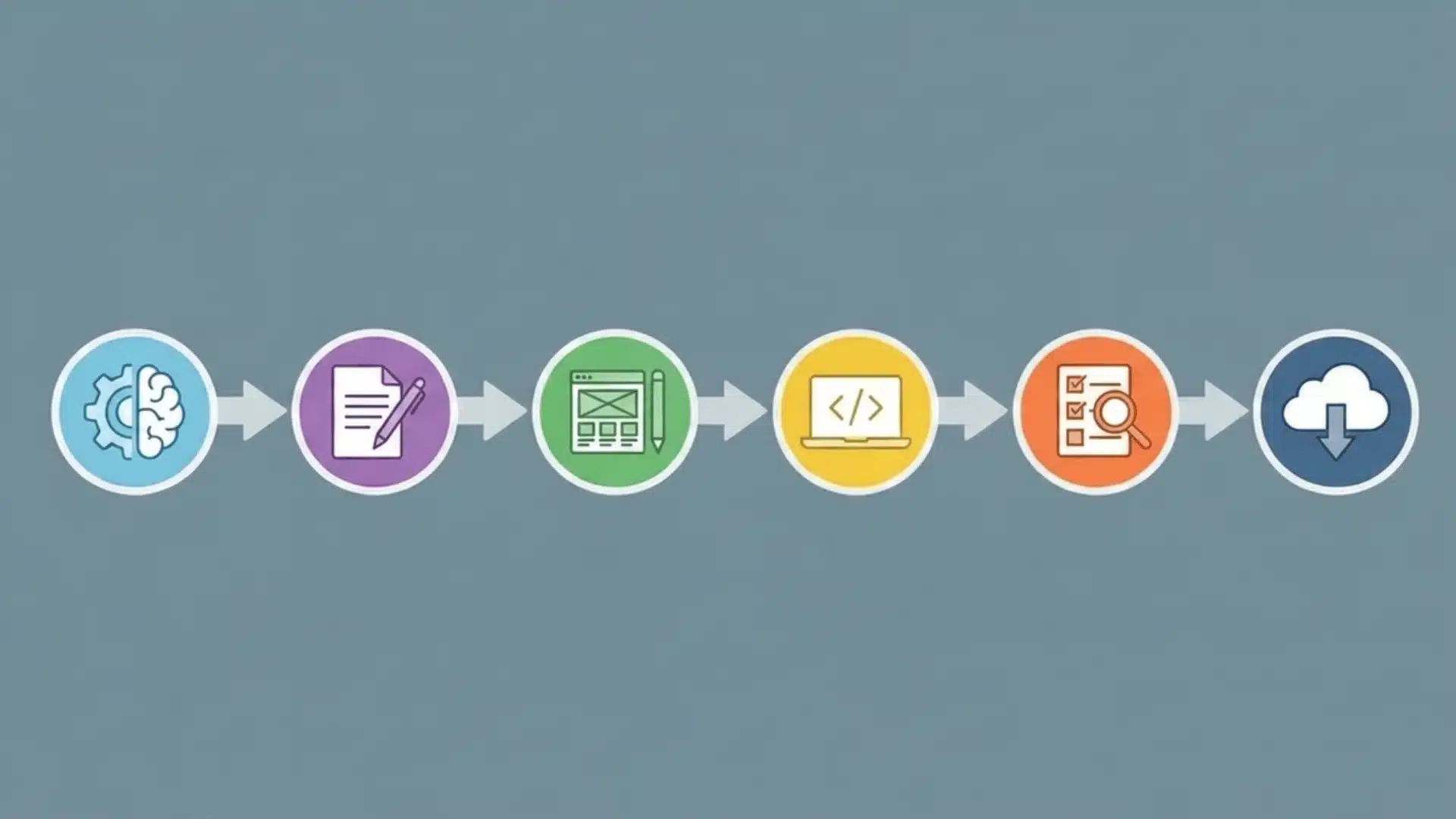
This process follows a structured path where each step builds on the previous one. The goal is to ensure the software is safe, compliant, and works as intended in real-world medical use.
Step 1: Define Intended Use and Requirements
This is where the entire development direction gets set. You define the medical purpose, who will use the software, and the environment it will operate in.
Functional, safety, and security requirements all get documented here. If these are vague or incomplete, everything downstream becomes harder to test and harder to approve. Regulators will trace every decision back to this step, so getting it right matters more than getting it done fast.
Step 2: Perform Risk Analysis and Safety Classification
Once requirements are defined, you assess what could go wrong and how serious the consequences would be. This determines whether the software falls under Class A, B, or C.
That classification is not just a label. It directly controls how strict your testing, documentation, and controls need to be throughout the rest of the project. Misclassifying at this stage either creates safety gaps or adds unnecessary complexity that slows the entire process down.
Step 3: Design Software Architecture
Here, the system gets broken into components with clearly defined interfaces and responsibilities. The goal is to isolate critical functions so that a failure in one area does not cascade into others.
Good architecture also makes validation easier later. If components are tightly coupled or poorly defined, testing becomes harder and the risk of undetected errors increases.
Step 4: Implement and Develop Code
Development happens under controlled practices: coding standards, peer reviews, and unit-level checks at each stage. This is not just about writing functional code. It is about writing code that can be traced, tested, and verified against the original requirements.
Unstructured coding at this stage is one of the most common sources of hidden defects that only surface during final validation, which is the worst time to find them.
Step 5: Perform Verification and Validation
These two activities are often confused, but they answer different questions. Verification asks: did we build the software correctly? Validation asks: does it actually do what it is supposed to do for the patient?
Both are required. Unit, integration, and system-level testing happen here. If teams skip straight to validation without thorough verification, defects get carried forward and the validation fails.
Step 6: Release and Regulatory Submission
Before the software reaches market, all documentation must be finalized and all compliance evidence must be in order. Regulators review this package to confirm the software was built as required.
Missing traceability or incomplete records at this stage causes delays or outright rejection. This is why documentation needs to happen throughout development, not as a final task.
Step 7: Post-Market Monitoring and Maintenance
Releasing the software is not the end of the process. Real-world performance must be tracked, user feedback collected, and any issues managed through a controlled change process.
Updates and patches still carry risk. Any change to a validated system needs to be assessed, controlled, and re-verified to ensure nothing breaks compliance or introduces new hazards.
This step-by-step approach ensures the software is not only functional but also safe, compliant, and reliable throughout its entire lifecycle.
Key Standards that Govern Medical Device Software
These standards do not just define what needs to happen. They define how development teams prove it happened. For regulators, evidence is everything, and these three standards are the framework that makes that evidence credible.
IEC 62304
IEC 62304 defines the software development lifecycle. In practice, this means every stage from planning to maintenance needs documented inputs, outputs, and verification steps.
For a development team, applying IEC 62304 means producing specific deliverables at each stage: a software development plan, architecture documents, test records, and a maintenance process.
Regulators check these documents to confirm the lifecycle was followed, not just described.
ISO 14971
ISO 14971 governs risk management. Applying it means building a risk file that starts at requirements and follows the software all the way through post-market monitoring.
In practice, teams use it to formally document every identified hazard, assess the probability and severity of harm, and show what controls were put in place to reduce that risk. It is a living document, updated as the software changes.
ISO 13485
ISO 13485 defines the quality management system behind the development process. It is less about what goes into the software and more about how the organization operates.
For teams, this means controlled processes for documentation, change management, audits, and supplier oversight. It is what gives regulators confidence that the people building the software are working within a reliable system.
How These Standards Work Together
In practice, these three standards operate as a single system. IEC 62304 tells you what to do at each stage. ISO 14971 ensures risk is being managed as you do it. ISO 13485 ensures the organization running the process is doing so consistently.
Treating them as separate compliance tasks breaks the flow. A change to the software, for example, needs to trigger a risk review under ISO 14971, be managed under ISO 13485 change control, and be re-verified under IEC 62304. All three respond to the same event.
Software Safety Classification and its Impact on Development
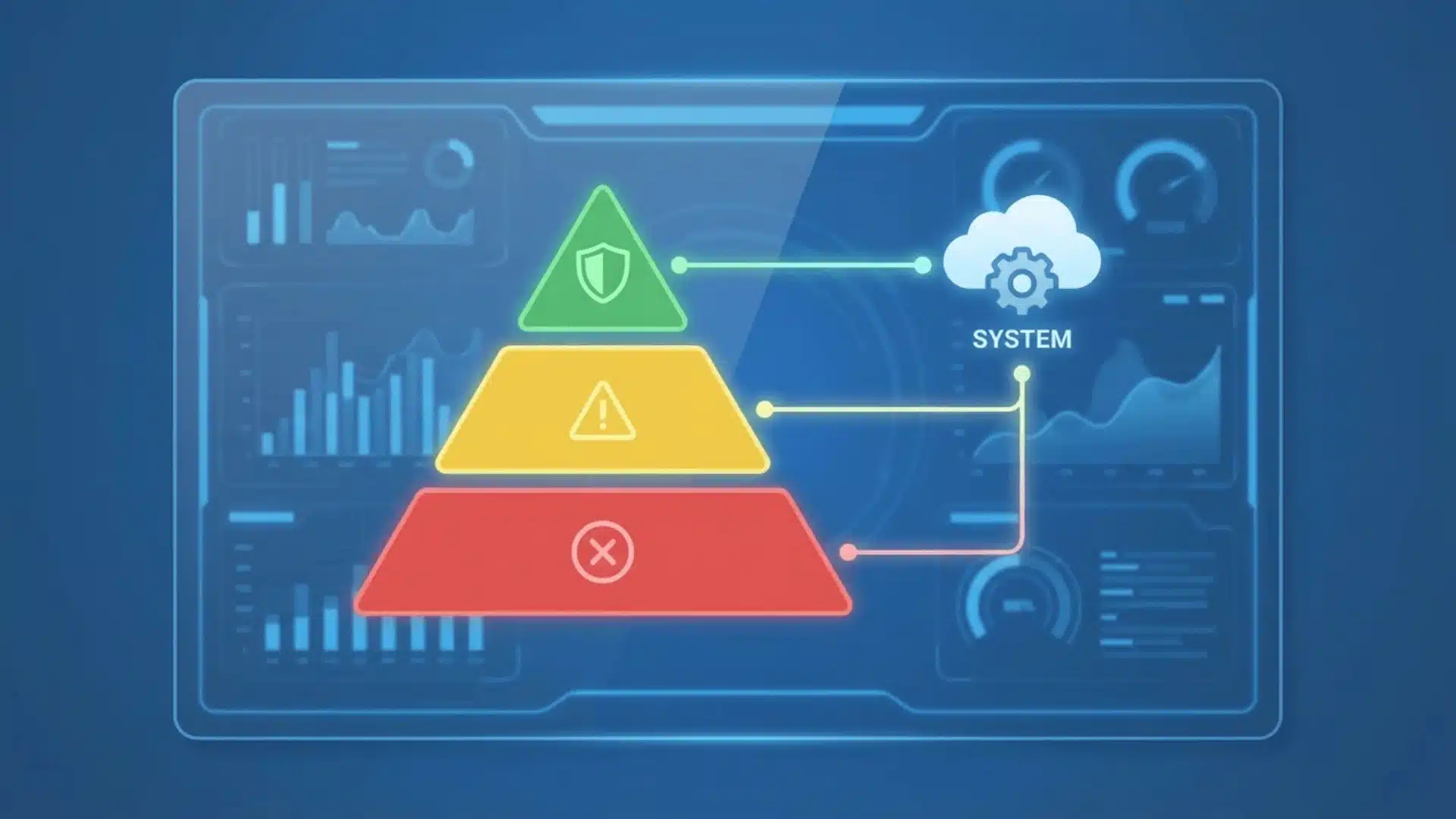
Software safety classification defines how risky a medical software system is and how strict the development process must be. It directly influences how the software is designed, tested, and controlled.
Safety Classes
- Class A: No risk of injury or harm to patients
- Class B: Possibility of non-serious injury
- Class C: Risk of serious injury or death
Impact on Development
Higher-risk software requires stricter testing, more detailed documentation, and tighter control throughout all development stages. This ensures that potential failures are identified and handled early.
As the risk level increases, additional validation and traceability requirements are introduced. This creates a more rigorous process that improves safety and reliability.
As risk level rises, so does the rigor required across every stage. Testing becomes more intensive, documentation becomes more detailed, and control over each development activity tightens.
This directly results in safer, more reliable software. Getting the classification wrong pushes the process in the wrong direction; too loose creates safety gaps, too strict adds unnecessary cost and complexity.
Choosing the correct classification ensures the development process is aligned with both safety requirements and regulatory expectations.
Core Principles that Make the Process Work
Medical device software development works as a connected system, not a series of independent steps. These principles ensure consistency, safety, and compliance across the entire lifecycle.
Traceability ensures that every requirement is linked to design, implementation, and testing. This allows proving that the software behaves exactly as intended.
Risk-first design means safety is considered from the beginning, not added later. This reduces the chance of critical issues appearing late in development.
Lifecycle continuity treats development, release, and maintenance as one continuous process. This ensures that updates and changes do not break compliance or safety.
Verification and validation serve different roles but work together. Verification checks if the software is built correctly, while validation confirms it meets its intended medical purpose.
When these principles are ignored, and steps are treated as isolated, gaps start to appear. This leads to broken traceability, safety risks, and compliance failures.
Following these principles keeps the process aligned, controlled, and reliable from start to finish.
Common Mistakes that Break Medical Software Development
Even with a defined process, certain mistakes can weaken the system and lead to compliance or safety issues. These gaps usually happen when core principles are ignored during execution.
- Late risk management: Identifying risks too late leads to design changes, delays, and increased safety gaps
- Compliance as paperwork: Treating compliance as documentation instead of a process creates weak and unverifiable systems
- Weak traceability: Missing links between requirements, design, and testing make it hard to prove correctness
- Ignoring cybersecurity: Failing to address security risks can expose patient data and disrupt device functionality
- Poor change control: Uncontrolled updates can introduce new risks and break previously validated functionality
Avoiding these mistakes keeps development structured, reduces rework, and ensures the software remains safe and compliant throughout its lifecycle.
Wrapping Up
Medical device software development is not just about adding functionality; it is about ensuring safety at every stage. Each step, from planning to post-market monitoring, plays a role in creating reliable and compliant systems.
By understanding the standards, risk classification, and core principles, you now have a clear view of how the process works.
This knowledge helps you avoid common mistakes and build software that meets both safety and regulatory expectations.
If you are planning to develop medical software, focus on building the process right from the start. A structured approach will save time, reduce risk, and ensure long-term success.
Frequently Asked Questions
How do you choose the right development model for medical device software?
You can use Agile or Waterfall, but the key is to align it with regulatory requirements and ensure documentation, traceability, and validation are maintained throughout the process.
Can open-source components be used in medical device software?
Yes, but they must be evaluated for risk, reliability, and compliance, with proper documentation and controls to ensure they do not compromise safety or performance.
How is cybersecurity handled in medical device software?
Cybersecurity is addressed by identifying risks early, implementing controls like encryption and access management, and continuously monitoring threats throughout the software lifecycle.