


Finding the right AI tool today is harder than ever. New options keep launching, and most users feel stuck between too many choices and not enough clarity.
This is where platforms like Goseboze AI Tools come into the picture. Instead of searching across dozens of websites, you can browse a structured directory that brings multiple tools into one place.
In this blog, you will understand how Goseboze works, what to expect from it, and how to use it effectively without treating it as the final word on what to choose.
What Goseboze AI Tools Actually Are?
Goseboze AI Tools is not an AI tool you can use directly. It is a directory platform that lists and organizes AI tools built by other companies.
Instead of creating its own software, Goseboze works like a catalog of third-party tools. It brings together various AI products in one place so users can browse, compare, and explore options based on their needs.
A simple way to understand this is to think of it like a library.
- The library (Goseboze) does not create the books
- It only organizes and displays them
- You still have to pick a book and read it elsewhere
The same idea applies here. You don’t “use” Goseboze to generate content, images, or code. You use it to find tools that can do those things.
This leads to an important outcome. Goseboze is a starting point for discovery, not the place where actual work happens. Once you find a tool, you leave the platform and go to that tool’s website to use it.
Note: Goseboze is not an AI tool like ChatGPT; it has no built-in features and only helps you discover and navigate other AI tools.
How Goseboze AI Tools Work?
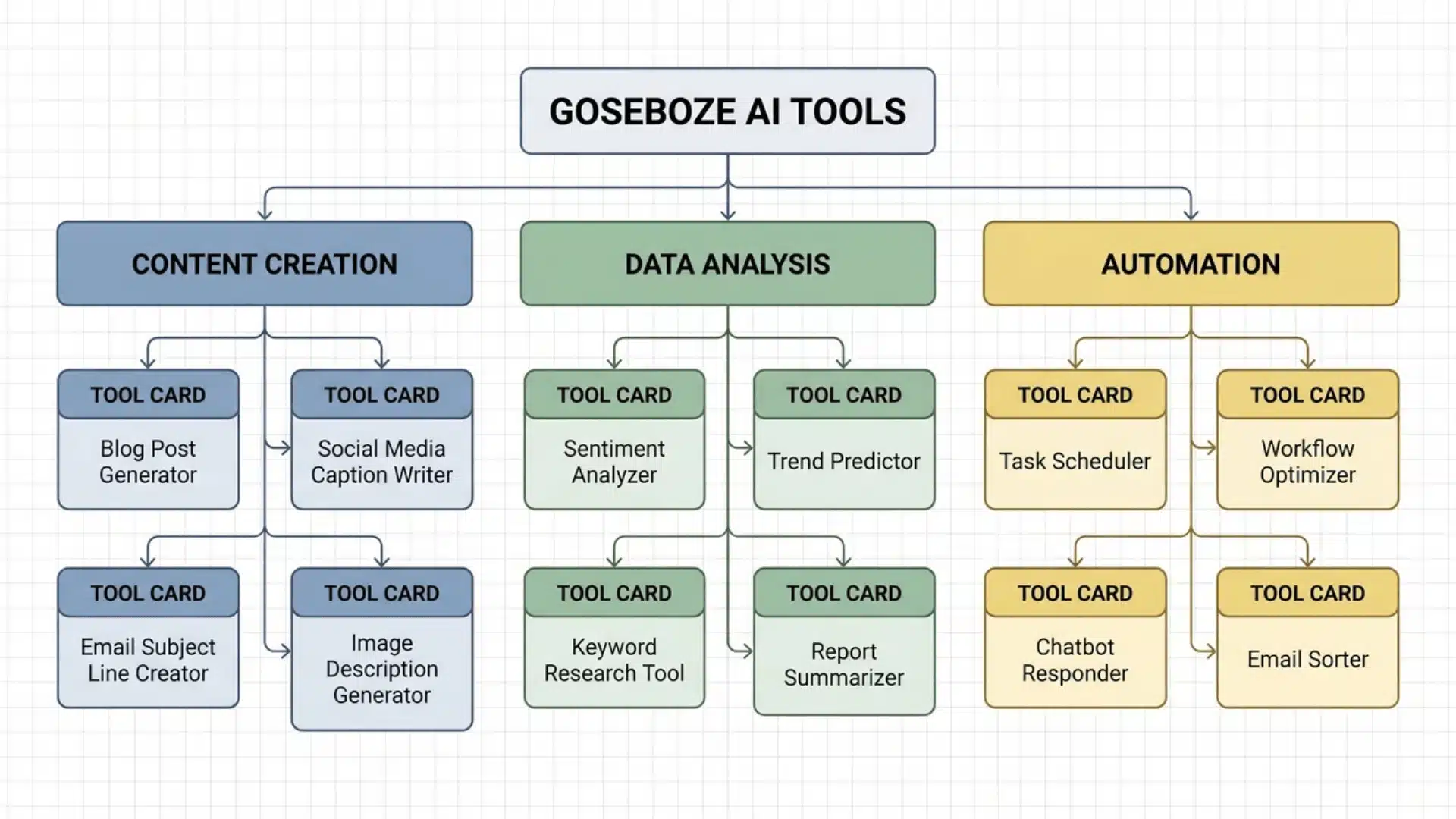
The number of AI tools has grown fast, making it harder to find the right one. Users often face too many choices without a clear direction.
Goseboze solves this by organizing tools into a structured system. It brings scattered options into one place so users can browse more easily.
Category-Based Organization
This is the first layer most users interact with. It shapes how easily someone can move from a vague need to a clear set of options.
- Tools are grouped by use case, such as writing, chatbots, image generation, and productivity
- Helps users who do not know specific tool names start from their task
- Reduces search effort by narrowing options quickly
- Works best when the user has a clear goal, but not a specific product
- Can fail when categories are too broad or overlapping
- Some tools may appear in multiple categories, causing confusion
This system works well for quick exploration, but it is not always precise. You may still need to dig deeper when categories do not clearly separate similar tools.
Individual Tool Listings
Once a user selects a category, the next step is reviewing individual tools. This layer is designed to help users decide which options are worth exploring further.
- Each tool includes a short description, pricing type, and key features
- Listings provide a direct link to the official product website
- Acts as a preview layer before using the actual tool
- Helps users quickly filter tools based on basic criteria
- Does not include deep testing, comparisons, or performance data
- Users still need to verify quality outside the platform
These listings are useful for quick filtering, but they are not enough for final decisions. You get a summary, not a full evaluation.
Submission Model
Behind the scenes, this is what controls how tools enter the platform. It directly affects both the size and the quality of the directory.
- Anyone can submit a tool for listing on the platform
- Low entry barrier allows rapid addition of new tools
- Keeps the directory updated with emerging AI products
- Encourages visibility for new founders and startups
- Leads to inconsistent quality across listings
- Some tools may be incomplete, outdated, or overhyped
This model explains why Goseboze grows quickly but also why users need to be careful. More tools do not always mean better choices without proper validation.
How Users Actually Use Goseboze (Step-By-Step Flow)?
Most users do not come to Goseboze looking for a specific tool. They come with a problem and need a faster way to explore possible solutions.
The platform is designed to guide users from confusion to clarity, but only up to the discovery stage.
Discovery Workflow
This is the typical path users follow when using Goseboze to find AI tools.
- Start with a clear task or problem you want to solve
- Browse or search within relevant categories
- Open multiple tool listings that match your needs
- Compare basic details like pricing type and features
- Click through to the official websites of shortlisted tools
- Test those tools independently in real use cases
This workflow works because it reduces the time spent searching across different websites. You get multiple options in one place instead of starting from scratch each time.
But it is important to understand the limitations. Goseboze simplifiessearch, not decision-making. You still need to evaluate tools on your own after leaving the platform.
The result is faster shortlisting, not a final answer. If you expect the platform to tell you which tool is best, you may find it incomplete because it only presents options, not conclusions.
Why Platforms Like Goseboze Exist?

The number of AI tools has grown rapidly, creating confusion for users who do not know where to start. Too many choices without structure leads to information overload.
Platforms like Goseboze solve this by aggregating and categorizing tools in one place. This helps users move from a vague need to a list of relevant options much faster.
This works because most users search by task, not by brand name. They know what they want to do, but not which tool to use.
However, aggregation only improves discovery, not quality. Just because a tool is listed does not mean it is the best or most reliable option.
Types of Tools You Typically Find on Goseboze
When you browse Goseboze, you will notice that not all tools are at the same level. Some are powerful and well-built, while others are basic or even inactive.
This variation exists because anyone can submit a listing. It helps to know the main types you are likely to encounter before you start browsing.
- Proprietary Tools: Built on original technology with unique features, these tend to be more reliable and actively maintained. Tools like Midjourney for image generation and GitHub Copilot for coding assistance fall into this category. They often cost more, but the performance tends to be more consistent.
- API-Based Tools: These use existing AI models like GPT and layer an interface or templates on top. Many writing assistants and chatbot tools on the platform work this way. They are useful, but a lot of them do similar things with different branding.
- Niche Tools: Built for one specific task, like transcribing audio or resizing images automatically. They perform well inside that narrow use case but are not meant to replace broader platforms like ChatGPT or Grammarly.
- Low-Quality or Inactive Tools: Some may be outdated, poorly built, or unsupported. Always check when a tool was last updated before committing to it.
Knowing these differences helps you filter options faster and avoid poor choices. It also reminds you that a listing alone does not guarantee quality or usefulness.
Key Features that Shape the User Experience
These features are designed to make the platform quick and easy to use, especially for users who are just starting their search for AI tools, by simplifying discovery through structured browsing and basic filters.
 Category Browsing
 Search Function
 Pricing Labels
 Simple Interface
However, while they reduce effort in the early stage, they are not enough for final decisions, since deeper evaluation still depends on external research and testing.
The Core Limitation of Goseboze (Where it Falls Short)
Goseboze focuses on listing tools quickly rather than validating them deeply. This means speed and coverage are prioritized over accuracy.
Tools are added with only basic checks. There is no detailed testing, performance comparison, or clear verification of claims.
There is also no system to track updates or quality over time. Some tools may become outdated or inactive, but still remain listed.
As a result, users must test the tools themselves. The platform helps with discovery, but final decisions still require independent evaluation.
When Goseboze is Useful vs. When it is Not?
Goseboze works best in the early stage when you are still exploring options. It helps when you know the problem, but not which tool to choose.
It is also useful for broad market scanning, where you want to see multiple tools in one place. This makes it easier to understand the options without extensive research.
However, it falls short when you need detailed comparisons or proven results. It does not provide enough depth for serious evaluation or high-stakes decisions.
The platform’s strength is breadth, not depth. It works well as a starting point, but final decisions require further research and testing.
The Real Role of Goseboze in the AI Tool Selection Process
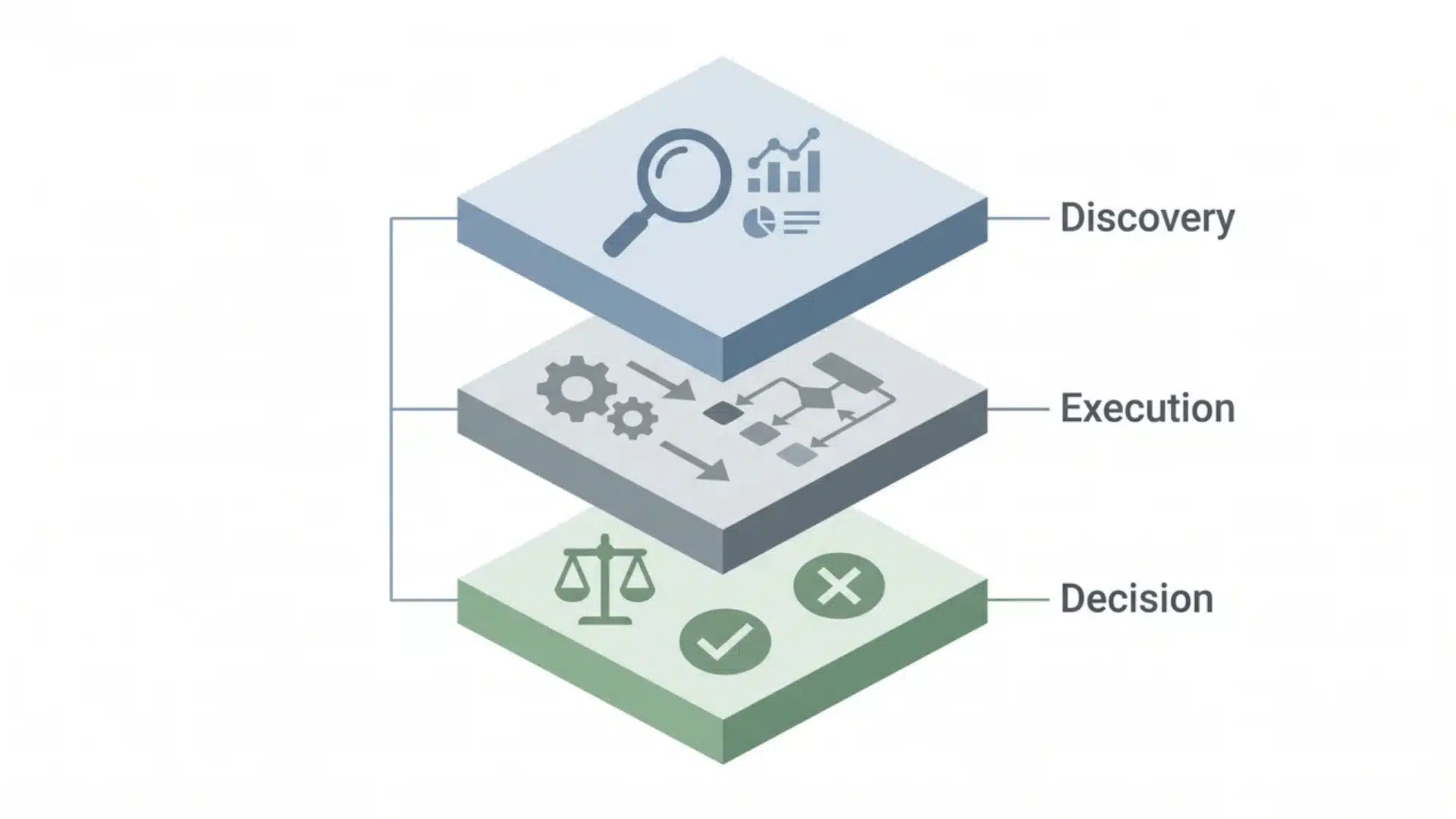
Understanding where Goseboze fits in the overall process helps avoid confusion. It is not built to replace research or decision-making, but to simplify the starting point.
- Goseboze operates at the initial stage, where users explore options, not where they finalize them.
- It connects your need to possible tools, but does not identify the best one for you.
- It saves time by grouping tools, but shifts the responsibility of evaluation to the user.
- Use it to find tools by category and use case.
- Do the actual work inside the tools you choose after leaving the platform.
- Make the final call based on external testing, reviews, and real-world results.
- It does not rank, review, or guarantee quality, so listed tools are not automatically reliable.
This clear separation helps you use Goseboze correctly. Treat it as a discovery tool, not a decision-making system, and you will get more value from it.
Wrapping Up
Goseboze AI Tools makes it easier to discover AI solutions, but it does not replace proper evaluation. It helps you move faster from confusion to a shorter list of possible options.
The key takeaway is simple. Use it for discovery, then test and validate tools before making a choice that fits your workflow.
If you want better results, treat the platform as a research starting point and build your own process for selecting the right tools. The right fit is out there, you just need to verify it yourself.
Frequently Asked Questions
Is Goseboze AI Tools free to use?
Yes, Goseboze AI Tools is free to browse. However, the tools listed on the platform may have their own pricing models, including free, freemium, or paid plans.
Can beginners rely only on Goseboze to choose tools?
No, beginners can use Goseboze for discovery, but they should still test tools and read external reviews before making a final decision.
Does Goseboze list only popular AI tools?
No, it includes both popular and lesser-known tools, since anyone can submit listings, creating a mix of well-known and new options.
How often are tools updated on Goseboze?
Updates depend on submissions and platform activity. Some tools may be updated regularly, while others might remain unchanged or outdated over time.