

If you’re digging into Character Tavern AI, you’ve probably found yourself hopping between site pages, Reddit threads, and quick videos that leave more questions than answers.
One page tells you it’s a place to chat with characters. Another talks about cards, models, or imports. Then, someone mentions SillyTavern, and it all gets even more tangled.
I get it, this confusion happens because people often use the same terms for different things. But here’s the deal: a platform, a character card, and an AI model are not the same thing.
Once you break them apart, it’s a lot easier to understand how everything connects. And trust me, once you do, the AI’s behavior will make much more sense
What is Character Tavern AI?
Character Tavern AI is a platform for AI character chat and roleplay where users create or import characters and interact with them through conversation-based interfaces.
It goes beyond simple question-and-answer chat by emphasizing personality, tone, and immersive interaction, so responses feel like they come from a character with a distinct voice and behavior.
Users typically:
- Create custom characters with traits and backstories
- Import character cards and start chatting instantly
- Continue conversations to build consistency and depth
- Test how different characters respond to the same input
It’s important to note that Character Tavern AI is not the AI model itself. It’s the environment where interactions happen, and consistency depends on character setup, conversation context, and model behavior.
How Character Tavern AI Works at a Basic Level
Character Tavern AI operates by combining character setup and conversation context to generate responses. Here’s a breakdown of how it works:
- Create or Import a Character: You can create a character or import one with defined traits, backstory, and personality.
- Start a Conversation: Engage in a chat where the AI responds based on the character’s details and context from prior messages.
- Context Matters: Every message builds context, influencing how the AI replies, shaping the character’s tone and behavior over time.
- Layered AI Processing: Responses are generated through a blend of character instructions, chat context, and the underlying model, allowing for varied outputs.
Each of these elements contributes to how consistent or diverse the character’s responses are during the conversation.
How AI Characters Actually Generate Responses
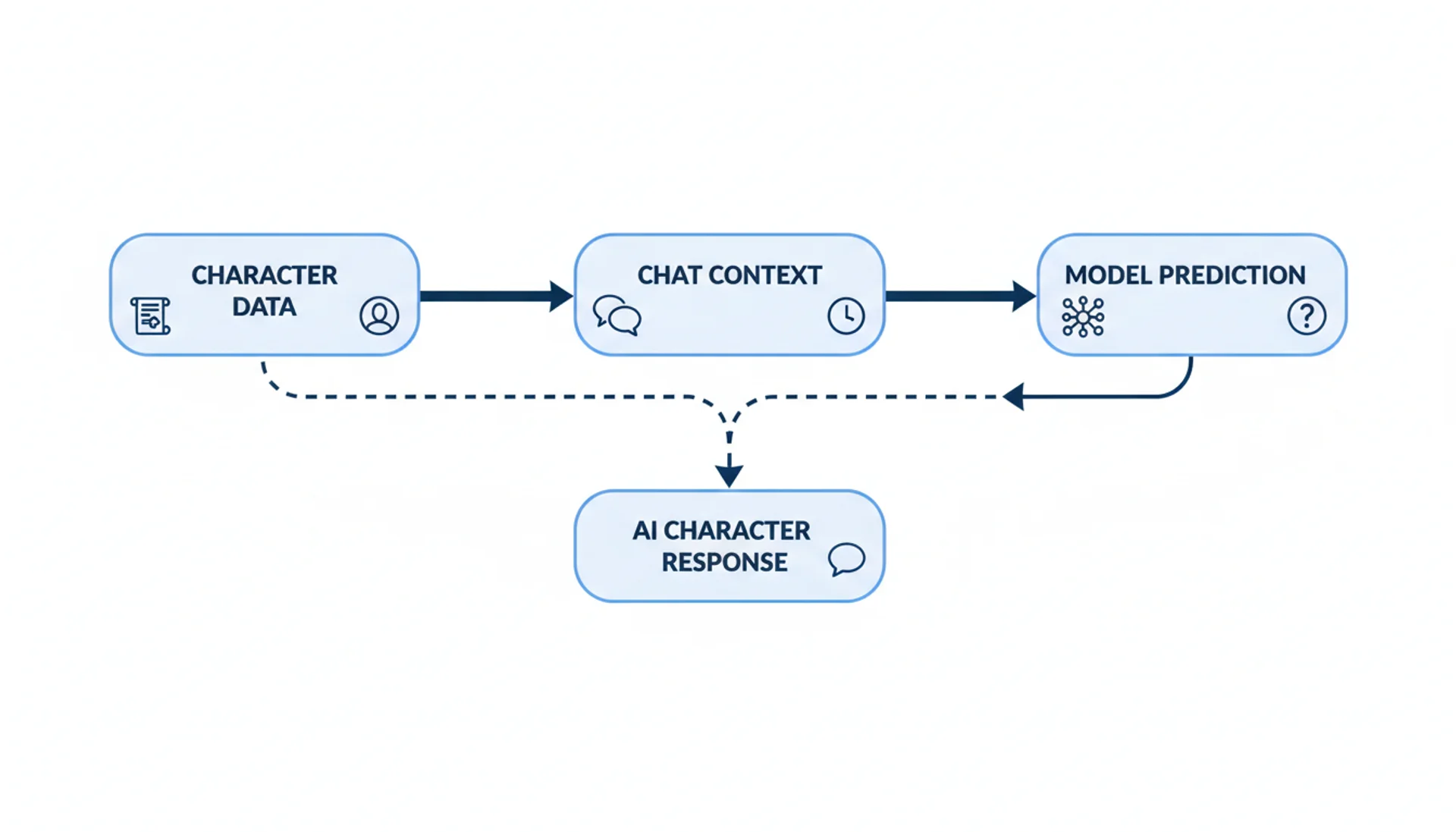
AI characters generate responses by combining three elements: character instructions, current conversation context, and model prediction.
This blend of setup and conversation helps produce dialogue that feels consistent, but context and clarity play major roles in shaping accuracy.
1. What Information Defines a Character
A character’s personality, background, speech style, tone, and relationships form its foundational traits. Sample dialogue examples help clarify the character’s voice, ensuring consistency in responses.
Clear and specific examples allow the AI to understand how to generate the character’s dialogue, making it feel more natural and real.
Vague or broad descriptions, however, can lead to inconsistent outputs. The clearer the guidance, the better the AI can respond accurately.
2. How Character Data is Turned Into Prompts
Character information is turned into structured instructions behind the scenes. These instructions dictate how the character should speak and behave, offering a consistent framework.
The AI uses this structured information to generate responses based on probabilistic language prediction, but it relies heavily on the clarity of the setup. Traits like “confident” aren’t simple on/off switches; they require specific descriptions for the AI to mimic.
If a character’s traits are unclear or overly general, the output can become weaker or less accurate.
3. How Context and Memory Shape Each Reply
Recent conversation history plays a significant role in shaping the character’s next reply. The AI adjusts its tone based on the context of previous messages, making interactions feel dynamic.
However, memory isn’t perfect; some details may fade or be forgotten over time. This inconsistency can lead to a character feeling sharp at one moment and vague the next.
The system constantly balances character instructions with evolving chat context, which can affect the clarity and consistency of responses.
4. Why Characters Sometimes Break Personality
Characters break personality when there’s a breakdown in the strength of their setup or a mismatch in conversation tone.
A vague character setup, drifting chat tone, or lack of consistent context can cause the AI to produce weaker or inconsistent responses. If the conversation veers too far from the original guidance, the AI may default to generic responses, which leads to personality breaks.
Stronger setups and more consistent context can help maintain the character’s voice throughout the chat.
What Character Cards Are and Why They Matter
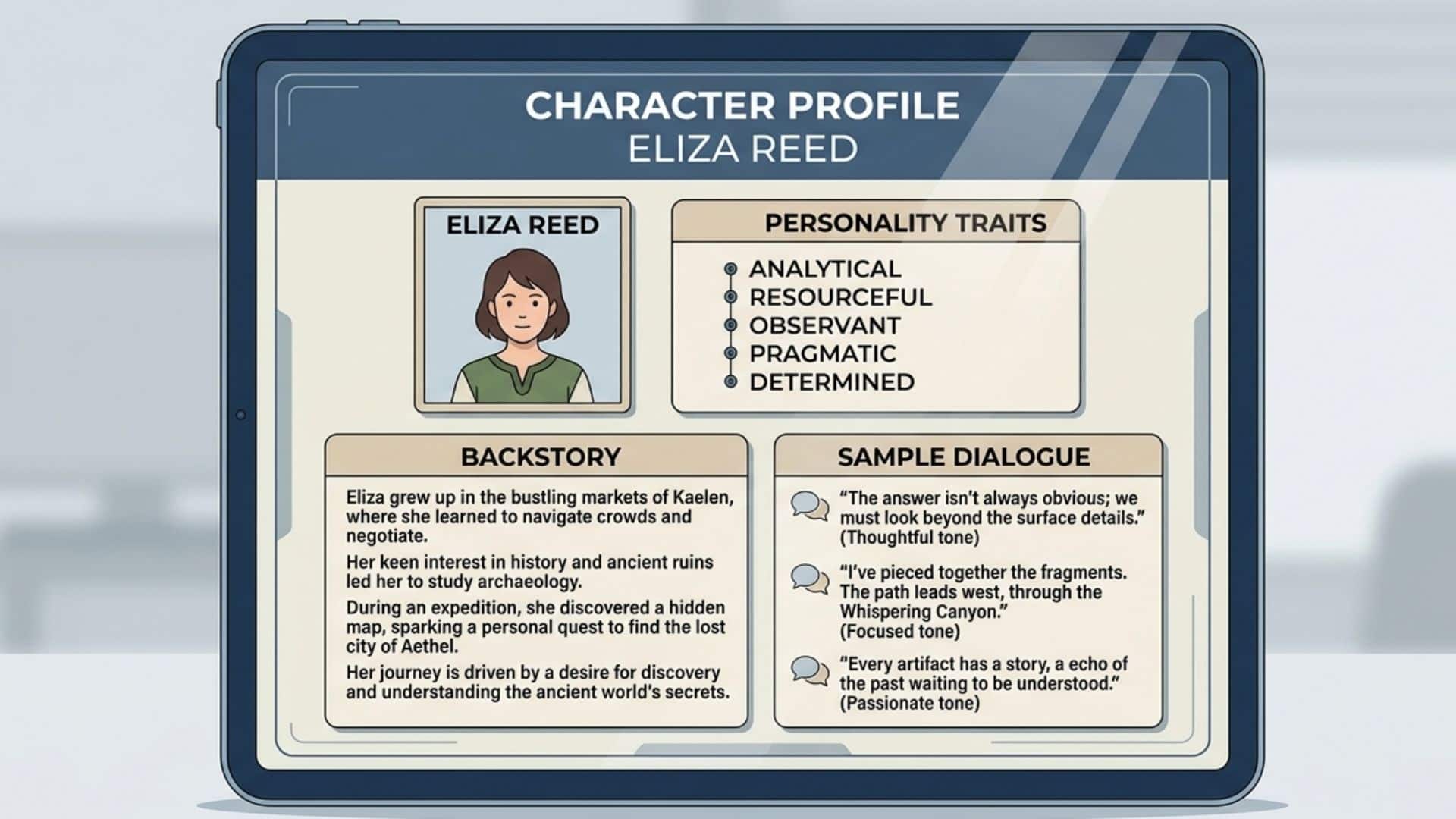
Character cards are key to shaping how AI characters behave in Character Tavern AI. They serve as behavior blueprints, defining how a character should act, speak, and respond during interactions.
When creating or importing a character, the character card provides clear instructions on its personality, tone, and overall behavior.
The strength of the character card directly affects the consistency and realism of the AI’s replies.
Well-structured cards lead to stable, engaging interactions, while weak or poorly defined cards can result in generic, inconsistent responses. Strong cards give the AI clear patterns to follow, shaping the character’s voice, emotional tone, and response style.
For example, a calm, formal character will respond in a controlled manner, while a chaotic, playful one will have a more unpredictable tone.
The more specific and consistent the card, the more aligned the character’s behavior will be with the initial design, ensuring clear and reliable interactions throughout.
How Conversations Change Over Time
Conversations in Character Tavern AI evolve as context and character interactions build. The nature of the chat can shift dramatically based on prior exchanges.
- Early conversations can feel focused and consistent.
- As the chat progresses, the character’s tone and responses may change.
- Small shifts early on can lead to noticeable personality drift later.
- Context from previous messages influences the behavior and direction of responses.
- A conversation may start strong, but as it grows, inconsistencies can appear.
As the conversation progresses, earlier context heavily influences the direction and tone of the AI’s responses, causing gradual shifts.
How Character Tavern AI Fits Into the Larger AI Chat Ecosystem
Character Tavern AI fits within the ecosystem by offering a platform where interfaces (like SillyTavern) use AI models for character-driven conversations.
Character Tavern vs. SillyTavern and the AI Model
Character Tavern, SillyTavern, and the AI Model serve distinct purposes, but they’re often confused. Here’s a clearer breakdown:
| Platform | Role |
|---|---|
| Character Tavern | A platform providing the environment for interaction. |
| SillyTavern | Interface/front-end for interacting with characters. |
| AI Model | The engine generates text responses. |
By understanding these roles separately, it’s easier to see how each part contributes to the overall user experience.
Why These Terms Get Confused So Easily
Users often treat platforms, interfaces, and models as the same thing because they focus on the final experience.
Behavior shifts can stem from changes in the character card, model, or context handling, which makes it tricky to pinpoint exactly what changed. Grouping all elements under a single term creates confusion about where the changes actually occur.
What Happens When You Use Multiple Characters
Using multiple characters can add a lot of complexity to conversations. More characters introduce more voices and roles, which can enrich or disrupt the flow. Here’s how it plays out:
- Group Setup Complexity: Managing multiple characters means handling different voices, roles, and interactions at once. The system needs to decide who speaks and how they differ.
- Clear Differences Keep Structure Stable: Characters with defined personalities, goals, and tones are easier to separate, ensuring smoother interactions.
- Overlapping Voices or Fading Characters: Similar character setups can cause voices to blend or one character to dominate, while others fade into the background.
- Decreased Coherence Over Time: As the chat progresses, the conversation can become crowded and unclear if roles aren’t well separated, leading to less coherence.
Using multiple characters may seem exciting, but without careful setup, it can quickly lead to confusion and less engaging conversations.
Wrapping Up
The key to getting a clear understanding of Character Tavern AI is to stop seeing it as one unified system. Instead, think of it as a layered structure where each piece plays its part in shaping the outcome.
The character card sets the foundation for behavior. The conversation itself influences how things play out in the moment. And the AI model is the engine that generates responses based on both.
Once you recognize this flow, those strange or unpredictable moments start to make more sense. Characters drifting, group chats breaking down, or some setups feeling more realistic, they all have clear reasons behind them.
By keeping this mental framework, you’ll be able to better read what’s happening and adjust your expectations without getting lost in the details.