
Type the “ahegao” into a few different platforms, and you’ll notice something quickly: the results aren’t consistent.
Some generators produce exaggerated anime expressions immediately. Others soften the output. A few block the prompt entirely. The variation isn’t random, and it isn’t clearly explained.
In my own testing across hosted image tools and local diffusion models, I’ve seen the same prompt generate a stylized expression on one platform and trigger moderation on another. The difference wasn’t the wording. It was where control was enforced.
Some tools create new anime faces from scratch, while others modify existing images. Some allow broader prompts. Others quietly block outputs before you ever see them.
Instead of relying on marketing language, let’s break down what’s actually happening and where those limits sit.
What is “ahegao AI” in The Context of Unrestricted Image Tools?
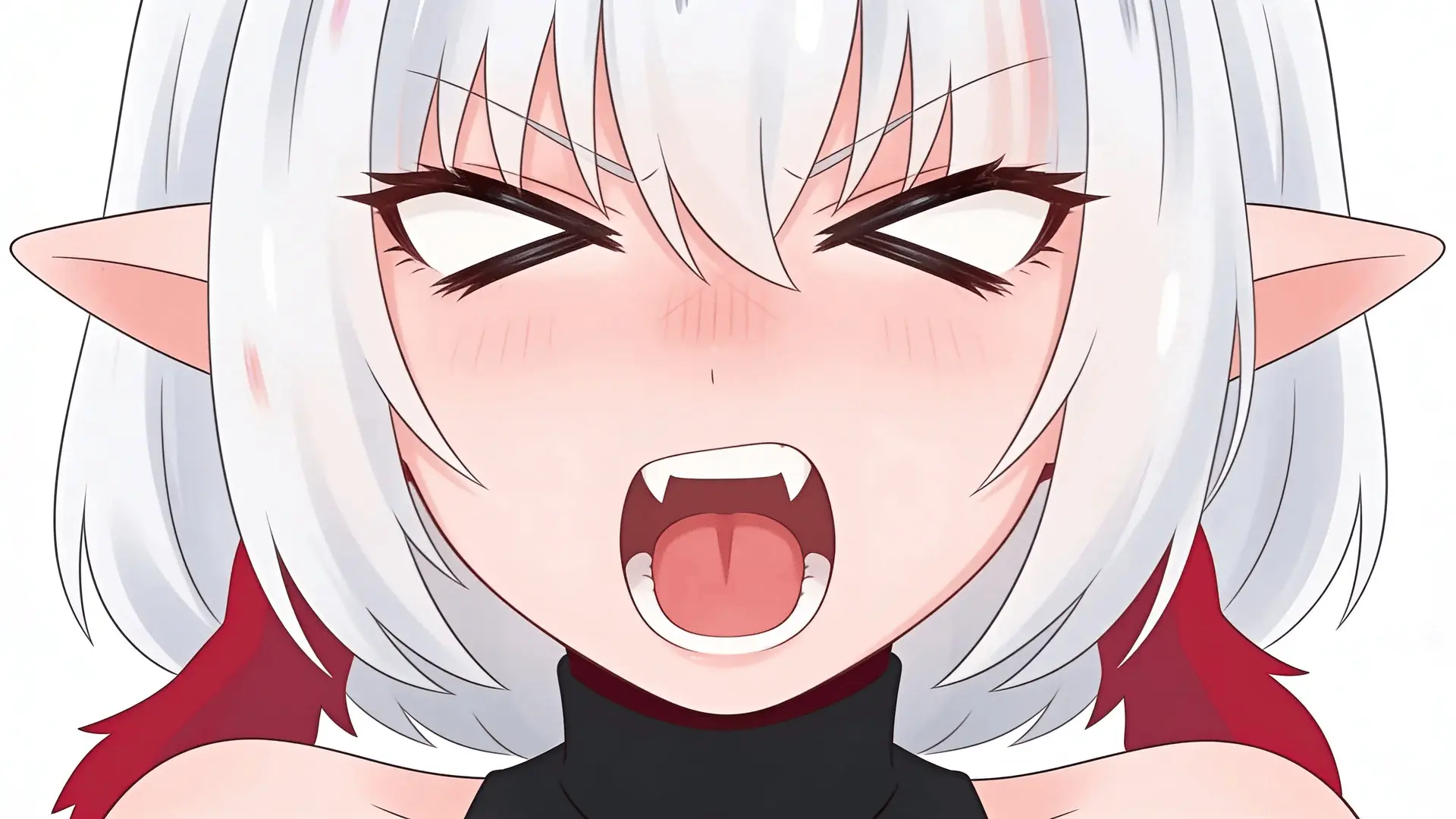
When people say “ahegao AI,” they usually mean one thing: an AI system that can generate exaggerated anime-style facial expressions with crossed eyes, open mouth, and highly stylized emotion.
But there are two separate layers involved: the visual style itself, and the system generating it. Those are not the same thing.
The Expression Style Itself (Visual Characteristics)
The expression is typically:
- Crossed or upward-rolled eyes
- Open mouth
- Exaggerated facial emotion
- Strong anime-style shading and line work
It’s not realistic anatomy. It’s stylized, and that distinction matters technically.
Stylized faces are easier for image models to exaggerate because they don’t have to match strict human facial proportions. A realistic portrait model may resist extreme distortions, while an anime-trained model may amplify them.
So the style bias in the training data directly affects the output.
Why It Appears Mostly Inside “Less Filtered” Image Platforms
This visual style often appears inside platforms marketed as “less filtered” or “unrestricted.”
That doesn’t mean the base model is inherently uncensored. It usually means:
- The platform allows broader prompts
- The moderation layer is lighter
- The UI does not block certain outputs
For a broader look at how image moderation works across different platforms, see AI generators with no filters, where filtering layers are examined more directly.
The important distinction is simple: the model may be capable of generating the expression, but whether you’re allowed to see it depends on the platform layer.
Model Capability vs. Platform Permission
An AI model is trained on image data and fine-tuned to behave in certain ways. Platforms can then apply additional moderation before or after generation.
So if a prompt is blocked or an image never appears, it doesn’t automatically mean the model lacks the capability. In many cases, the restriction sits at the platform layer rather than inside the model itself.
Where Limits Actually Apply in Ahegao-Style Image Generation
Limits in these systems can exist inside the model itself, inside the platform’s moderation layer, or within the hosting environment.
Sometimes the model is technically capable of generating a stylized expression, but the platform blocks the prompt or filters the output. When models are run locally, platform moderation disappears, though the model’s training still influences behavior.
If you want a deeper breakdown of how these layers interact, see the full explanation in AI with no limits.
How AI Image Models Technically Create Exaggerated Facial Expressions
Most tools generating this style rely on diffusion-based image models.
These models don’t “draw” the way a human does. They begin with noise, then gradually refine that noise into an image using learned statistical patterns.
Diffusion-Based Image Synthesis
A diffusion model works like this:
- Start with random visual noise
- Apply learned patterns to shape it toward the prompt
- Iteratively refine details
When you prompt an exaggerated facial expression, the model searches its learned visual space for patterns that match that style.
If the training data included many anime expressions, it can exaggerate eye position and mouth shape more easily. If not, it struggles.
Exaggeration dynamics like this also appear in other stylized outputs, including trends such as goofy AI images, where proportion and distortion drive the visual effect.
Training Data and Style Bias
The model’s ability depends heavily on:
- What styles it saw during training
- How often it saw them
- Whether those images were high quality
If a model was trained heavily on clean anime art, it will usually produce cleaner outputs. If it was trained on mixed community art, output may vary more widely.
That variability explains why some platforms produce sharp stylized faces while others look distorted or off.
Why Prompts Cannot Fully Override Model Conditioning
A common misunderstanding is that prompts control everything. They don’t.
Prompts guide the model within the limits of its learned space.
That’s why structure matters more than repetition. The mechanics behind stable visual control are outlined in the post on AI photo prompts.
If the model has a weak representation of extreme facial distortion, you can repeat the prompt twenty times and still get mild outputs.
Think of it like this: The prompt is steering the car, but the training data built the engine.
Types of Ahegao AI Tools and Where Control Lives
Not all tools operate the same way. The category determines where control sits. Here’s a breakdown of each:
1. Hosted Anime Image Generators
These are web-based tools that generate images on cloud infrastructure.
Strengths:
- Easy access
- No hardware required
- Optimized performance
Limitations:
- Moderation may still apply
- Usage caps may exist
- Output policies can change over time
2. NSFW-Focused Image Communities
These platforms typically allow broader stylized prompts and reduce visible filtering.
Strengths:
- Broader prompt tolerance
- Community-driven styles
Limitations:
- Narrow content focus
- Quality can vary
- Monetization layers often appear
3. Open-Source Local Diffusion Models
Here, you download and run the model yourself.
Strengths:
- No platform moderation
- Full configuration control
- Privacy remains local
Limitations:
- Requires a strong GPU and memory
- Model alignment still applies
- Setup complexity
4. Hybrid “Lightly Filtered” Platforms
These tools sit between mainstream providers and fully local setups.
Strengths:
- Balanced access
- Lower technical barrier
Limitations:
- Some filters remain
- Marketing may overstate freedom
Different categories shift control to different layers of the system. Hosted tools retain platform oversight. Local models shift hosting control to you. Hybrid systems balance flexibility with selective moderation.
The important distinction isn’t which tool sounds less filtered. It’s which layer of control you’re actually changing.
Why Results Vary Across Platforms
People often assume one generator is “better.” In most cases, the difference comes from structure.
Model Training Differences
Two platforms may use entirely different base models.
- One trained heavily on anime datasets.
- Another trained on general art plus safety fine-tuning.
Output style and exaggeration level will differ because the training differs.
Platform-Level Content Boundaries
Even with identical base models, platforms can apply different moderation thresholds.
- One may block certain prompts.
- Another may allow them but watermark the output.
That’s not model weakness. That’s policy.
Hardware and Inference Constraints
Local setups depend on:
- GPU power
- VRAM capacity
- Model size
Lower hardware capacity may force smaller models, which produce less detailed output.
Cloud systems may run larger, optimized models that deliver cleaner results. The variation often reflects infrastructure, not magic.
Risks, Boundaries, and Responsibility in Unrestricted Image Communities
Reduced filtering does not eliminate platform rules.
Hosted tools still operate under terms of service, and accounts can be restricted or suspended if those terms are violated. Even when moderation feels lighter, enforcement mechanisms remain in place.
Running models locally removes platform-level oversight, but it does not remove responsibility.
Control shifts to you. That includes how prompts are written, how outputs are stored, and how generated material is shared or distributed.
There are also infrastructure considerations beyond the model itself.
If unrestricted image generation is used in a commercial context, hosting providers, cloud services, and payment processors may apply their own policies. Reduced moderation at the model level does not override the legal and operational boundaries of the systems around it.
Freedom in tooling changes who manages the guardrails. It does not eliminate the guardrails entirely.
Choosing the Right Setup for Your Specific Goal
There is no universal best option for anyone. The right setup depends on what you value most.
| Priority | Best Fit | What You Gain | Tradeoffs | Where Control Lives |
|---|---|---|---|---|
| Convenience | Hosted platforms | Fast access, no setup, optimized infrastructure | Platform moderation, possible caps | Provider |
| Creative flexibility | Lightly filtered or niche platforms | Broader prompts, style tuning | Variable quality, policy shifts | Shared |
| Privacy & full control | Local open-source models | No platform oversight, full parameter control | Hardware cost, setup complexity | User |
The key question isn’t “Which tool has no limits?” It’s “Where do I want control to live in the stack?”
Wrapping Up
The idea of ahegao AI sounds straightforward: write a prompt, generate a stylized image, and move on.
In reality, the keyword isn’t what determines the outcome. The structure behind the tool does.
Some systems apply limits at the platform level. Others embed alignment directly into the model. Running locally shifts control to your hardware, but it doesn’t remove the model’s training constraints.
The boundaries don’t vanish; they move.
Once you understand where those limits sit, you can evaluate tools more clearly instead of relying on marketing claims.
Define what “freedom” means for your use case, then choose the setup that places control where you want it in the stack.
Frequently Asked Questions
What is an ahegao AI generator?
It’s an image model or platform that generates exaggerated anime-style facial expressions, either from prompts or by transforming existing images.
Are these tools truly unrestricted?
No system is completely unrestricted. Limits may exist at the model layer, platform layer, or hosting layer.
Can you run these models locally?
Yes. Open-source diffusion models can be downloaded and run on your own hardware, removing platform moderation but not model alignment.
Why does one generator block prompts while another allows them?
Because platform moderation policies differ, even when underlying models are similar.
Does prompt wording override model restrictions?
Not fully. Prompts guide generation, but the model’s training data and fine-tuning define its core boundaries.