


Most people hear about AI in business and assume it just means automation or chatbots. That’s where the confusion starts. AI isn’t only about doing tasks faster.
It changes how decisions are made, how work flows, and how companies operate day to day. That’s what makes it part of digital transformation, not just another tool.
What gets less attention is how AI actually works inside a transformation effort, what it connects to, what it depends on, and where it breaks down.
This post covers where AI fits, what it actually does, and how it drives real change across business systems.
How is AI used in Digital Transformation?
AI plays a key role in business change by turning large volumes of data into actions. In drovenio AI in digital transformation, the focus is on improving speed, accuracy, and decision-making across systems.
AI is applied across industries in a few core ways:
- Automating repetitive tasks
- Analyzing large datasets
- Personalizing customer interactions
- Improving internal workflows
- Enabling new digital products
All of these follow one principle: AI processes data and turns it into actions or decisions.
Unlike traditional automation, which follows fixed rules, AI learns from data and adapts when conditions change, enabling it to handle exceptions. Its effectiveness depends on data quality: structured data improves results, while poor data limits outcomes.
What Problems AI Solves in Digital Transformation
AI helps solve problems that traditional systems struggle with:
- Too much data: AI processes large volumes continuously and highlights what matters.
- Slow decisions: AI enables near real-time insights, reducing delays.
- Inconsistent customer experience: AI creates a stable baseline and allows personalization at scale.
- Inefficient workflows: AI identifies steps that waste time and add no value.
The key difference is how AI works. Traditional systems depend on fixed rules, while AI learns from patterns and adapts when conditions change.
However, AI depends on data quality. If the data is incomplete or biased, the results will reflect that. This makes data integrity a critical factor in any drovenio AI in a digital transformation strategy.
What Role Does AI Actually Play in Digital Transformation?
Digital Transformation vs. Digitalization
Digitalization and digital transformation are often treated as the same, but they differ in purpose and impact. The distinction lies in how data is used and what actually changes in the business.
 Definition
 Examples
 What changes
 Role of data
 Role of AI
 Depth
Depth
The practical implication: investing in AI before the underlying processes are transformed means building on a digitalization foundation — the data exists, but nothing is set up to act on it.
Where AI Fits in the Transformation Stack?
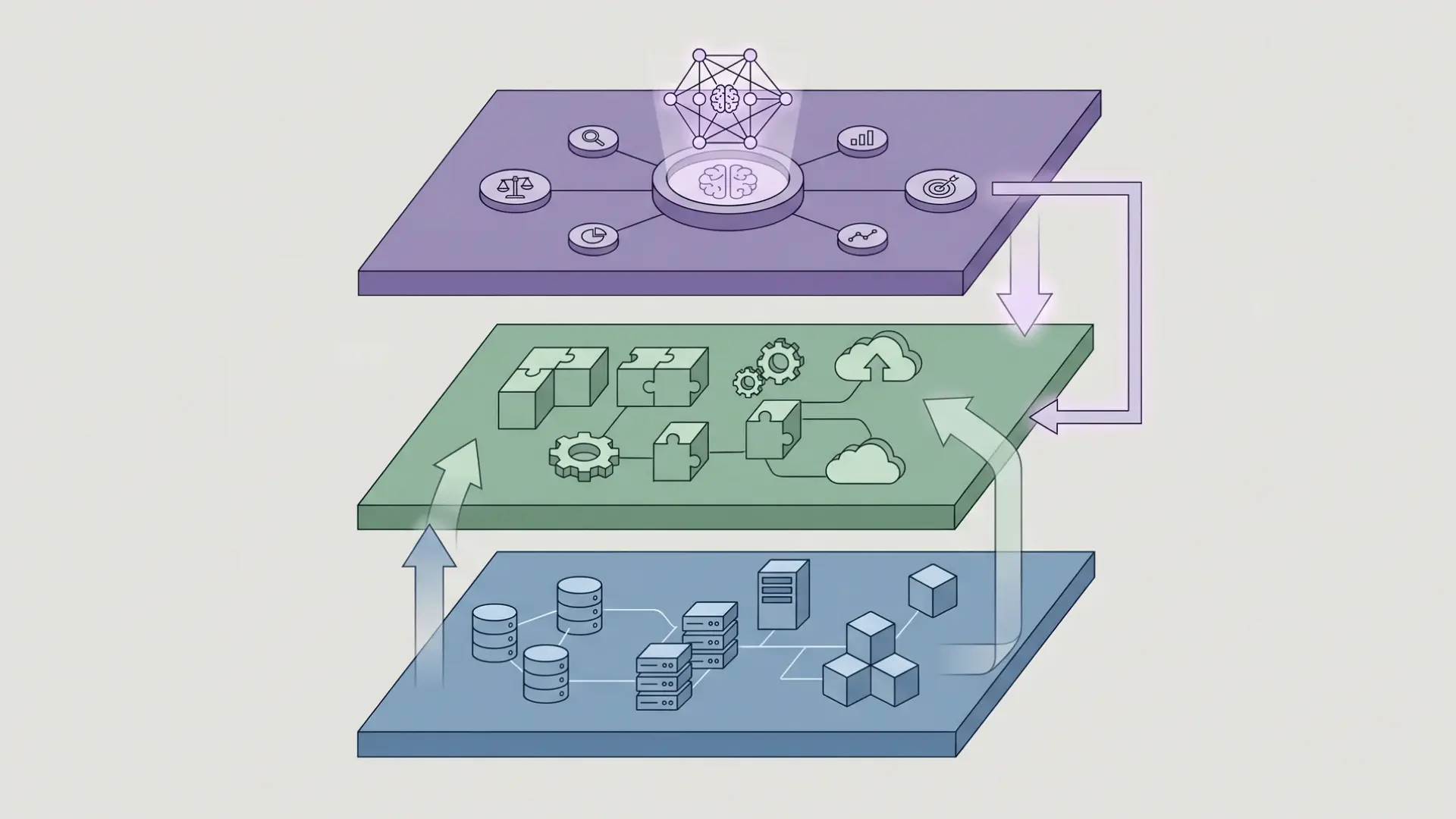
Business systems work in three layers: data, applications, and decisions.
The data layer stores information, the application layer is where users interact with tools, and the decision layer is where actions are taken.
AI mainly operates in the decision layer, using data to identify patterns and recommend or trigger actions. Its impact depends on the layers around it.
Weak or inconsistent data leads to poor outputs, and disconnected systems prevent AI insights from turning into action.
AI does not work alone. Its effectiveness depends on how well the entire stack is structured and connected.
Why AI is Considered a Core Enabler?
AI is called a core enabler because it supports transformation rather than driving it on its own. It helps businesses make faster decisions, apply consistent logic, and extract value from large volumes of data.
However, its impact depends on the systems around it. If data is unstructured or workflows are unclear, AI will produce unreliable results at scale.
Organizations see better outcomes when they first fix data quality, define processes, and align systems. AI then improves what already works instead of replacing the foundation.
Core AI Use Cases Driving Digital Transformation
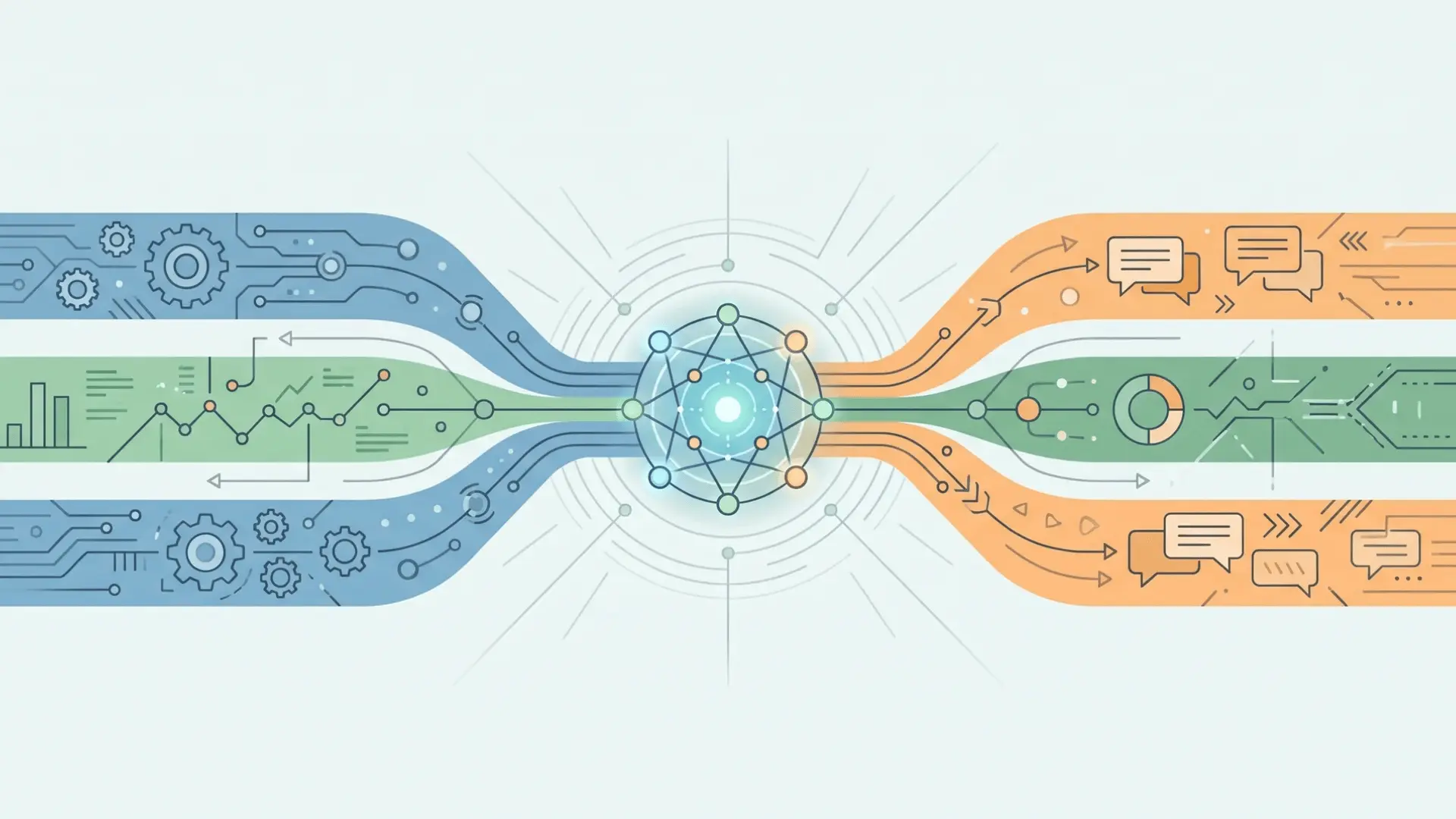
AI is applied in specific, practical ways across businesses. These use cases show where it has the greatest impact on digital transformation.
Automation of Tasks and Workflows
AI replaces repetitive work with systems that learn from data rather than follow fixed rules. The core technology is machine learning, models that improve as they process more inputs.
A common starting point is robotic process automation (RPA), which handles tasks like data entry, invoice processing, and report generation.
Combined with machine learning, RPA can handle more variable inputs than rule-based systems alone. Both work best with stable, structured data and need human oversight in unpredictable conditions.
Data Analysis and Decision Support
AI handles pattern-detection work like processing large datasets, surfacing correlations, flagging anomalies, and whatnot, while humans apply context and make the final call.
A model built on incomplete or biased historical data will miss patterns that were never in its inputs, which is why data quality determines output quality more than the model itself.
Customer Experience and Personalization
AI uses behavior data — clicks, purchases, session time, support history — to adjust what a user sees or hears in real time. The gap between useful personalization and irrelevant noise almost always traces back to data quality rather than the model.
Process Optimization and Efficiency
AI identifies where workflows stall: handoff delays, repeated approval steps, tasks that consistently run long. In structured, repeatable processes it can flag these automatically.
In less predictable environments, it surfaces the data and leaves the diagnosis to a human.
Innovation and New Business Models
Predictive maintenance services, dynamic pricing engines, and personalized content platforms all depend on AI processing continuous data streams.
Generative AI has expanded this further; businesses now use it to produce content, draft communications, and synthesize reports at scale.
In both cases, value depends on a steady, structured data supply.
Where These Use Cases Break Down
A retailer analyzing purchase history for real-time recommendations, a logistics company rerouting shipments before delays happen, a bank flagging unusual transactions as they occur; in each case, the value comes from structured data flowing into a system that can act faster than a manual process could.
Remove the data quality, and the use case fails regardless of the technology behind it.
How AI Changes Business Operations Internally?
AI shifts how work is done by changing processes, workflows, and roles. It moves businesses from manual effort to system-driven operations as follows:
From Manual Processes to Automated Systems
Before AI, tasks relied on manual effort or fixed rules. With AI, repetitive work is handled by systems that learn from data and adjust over time. This reduces manual workload and shifts focus to monitoring and managing systems.
From Rule-Based Workflows to Data-Driven Systems
Traditional workflows follow fixed steps. AI-driven systems adjust actions in real time based on data and changing conditions. This improves flexibility and efficiency, but also requires better control to manage complexity.
How Human Roles Change Alongside AI
AI reshapes roles rather than removing them. Humans focus on oversight, decision validation, and handling exceptions. A clear role definition is important to avoid confusion and maintain efficiency.
Overall, AI changes operations by shifting control from manual execution to data-driven systems, with outcomes depending on how well systems, data, and roles are aligned.
How AI Enables Data-Driven Decision Making?

AI supports decision-making through a clear, step-by-step process in which each step builds on the previous one. Weakness at any stage affects the final outcome.
Data Collection and Preparation
Data is gathered from systems, user activity, or devices. It must be cleaned, organized, and made consistent before AI can use it. Poor or incomplete data at this stage leads to unreliable results later.
Data Processing and Pattern Detection
AI models analyze the prepared data to find patterns and relationships. They learn how inputs relate to outcomes from training data. If training data is limited or biased, the model’s outputs will be less accurate.
Converting Outputs into Decisions
AI generates predictions or recommendations, which are then used by systems or people to take action. AI supports decisions but does not replace the decision process itself.
Where the Process Can Fail?
Issues can occur at any stage, such as poor data quality, incorrect model assumptions, or misreading the output. Even accurate models can lead to poor decisions if the results are used incorrectly.
Strong results depend on maintaining quality and clarity across all steps, not just the AI model.
How AI Improves Customer Experience In Digital Transformation?
AI improves customer experience by using data to understand behavior and respond in real time. Its impact depends on how accurately it can track and interpret user activity.
- Understands customer behavior: AI tracks user actions like clicks, purchases, and interactions to identify patterns and preferences. Its accuracy depends on consistent, up-to-date data, and it may lag when behavior changes.
- Enables real-time personalization: AI uses past and current data to predict user needs and adjust content, recommendations, or responses in real time. This depends on continuous data flow, and gaps can reduce accuracy.
- AI experiences fail with weak data or context: AI fails when data is incomplete, context is missing, or predictions are too broad, leading to irrelevant or repetitive experiences.
Overall, the quality of customer experience depends on data accuracy and how well AI systems are designed and maintained.
Why AI Leads to Innovation and New Business Models?
AI drives innovation by turning data into usable outputs that support new offerings and ways of delivering value. Its impact depends on how well data, systems, and use cases are defined.
AI Enables New Products and Services Built on Data
Businesses use it to create offerings such as predictive services, automated support, and real-time insights. These rely on continuous data input and processing to stay accurate and relevant. Without a steady stream of data, their value drops quickly.
Data Becomes a Strategic Asset when Reused Effectively
Data gains long-term value when it can be applied across multiple systems and decisions. AI converts raw data into actionable insights, and structured data increases consistency, scalability, and usefulness over time.
AI Fails to Drive Innovation without the Right Foundation
AI does not create new value if data is limited, use cases are unclear, or systems are disconnected. In such cases, it only supports existing operations instead of enabling new business models.
AI leads to innovation only when supported by strong data, clear use cases, and connected systems. Without these, it adds efficiency but does not create new value.
Limitations of AI in Digital Transformation
AI offers clear benefits, but its effectiveness is limited by data, systems, and the suitability of the use case. Understanding these limits helps set realistic expectations.
- AI depends heavily on data quality: AI systems rely on accurate, complete, and unbiased data to perform well. Poor data quality leads to flawed outputs, making it a major constraint.
- Integration with existing systems is critical: AI must connect with current tools and workflows to deliver value. Disconnected systems prevent AI insights from turning into action.
- Human oversight remains necessary: AI requires monitoring to validate outputs and handle exceptions. Without oversight, errors can scale and affect decisions.
- AI has limited value in certain scenarios: Itperforms poorly in low-data environments, unpredictable processes, or situations requiring deep human judgment. In such cases, traditional methods may work better.
AI delivers results only when used in the right context, with strong data, connected systems, and human involvement.
Wrapping Up
AI in business is often talked about as a magic solution, but that’s not how it works in practice.
It’s a system that depends on data, structure, and decision-making. When those pieces are in place, AI can change how a company operates from the inside.
Understanding AI’s role in digital transformation comes down to seeing this shift clearly. It’s not about tools or features. It’s about how data moves through a system and turns into action.
Keep that picture in mind and everything else becomes easier to follow. From automation to decision-making, it all connects back to that flow.
Frequently Asked Questions
How is AI used in digital transformation?
AI automates tasks, analyzes data, improves decision-making, and personalizes experiences by processing large volumes of information and turning it into actionable outputs.
Why is AI important for digital transformation?
AI is important because it enables faster decision-making, better data use, and more flexible systems, which support changes in how businesses operate.
How does AI improve decision-making?
AI improves decision-making by analyzing data patterns, generating predictions, and providing insights that help humans or systems choose better actions.
How does AI enhance customer experience?
AI enhances customer experience by analyzing user behavior and delivering personalized interactions, recommendations, and support using real-time and historical data.