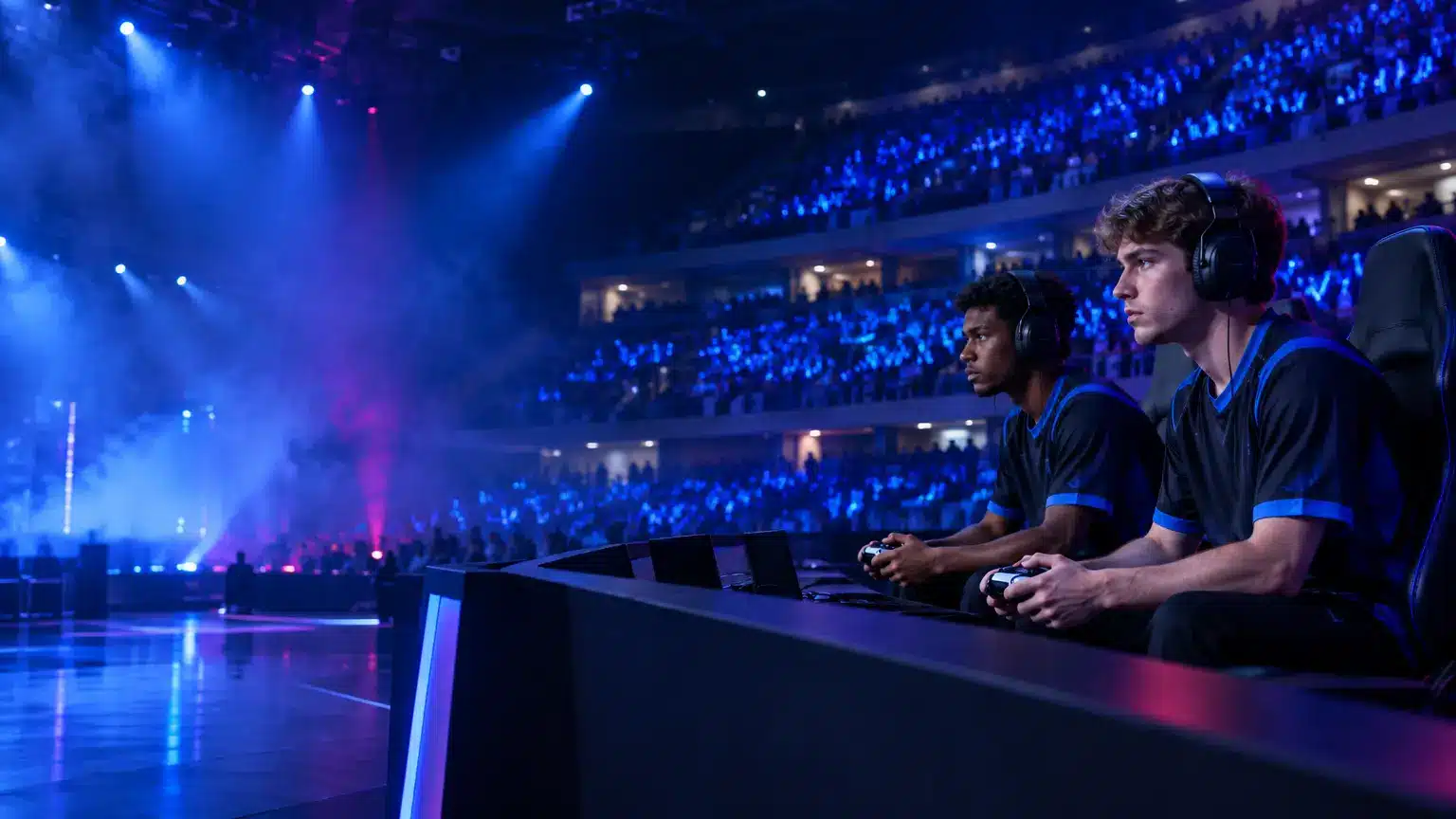
Playing a match with friends on a weekend feels very different from watching a packed arena cheer for professional players. Qualification routes, tournament brackets, standardized rules and live broadcasts all play a part in turning a video game into a competitive sport.
Differentiating Competitive Gaming From Casual Play
Esports explained in plain English comes down to scheduled competition in video games, with a winner at the end. The Network of Academic and Scholastic Esports Federations describes esports as organized and multiplayer video game competitions that run online. Many include live commentary and prize money for competitors.
Everyday online play runs on matchmaking, the system that pairs you with other players. You can usually jump in and out whenever you like, and a result typically earns a rank or bragging rights.
Think of casual video gaming as a pickup basketball game at the park versus esports as a league with referees and a playoff schedule. Competitive gaming adds a path toward a title that makes each outcome count toward something bigger.
How Competitive Gaming Became Standardized
Stakes need consistent rules to mean anything. Imagine winning a tournament, then learning the next one bans your best tactic. When every organizer writes its own rulebook, results become hard to compare. A governing body, which is an organization that sets standards for a field, helps close that gap.
The International Esports Federation is the global governing body for esports. Founded in 2008, it brings together over 150 national federations. Its goals include setting standards, promoting fair play and protecting athletes. Beyond the rulebook, it also describes building pathways for gamers to represent their countries internationally.
How Esports Tournaments Work From Qualifiers to Finals
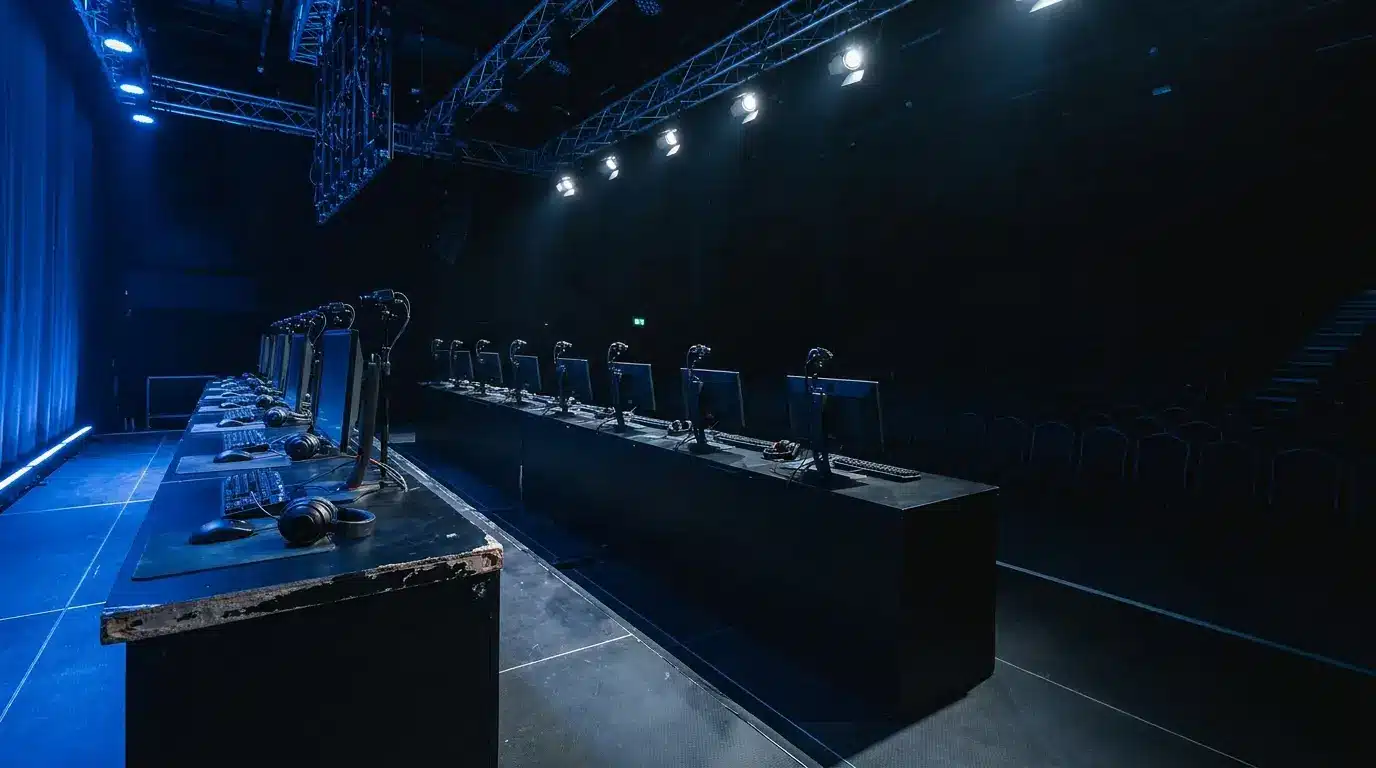
With shared rules in place, tournaments still need a way to choose who plays. Players or teams earn a place through qualification, which involves proving themselves before the main event. The TEKKEN World Tour 2026 Global Finals fills its final bracket through routes that include:
- Group stages: Players who advance out of the Global and Regional Group Stages earn a spot in the final bracket.
- Leaderboard rankings: The top four players from the Global Leaderboard Rankings also qualify.
A third route is the last chance qualifier, a safety net that gives players who fell short a second shot. TEKKEN will hold its qualifier on January 16, 2027, as part of Evo Singapore 2027 at Marina Bay Sands in Singapore. Anyone who missed the Global Finals field or exited in the Group Stages is eligible to enter. The Last Chance Qualifier winner advances directly to the Global Finals’ final bracket on January 17.
Understanding Tournament Bracket Formats
After qualification, players enter a bracket, a chart that maps out every match and shows who faces whom. Single and double elimination illustrate how esports tournaments work from the first round to the last.
Single-Elimination Brackets
In single elimination, you’re out after one loss. An eight-player bracket needs just three rounds to crown a champion, covering the quarterfinals, semifinals and final. Because it requires fewer matches than double elimination, this format generally finishes faster.
Double-Elimination Brackets
In double elimination, you’re out after two losses. A first loss sends a competitor to a losers’ bracket, a second path back toward the final. That cushion can protect players from one bad match, though the format takes more matches to finish.
How GeoGuessr Shows Casual Game Can Go Competitive
Competition can grow around games that seem casual, and GeoGuessr is a good example. It drops players into a Street View location and asks them to guess where they are on a map. The GeoGuessr World Championship began in 2023 as the World Cup and was renamed in 2025. The 2025 edition reportedly offered a prize pool above $100,000, and Radu Casapu took the title.
In the Duels format, two players see the same location under a time limit. Whoever guesses farther from the correct spot takes damage based on that distance. Rule sets also change how much freedom players get, and GeoGuessr offers three main movement options:
- Moving: Players can travel through the scene and look around.
- No moving: Guesses come from wherever the round begins.
- Fixed camera: The “No Move, Pan or Zoom” mode locks the camera, making it the most restrictive of the three.
Add a time limit, movement rules and head-to-head scoring, and a casual game can become a skill-based contest. Shared limits and ranked results give every player the same yardstick.
Why Live Broadcasts Make Esports Feel Like a Real Sporting Event
On top of qualifiers, brackets and rules, a live broadcast can give a tournament the feel of a televised game. Without commentary explaining each turning point, a match can seem like watching a stranger’s screen. Add production planning and a Twitch stream, a live video feed on a popular streaming platform, and it starts to look like a broadcast.
Students in Ohio University’s live esports broadcasting program get a close look at that work. They learn to schedule ads and breaks between matches, keep broadcasts on time and manage shout-outs for corporate partners. Other duties include running programming on the official OHIO Esports Twitch channel and preparing the arena for live events. They do all of it alongside fellow student broadcasters under the director of esports.
Ready to Watch Your First Esports Tournament?
Esports can earn the label of sport when qualification, standardized rules, bracket structures and broadcast production work together. Video game enthusiasts can pick an upcoming tournament and follow a player from the first qualifier to the final match.