
You are three chapters into a haunted-house story. The thing in the cellar has one rule: it cannot cross salt. You ask your AI assistant for the next scene, and it has the creature step over the salt line, explain its whole origin, and apologise to the family. Two thousand words of careful dread, gone in one reply.
That is the real test for any AI writing tool when the genre is horror. Most general chatbots can write a spooky paragraph. Far fewer can hold back a reveal, remember the rules of a monster across a whole book, and let you decide when the door finally opens. Before you pay for a subscription, it helps to know which tools can do that and which ones only sound atmospheric in a demo.
This guide compares seven AI writing tools for horror fiction, from story generators with lore systems to editors that check a finished draft for slips. Each entry covers what the tool does well for slow-burn fear, where it falls short, and what it costs, so you can pick the one that fits the way you write.
Five filters shaped the ranking.
- Real-time steering: can you redirect a scene while it is being written, not only after?
- Lore persistence: does a Codex, Story Bible or Lorebook bring back the right facts at the right moment?
- Slow-burn pacing support: do the features help you delay a reveal instead of rushing it?
- Long-form practicality: how large is the context window, how are projects organised, and how much setup does the tool need?
- Transparent pricing: can you see what you will pay before you commit?
Lore retrieval matters more than raw context size. A horror novel depends on small facts that return at the right moment: the name carved into a door, the hour the bells stop, the one thing a ghost cannot do. A tool that brings back only the lore a scene needs keeps those facts sharp without flooding the model with every note you ever wrote.
The evidence for each entry comes from the vendors’ own documentation, help centres, changelogs and current pricing pages. No numeric scores appear here, because no public benchmark yet measures horror-specific needs such as tension, restraint and rule consistency at novel length.
Quick Reference Table
| Tool | Best for | Lore system | Steering style | Pricing model |
|---|---|---|---|---|
| DreamGen | Overall balance | Scenario Codex | Inline instructions | Credits + tiers |
| Sudowrite | Scene craft | Story Bible | Scene prompts | Flat monthly |
| NovelAI | Fine control | Lorebook | Retry and sliders | Three tiers |
| Novelcrafter | Series canon | Codex | Prompt + Codex | Subscription + own AI key |
| FireQuill | Continuity checks | Story Bible | Director’s Mode | Tiered plans |
| AI Dungeon | Playable scares | Plot Essentials + Story Cards | Turn by turn | Free tier + paid tiers |
| Claude | Manuscript critique | Project files | Chat revision | Free tier + paid tiers |
1. DreamGen: Best Overall for Steerable, Lore-Heavy Horror
DreamGen is built for fiction and role-play rather than general chat, and that focus shows in how it handles dread. The AI story generator tool sits inside a platform with two connected workspaces: Story Writing Mode for continuous prose and Role-Play Mode for live, multi-character scenes. Both read from the same Scenario Codex, so whatever waits in the cellar in chapter one still obeys the same rules in chapter nine.

The DreamGen dashboard, with Role Play and Write Stories side by side
The Scenario Codex works as a personal story bible for characters, places, items and lore. For horror, this is the feature that matters most. You can write down the creature’s three rules, the town’s buried history and the one secret the narrator does not know yet, and DreamGen brings those entries into a scene only when they are relevant. The reveal stays hidden until you decide it is time.
Steering happens in real time. You can add an instruction in the middle of a scene to slow a reveal, move a frightened character to another room, or cut an explanation that arrived too early. You do not need to rewrite the whole prompt to change direction. For a fresh project, the Scenario Wizard sets up the location, the cast and the logic of the threat, and you then adjust the details yourself.
Role-Play Mode supports multi-character scenarios, which suits ensemble horror: a group of friends in a cabin, a crew on a failing ship, a family that does not trust each other. Each character keeps a separate voice while the scene builds. The public scenario library is SFW, so you can start from shared material and keep the tone on atmosphere rather than shock.
Pricing is organised as an entry tier with monthly credits, then Starter, Advanced and Pro plans. The context window grows with each tier, from 5,000 tokens on Starter to 30,000 tokens on Pro, and Pro subscribers also get discounted access to selected third-party models.
Where it falls short: the smaller context on the lower tiers can feel tight on long drafts, so the Codex does more of the work there. DreamGen also has no dedicated mobile app, although the website works on a phone.
Choose DreamGen if you write ensemble scenes, want strict lore consistency, and like to control the pace of the tension without starting your prompts over.
2. Sudowrite: Best for Scene Craft
Sudowrite works like a tireless line editor. Put in a chapter and its Write tool reads a large part of your draft before it adds the next beat, so the continuation follows your rhythm, sharpens foreshadowing and adds sensory detail without breaking your voice.
Its Story Bible holds character profiles, world rules and the things that must never happen. Each continuation checks against those pages, so the possessed doll stays wooden and the locked door stays shut. When you need polish rather than new text, the Describe and Rewrite tools tighten pacing, replace clichés and vary sentence rhythm line by line.
Sudowrite also offers Muse, a model trained for fiction, which aims to avoid the flat tone of general-purpose AI prose.
Pricing is simple: every tier opens the full toolbox, and higher tiers add more generation credits. Current plans start at about $10 a month billed annually and rise to about $44. Heavy drafting uses credits quickly, so many novelists choose the middle plan. Keep the Story Bible tidy, because Sudowrite follows whatever you put into it. There is no role-play mode for live ensemble improvisation.
Choose Sudowrite when the texture of the language is your first priority and interactive scenes can wait.
3. NovelAI: Best for Granular Generation Control
NovelAI is a tool for writers who like to adjust every setting. The centre of that control is the Lorebook: entries that activate only when their keywords appear in the text. You can make a rumour about a candle appear only on the third midnight, or keep a cult’s chant hidden until a victim speaks its name.
Two other features support tone. Memory stores permanent facts, and the Author’s Note pins style instructions, so each continuation keeps the same close, tense feeling. After each generation you can press Retry, change the randomness settings and watch the same scene branch in different directions. This is a useful way to test how much dread a scene can hold without breaking canon.
Context grows by tier. On the top Opus tier, NovelAI’s documentation lists a context of up to 28,672 tokens, which is enough to keep a novella’s setups and payoffs in view.
Pricing runs from Tablet at $10 a month to Scroll at $15 and Opus at $25. Expect a learning curve. Temperature, sampling and Lorebook settings take practice, but once they are tuned, NovelAI becomes a flexible co-writer that does not forget which corridor still smells of smoke.
4. Novelcrafter: Best for Complex Canon and Series Planning
Novelcrafter treats continuity like a database. Its Codex lets you file every rule, relic and rumour, then highlights each mention in the manuscript, so you can see at once when a symbol changes shape or a character learns a secret too early. Progressions add timeline tracking, so you can chart a curse’s spread or a house’s decay across several books.
The Novelcrafter homepage
AI generation in Novelcrafter works with a model you connect yourself. You link an AI provider with your own key, and Novelcrafter sends the relevant Codex entries with each request. The plans are:
- Scribe, about $4 a month: the writing tool with unlimited books and series management, without AI.
- Hobbyist, about $8 a month: adds AI through your own provider key.
- Artisan, about $14 a month: adds AI chat and advanced review tools.
- Specialist, about $20 a month: adds collaboration and priority support.
Model usage is billed by your provider, so budget for both the subscription and the token fees. Because you choose the model, the context size depends on that model, not on Novelcrafter.
Choose Novelcrafter if your horror spans generations, cursed family lines or parallel timelines, and you are comfortable connecting the engine that runs it.
5. FireQuill: Best for Spotting Logic Slips
FireQuill is built around continuity. You load your chapters, keep your rules in its story bible, and plot and continuity validators flag contradictions when the draft starts to drift. Director’s Mode generates the text paragraph by paragraph and stops at each creative fork to offer several directions, which suits horror writers who want to choose each turn of the screw themselves.
The pricing page shows a free starting plan and paid tiers from about $10 a month, with more capacity at higher levels. Try FireQuill when your plot twists are already tangled and you need an assistant that keeps every locked door, cursed relic and blood pact consistent to the last page.
6. AI Dungeon: Best for Interactive Horror Adventures
AI Dungeon turns horror into a text game. The story moves turn by turn. Plot Essentials pins the core facts to every response, and Story Cards appear only when their keywords come up, like props that slide onstage at exactly the right moment. A memory system summarises earlier scenes and brings them back when they are relevant, so a scream heard in room two can echo when the attic door opens in room ten.
Context is shared between the essentials, recent history, active cards and retrieved memory. Higher tiers give a larger context, and when space runs short, lower-priority text is cut first so that the core lore stays in place.
AI Dungeon has a free tier, and paid tiers add stronger models and more memory. The raw output is conversational, so you will need to revise it into finished prose. But if you want readers, or yourself, to explore a story from the inside, AI Dungeon hands them the flashlight and locks the exit behind them.
7. Claude: Best for Psychological-Horror Planning and Critique
Claude works less like a co-author and more like a story analyst. You can add a full manuscript and your notes to a Project, and Claude uses those files as reference for every conversation in that Project. Ask it to find every scene where the narrator doubts her own memory, and it pulls the relevant passages and suggests precise edits that keep the cracks hidden.
That strength suits psychological horror, where consistency depends on quiet callbacks and unreliable memories. Paste in an act and ask for pacing notes, and Claude can suggest tighter chapter endings without you rereading two hundred pages. There is no built-in lorebook, so you must keep your own files and timelines, but Claude will cross-check them as often as you ask.
Claude has a free tier with limited usage, a Pro plan at about $20 a month and Max plans from about $100 a month for heavier use. Choose Claude when the draft already exists and you need a patient editor to track motifs, flag continuity slips and suggest new angles.
Conclusion
Good horror depends on what stays hidden, and the right AI writing tool protects that secrecy while it follows your rules. Here is the short version:
- DreamGen balances live steering with a strong lore system and ensemble scenes.
- Sudowrite polishes each line of a scene.
- NovelAI gives fine control over every generation.
- Novelcrafter protects large, multi-book canon.
- FireQuill catches logic slips before a reader does.
- AI Dungeon turns fear into a playable story.
- Claude reviews a finished draft with calm precision.
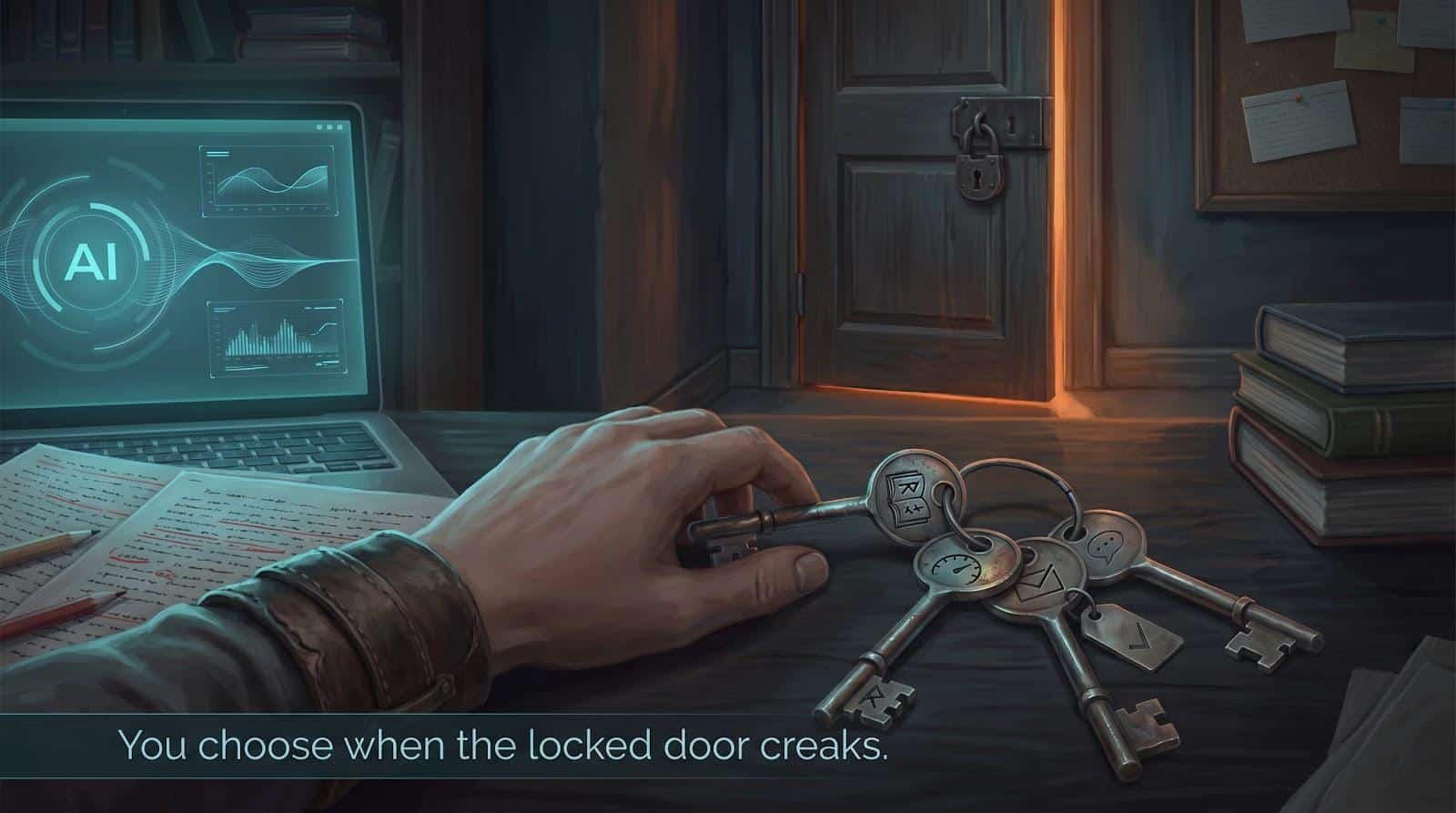
Before you subscribe, run a simple three-prompt test. Give each tool the same premise, one strict rule and an unfinished scene. Ask for three continuations, then note which tool keeps the rule, holds the tension and leaves the right questions open. Pick the one that lets you, not the algorithm, decide when the locked door finally creaks.