

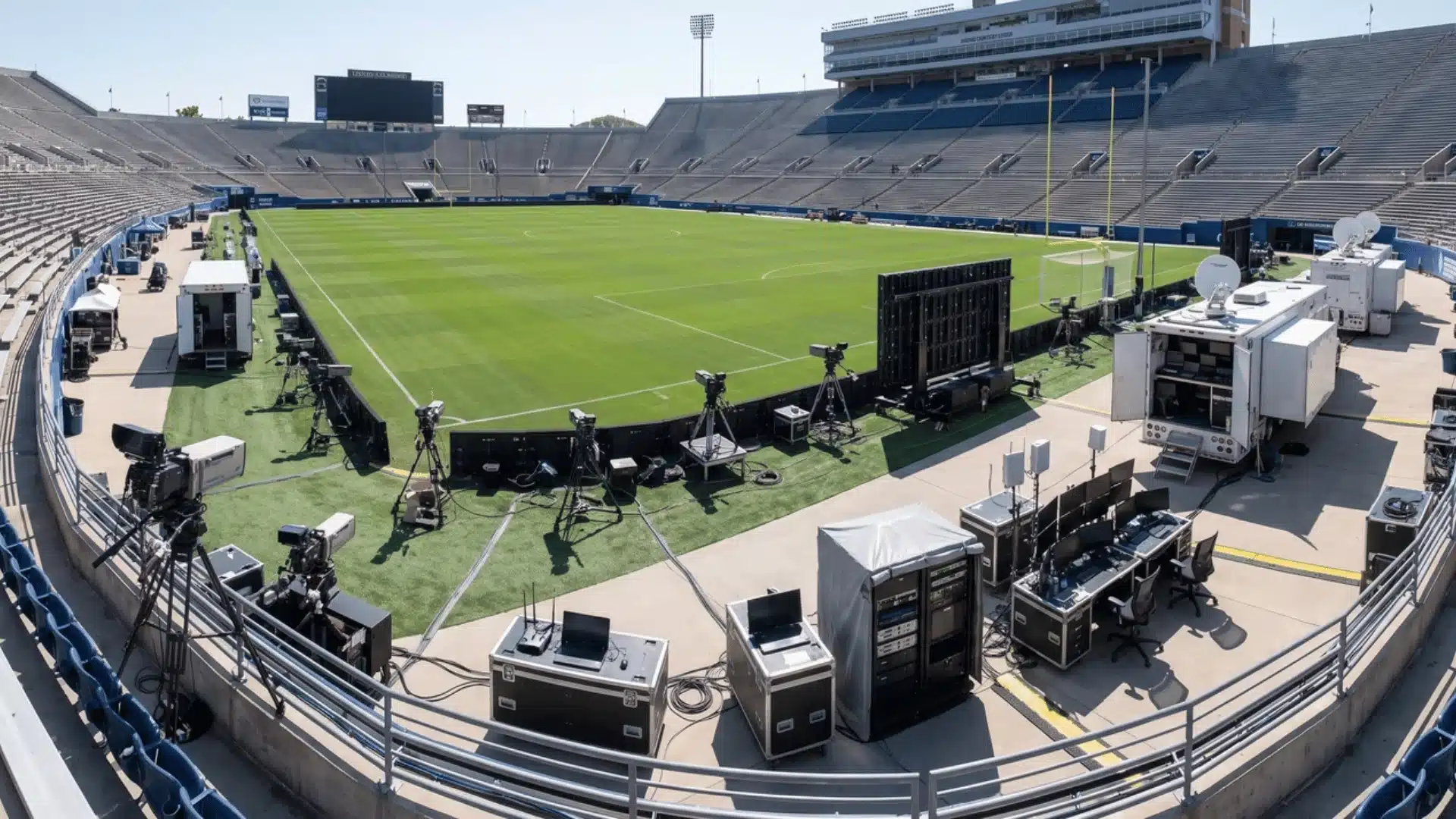
How much of a modern sports game is still decided by people alone? Every year, more of the answer comes from a screen, not a person.
Automated calls, AI-driven data, and immersive broadcast tech now shape how leagues operate and how fans watch.
Sports tech news is the beat that tracks all of it: officiating, data deals, broadcast tech, and investment.
I’ve covered fast-moving beats before, and this one changes shape every few months. It helps separate real shifts in how sports operate from short-lived tech hype.
Here’s what the term covers, what’s driving it right now, where investment is heading, and where you can follow it.
What Is Sports Tech News?
Sports tech news covers how technology changes professional sports: officiating, player tracking, analytics, broadcasts, stadium tech, and fan experience. It skips consumer gadgets and game highlights.
One tracking system often does three jobs at once. The same cameras that flag a pitch’s location can feed a broadcast graphic and get sold as licensed data.
I’ve seen people assume this beat is just gadget reviews. It actually reads more like business journalism with a technical edge, and that catches newcomers off guard.
If you’ve only followed sports through highlight reels, this framing takes some adjusting to.
Sports tech news differs from sports science and fitness tech. Sports science studies the body; fitness tech targets everyday users.
This beat covers the business of pro sports, not the biology behind it.
What Does Sports Tech News Cover Right Now?
Sports tech news moves fast right now. It’s concentrated in a few areas that are genuinely changing how the industry runs.
Knowing those areas helps you follow the beat and skip the noise.
How Does Automated Officiating Technology Work?

Major League Baseball’s Automated Ball-Strike Challenge System is the biggest officiating story right now. T-Mobile provides the connectivity that keeps the review fast.
Here’s how it works: an umpire makes the call. A player or manager can challenge it.
The challenge triggers a review from a camera and sensor system that already tracks pitch location for every pitch thrown. That system checks the umpire’s call against the ball’s actual path and returns a verdict in seconds.
I’ve watched leagues test tech like this before, and the sticking point is always trust, not accuracy. This isn’t full automation.
Human umpires still make every initial call, and the technology only steps in when someone challenges it.
That distinction is what makes other leagues comfortable watching this rollout. If you’ve sat through a slow replay review in other sports, this challenge system feels fast by comparison.
The same tracking approach is scaling up fast. At the 2026 World Cup, AI-powered tracking and automated 3D replay now support referee decisions on a much bigger stage.
Player tracking runs on a separate layer entirely. Cameras and sensors around a venue capture position, speed, and movement in real time.
That data feeds coaches, broadcasters, and data partners, often from the same source.
How Are Leagues Using AI Data Partnerships?

Genius Sports and the Pac-12 Conference just signed a deal that shows where this beat is heading. Genius Sports is rolling out its GeniusIQ platform across every Pac-12 football and basketball venue.
The deal covers data integrity, fan engagement, and AI-driven insights. It’s an infrastructure agreement, not one single use case.
Sportradar operates in the same space. I’ve seen the two called rivals, but they do the same job.
Both sit between leagues and the broadcasters, sportsbooks, and platforms that need official data.
Here’s the logic: leagues hold exclusive rights to their own data. Data companies license it and build products on top.
AI is what makes those products worth more, and worth more to license. If you’ve wondered why so many conferences are signing these deals, that’s why.
How Is Broadcast and Fan Technology Changing?
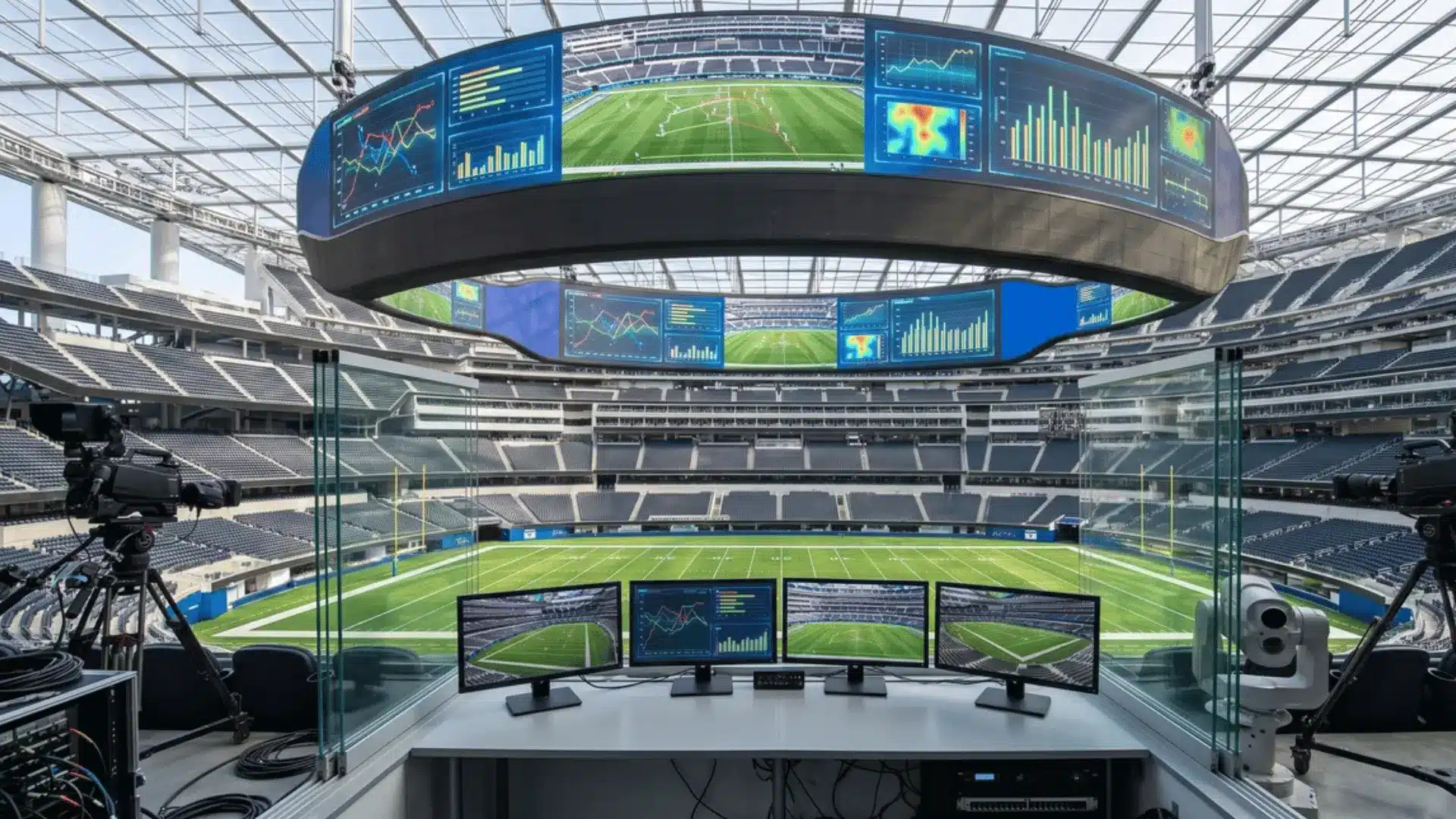
Fan-facing technology is its own track, separate from officiating and data deals, and it’s quietly become just as important.
High-definition displays and data-driven broadcast graphics now shape how fans experience a game, in the stadium and at home.
Augmented reality overlays, real-time stats built into the broadcast feed, and large-format LED installations inside venues aren’t experimental anymore. I’ve seen venues built entirely around this idea rather than adding it as an afterthought.
Sony’s $100 million investment in Cosm is the clearest example of where that money is going. Cosm builds dome-shaped venues that put fans inside a shared, immersive version of the broadcast.
This is the part most people miss: fan technology gets less coverage than officiating or data deals. But the money behind it is just as real.
If you’ve noticed stadiums adding giant screens and immersive viewing rooms lately, this is why. It connects directly to how leagues justify what media rights are worth.
Where Is Investment in Sports Tech Heading?
where-is-investment-in-sports-tech-heading
Investment activity is part of this beat too, not just background noise around the technology itself. It shows where money is flowing before products reach the field.
Outlets track funding rounds, acquisitions, and startup activity in sports tech the same way they track officiating or data deals. That’s a signal of how fast this space is growing.
One number stands out: youth sports streaming has grown into roughly a $10 billion business, driven largely by AI.
I’ve watched plenty of well-funded ideas never turn into something people actually use. That gap matters here too.
Deal flow and shipped technology are two different things to track. Mixing them up is a common mistake.
If you’re trying to spot real change instead of hype, watch what ships. Don’t watch what raises the biggest round.
Where Can You Follow Sports Tech News?
Not every source covering this beat serves the same purpose. They’re built for different audiences. Knowing which is which saves you from following the wrong one for what you actually need.
Trade Publications for Executives and Investors

These two outlets source their reporting from people making the actual decisions.
- Sports Business Journal’s SBJ Tech vertical covers deals, rights negotiations, and strategy with institutional sourcing.
- SportsPro Media operates in the same lane, with analysis aimed at people making industry decisions, not just following them.
If you need to understand a deal before it’s public knowledge, start here.
Enthusiast and Innovation Outlets for Deployments and Products
These outlets focus on what’s actually being built and deployed, not boardroom strategy.
- GeekWire’s sports tech vertical covers specific technology deployments in plain language.
- Sports Tech HQ publishes news aimed at a technically curious general audience.
- Logicalshout news covers technology across industries, with sports tech appearing alongside broader innovation coverage.
I check these first when I want to know what a new system actually does, not just that it exists.
Newsletters for Deal Flow and Investment Activity

These get to where the money is moving before it becomes a headline elsewhere.
- SportsTechX Weekly goes out every Friday to more than 18,000 sports business leaders, covering funding rounds, acquisitions, and startup movements.
- The Australian Sports Technologies Network covers the same territory with a stronger focus on international markets.
Subscribe to one of these if funding activity is what you’re trying to track.
The outlet you follow should match what you’re trying to track. Trade publications have the strongest sourcing on business decisions.
Enthusiast outlets cover what’s actually being built. Newsletters get to where money is moving first.
Conclusion
Sports tech news is more than updates about new gadgets. It’s how technology is reshaping officiating, data partnerships, fan experience, and the money behind all of it.
You now have a clearer view of what’s actually driving professional sports right now, and which sources cover it well.
Trade publications, enthusiast outlets, and newsletters each cover a different piece of this picture. Pick the one that matches what you’re trying to track.
That’s the real value of knowing where to look.
The beat keeps moving. Following it closely is how you stay ahead of where the game is headed.