

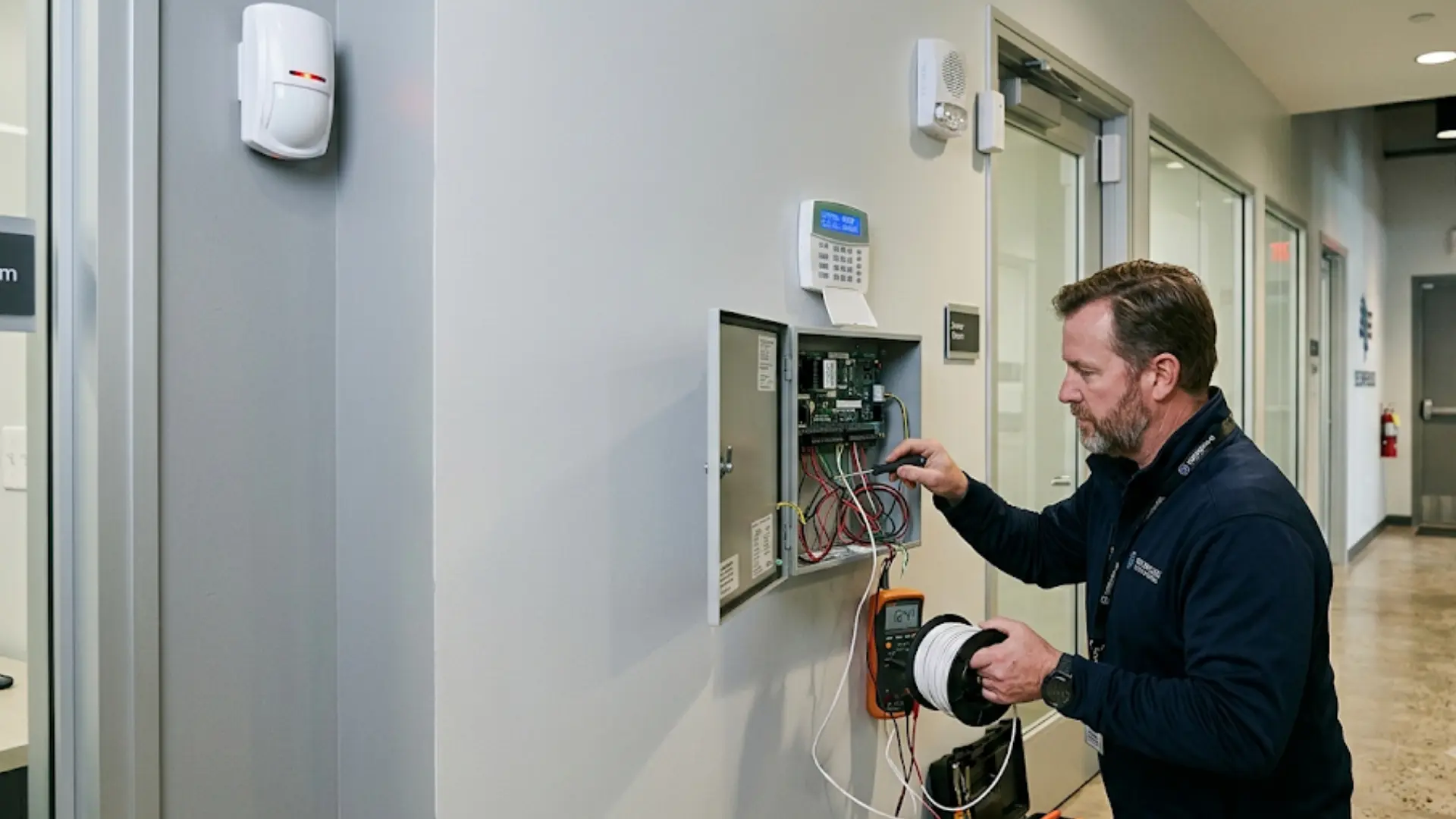
Most security marketing says the same thing about an intrusion alarm system. It detects unauthorized entry. Full stop.
That sentence hides almost everything worth knowing. It doesn’t tell you how the system actually knows someone got in. It doesn’t tell you what parts make that possible.
And it definitely doesn’t tell you why this term gets mixed up with two other things people search for, including intruder alarm, which shows up just as often.
I’ve spent enough time around these systems to know where people get tripped up.
So let’s go through it properly: what an intrusion alarm system is, what it’s built from, where it gets confused with similar-sounding terms, and why any of this should matter to you before you’re standing in a building trying to size one up.
What is an Intrusion Alarm System?
An intrusion alarm system is a physical security system. Its job is to catch unauthorized entry into a building.
It is not a network security tool. That’s worth saying plainly up front, because a very similar term, intrusion detection system, gets used constantly in cybersecurity, where it refers to software that monitors network traffic for malicious activity. Completely different thing.
The building version works by watching specific points in a structure, such as doors, windows, hallways, and restricted rooms. When something crosses a line it shouldn’t, the system sends an alert to the people inside, a remote monitoring center, or both.
Here’s something most people get wrong: they assume these systems only run when a building is empty. That’s true a lot of the time, but not always. Plenty of commercial setups use partial arming, keeping a server room or cash office under surveillance even while the rest of the building stays open.
If you take one thing from this section, take this: the term refers to physical, not digital, space.
What Does an Intrusion Alarm System Include?
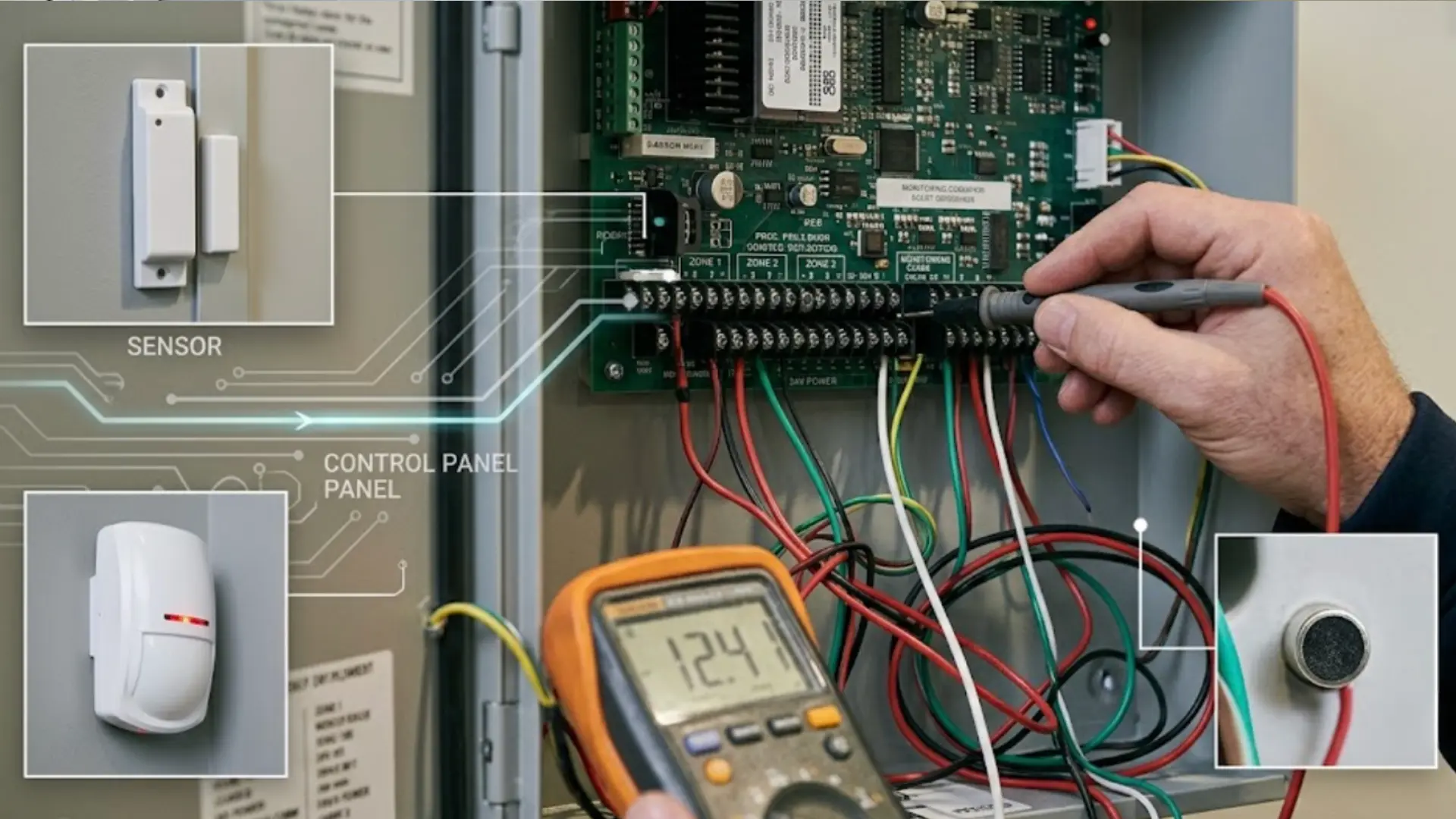
An intrusion alarm system isn’t one device. It’s a chain of parts working together. And honestly, that chain is the part most explanations skip entirely; they’ll tell you what the system does, never how it works.
1. The Sensors
It starts with sensors. These sit at entry points, and inside rooms you want watched.
Door and window contacts break a circuit when something opens. Motion detectors pick up movement in a space. Glass-break sensors listen for the specific sound of breaking glass. Vibration sensors detect forced entry, such as someone prying or drilling.
Every sensor gets assigned to a zone. Zones are just groupings that the rest of the system uses to know where something happened.
2. The Control Panel
When a sensor trips, it sends a signal to the control panel. Think of the panel as the brain of the whole setup.
Its job is to decide if that signal means something. This depends on how the system is currently armed. A door sensor might stay active all the time. A set of interior motion sensors might only matter when the building’s supposed to be empty.
If the panel decides it’s a real alarm, it passes that along to a monitoring service. This is usually a third-party company watching several properties at once, in real time.
3. Where It Actually Breaks Down
I’ve seen this happen more than anything else: one zone gets left unmonitored. Maybe a sensor never got assigned to it properly.
Maybe a door got propped open so often that staff just started leaving that zone disarmed. Maybe a battery died, and nobody caught it.
Here’s the part that catches people off guard. A system can have great components everywhere else and still fail completely, at the one point nobody was watching.
What an Intrusion Alarm System Is Not
People throw around “intrusion alarm system,” “burglar alarm,” and “intrusion detection system” like they’re the same thing. They’re not. And treating them as interchangeable sends you looking in the wrong place.
A burglar alarm performs the same core function: detecting unauthorized entry. But you’ll mostly see this term used for homes and small consumer setups. If something’s described as a burglar alarm, that usually means it’s built for homeowners, not for a warehouse or office building.
An intrusion detection system is where the real mix-up happens. In building security, people use it almost interchangeably with an intrusion alarm system. But that same term, especially shortened to IDS, gets used heavily in cybersecurity too, where it means monitoring network traffic, not physical space.
If you search this term without knowing that, you can easily land on network security content when you want to build security information. It happens constantly.
To make it messier, plenty of vendors use “intrusion alarm” and “burglar alarm” interchangeably in their own marketing. So the terminology alone won’t always tell you what a product is actually built for.
Why an Intrusion Alarm System Matters
This system’s value isn’t abstract. It comes down to catching or scaring off unauthorized entry before it becomes a real loss. Theft. Vandalism. Property damage.
A known or visible system changes behavior before anything even happens. And when something does happen, it shortens the gap between entry and response.
But, and this is where I’d push back on how these systems get sold, that value depends almost entirely on whether it’s paired with active monitoring. A system that just sounds a local alarm can still scare someone off. Without a monitoring service watching for that signal, there’s no guarantee anyone responds while it still matters.
A monitored system and an unmonitored one aren’t the same product with different price tags. One prevents a loss. The other just documents it after the fact.
The most common failure I’ve seen isn’t technical. It’s a system installed and then forgotten: a dead battery, a zone disarmed months ago and never rearmed, a lapsed monitoring contract nobody noticed. All of it ends the same way; a building that looks protected but isn’t.
The Bottom Line
At its core, an intrusion alarm system is a chain, not a single gadget. Sensors pick up movement or entry, zones organize that information, a control panel makes the call, and a monitoring service decides what happens next.
Miss one link, and the whole thing can fail quietly without anyone noticing until it’s too late. That’s also where the confusion with “burglar alarm” and the cybersecurity meaning of “intrusion detection system” tends to creep in, so knowing the difference saves you real time and money.
If you’re evaluating options for your own building, use what you learned here to ask sharper questions before you buy. Got a system already? I’d love to hear what’s worked for you.
Frequently Asked Questions
How much does an intrusion alarm system cost?
Cost depends on the size of the building and how many zones you need. A small setup with a few door sensors can run a few hundred dollars. A full commercial system with monitoring can run into the thousands, plus a monthly fee for the monitoring service itself.
Can you install an intrusion alarm system yourself?
Some basic residential kits are built for DIY setup, especially wireless ones. Commercial systems almost always require a professional installer, since zone planning and wiring can get complex quickly. Getting it wrong here is exactly how you end up with the blind spots I mentioned earlier.
What causes false alarms in an intrusion alarm system?
Most false alarms stem from human error, not faulty equipment. A door left open too long, a pet triggering a motion sensor, or someone forgetting to disarm a zone before entering are the usual culprits. Weak batteries and loose sensor mounts cause the rest.
Do you need a permit for an intrusion alarm system?
Many cities and counties require an alarm permit, especially if the system connects to a monitoring service that can dispatch police. Skipping this step can result in fines if your alarm triggers a false police response. Check your local regulations before you install