
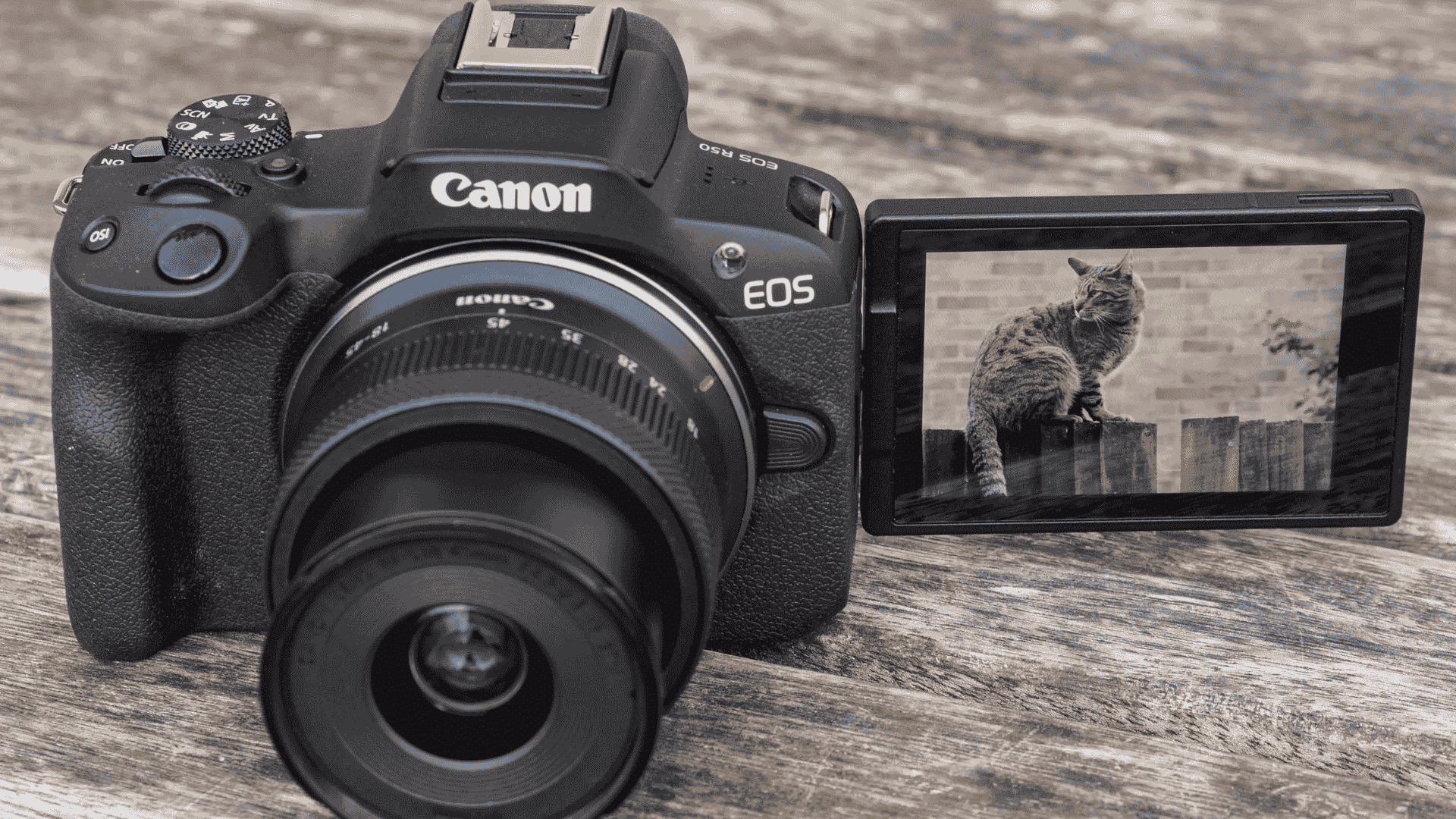
A first camera should make photography feel exciting, not confusing. The Canon EOS R50 mirrorless camera aims to do just that with its small body, smart autofocus, sharp photos, and useful 4K video.
On paper, it looks like a great choice for beginners, but daily use can reveal a few trade-offs.
I looked at the camera from a practical point of view, focusing on how it handles family photos, travel, pets, portraits, and casual videos.
From its simple controls to its limited buffer and lack of IBIS, there is plenty to consider before buying. Here’s what makes the R50 worth a closer look.
Canon EOS R50 Mirrorless Camera Reviews: First Impressions
The Canon EOS R50 is Canon’s compact APS-C mirrorless camera for photographers who want good results without a steep learning curve.
Canon launched it as a successor to the EOS M50 Mark II and EOS 250D. It pairs a 24.2-megapixel sensor with the DIGIC X processor for sharp, clean images. At only 375 grams with the battery and card in place, it fits easily into a small bag.
The Dual Pixel CMOS AF II system tracks people, animals, and vehicles on its own.
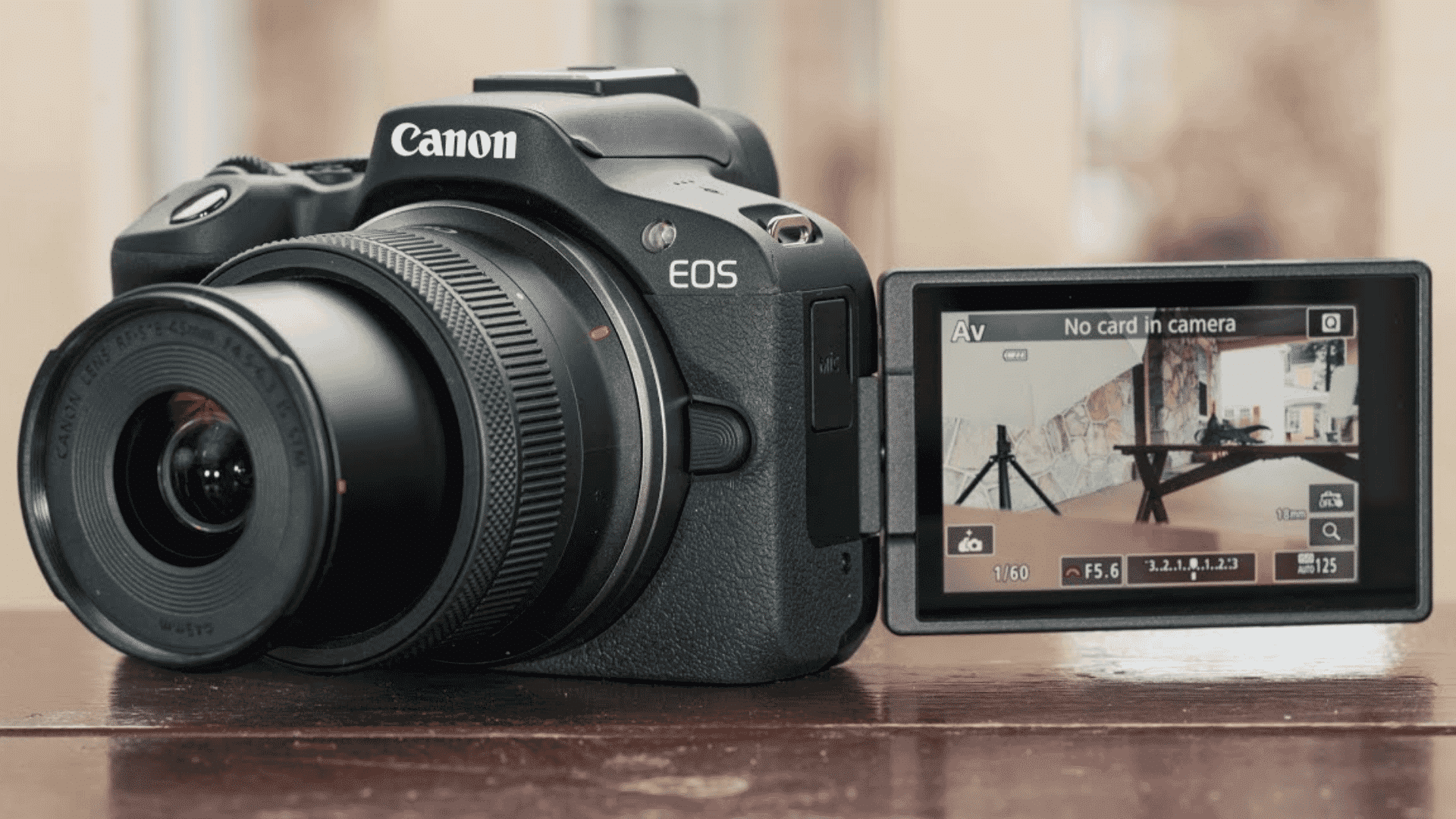
You also get a vari-angle touchscreen and a bright electronic viewfinder for shooting from awkward angles. It feels light in hand, even during long shoots or full days of travel.
Check current pricing and kit options on B&H’s Canon EOS R50 page.
Canon EOS R50 Specifications at a Glance
Here is a quick snapshot of what the Canon EOS R50 offers on paper, based on Canon’s official technical specification sheet.
| Spec | Detail |
|---|---|
| Sensor | 24.2MP APS-C CMOS |
| Processor | DIGIC X |
| Autofocus | Dual Pixel CMOS AF II, 651 AF zones (stills) |
| ISO Range | 100–32000 (expandable to 51200) |
| Continuous Shooting | 12 fps (mechanical/e-1st curtain), 15 fps (electronic shutter) |
| Viewfinder | 2.36M-dot OLED EVF, 0.95x magnification |
| LCD Screen | 3.0-inch vari-angle touchscreen, 1.62M dots |
| Video | 4K UHD up to 30p (oversampled from 6K), Full HD up to 120p |
| Image Stabilization | Digital IS for video; no in-body stabilization |
| Storage | 1x SD card slot (UHS-I) |
| Connectivity | Wi-Fi, Bluetooth 4.2, USB-C |
| Battery Life (CIPA) | Approx. 440 shots (LCD) / 310 shots (EVF) |
| Weight | 375g (body, with battery and card) |
| Dimensions | 116.3 x 85.5 x 68.8 mm |
| Launch Price | $679.99 (body only) |
These numbers explain why the R50 remains a common pick for people moving up from a smartphone.
How Does the Canon EOS R50 Perform in Everyday Use?
Specs only tell part of the story. Real-world use shows how the Canon EOS R50 handles everyday shooting, from family photos to fast-moving pets. Two areas stand out most: image quality and autofocus tracking.
Canon EOS R50 Image Quality
The 24.2-megapixel sensor produces clean, detailed photos in good light and holds up well past ISO 3200. Colors look natural straight out of the camera, with skin tones rendered accurately in daylight and indoor lighting.
Dynamic range is solid for an entry-level body, recovering shadow detail without excess noise. Shots taken with the kit lens show sharp detail across the frame. Low-light shots show grain past ISO 6400.
Canon EOS R50 Autofocus and Tracking
Autofocus is where the R50 shows its strength. Dual Pixel CMOS AF II covers up to 651 zones and locks onto faces, eyes, and moving subjects fast.
Subject detection recognizes people, dogs, cats, birds, and vehicles without extra setup. DPReview’s review of the camera noted its impressive autofocus performance.
It keeps pace with kids, pets, and casual sports well, though tracking can lag in dim indoor light.
Canon EOS R50 Video: Is It Good for Beginners?
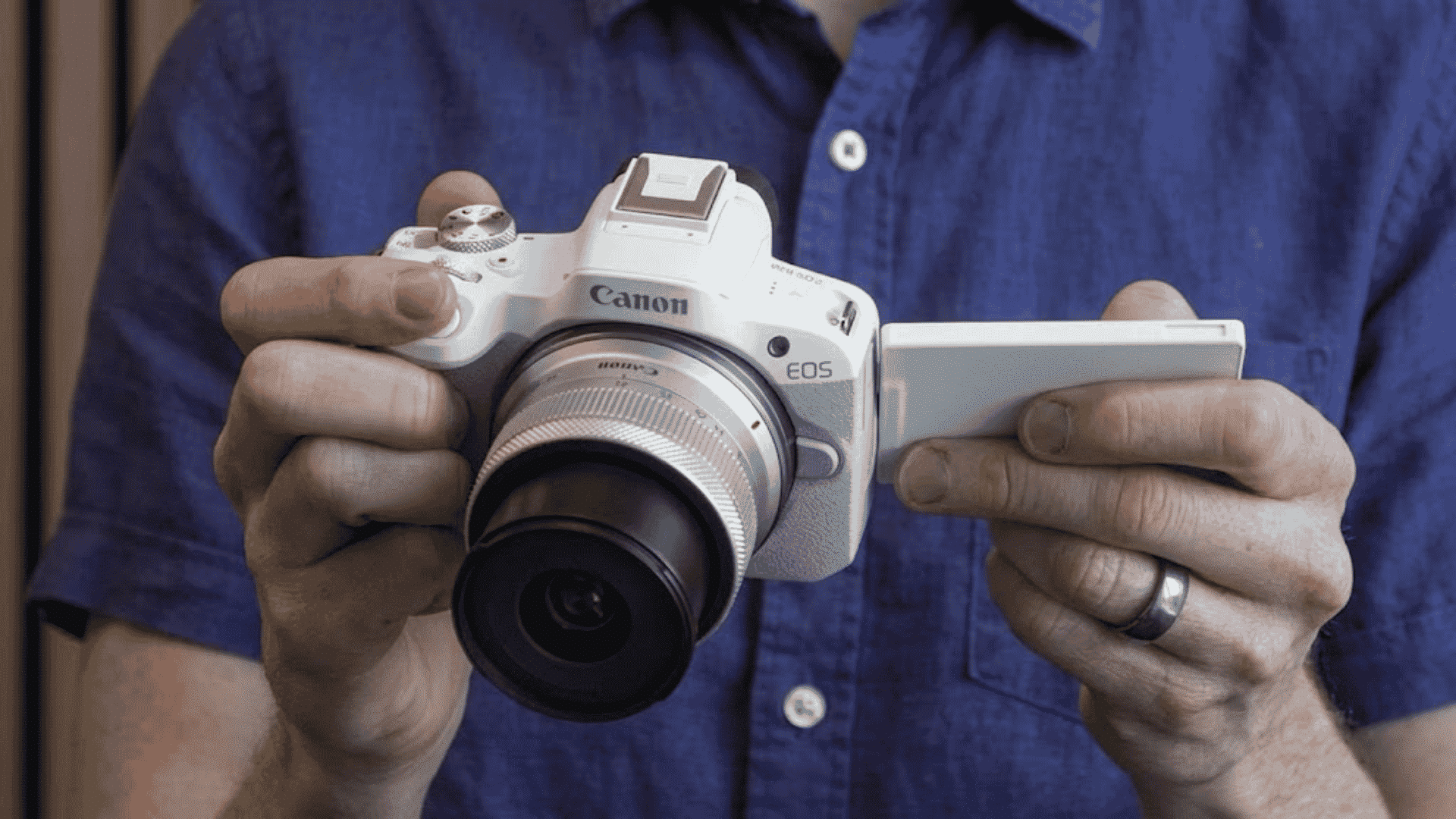
Video is a major selling point for the Canon EOS R50, especially for beginners moving into vlogging or content creation. The camera uses the same processor and AF system as its stills model, so footage tracks focus reliably.
1. 4K and Full HD Video Quality
The R50 records 4K UHD video oversampled from 6K, at up to 30 fps, without a sensor crop. This delivers sharp, detailed footage that holds up well when zoomed in during editing. Full HD tops out at 120 fps for smooth slow-motion clips.
Color looks natural in daylight, though footage can appear soft indoors under weak lighting. The camera also supports 10-bit HDR PQ recording for wider dynamic range.
2. Stabilization and Handheld Shooting
The Canon EOS R50 has no in-body image stabilization, so steady footage depends on the lens or digital IS.
Movie Digital IS crops the frame slightly and smooths handheld shake for walking shots. Paired with the RF-S 18-45mm kit lens, which includes optical stabilization, results look reasonably steady for casual vlogging.
Fast pans or running shots still show some shake. A gimbal or tripod helps for smoother, more controlled footage.
3. Audio and Recording Limits
The built-in stereo microphone picks up clear audio in quiet settings, but it also picks up handling noise and wind. A 3.5mm microphone jack lets you connect an external mic for cleaner sound, and a headphone jack lets you monitor audio.
Continuous video recording is capped at about one hour per clip, which suits most vlogs and tutorials. The single UHS-I SD card slot can limit longer 4K recording sessions.
Which Canon EOS R50 Lens Should You Buy?
The Canon EOS R50 uses Canon’s RF-S lens lineup, built specifically for APS-C bodies. It also accepts full-frame RF lenses without an adapter. Here are a few solid options depending on what you shoot.
| Lens | Best For | Focal Range | Notes |
|---|---|---|---|
| RF-S 18-45mm f/4.5-6.3 IS STM | Everyday and kit use | 18-45mm | Compact, common kit lens |
| RF-S 55-210mm f/5-7.1 IS STM | Telephoto and wildlife | 55-210mm | Pairs well with the 18-45mm |
| RF-S 10-18mm f/4.5-6.3 IS STM | Wide landscapes and interiors | 10-18mm | Compact ultra-wide zoom |
| RF-S 18-150mm f/3.5-6.3 IS STM | All-in-one travel lens | 18-150mm | Covers wide to telephoto in one lens |
| RF 50mm f/1.8 STM | Portraits and low light | 50mm (fixed) | Fast f/1.8 aperture, full-frame RF prime |
Start with the kit lens, then add a telephoto or prime lens based on the type of photos you take most often.
Is the Canon EOS R50 Worth It for Everyday Use?
The Canon EOS R50 works well for photographers who want strong image quality and quick autofocus without a complex menu system.
Casual shooters, students, and content creators get real value from its size, price, and video features. Engadget’s review found the camera strikes a good balance between power and affordability, a verdict that holds up in daily use.
It does have limits: no in-body stabilization, a single UHS-I card slot, and a still-growing lens lineup.
For portraits, travel, pets, and everyday video, it performs above its price point. Anyone stepping up from a smartphone or an older DSLR will notice the difference right away.
Check the official Canon EOS R50 product page for full details and current availability.
Closing Thoughts
The Canon EOS R50 mirrorless camera makes a strong case as a first interchangeable-lens camera. Its light body, reliable autofocus, detailed photos, and sharp 4K video make everyday shooting easy and enjoyable.
I like that it keeps things simple without giving beginners too little room to learn.
Still, the single control dial, small RAW buffer, lack of IBIS, and basic kit lens may become limiting as your skills grow. For family photos, travel, pets, and casual videos, it remains a solid choice.
Would you buy the R50 or choose another camera instead? Share your thoughts in the comments.
Frequently Asked Questions
How Long Does the Canon EOS R50 Battery Last?
The R50 is rated for up to 370 shots using the screen or 230 through the viewfinder, with power-saving modes increasing those figures.
Can You Use EF Lenses on the Canon EOS R50?
Yes. You can use EF and EF-S DSLR lenses with the R50 through Canon’s EF-EOS R mount adapter, although the adapter adds size and weight.
Can You Charge the Canon EOS R50 With USB-C?
Yes. The R50 supports USB Power Delivery charging, it you can recharge the battery using a compatible USB-C charger or suitable power bank.
Is the Canon EOS R50 Good for Travel Photography?
Yes. Its compact 375g body, strong autofocus, interchangeable lenses, and good image quality make the R50 practical for travel, family outings, and everyday photography.