

A bathroom scale gives you one number, but your body is far more complex than your weight. The Hume scale aims to change that by showing body fat, muscle mass, visceral fat, and other measurements from a quick scan.
But with a higher price than a basic smart scale, is it really worth buying?
I looked at how the Hume Pod works, what it measures, how its accuracy compares with DEXA, and what real users report after using it.
From its eight-electrode design to app features and common problems, you’ll get a clear idea of what this smart scale can, and cannot, tell you about your body.
What is the Hume Scale?
The Hume Scale, also called the Hume Body Pod, is a smart scale that measures more than your weight. It uses bioelectrical impedance analysis to measure body fat, muscle mass, water levels, and bone mass.
The device costs $229, discounted from a regular price of $352. Basic body readings work without a paid plan.
If you want extra features like coaching and weekly reports, you pay $9.99 a month for Hume+. The scale connects to an app on your phone through Bluetooth, and it can send data to Apple Health or Google Fit.
Up to 24 people can use one scale, so it works well for a whole household.
How the Hume Pod Works
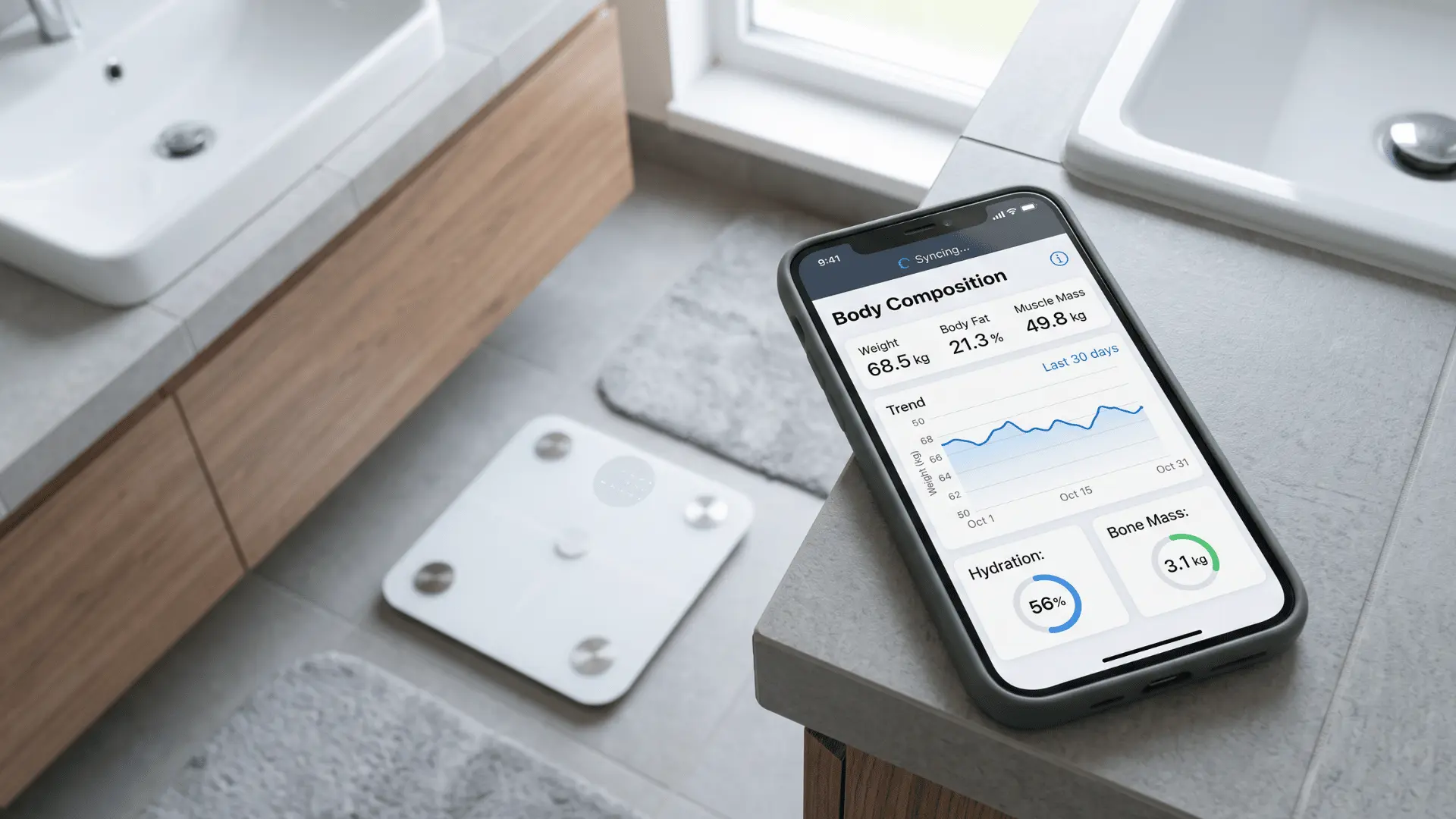
The Hume Pod works by sending a tiny, safe electrical signal through your body. This signal moves through fat, muscle, and water at different speeds, and the scale reads those differences.
1. Multi-Frequency BIA Sensors
Multi-frequency BIA sends several different electrical signals through your body instead of just one. Each frequency moves through water, fat, and muscle at a different speed.
By comparing these speeds, the scale can tell water inside your cells apart from water between them.
This gives a clearer picture of hydration and muscle tone than single-frequency scales. Cheaper scales that use only one frequency often give a rougher, less complete estimate of body fat, a method studied extensively by the NIH since the 1990s.
8-Electrode Segmental Design
Most cheap scales only measure through your feet, so they guess at your upper body. The Hume Pod adds handles with sensors, giving it eight electrode points total: four under your feet and four in the handles.
This lets current travel through your arms, legs, and torso separately, a method known as segmental body analysis. The scale can then report fat and muscle levels for each body part on its own, not just one number for your whole body.
The Hume Health App
After each weigh-in, your results sync to the Hume Health app over Bluetooth.
The app stores your numbers and shows trend lines, so you can see changes over weeks and months, not just one day. It supports up to 24 profiles, so a whole family can track separate accounts.
Core metrics are free to view. For personalized coaching, weekly reports, and nutrition tracking, you need the Hume+ subscription, which costs $9.99/month.
Hume Scale vs DEXA Scan: How They Compare
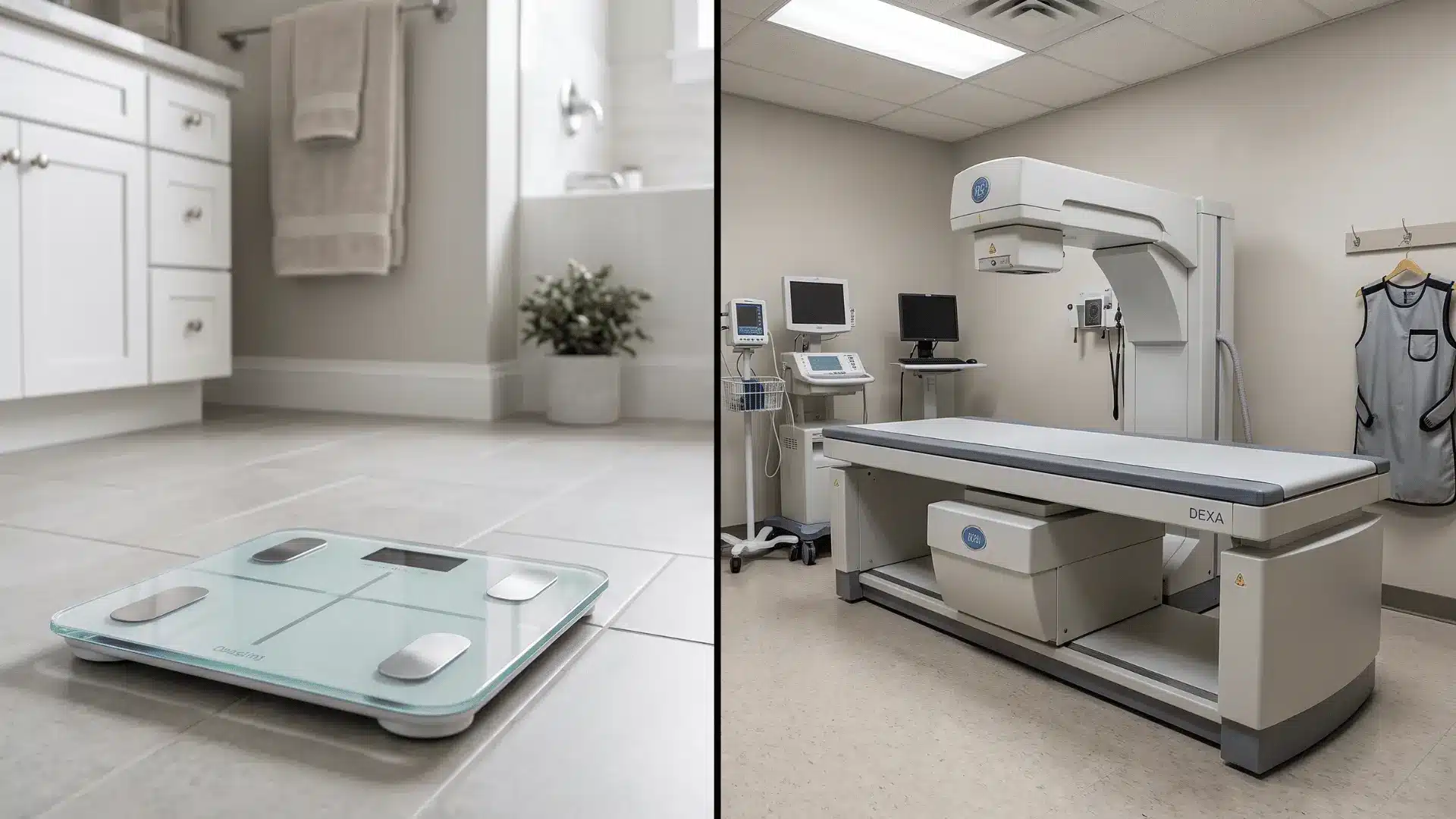
DEXA scans are the gold standard doctors and researchers trust for body composition data. The Hume Scale can’t fully replace one, but it gets close for a fraction of the cost and none of the hassle.
| FEATURE | HUME SCALE | DEXA SCAN |
|---|---|---|
| Upfront Cost | $229 one-time | $0 (equipment already owned by clinic) |
| Cost Per Use | Free after purchase | $40–$200 per session |
| Technology | Multi-frequency BIA (electrical current) | Dual-energy X-ray |
| Scan Time | About 60 seconds | 10 to 20 minutes |
| Where You Go | At home | Clinic or lab visit required |
| Radiation Exposure | None | Very low dose, about 4–5 microsieverts |
| Whole-Body Fat Accuracy | Within about 2 points of DEXA in independent testing | Considered the reference standard, 1–2% margin of error |
| Segmental (Arm/Leg) Accuracy | Less precise, off by roughly 30% or more in some tests | High precision, region-by-region breakdown |
| Repeat Testing | Unlimited, track daily if you want | Limited by cost and appointment access |
The Hume Scale wins on convenience and price. You get a daily reading with no appointment and no per-use fee.
DEXA still wins on precision, especially for individual body parts, which is why many people use the Hume Scale for everyday trend tracking and save DEXA for a periodic accuracy check.
Is the Hume Scale Accurate?
Hume Health states that the Body Pod shows a 98 percent correlation with DEXA results. The brand also points to an independent Socotech study placing it within about 3 percent of DEXA accuracy.
Those numbers sound impressive, but a few points matter before you fully trust them.
- A high correlation shows two devices move in the same direction. It does not guarantee your exact number matches a DEXA result.
- Some independent reviewers report wider swings for women and leaner users. Readings can shift more in these groups than the marketing suggests.
- Real-world accuracy depends heavily on technique. Dry skin, a tilted floor, or a loose handle grip can all throw off a scan.
- BIA scales are not approved for people with pacemakers or other implanted medical devices. The electrical current can interfere with these devices.
For the most reliable trend, weigh in at the same time of day. Keep your feet and hands clean and slightly moist for the best sensor contact.
Hume Health Body Pod Reviews: What Users Say
Hume Health reviews on Trustpilot cover the Band, Pod, and Scale together, not the Pod alone. Across thousands of entries, the pattern is mixed rather than one-sided.
What Users Like
Reviewers consistently point to a few strengths:
- Easy App Navigation: Reviewers describe the app as simple to use, including beta features for activity and nutrition tracking.
- Useful Insights: Many customers say the data helps them track health and progress over time.
- Staying on Track: Some users credit the band with helping them decide when to rest and when to push harder in training.
- Responsive Replacements: Several reviewers mention fast, no-hassle replacements for defective units, sometimes crediting specific support staff by name.
What Users Dislike
Recurring complaints show up just as often:
- Accuracy Concerns: Some reviewers report sleep tracking and body composition data that felt significantly off compared to medical standards.
- Inconsistent Readings: A few users describe metrics that were missing at key moments or changed inconsistently between scans.
- Battery Life: Some customers say the battery lasted under three days, short of the advertised full week.
- Refund and Return Friction: Complaints include slow replies, unwillingness to arrange pickups, and difficulty getting written refund confirmation despite an advertised 45-day return window.
Customer service reports split sharply between reviewers, with some praising fast, friendly help and others frustrated by delays and unclear communication.
Common Problems and Quick Fixes
Most common Hume scale problems involve placement or poor sensor contact. Use this table to identify the likely cause and apply the quickest fix.
| Problem | Likely Cause | Quick Fix |
|---|---|---|
| Scale shows a weight after you step off | The scale has not reset to zero | Place it on a hard, flat surface and wait several seconds before weighing again. |
| Inconsistent body fat readings | Dry skin is reducing electrode contact | Lightly dampen your feet and hands before starting another scan. |
| Retractable handle sensor problems | Your palms are not fully contacting the sensors | Hold the handle firmly with both hands and keep each palm flat against the metal plates. |
If the problem continues after these fixes, recalibrate the scale, restart the Hume app, and contact Hume Health support for further help.
Is the Hume Scale Worth It?
The Hume Scale is worth it if you want more than a weight number and don’t mind occasional accuracy swings.
or $229, you get whole-body fat, muscle, and water tracking that lands close to DEXA scan results, based on independent testing.
Segmental readings for arms and legs are less reliable, which matches what multi-frequency BIA research has found about this type of technology in general. You don’t need a subscription for core features, which keeps the cost honest.
Add Hume+ later if you want coaching and reports. It’s a solid pick for tracking trends, but skip it if you need clinical-level precision for a single reading.
Closing Thoughts
The Hume scale offers much more than a basic weight reading. Its eight-electrode design, segmental measurements, and detailed app data make it useful for people who want to track body-composition trends at home.
Still, its numbers are estimates, and they should not be treated as a replacement for DEXA or other clinical testing.
I think the Hume Pod makes the most sense for users who value detailed tracking and plan to measure consistently over time.
If you only need your weight, a cheaper scale may be enough. Have you used the Hume scale or another smart body-composition scale?
Share your experience in the comments and tell me if it was worth the price.
Frequently Asked Questions
How Many People Can Use the Hume Scale?
The Hume Pod supports multiple accounts, making it suitable for households. However, only one phone can connect through Bluetooth at a time during measurements.
Does the Hume Scale Need Wi-Fi?
No. The Hume Pod uses Bluetooth to connect with the Hume Health app. You need the app open and your phone within Bluetooth range during measurements.
How Long Does the Hume Scale Battery Last?
Hume lists an average battery life of up to one year per charge for the Pod, although actual battery life depends on usage and charging habits.
Do You Need the Hume Band with the Scale?
No, the Hume Pod works independently. The Hume Band is optional and adds activity, sleep, recovery, and other health data to the broader Hume ecosystem.